
Introduction
Finding the best automatic feeder for two cats portion control is easier once you know what matters most. Two cats in one house eat at different speeds. One may guard the bowl. The other may eat too little. An automatic feeder with portion control solves both problems at once. It gives each cat the right amount of food at the right hour, even when you are at work or away for a day.
Millions of American homes now keep two cats. Work hours are long, and travel is common. A good feeder keeps the routine steady. Cats are creatures of habit, and they thrive on regular meals. This guide explains the types of feeders, the features worth paying for, the price ranges, and the upkeep a feeder needs. It also answers common questions from owners of two-cat homes.
Why Portion Control Matters for Two Cats: Best Automatic Feeder for Two Cats Portion Control
Cats that live alone can eat on their own schedule. Two cats change the picture. The bold cat often eats first and eats more. The shy cat may wait until the bowl is empty and then walk away hungry. Over months, one cat gains weight while the other loses it. The vet bill grows.
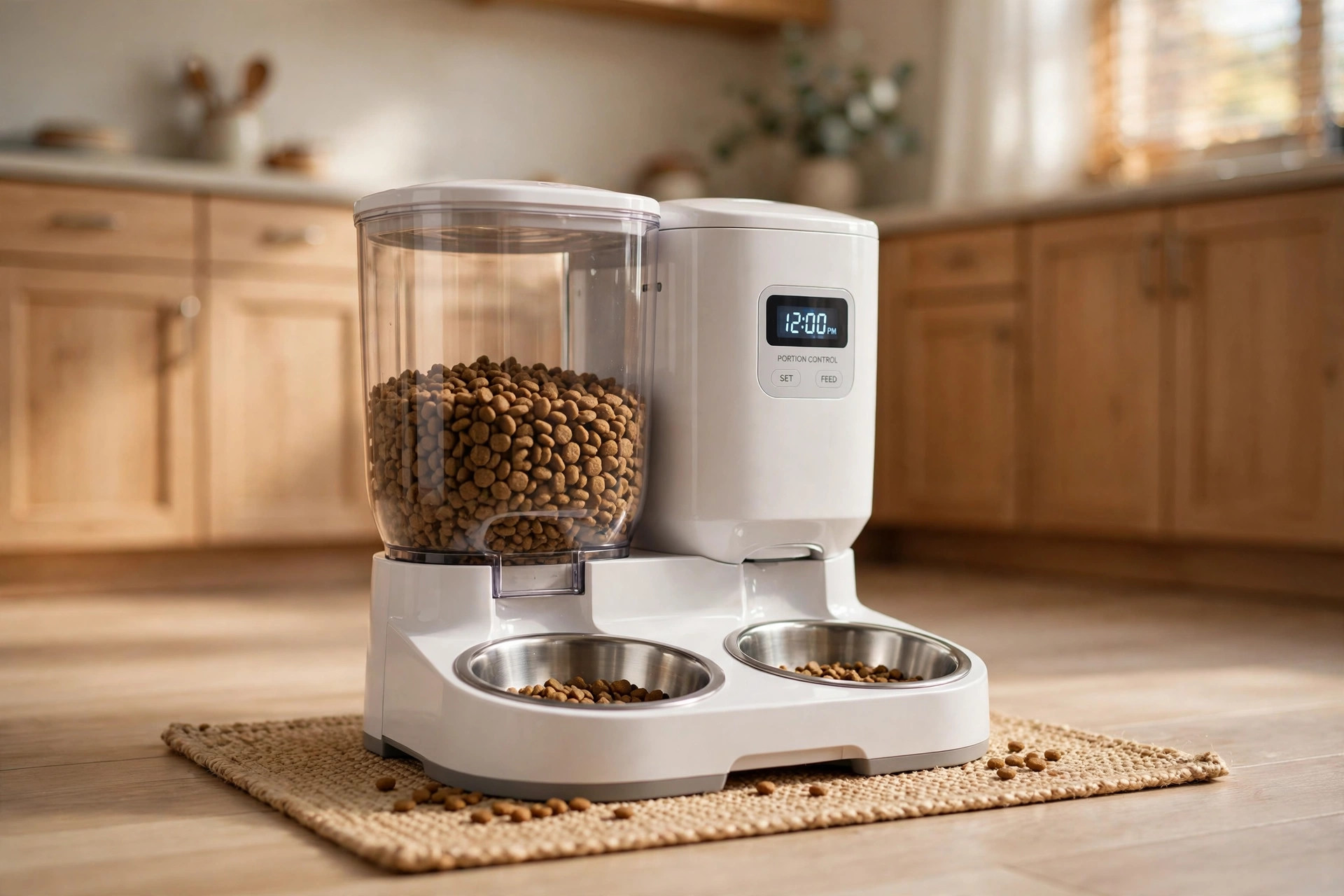
Portion control feeders remove the guesswork. They drop a set amount of food at set times. Some models have two bowls and a divider, so each cat gets its own dish. A few smart models even read a tag on each cat’s collar and open only the right door. That stops food stealing entirely.
Steady portions also protect health. Cats do best on small, regular meals. Free feeding, where food sits out all day, invites weight gain. Studies by animal groups have linked extra weight to diabetes and joint pain in cats. A timed feeder with measured portions keeps both cats near their ideal weight.
What to Look for in a Two-Cat Feeder
Dual Compartments or Two Bowls
The first feature to check is the bowl setup. A feeder made for two cats should have two separate bowls or one bowl with a fixed divider. A splitter attachment on a single-dish feeder is a weak answer. The fast eater will still reach across. True dual bowls keep the meals apart.
Adjustable Portion Size
Portions should adjust in small steps. A good feeder allows servings as small as a tablespoon and as large as a full cup per meal. Small steps matter when the vet asks you to cut food by ten percent. Feeders with only three or four size settings are less useful.
Meal Scheduling
Look for at least four to six meals per day. Six small meals match a cat’s natural grazing pattern better than two large ones. The feeder should let you set different times for each meal. A weekend schedule that differs from the weekday one is a nice extra, though not a must.
Food Type Support
Most portion-control feeders work with dry kibble. Wet food feeders exist, but they need ice packs and daily cleaning. If your cats eat wet food, you will need a sealed model with cooling. Check the kibble size the feeder accepts. Large kibble can jam a machine made for small pieces.
Power Backup
A feeder is only as good as its power supply. Choose a model with battery backup. If the power goes out, the batteries keep the schedule running. Some owners skip this feature and regret it after one missed dinner.
Ease of Cleaning
Food bowls and the food path should come apart for washing. Stainless steel bowls are best. Plastic bowls can trap oils and odors. Removable parts that are safe for the dishwasher save time each week.
Types of Automatic Feeders for Two Cats
Gravity Feeders
Gravity feeders are the simplest type. Food falls from a hopper into a bowl as the cats eat. They cost little and need no power. The problem is portion control. There is almost none. Food is always there, so a greedy cat will overeat. Gravity feeders suit only homes where both cats graze lightly.
Programmable Dry Food Dispensers
These are the most popular choice for two cats. A motor turns on a timer and drops a measured portion into each bowl. They run on a plug or batteries. Prices sit in the middle range. They handle dry food well and most allow six or more meals a day. This is the type most owners mean when they search for the best automatic feeder for two cats portion control.
Smart Feeders with Apps
Smart feeders connect to your phone. You can change the schedule, watch a camera, and get alerts when food runs low. Some models identify each cat by a microchip or collar tag and open the right door. They cost the most and need steady Wi-Fi. They are the best answer for a home where one cat steals the other’s food.
Wet Food Feeders with Timers
Wet food feeders use rotating trays and ice packs. They keep canned food fresh for up to a day or two. They hold fewer meals than dry feeders and need daily washing. They suit owners who feed mostly wet food and work long shifts.
Cost and Price Guide
Prices for two-cat feeders fall into three bands. Basic gravity feeders cost about fifteen to thirty dollars. They offer no real portion control, so they are a poor match for this task.
Programmable dry food dispensers with dual bowls run from forty to one hundred twenty dollars. This is the sweet spot for most two-cat homes. Models in the sixty to ninety dollar range usually offer six meals a day, battery backup, and stainless bowls.
Smart feeders with cameras and apps range from one hundred fifty to three hundred dollars. Microchip feeders for food-stealing problems can pass three hundred. Add the cost of batteries and a replacement food hopper each year. A feeder that lasts three to five years is a fair buy. Spending more up front often means fewer jams and a steadier motor.
Care and Upkeep
A feeder needs care to keep working well. Wash the bowls every two to three days. Dry food leaves oils that turn stale. Once a week, take the feeder apart and wipe the food path with a damp cloth. Do not soak the motor base.
Check the hopper for stuck kibble. A jammed wheel can skip a meal. If your model uses batteries, change them on a schedule, such as the first of each month, rather than waiting for a warning light. Keep the feeder on a flat, dry floor away from direct sun. Heat can soften kibble and cause clogs.
Pair your feeder with a good pet food mat for messy eaters to keep the floor clean under the bowls. A mat catches crumbs and stray kibble that the dispenser may scatter. It also keeps the bowls from sliding when eager cats bump the feeder.
Safety Tips
Safety starts with placement. Put the feeder where both cats can reach it without crowding. A corner with room on both sides works well. Leave space between the bowls so the shy cat does not feel trapped.
Choose feeders with secure lids. A clever cat can pry open a weak lid and gorge. A locking lid stops midnight raids. Check that small parts cannot break off and become a choking hazard.
Clean regularly to stop mold. Stale kibble dust mixed with cat saliva can grow mold in warm rooms. If a cat refuses the feeder, check for a bad smell in the bowl before blaming the machine.
For homes with outdoor access, remember that food near a door can draw wildlife. The ASPCA advises keeping pet feeding areas clean and stored safely. If your cats also roam outside, a secure outdoor rabbit run is not for cats, but the same idea applies: outdoor gear must be sturdy and safe.
Watch each cat’s weight after you start the feeder. Weigh both cats monthly. If one gains and the other loses, adjust the portions or add a microchip feeder that opens only for the right cat. The PetMD site offers solid guidance on healthy cat weights and feeding charts.
How to Introduce the Feeder
Do not swap to the feeder all at once. Set it next to the old bowls for three or four days. Let the cats sniff it. Drop a few treats in the bowls so the machine means good things.
Then run one timed meal a day from the feeder and hand-feed the rest. Raise the count over a week until the feeder handles all meals. Most cats accept the change within ten days. A nervous cat may need two weeks. Patience pays off.
If one cat guards the feeder, feed that cat in another room for a week. Then bring the bowls closer each day. Guarding often fades once food arrives on a fixed schedule and there is nothing to fight over.
Two Cats, Different Needs
Two cats rarely need the same diet. One may need weight-loss food while the other needs a normal recipe. A single-hopper feeder cannot serve two recipes. In that case, you need two single feeders or a smart model with two hoppers.
Senior cats may need softer food or smaller kibble. Kittens need more calories. A Maine Coon cat tree is a fine buy for a large breed, and the same care in sizing applies to feeders: a large cat needs a sturdy, wide-based feeder that will not tip during a hungry rush.
Ask your vet how much each cat should eat per day. The vet will give a calorie number. Set the feeder to split that number across the meals. Write the settings on a card and tape it inside a cabinet door. That way any pet sitter can check it.
Smart Features Worth Having
Some features sound like extras but earn their keep. A voice recorder that plays your voice at mealtime calms anxious cats. A slow-feed mode spreads one portion over fifteen minutes, which helps cats that eat too fast and vomit.
Low-food alerts matter for busy owners. A push alert or a flashing light tells you the hopper is near empty. A camera lets you check that both cats ate. For homes that also shop online for supplies, Chewy and PetSmart both stock replacement parts and extra bowls for popular feeder brands.
Battery backup is the one feature to never skip. A power cut at six in the evening should not mean two hungry cats at midnight. Models with both plug and battery power switch over without a pause.
Common Mistakes to Avoid
The first mistake is buying a one-bowl feeder for two cats. It never works well. The second is setting portions by eye instead of measuring. Use a kitchen scale for the first week to confirm the machine drops what the dial promises.
A third mistake is ignoring kibble size. Oversized kibble jams small dispensers. Match the feeder to the food you already buy, or be ready to change food. A fourth mistake is placing the feeder next to the litter box. Cats dislike eating near their waste, and one may refuse the feeder for that reason alone.
The fifth mistake is never cleaning the machine. A feeder that smells of old oil will put cats off their food. Weekly cleaning takes ten minutes and keeps both cats eating well.
Frequently Asked Questions
Can two cats share one automatic feeder? Yes, if the feeder has two bowls or a divider and true portion control. A single open bowl lets the faster cat eat more. Choose a dual-bowl model or a smart feeder that serves each cat separately.
How many meals per day should I schedule? Four to six meals suit most adult cats. Split the daily food evenly across the meals. Kittens may need more meals. Your vet can confirm the right count for your cats.
Will an automatic feeder work for wet food? Only models made for wet food will work. They use sealed trays and ice packs. Standard dry-food dispensers cannot handle canned food and will clog or spoil it.
What if one cat steals the other’s food? Use a microchip or collar-tag feeder that opens only for the tagged cat. Each cat wears a tag, and each feeder opens for one cat alone. This is the most reliable fix for food stealing.
Do automatic feeders need Wi-Fi? Basic programmable feeders do not. They run on timers and batteries. Only smart feeders with apps and cameras need Wi-Fi. If your internet is shaky, a timer model is the safer pick.
How long does a feeder last? A well-kept feeder lasts three to five years. The motor is the part that wears out first. Cleaning the food path and using the right kibble size will stretch its life.
A Short Final Word
The best automatic feeder for two cats portion control is the one that fits your cats, your food, and your budget. Start with the basics: two bowls, small portion steps, six meals a day, and battery backup. Add smart features only if food stealing or travel makes them worth the price. Keep the machine clean, weigh your cats each month, and adjust as they change. Steady meals make for calm cats, and calm cats make for a happy home.
For more background, see The Spruce Pets, The Home Depot, and American Kennel Club. See also Petco for further detail.
References
American Kennel Club. (n.d.). Dog care and training resources. https://www.akc.org ASPCA. (n.d.). Pet care and animal welfare resources. https://www.aspca.org Chewy. (n.d.). Pet supplies. https://www.chewy.com Petco. (n.d.). Pet supplies and services. https://www.petco.com PetMD. (n.d.). Pet health information. https://www.petmd.com PetSmart. (n.d.). Pet supplies and services. https://www.petsmart.com The Home Depot. (n.d.). Home improvement products. https://www.homedepot.com The Spruce Pets. (n.d.). Pet care guides and product reviews. https://www.thesprucepets.com
Was this guide helpful?

About Robert Taylor
The My Garden US editorial team writes practical, in-depth home and garden guides for American homeowners — tested advice, no fluff.
You May Also Like
Cat Carrier With Wheels for Travel Ease: A Complete Buyer Guide
February 11, 2026 0 views
Dog Raincoat for Large Breeds: A Waterproof USA Buying Guide
June 10, 2026 0 views
Cat Scratching Pad for Couch Arm Protection: A Plain Guide for Cat Owners
March 9, 2026 0 views