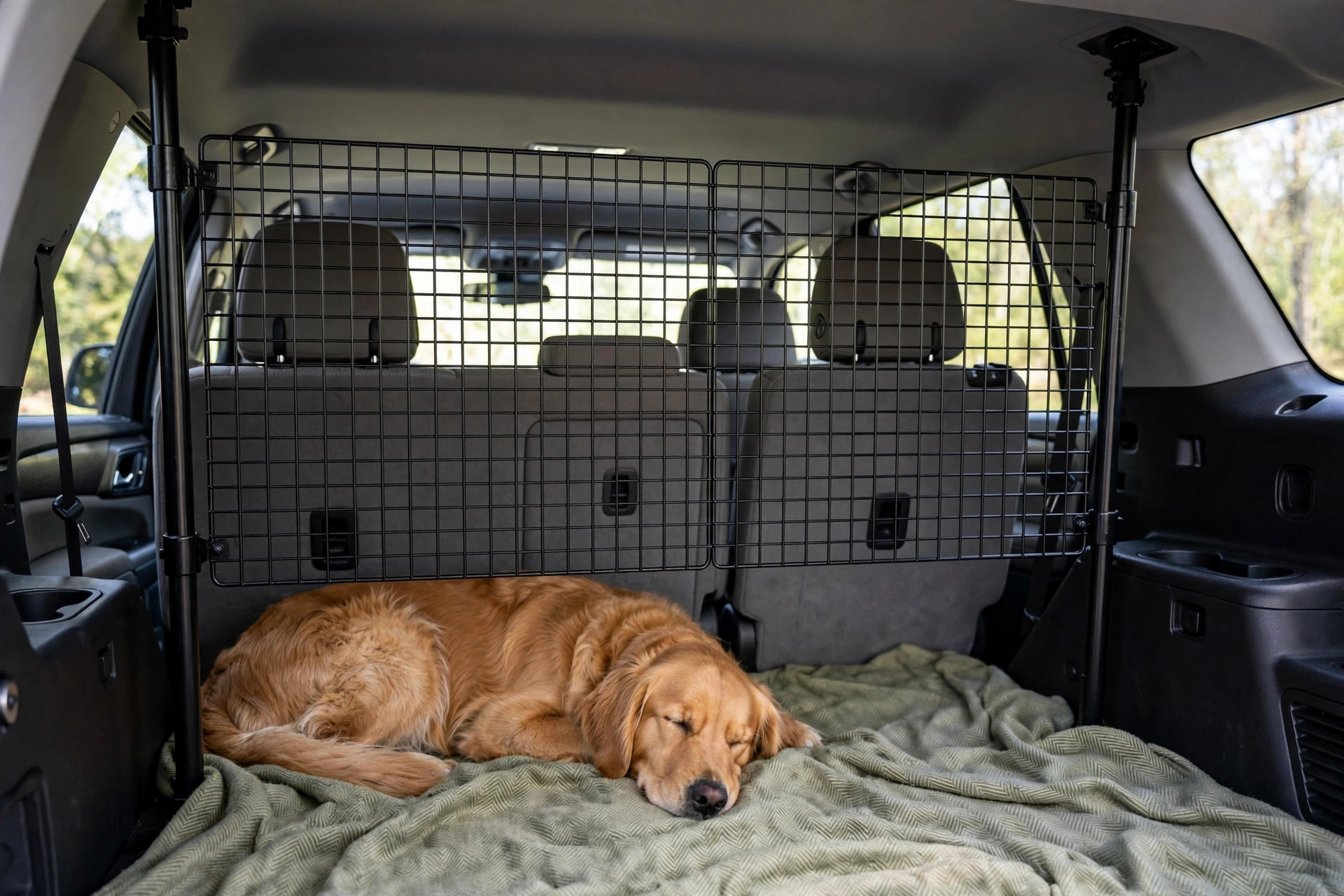

Many families travel with their dogs. The cargo area of an SUV seems like the natural place for a pet. It is roomy. It has space for bedding and bowls. But an open cargo area can be a danger. A sudden stop can send a large dog flying forward. A curious dog may climb into the driver seat. A dog car barrier for SUV cargo area safety solves this problem. It is a simple screen that blocks the gap between the cargo space and the seats. It keeps the dog in the back and the driver free of distraction. This guide explains the types of barriers, how to choose one, what they cost, and how to keep them safe.
Why a Dog Car Barrier for SUV Cargo Area Safety Matters
A loose dog in a moving car is a real hazard. Animal safety groups note that unrestrained pets can become flying objects in a crash. Even a hard stop can throw a 60-pound dog forward with great force. The driver and passengers can be hurt. The dog can be hurt too.
Distraction is another worry. A dog that climbs into the front seat can block the view. It can bump the wheel. It can step on the gas pedal or the brakes. Studies of driver behavior list pets as a common source of inattention on the road.
A barrier also protects the dog. The cargo area of an SUV has its own risks. Loose items can slide and strike the animal. A barrier made with a fine mesh can stop luggage and gear from hitting the dog during sharp turns. It also stops the dog from chewing on seat belts and headrests in the passenger seats.
A barrier also helps with house rules. Some hotels, parks, and rest areas ask that dogs stay contained in the vehicle. A solid barrier shows that the animal is secured. It also keeps a shy dog from bolting out the moment a door opens.
For owners of SUVs, the cargo space is the best travel spot for medium and large dogs. A proper barrier makes it a safe travel spot. That is why the phrase dog car barrier for SUV cargo area safety has become a common search for American pet owners who take their dogs on road trips, vet visits, and trips to the park.
Measuring Your SUV
Take a tape measure to the car. Note the width at three points: at floor level, at the top of the rear seats, and near the ceiling. The narrowest point is the one that matters. Next, measure the height from the cargo floor to the headliner. Some barriers list a single height range, such as 30 to 40 inches. Your number must fall inside that range. Also look at the headrests. Models that clamp to headrest posts need posts of a certain thickness and shape. If your rear headrests do not adjust or remove, choose a pressure-fit model instead.
How to Choose the Right Barrier: Dog Car Barrier for Suv Cargo Area Safety
Fit and Size
SUVs differ in size. A barrier that fits a compact SUV may leave wide gaps in a full-size model. Measure before you buy. Measure the width between the headrests of the rear seats. Measure the height from the cargo floor to the ceiling. Write both numbers down.
Many barriers adjust. They have side panels that slide out to cover gaps. Look for a model with at least two inches of adjustment on each side. Check that the height reaches near the roof. A dog that can jump over the barrier will defeat its purpose.
Strength and Material
Barriers come in steel, aluminum, and plastic mesh. Steel is the strongest choice. It holds up when a large dog leans or pushes against it. Powder-coated steel resists rust and scratches. Aluminum is lighter but bends more easily. Heavy-duty plastic mesh works for small, calm dogs.
The mesh size matters. Openings should be small enough that a dog cannot push its nose or paws through. Tight grids also stop small items from passing into the cargo area.
Mounting Style
Most barriers press-fit between the floor and ceiling of the cargo area. They use adjustable poles and rubber feet. This style is easy to move from one car to another. It needs no drilling. Other models attach to the headrest posts of the rear seats. These are very stable but may need a specific vehicle fit.
Some owners choose a custom crate in place of a barrier. That is a fine option too, but a barrier gives the dog more room and costs less.
Types of Dog Car Barriers
Tube and Mesh Barriers
The most common type uses vertical and horizontal steel tubes with a wire mesh center. It divides the space cleanly. It is sturdy and light. Most models fold flat for storage when the cargo area is needed for other loads.
Full-Screen Barriers
These use a fine net or screen stretched over a frame. They cover the full opening from floor to ceiling. They work well for small dogs that might slip through wider grids. The screen material is usually a strong woven fabric that resists claws.
Headrest-Mounted Barriers
These attach directly to the posts of the rear headrests. They are quick to install and remove. They suit owners who move the barrier between two cars. Check weight limits before use with large breeds.
Divider Panels
Some owners use a barrier to split the cargo area itself. This keeps two dogs apart during travel. It also keeps gear separate from the pet. These panels often pair with a main barrier behind the seats.
For more gear ideas for travel with pets, see our guide on dog ramps for SUV and high bed access, which covers safe loading for older and large dogs.
Cost and Price
Prices vary with size and material. A basic mesh barrier for a small SUV often costs between 30 and 60 dollars. Mid-range steel models run from 70 to 130 dollars. Heavy-duty barriers for full-size SUVs can reach 150 to 200 dollars.
Custom-fit barriers cost more. They are made for a specific make and model. Expect to pay 200 dollars or more for a perfect fit.
Installation costs are usually zero. Most barriers install in under 15 minutes with no tools. If you need help, a pet supply store may offer basic fitting advice at no charge.
To protect your interior during travel, read about dog car seat covers for back seat protection as a companion product.
Care and Upkeep
A barrier needs little care. Wipe it down with a damp cloth every month or so. Dog hair and dust collect on the mesh. Use a soft brush for stubborn fur.
Check the rubber feet and tension knobs twice a year. The vibration of driving can loosen them. Tighten any knob that moves freely. Replace worn rubber feet so the poles do not slip or scratch the interior.
Inspect the mesh for bent wires or torn netting. A damaged barrier may fail when the dog pushes hard against it. Repair or replace damaged parts at once. Keep the bolts and tension rods free of grit. A little dry lubricant on the threads once a year keeps the poles easy to adjust and stops them from seizing up.
Store a folding barrier flat in a dry place. Keep the storage bag it came with, if one was included. This prevents scratches on the coating.
For small pets that travel in carriers, see our article on pet strollers for small dogs and cats travel.
Safety
Secure Fit
Test the barrier before a long trip. Push it from the cargo side with firm pressure. It should not tilt or slide. Drive a short distance with the dog inside and listen for rattles. A rattling barrier may need its tension reset.
Give the Dog Space
The cargo area should allow the dog to stand, turn around, and lie down. If the space is too small, the dog may panic and push against the barrier. For very long trips, plan rest stops every two to three hours.
Ventilation and Heat
Cars heat up fast in summer. The cargo area of an SUV can be warm even with the front vents on. Make sure cool air reaches the back. Crack the rear windows slightly when parked with the dog inside, or leave the dog with a helper. Never leave a dog alone in a hot car.
Keep the Barrier Clear
Do not stack bags against the barrier. In a sudden stop, loose cargo can press the barrier out of place. Secure all gear with nets or tie-downs. Check that items stored near the ceiling of the cargo area cannot slide forward over the top of the barrier.
Teach the Dog
Let the dog get used to the barrier at home before a road trip. Set the barrier in place and let the dog explore the cargo area while the car is parked. Reward calm behavior with treats. A dog that is calm behind the barrier is less likely to test it.
FAQ
Will a barrier work in every SUV?
Most universal barriers fit a wide range of SUVs. They adjust in width and height. Still, some SUVs have sloped ceilings or odd shapes. Always check the listed size range against your own measurements before buying.
Can a barrier stop a large dog in a crash?
A barrier is mainly a divider, not a crash restraint. It keeps the dog out of the front seat and blocks flying objects. For the best crash protection, combine a barrier with a crash-tested harness or a secured crate. Sources such as the American Kennel Club and the American Society for the Prevention of Cruelty to Animals offer guidance on safe pet travel.
Is drilling needed for installation?
No. Most models use pressure poles or headrest mounts. No holes are drilled. This protects the resale value of the vehicle.
How do I clean a mesh barrier?
Use warm water and mild soap on a cloth. Avoid harsh chemicals that can damage the coating. Dry the barrier before folding it for storage.
Can I use one barrier in two cars?
Yes, if both cars fall within the size range of the model. Headrest-mounted styles are the easiest to move. Keep the instructions so you can refit it quickly.
What is the difference between a barrier and a pet gate?
A pet gate usually blocks doorways inside the home. A car barrier is built for a vehicle. It handles road vibration and sudden stops. Do not use a household pet gate in a car. Guidance on product safety is available from the Consumer Product Safety Commission and Consumer Reports.
A Short Final Word
A dog car barrier for SUV cargo area safety is a small purchase with a large payoff. It keeps the driver focused. It keeps the dog where it belongs. It protects both during sudden stops and sharp turns. Choose a steel model that fits your SUV. Install it snugly. Keep it clean and tight. Check the fit at the start of each travel season, because road vibration and temperature swings can loosen pressure-fit poles over time. Then enjoy every trip with your dog riding calmly in the back. For more on pet care and travel, visit Chewy, PetMD, and The Spruce Pets. Retailers such as The Home Depot and Lowe’s also carry pet travel gear, and highway safety tips are posted by the National Highway Traffic Safety Administration.
References
American Kennel Club. (n.d.). Dog care and training resources. https://www.akc.org ASPCA. (n.d.). Pet care and animal welfare resources. https://www.aspca.org Chewy. (n.d.). Pet supplies. https://www.chewy.com Consumer Reports. (n.d.). Product reviews and ratings. https://www.consumerreports.org Lowe’s. (n.d.). Home improvement products. https://www.lowes.com National Highway Traffic Safety Administration. (n.d.). Road safety data and guidance. https://www.nhtsa.gov PetMD. (n.d.). Pet health information. https://www.petmd.com The Home Depot. (n.d.). Home improvement products. https://www.homedepot.com The Spruce Pets. (n.d.). Pet care guides and product reviews. https://www.thesprucepets.com U.S. Consumer Product Safety Commission. (n.d.). Product safety information. https://www.cpsc.gov
Was this guide helpful?

About Jennifer Lee
The My Garden US editorial team writes practical, in-depth home and garden guides for American homeowners — tested advice, no fluff.
You May Also Like

Best Dog Paw Balm for Winter Salt Protection: A Complete Guide
June 15, 2026 0 views
Dog Ramp for SUV and High Bed Access: A Simple Buying Guide
May 15, 2026 0 views
The Best Pet Water Fountain for Dogs: Large Capacity Models That Keep Water Fresh
April 27, 2026 0 views