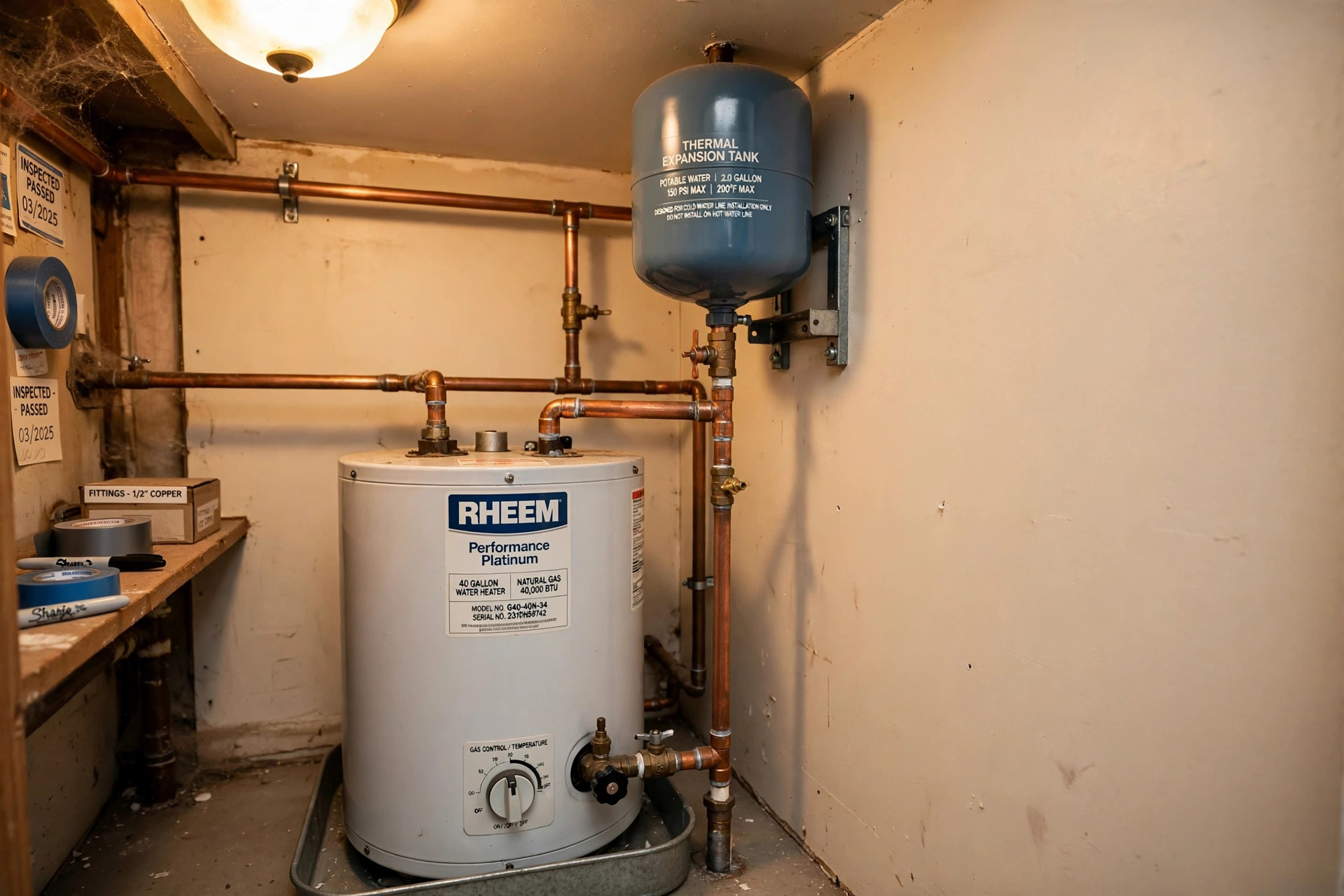

Most home owners have never looked at the small steel tank that hangs above their water heater. It sits there in silence for years. Then one day it fails, and water starts to drip from the pressure relief valve. The heater bangs and groans when it runs. This guide on thermal expansion tank for water heater reviews will help you choose the right tank before that day comes. It explains what the tank does, how to read buyer reviews with care, which sizes fit common heaters, what the work costs, and how to keep the tank in good shape.
Why a Thermal Expansion Tank Matters
Water expands when it is heated. That is a simple fact of physics, and it has real meaning inside a home. A fifty-gallon water heater can push several cups of water out of the tank as it heats a cold fill up to one hundred and twenty degrees. In an old open system, that extra volume simply flowed back into the city main. In most homes today, a check valve or a pressure-reducing valve sits on the service line. That valve closes the system. The extra water has nowhere to go.
The result is thermal expansion. Pressure inside the plumbing rises fast each time the heater fires. Gauges on closed systems can show spikes of one hundred and fifty pounds per square inch or more. Normal house pressure runs between forty and eighty. That gap is hard on every part of the system. Washing machine hoses bulge. Faucet cartridges wear out early. The temperature and pressure relief valve on the heater opens and drips to let the stress out. Over months, joints weaken and fixtures fail.
A thermal expansion tank gives that extra water a place to go. The tank is a small steel vessel with a rubber bladder inside. One side of the bladder holds air. The other side connects to the water line. When pressure rises, water pushes into the tank and squeezes the air cushion. When pressure falls, the air pushes the water back out. The system stays calm. Most plumbing codes in the United States now require an expansion tank wherever a closed system exists. An inspector will look for one at the time of a water heater replacement. For more on closed systems and household water, see the Www.epa.gov.
What to Look for When You Read Reviews: Thermal Expansion Tank for Water Heater Reviews
Buyer reviews are useful, but they need to be read with a steady eye. Many one-star reviews have little to do with the tank itself. A buyer writes that the tank failed after six months. The real cause may be that the air charge was never set to match the house pressure. A tank that ships with a forty-pound charge will die young in a house that runs at eighty. The review blames the brand. The installer blames the brand. The tank was fine.
Look for reviews that mention three facts. First, the size of the water heater in gallons. Second, the house water pressure at the time of the install. Third, whether the installer checked and set the tank pre-charge with a tire gauge. Reviews that include these facts are worth more than pages of general praise. Short reviews that say only “works great” tell you little. Long reviews that walk through the install steps tell you a lot.
Also watch for the age of the reviews. Tank designs change slowly, but listings change fast. A product page from three years ago may now ship a different model under the same name. Sort reviews by newest first. If the recent reviews match the older ones, the product is likely steady. If the tone changed, the product may have changed too. Plumbing fixture makers such as Www.moen.com and Www.deltafaucet.com publish clear spec sheets, and the habit of checking specs before buying is a good one for tanks as well.
Finally, be careful with reviews that promise the tank will fix every plumbing noise. An expansion tank solves pressure spikes from heat. It does not fix water hammer from fast-closing valves. It does not fix high static pressure from the street. Those are different problems with different cures. Honest reviews say what the tank did and what it did not do.
Common Types and Sizes
Tanks for home water heaters fall into a few clear groups. Reviews tend to cluster around these same groups, so it helps to know them before you shop.
Two-Gallon Tanks
The two-gallon tank is the standard choice for most homes. It fits heaters from thirty to fifty gallons when house pressure is normal. It is small enough to hang on a three-quarter-inch line without extra support in many cases, though support is still wise. Most Www.lowes.com guides point to this size first. Reviews for two-gallon tanks are the most common, which makes them the easiest to compare. Prices run low, and stock is easy to find.
Four-and-a-Half-Gallon Tanks
Larger homes with eighty-gallon heaters, or homes with high street pressure, need the next size up. The four-and-a-half-gallon tank gives the system more room to breathe. It costs more and weighs more, so it always needs solid strapping to a joist or wall. Reviews note that these tanks last well because they work less hard per cycle. If your pressure sits above seventy-five pounds, this size is worth a look even on a fifty-gallon heater.
Potable Versus Heating Tanks
This point matters more than most buyers know. Tanks marked for potable water use a bladder rated safe for drinking water. Tanks made for hydronic heating systems look almost the same but are not rated for drinking water. The price on a heating tank can be lower, which tempts bargain hunters. Reviews sometimes praise the low price and never mention the rating. Do not follow those reviews. For a water heater that feeds sinks and showers, buy a tank rated for potable water. The box will say so in plain words.
What a Thermal Expansion Tank Costs
The tank itself is not dear. A two-gallon potable-rated tank from a known brand usually sells for between forty and eighty dollars at retail. A four-and-a-half-gallon tank runs from eighty to one hundred and forty dollars. You can Www.homedepot.com or order one online for about the same money. Off-brand tanks can cost half as much, but reviews on the cheapest models report more early failures and thin paint that rusts fast.
Labor is the larger part of the bill. A plumber who is already replacing a water heater will often add the tank for one hundred to two hundred dollars in labor. A stand-alone visit just for the tank can run two hundred to four hundred dollars, since the plumber must shut the water down, drain pressure, set the pre-charge, and test the system. Some cities require a permit for the work, which adds a small fee.
When you plan the whole water heater job, it helps to look at the full picture. Many owners compare the tank cost with the Well pump replacement cost near me or with other pressure-system work to set a budget. The tank is small money next to a heater, but it protects the heater and everything downstream of it.
Care and Upkeep
An expansion tank asks for little, but it does ask for something. Once a year, tap the tank with your knuckle. The top half should ring hollow, like an empty drum. The bottom half, near the water connection, should sound dull and full. If the whole tank rings hollow, the bladder may have lost its air. If the whole tank sounds dull and heavy, the bladder may have failed and filled with water. A waterlogged tank is dead weight. It must be replaced.
Check the air charge each year as well. Shut off the water to the tank, open a faucet to drop the pressure to zero, and press a tire gauge on the Schrader valve on top of the tank. The reading should match your house pressure. If it is low, add air with a bicycle pump or a small compressor. If water comes out of the air valve, the bladder is torn. Replace the tank.
Watch the pressure relief valve on the heater too. A relief valve that drips now and then is often the first sign that the expansion tank has failed. Do not cap the relief valve or plug it. That valve is the last guard against a dangerous pressure rise. Fix the tank instead. Www.familyhandyman.com from veteran sources show the testing routine in plain detail.
Safety Notes
Water heaters hold real energy. A tank of hot water under high pressure deserves respect. Turn off the power or gas to the heater before you drain pressure for any test. Let the water cool before you open a drain valve. Scalding is the most common injury in this work, and it happens fast.
Support the expansion tank with a strap or bracket. A two-gallon tank holds about seventeen pounds of water when full, plus the steel shell. Hung from a copper line with no support, it will stress the joints over time. A simple perforated strap to a joist costs a few dollars and removes the risk.
Check local code before you buy. Some areas require the tank on the cold-water line within a set distance of the heater. Some require a specific size by heater volume. A quick call to the building office settles the matter. Programs like Www.thisoldhouse.com have covered code basics for decades, and your local inspector has the final word.
If your home has a private well, pressure swings work a little differently. The well tank already holds an air cushion, but it sits on the cold side before the check valve in many layouts. Homes on wells still see thermal expansion past the heater. If you are budgeting pressure-system work on a well home, a look at Septic system installation cost for 3 bedroom homes can help you plan, since well and septic projects often happen together in rural areas.
Frequently Asked Questions
How do I know if my home needs an expansion tank? Look at the water service where it enters the house. If you see a pressure-reducing valve, a check valve, or a backflow preventer, your system is closed and you need a tank. If the temperature and pressure relief valve on your heater drips after long heating cycles, that is another sign. A plumber can test the system in a few minutes.
What size thermal expansion tank does a 50-gallon water heater need? A two-gallon tank suits most fifty-gallon heaters at normal house pressure. If your pressure runs above seventy-five pounds, or if your supply pressure swings a lot, step up to a four-and-a-half-gallon tank. Match the tank pre-charge to your house pressure with a gauge. Size charts from major retailers help, and you can Lowe’s before you buy.
Can I install an expansion tank myself? A handy home owner can do it. The job needs basic plumbing tools, thread sealant, and a tire gauge. You must shut off the water, drop the pressure to zero, and set the air charge to match the house. If your skills are thin, hire a plumber. A bad joint on a pressurized line will flood a room fast.
How long does an expansion tank last? Five to ten years is common. Hard water, high pressure, and a wrong pre-charge shorten the life. A tank set correctly in soft water at sixty pounds can run a decade. Check it each year and you will know when the end is near.
Why does my new expansion tank drip from the relief valve anyway? Three causes cover most cases. The pre-charge does not match the house pressure. The tank is too small for the heater and pressure. Or the bladder was torn from the start, which is rare but real. Check the pre-charge first. It is the cause nine times out of ten.
Does an expansion tank replace the pressure-reducing valve? No. The two parts do different jobs. The pressure-reducing valve sets the house pressure coming in from the street. The expansion tank absorbs the rise that heating adds on top. Many closed systems need both. They work as a pair.
A Final Word
A thermal expansion tank is a quiet part that does loud work when it is missing. Read the reviews with care. Match the size to your heater and your pressure. Set the air charge with a gauge, not a guess. Strap the tank up solid and check it once a year. Do those plain things and the tank will guard your heater, your fixtures, and your pipes for many years. When the rest of the bath or kitchen needs care too, owners often weigh projects like a Wall mounted toilet installation cost usa alongside water heater work, since one plumbing visit can cover both. And if water quality is on your mind as well, Www.aquasana.com and Kohler publish useful background on keeping the whole system clean and sound.
Related guides on this site include best whole house water filter system usa, whole house water filtration cost installed, and reverse osmosis system under sink reviews usa.
References
Aquasana. (n.d.). Water filtration systems. https://www.aquasana.com Delta Faucet. (n.d.). Kitchen and bathroom faucets. https://www.deltafaucet.com Family Handyman. (n.d.). DIY home repair and maintenance. https://www.familyhandyman.com Lowe’s. (n.d.). Home improvement products. https://www.lowes.com Moen. (n.d.). Faucets and plumbing fixtures. https://www.moen.com Septic system installation cost for 3 bedroom. (n.d.). Home and garden information. https://septic-system-installation-cost-for-3-bedroom/ The Home Depot. (n.d.). Home improvement products. https://www.homedepot.com This Old House. (n.d.). Home renovation guidance. https://www.thisoldhouse.com U.S. Environmental Protection Agency. (n.d.). Protecting human health and the environment. https://www.epa.gov Wall mounted toilet installation cost usa. (n.d.). Home and garden information. https://wall-mounted-toilet-installation-cost-usa/ Well pump replacement cost near me. (n.d.). Home and garden information. https://well-pump-replacement-cost-near-me/ Www. (n.d.). Home and garden information. https://www
Was this guide helpful?

About Sarah Mitchell
The My Garden US editorial team writes practical, in-depth home and garden guides for American homeowners — tested advice, no fluff.
You May Also Like
Best Water Softener for City Water USA: A Practical Buying Guide
February 11, 2026 0 views
One Piece vs Two Piece Toilet Comparison USA: Which Toilet Suits Your Home?
March 10, 2026 0 views
Toilet Auger vs Plunger Comparison: Which Tool Clears Clogs Best in USA Homes
June 3, 2026 0 views