
This year’s crawl space dehumidifier reviews 2026 usa come down to a few simple facts. A damp crawl space hurts the whole house. It can rot floor beams, feed mold, and drive up power bills. A good dehumidifier pulls water from the air and keeps the space dry. This guide looks at what matters when you shop, what types are on the market, what they cost, and how to care for the unit you buy.
Why a Dry Crawl Space Matters
Water is the quiet enemy of a house. It does not knock at the door. It rises from damp soil, seeps through foundation vents, and hangs in the air as humidity. When the air under the floor stays wet for weeks, mold takes hold. Wood beams soak up the damp and grow soft. Insulation sags. A musty smell rises into the rooms above.
Dry air under the house changes all of this. Mold cannot grow where there is no moisture. Wood stays hard and straight. Your floors feel warmer in winter because dry air is cheaper to heat than wet air. In summer, the air conditioner runs less, since half its job is pulling damp from the air. Many homeowners who buy a unit after reading crawl space dehumidifier reviews 2026 usa say the change is plain to see: the smell goes, the floors feel firm, and the power bill falls a little.
A dehumidifier is not the whole fix. If water floods the crawl space in a storm, you need drainage first. Gutters, downspout runs, and a sump pump come before any machine. But once the standing water is gone, damp air remains. That is where the dehumidifier does its work. The EPA notes that keeping indoor humidity between 30 and 50 percent helps stop mold growth in homes, and the crawl space counts as part of the home.
What to Look for When You Choose: Crawl Space Dehumidifier Reviews 2026 Usa
Reviews this year keep naming the same few specs. Learn them before you shop, and the choices get easy.
Capacity
Capacity is measured in pints per day. That is how much water the unit can pull from the air in 24 hours. A small unit rated at 55 pints a day can serve a tight crawl space up to about 1,200 square feet. A large unit rated at 90 pints or more suits spaces up to 2,500 square feet or more. When in doubt, size up. A unit that is too small runs day and night and still loses to the damp.
Drainage
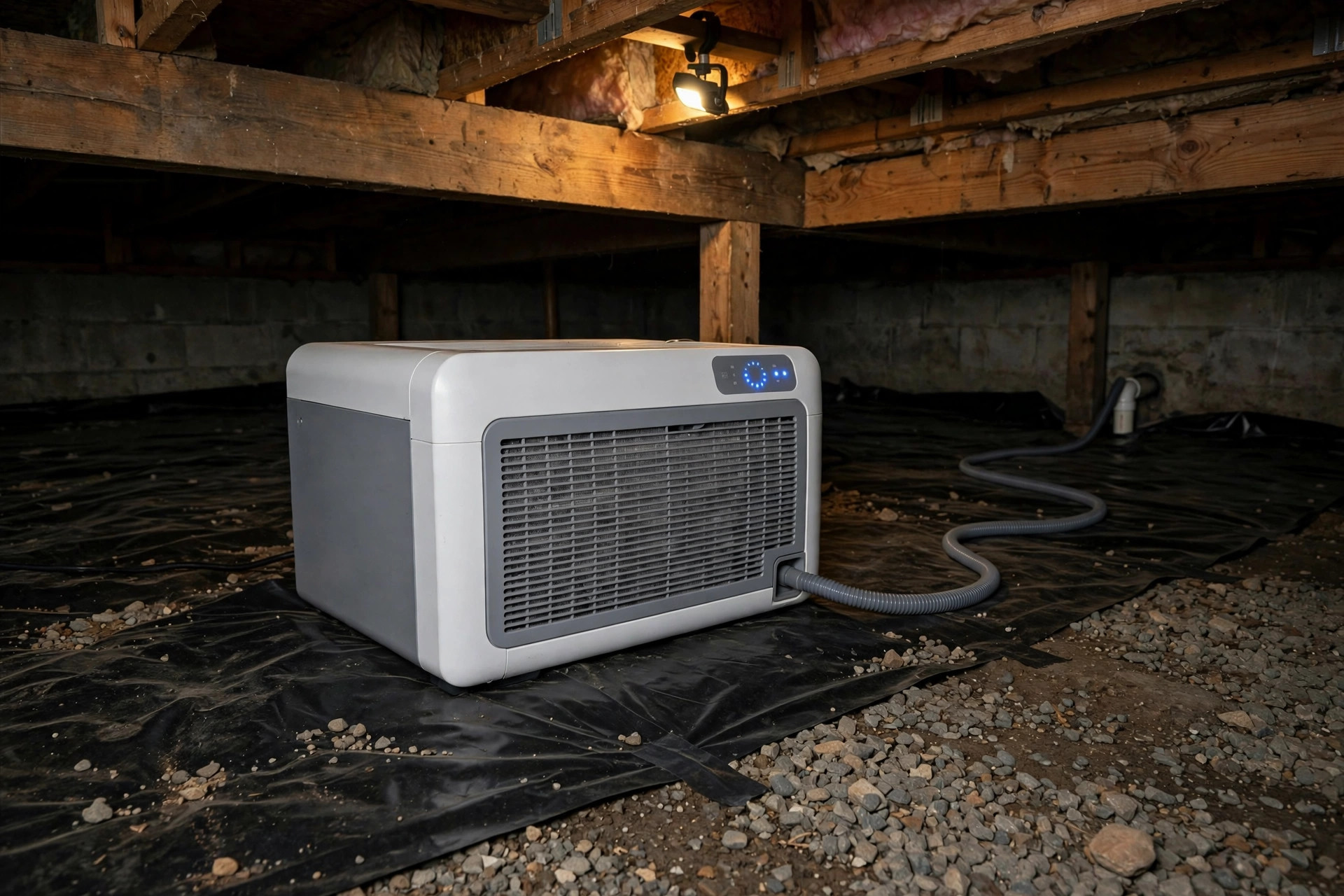
Crawl spaces are not places you visit daily. The best units drain by gravity through a hose or pump the water out with a built-in condensate pump. You run the hose to a floor drain, a sump pit, or out through the foundation wall. Check how high the pump can lift the water. Eight to fifteen feet of lift is common, and it matters when the drain sits above the unit.
Air Filter and Controls
A good washable air filter keeps dust out of the coils and makes the unit last longer. A built-in humidistat lets you set the target humidity, often 50 percent, and the machine cycles itself on and off. Some newer units also show the room temperature. Low ceilings and tight fits are normal under a house, so measure your clearance before you buy. Many units are built low and wide for just this reason.
Energy Use
A big dehumidifier can draw as much power as a room air conditioner. Look for an ENERGY STAR label or at least a good pints-per-kilowatt-hour rating. The energy efficiency guidance from the Department of Energy explains how these machines turn power into dry air, and it is worth a read before you commit to a large unit.
Noise and Build
Most people never hear the unit run, but a quiet machine matters in ranch homes where the crawl space sits under the bedroom. Metal housings handle rough crawl space floors better than plastic ones. A long power cord helps too, since outlets are rare under a house.
If you also want to check what is in your well water before it meets your damp-proofing gear, a simple water test kit can be a good first step for the house as a whole.
Types and Options in the 2026 Reviews
The reviews this year sort the machines into a few clear groups.
Standard crawl space dehumidifiers. These are low, wide machines with a humidistat, gravity or pump drain, and capacities from 55 to 90 pints. They sit right on the crawl space floor. Most homeowners buy this type.
Commercial-grade units. Built for big spaces, flood repair crews, and landlords with many units. They pull 100 pints or more a day and cost more to buy and to run. Unless your space is over 3,000 square feet, you likely do not need one.
Portable home dehumidifiers used under the house. Some shoppers try to save money with a small portable unit meant for a basement. Reviewers are blunt about this: they work for a season or two, then fail. They have no pump drain, freeze up in cool crawl spaces, and the collection bucket fills in hours. A real crawl space unit costs more, but it is built for the job.
Whole-house units tied to the HVAC. These connect to the ductwork and dry the whole home, crawl space included. They cost the most up front and need a pro to install. They make sense in very humid states where the whole house stays damp.
Desiccant units. A few reviews mention desiccant wheels instead of compressor coils. They run well in cold crawl spaces but cost more to run. Most buyers stick with compressor units.
Large home centers and hardware stores now stock several crawl space models on the shelf, and their review sections give a good feel for how each unit holds up after a year or two of real use.
Cost and Price
Prices in the 2026 reviews run wide. Here is what to expect in plain numbers.
– Small crawl space units (55 to 70 pints): about $900 to $1,300. These suit modest spaces under 1,500 square feet. – Mid-range units (70 to 90 pints): about $1,200 to $1,700. This is the sweet spot for most American homes. – Large and commercial units (100 pints and up): $1,800 to $3,000 or more.
Installation adds cost if you hire it out. A pro may charge $200 to $500 to set the unit, hang the drain line, and seal the ducts. Some owners do it themselves in a day. A proper job also includes sealing the foundation vents and laying a vapor barrier on the soil. That barrier, a thick plastic sheet, keeps soil damp from rising into the air, and it makes the dehumidifier’s job far easier.
Running costs matter too. A mid-size unit may use 500 to 800 watts while it runs. If it runs half the day at average power rates, that is roughly $30 to $60 a month on the power bill. Smaller and better-sealed spaces cost less, since the machine cycles off more often.
Buyers who read the reviews often note that the cheapest unit is not the cheapest choice. A weak unit that fails in two years costs more than a strong one that runs for ten. Consumer guides and DIY repair resources both stress buying enough capacity and installing a real drain line instead of emptying buckets.
If your crawl space plumbing needs work while you are down there, fixture makers like Moen, Kohler, and Delta Faucet all publish care guides for shutoff valves and fittings that often live in the same space. Water treatment brands like Aquasana also cover how clean water systems tie into a healthy home water setup.
Care and Upkeep
A crawl space dehumidifier asks little of you, but it asks it on time. Set a calendar reminder each season.
Clean or swap the air filter. Do this every two to three months in dusty spaces. A clogged filter makes the coils freeze and the unit run hot. Most filters rinse clean in a sink and snap back in.
Check the drain line. Once a season, pour a cup of water into the drain hose path and watch it flow out. A kinked or slime-clogged hose backs water up into the unit and shuts it down. Some owners add a cup of white vinegar to the line once a year to keep it clear.
Wipe the coils. Dust builds up on the coils in a year or two. A soft brush and a careful hand do the job. Never bend the thin coil fins.
Watch the humidistat reading. If the display shows rising humidity over the weeks, something changed: a vent came open, the vapor barrier tore, or the filter is due. Catch it early and the fix is small.
Winter care. In cold states, some units shut themselves down below about 40 degrees. That is normal. Make sure the space stays above freezing, since frozen condensate lines can crack.
Service life. Good units run eight to twelve years with basic care. Budget portables used under the house often quit in two. The difference shows in the reviews.
Safety
A dehumidifier is a safe machine when it is set up right, but a crawl space has its own risks.
Use a grounded outlet on its own circuit if you can. Never run a long, thin extension cord under the house for a permanent setup. Keep the unit a few feet from the vapor barrier edges so air can move around it.
Do not go into a crawl space that may have standing water near wiring. Call a pro first. If you see mold covering large areas, wear a mask and gloves, or hire a mold crew. Mold spores rise fast when you move around down there.
Set the humidistat no lower than about 45 percent. Air that is too dry can shrink wood floors and crack trim. Dry enough to stop mold is dry enough.
If your crawl space connects to other home water systems, keep clean records of what is installed where. A quick filter review for lead and a look at your instant hot water dispenser can round out a full home water check while you are at it.
Frequently Asked Questions
How many pints do I need for my crawl space?
Match pints to square feet and damp level. A 55-pint unit suits up to about 1,200 square feet of dry-to-normal space. For 1,500 to 2,500 square feet, or a space that stays very damp, step up to 80 or 90 pints. Size up rather than down. An overworked small unit costs more to run and dies sooner.
Do I still need a vapor barrier if I buy a dehumidifier?
Yes. The vapor barrier is the plastic sheet laid over the bare soil. It blocks damp from rising out of the ground. The dehumidifier then only has to dry the air that is left. Running a dehumidifier without a barrier is like bailing a boat with a hole in it. Most reviews treat the barrier as step one and the machine as step two.
How loud are these units?
Most crawl space units run at about 50 to 60 decibels, roughly the sound of a normal talk. You will barely hear one through a floor. In homes where the bedroom sits over the crawl space, look for models the reviews call quiet and place the unit away from that wall.
Can I install it myself?
Many owners do. The job is simple: set the unit level on the floor, lay the vapor barrier first if it is not there, run the drain hose to a drain or outside, plug it in, and set the humidistat to about 50 percent. Hire a pro if you need new wiring, if water pools down there, or if the space is too tight to work in safely.
What humidity level should I set?
About 50 percent is the standard target. It stops mold and keeps wood stable. Some owners run 45 percent in very mold-prone homes. Do not set it below 40 percent for long, since very dry air can shrink wood floors and trim.
How long does a crawl space dehumidifier last?
A well-made unit lasts eight to twelve years with filter cleanings and a clear drain line. Units with metal housings and washable filters tend to outlast cheap plastic models. The 2026 reviews are clear that buying enough capacity and keeping up with the simple upkeep doubles the useful life.
A Short Final Word
The crawl space dehumidifier reviews 2026 usa all point the same way. Seal the space, lay the barrier, drain the water out, and buy enough capacity for the job. Do those four things and the machine will run quiet for years while your floors stay firm and your air stays clean. It is one of the least seen machines in the house, and one of the most useful.
Related guides on this site include best whole house water filter system usa and whole house water filtration cost installed.
References
Aquasana. (n.d.). Water filtration systems. https://www.aquasana.com Best instant hot water dispenser reviews usa. (n.d.). Home and garden information. https://best-instant-hot-water-dispenser-reviews-usa/ Delta Faucet. (n.d.). Kitchen and bathroom faucets. https://www.deltafaucet.com Family Handyman. (n.d.). DIY home repair and maintenance. https://www.familyhandyman.com Kohler. (n.d.). Bathroom and kitchen fixtures. https://www.kohler.com Lead in drinking water filter reviews usa. (n.d.). Home and garden information. https://lead-in-drinking-water-filter-reviews-usa/ Lowe’s. (n.d.). Home improvement products. https://www.lowes.com Moen. (n.d.). Faucets and plumbing fixtures. https://www.moen.com The Home Depot. (n.d.). Home improvement products. https://www.homedepot.com This Old House. (n.d.). Home renovation guidance. https://www.thisoldhouse.com U.S. Department of Energy. (n.d.). Energy efficiency and renewable energy. https://www.energy.gov U.S. Environmental Protection Agency. (n.d.). Protecting human health and the environment. https://www.epa.gov
Was this guide helpful?

About Emily Rodriguez
The My Garden US editorial team writes practical, in-depth home and garden guides for American homeowners — tested advice, no fluff.
You May Also Like
Best Water Leak Detector for Water Heater USA: A Complete Buying Guide
January 2, 2026 0 views
Rough In Basement Bathroom Cost USA: What Homeowners Pay
September 19, 2026 0 views
Bottom Load Water Cooler Reviews 2026 USA
August 15, 2026 0 views