
When you work from home, small comforts shape your day. Fresh, clean water at your desk is one of them. The search for the best water dispenser for home office usa leads many buyers to a crowded market of bottles, tanks, filters, and plumbed units. This guide cuts through the noise. It explains what matters, what to skip, and how to match a dispenser to the way you work. The goal is simple: water you enjoy, within a budget you can justify, in a unit that fits your office.
Why It Matters
A home office is not a break room. You do not walk past a kitchen cooler ten times a day. Your water has to come to you, or you stop drinking it. Studies from workplace health groups show that mild dehydration can slow focus and drain energy in the afternoon. A desk-side dispenser turns hydration into a habit instead of a chore.
Cost is another factor. Buying single bottles each week adds up fast. A dispenser with a five-gallon bottle, or better yet a bottleless unit tied to your tap, can cut that spending to a fraction. Many home workers also care about waste. A refillable system keeps hundreds of plastic bottles out of the trash each year.
There is a comfort angle too. A dispenser that offers both cold and hot water covers two needs at once: chilled water for long summer calls, and instant hot water for tea or instant coffee between meetings. Fewer trips to the kitchen mean fewer breaks in your flow. For many remote workers, that alone justifies the purchase.
Homeowners who are upgrading their water quality often pair a dispenser with a broader plan, such as the best whole house water filter system usa for cleaner water at every tap. The dispenser then becomes the final, convenient stop in a clean-water setup.
How to Choose the Right Dispenser: Best Water Dispenser for Home Office Usa
Choosing well starts with three questions: where will it sit, how much water do you drink, and what does your tap water taste like now? Answer these first, and the rest of the decision gets easier.
Space and Placement
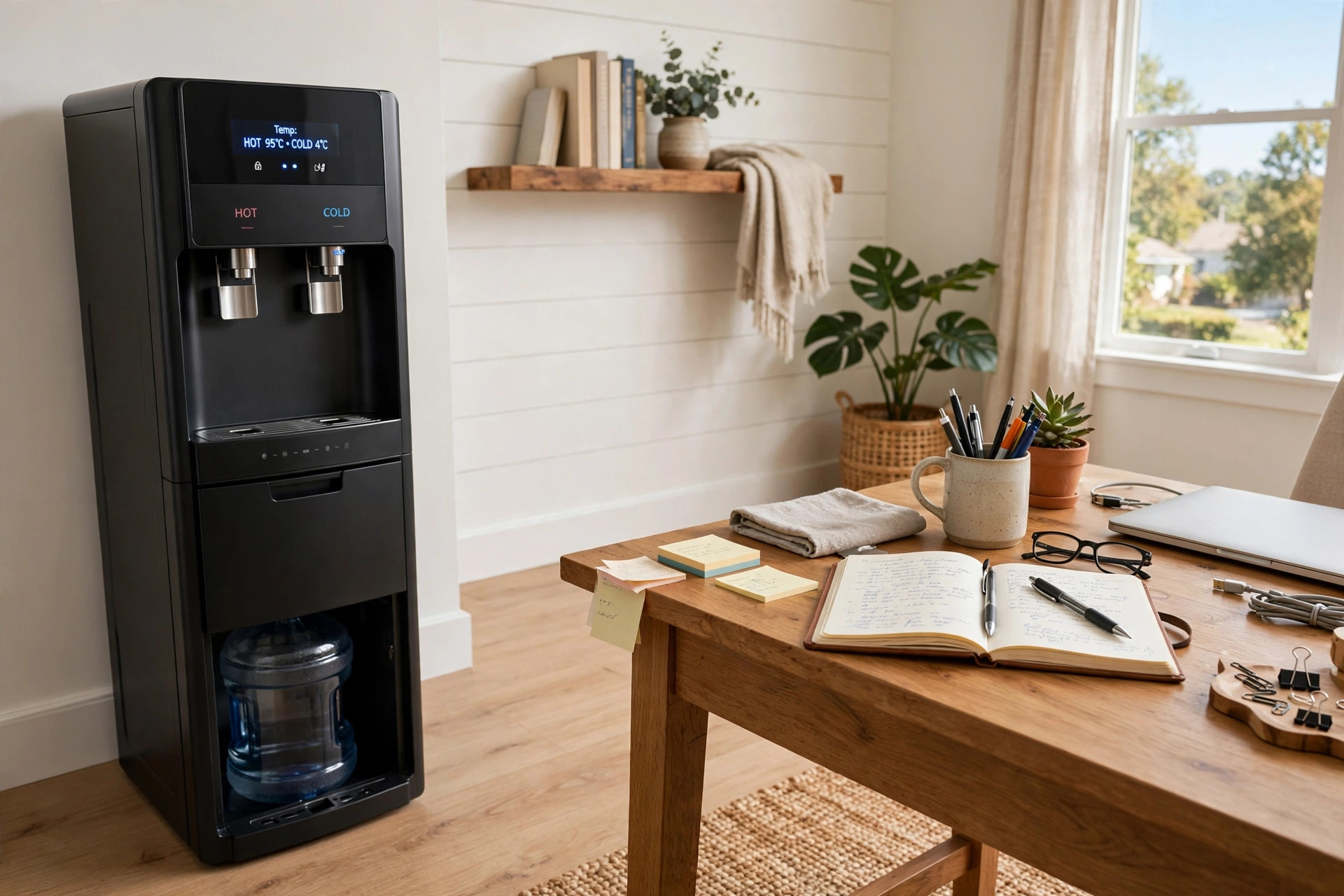
Measure before you shop. A full-size floor dispenser needs about a square foot of floor space, plus room above to load a bottle or to open the top. Bottom-load models solve the lifting problem, since you slide the bottle into a cabinet at the base. If your office is a spare bedroom corner, a bottom load water cooler style unit saves your back and fits under a desk-side counter.
Countertop models are the other option. They sit on a desk or sideboard and hold smaller reservoirs, usually one to two gallons. They work best in small offices or apartments. Keep in mind that a countertop unit still needs a power outlet for heating and cooling, and the reservoir needs refilling more often.
Noise matters in an office. Compressors and cooling fans make a low hum. Read reviews for words like “quiet” and “whisper.” A loud unit sitting three feet from your chair will annoy you on every call. The U.S. Environmental Protection Agency offers guidance on drinking water standards that can help you judge what level of filtration you actually need before you pay extra for it.
Your Daily Water Use
A single person working from home drinks roughly half a gallon to a gallon of water a day at the desk. Add hot water for tea, and the number rises. A five-gallon bottle then lasts four to seven days. If you share the office with a partner, expect to swap bottles twice a week.
Bottleless, or point-of-use, dispensers connect to your water line and filter on demand. They cost more up front but never run dry and never need bottle deliveries. For a solo worker with a kitchen nearby, bottled is fine and cheap to start. For a busy two-person office, bottleless is worth the math. Retail guides at Home Depot compare both styles side by side if you want to see the hardware before deciding.
Water Quality in Your Area
If your tap water tastes fine, a simple carbon filter in the dispenser is enough. If it tastes of chlorine or leaves scale on your kettle, look for multi-stage filtration. In areas with hard water or older pipes, an under-sink system may be the better investment; see our look at the reverse osmosis system under sink reviews usa for how those perform. You can also check your local water report, which every American utility must publish each year.
Types of Home Office Water Dispensers
Top-Load Bottle Dispensers
The classic design. A five-gallon bottle sits on top, gravity feeds the tanks. These are the cheapest to buy, often under one hundred dollars. The downside is lifting: a full bottle weighs over forty pounds. If you have stairs or a bad back, think twice.
Bottom-Load Bottle Dispensers
The bottle hides in a cabinet at the base, and a pump draws water up. Loading is easy, and the unit looks cleaner. Prices run higher, but for a home office this is the sweet spot for most buyers. Many models include child safety locks on the hot tap.
Countertop Dispensers
Compact units for desks and sideboards. Some use small refillable reservoirs; others connect to the tap with a small line. They heat and cool less water at a time, so recovery is slower. Fine for one person, tight for two.
Bottleless Point-of-Use Dispensers
These plumb into your cold water line and filter every glass. No bottles, no deliveries, no storage. Installation takes an hour or two and usually needs a saddle valve or a tee fitting. The Family Handyman site carries clear how-to guides for tapping a water line if you are handy. Upfront cost is highest, but per-gallon cost is lowest over time.
Instant Hot Water Dispensers
Some buyers only want hot water at the desk for tea and instant drinks. A dedicated instant hot water dispenser mounts near the sink or sits on the counter and delivers near-boiling water on demand. It pairs well with a simple cold-water carafe if hot drinks are your main need.
Cost and Price
Prices in the American market fall into clear bands. Top-load bottled dispensers start around sixty to one hundred twenty dollars. Bottom-load models run one hundred fifty to three hundred fifty. Countertop units sit between eighty and two hundred fifty, depending on filtration. Bottleless plumbed dispensers cost three hundred to seven hundred dollars, plus installation.
Running costs matter more over time. Five-gallon bottle refills or exchanges cost six to nine dollars at most grocery and warehouse stores. A solo worker spends roughly twenty-five to forty dollars a month on bottles. Bottleless owners pay for replacement filters, usually thirty to sixty dollars every six months, plus a small bump in the water bill.
Electricity is minor but real. Heating and cooling tanks draw power in bursts. Look for units with an Energy Star style efficiency mindset, and use the on-off switches for the hot tank when you do not need it. Shoppers comparing models on Lowe’s can filter by features like energy-saving modes and self-cleaning.
Watch for hidden costs. Some bottle delivery services require contracts. Some bottleless units need a plumber if your office is far from a water line. And replacement parts, like taps and drip trays, are easier to find for major brands. Fixture and parts makers like Moen, Delta Faucet, and Kohler set the standard for durable water hardware, which is a useful benchmark when you judge a dispenser’s build quality.
Care and Upkeep
A dispenser is a food-contact appliance. Clean it on a schedule or the water will tell on you.
Wipe the taps, drip tray, and exterior weekly with a mild cleaner. Every three to six months, sanitize the reservoirs. The standard method is simple: unplug the unit, drain it, fill the reservoir with a mix of water and unscented bleach at one teaspoon per gallon, let it sit for five minutes, then flush with clean water until no bleach smell remains. White vinegar works as a gentler option for scale.
Replace filters on the maker’s schedule. Carbon filters lose their taste-fighting power long before they look dirty. If your bottleless unit slows down or the water tastes off, the filter is the first suspect. Specialty filter makers like Aquasana publish clear replacement timelines that apply to most carbon-based systems.
Watch the bottle neck and the probe on bottled units. That is where dust and hands meet the water path. Wipe the probe with a clean cloth each time you change a bottle. If you use a five-gallon bottle for more than a week, keep the dispenser out of direct sun, which feeds algae growth in clear plastic.
Every year or two, check hoses and fittings on plumbed units for slow drips. A small leak under a desk can ruin flooring before you notice. This is the same care routine recommended for any home water appliance, and This Old House has practical maintenance checklists that cover dispensers alongside sinks and filters.
Safety
Hot water taps are the main hazard. Good dispensers ship with a child lock on the hot side: you push and hold, or slide a guard, before water flows. If you have small children at home during the workday, treat this as a must-have, not a nice-to-have. Test the lock when the unit arrives.
Electrical safety is basic but worth stating. Keep the cord away from the drip path, plug directly into a grounded outlet, and never run the hot tank dry. Most modern units have dry-burn protection, but do not rely on it.
Bottle hygiene deserves a note. Wash your hands before handling the bottle neck, and never touch the probe to the mouth of a bottle that sat open. For bottled water quality questions, independent testing groups like Consumer Reports publish bottled water ratings that can guide which brand you load.
Finally, if you plumb a bottleless unit yourself, shut the main water off first and check local code. Some towns want a licensed plumber for any new water connection. A flooded office floor costs far more than a service call.
FAQ
How much does a good home office water dispenser cost?
Expect to pay one hundred fifty to three hundred fifty dollars for a quality bottom-load bottled unit, which suits most home offices. Bottleless plumbed models run three hundred to seven hundred dollars before installation. Add twenty-five to forty dollars a month for bottles, or thirty to sixty dollars twice a year for filters on a bottleless unit.
Are water dispensers noisy enough to bother video calls?
Most modern units hum softly when the compressor runs, then go quiet. On a call, the hum rarely registers on a microphone, but a unit with an aging fan can click or rattle. If your desk is within arm’s reach of the dispenser, choose a model reviewers call quiet, and keep it on a level surface to cut vibration.
Bottled or bottleless: which is better for one person?
For one person, bottled is simpler and cheaper to start. You will change a five-gallon bottle every four to seven days. Bottleless wins if you hate lifting, hate running out, or want the lowest long-term cost. It also removes the storage problem of spare bottles in a small home.
How often should I clean my water dispenser?
Wipe taps and the drip tray weekly. Sanitize the reservoir every three to six months. Change filters on schedule, usually every six months for carbon filters. If the water tastes stale or the flow slows, clean and check the filter first before assuming the unit is failing.
Do I need a plumber to install a bottleless dispenser?
Often no. Many kits include a saddle valve that taps an existing cold water line with basic tools. But if the run is long, the line is hard to reach, or your local code requires it, hire a plumber. The job is small and usually takes under two hours.
Can a dispenser really replace my kettle?
For tea and instant coffee, yes. Most hot tanks hold water near one hundred ninety degrees, hot enough for most drinks. If you brew pour-over coffee and need a full rolling boil, keep the kettle. Many home workers run both: the dispenser for speed, the kettle for ritual.
A Short Final Word
The best water dispenser for home office usa is the one that fits your space, your habits, and your water. A bottom-load bottled unit serves most solo workers well: easy to load, quiet, and affordable. Heavy drinkers and two-person offices should run the numbers on a bottleless plumbed model. Whatever you choose, keep it clean, lock the hot tap if kids are around, and enjoy the small daily luxury of good water within arm’s reach. Your afternoon self will thank you.
References
Aquasana. (n.d.). Water filtration systems. https://www.aquasana.com Consumer Reports. (n.d.). Product reviews and ratings. https://www.consumerreports.org Delta Faucet. (n.d.). Kitchen and bathroom faucets. https://www.deltafaucet.com Family Handyman. (n.d.). DIY home repair and maintenance. https://www.familyhandyman.com Kohler. (n.d.). Bathroom and kitchen fixtures. https://www.kohler.com Lowe’s. (n.d.). Home improvement products. https://www.lowes.com Moen. (n.d.). Faucets and plumbing fixtures. https://www.moen.com The Home Depot. (n.d.). Home improvement products. https://www.homedepot.com This Old House. (n.d.). Home renovation guidance. https://www.thisoldhouse.com U.S. Environmental Protection Agency. (n.d.). Protecting human health and the environment. https://www.epa.gov
Was this guide helpful?

About David Wilson
The My Garden US editorial team writes practical, in-depth home and garden guides for American homeowners — tested advice, no fluff.
You May Also Like
Constant Pressure Well Pump Reviews USA: A Homeowner’s Guide
June 28, 2026 0 views
Heat Pump Water Heater Pros and Cons: A Plain Guide for American Homes
April 5, 2026 0 views
Enzyme Drain Cleaner Reviews for Septic USA: What Really Works
February 3, 2026 0 views