
The midwest is a fine place to own a home. It is also a hard place for outdoor fixtures. Winters are long and bitter. Ice, snow, and strong winds test every seal and screw. Spring brings heavy rain. Summer brings heat and storms. A house in Illinois, Indiana, Ohio, Iowa, or Michigan faces the full force of all four seasons. That is why so many homeowners search for the top rated exterior lighting fixtures for midwest homes. The right fixtures light your walk so you do not slip on ice. They welcome guests on dark evenings. They keep intruders away. This guide explains what to buy, what to pay, and how to keep your lights working year after year.
Why Good Exterior Lighting Matters in the Midwest
Light is a matter of safety first. In the midwest, the sun sets early in winter. Many people come home in the dark. A dark porch step covered in ice is a danger. A dark driveway hides black ice. Well placed fixtures make these risks plain to see. A lit house is less tempting to a thief.
There is also the matter of comfort. A warm light at the door makes a home feel safe after a long day. It helps guests find your walk. It marks your address for visitors and delivery drivers. In a season of long nights, a bright entry is a small pleasure that matters.
Good lighting also protects your investment. Moisture and ice can damage siding, trim, and steps. Fixtures that wash light across walls let you see water stains, cracks, and ice buildup before they grow into big repairs. If you are thinking about curb appeal too, our low maintenance siding color visualizer tools buying guide can help you plan a look that fits your lighting.
How to Choose Exterior Lighting Fixtures for Midwest Homes: Top Rated Exterior Lighting Fixtures for Midwest Homes
Shopping for outdoor lights can be confusing. Dozens of styles fill the shelves at Home Depot and Lowe’s. The top rated exterior lighting fixtures for midwest homes share a few traits. Look for these before you fall in love with a style.
Weather Resistance
This is the first and most important test. Midwestern weather punishes cheap metal. Rain seeps into seams. Salt from winter roads eats finishes. Cheap fixtures rust within one season.
Look for a wet location rating. The label should say “suitable for wet locations” or “UL listed for wet locations.” That rating means the fixture was tested against driving rain and snow. Damp-rated lights belong under covered porches only.
The housing material matters too. Cast aluminum resists rust and holds up well. Heavy-duty plastic, called polycarbonate, will not rust at all and costs less. Copper and brass last a long time but cost more. Painted steel is the weakest choice for the midwest. The paint chips, then the steel rusts.
Brightness and Bulb Type
LED bulbs are the clear choice today. They use little power. They last for years. They turn on in cold weather without delay. Old CFL bulbs struggled in the cold. LEDs do not. Guides at The Spruce note that most homeowners now pick LED outdoor lights for these reasons.
Think about brightness in lumens, not watts. A porch sconce of 400 to 800 lumens is plenty. A floodlight over the driveway may need 1,500 to 3,000 lumens. Too much light can annoy neighbors and wash out your yard. Warm white light, around 2700K, gives a welcoming glow. Cool white, around 5000K, looks stark and clinical. Most midwest homeowners prefer warm tones near doors and cooler tones for security lights at the back of the lot.
Style and Placement
The fixture should fit the house. A farmhouse in Iowa suits barn-style gooseneck lights. A brick colonial in Ohio suits lantern sconces. A ranch home in Kansas suits simple modern wall packs. Look at your siding, trim, and roof line. Pick a finish that matches your other hardware. Black and oil-rubbed bronze work with almost every color. Matte white suits light siding.
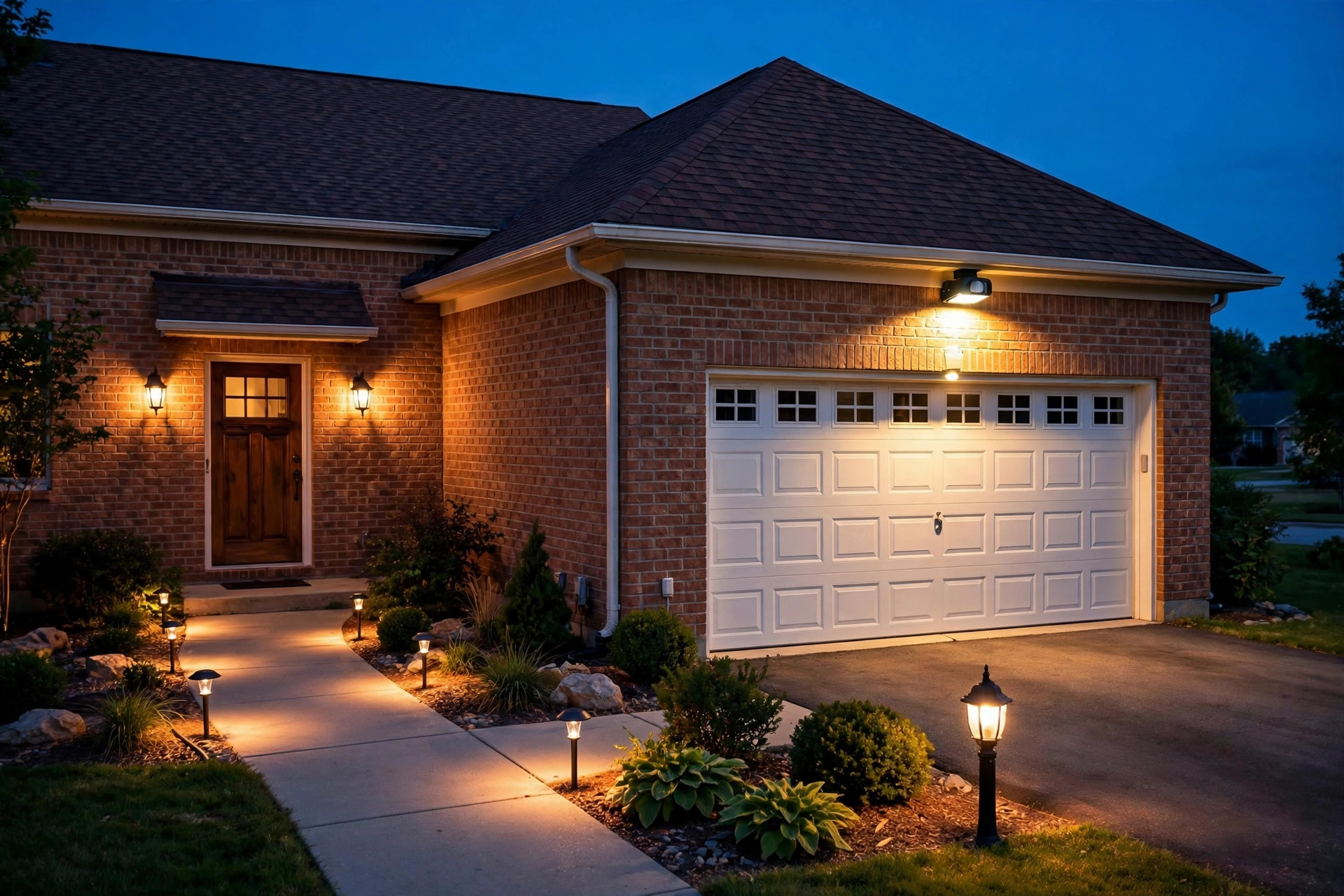
Placement matters more than style. The best rule is simple: light every door, every step, and every dark corner. A pair of sconces beside the front door is the classic answer. One fixture above the garage door lights the driveway. A motion-sensor light at the side door covers the path most people forget. If your state is far south, you may have different needs, so see where to buy exterior lighting fixtures in texas for a warmer-climate comparison.
Types of Exterior Lighting Fixtures
The top rated exterior lighting fixtures for midwest homes come in several types. Each serves a different job. Most homes need a mix of two or three types.
Wall Sconces and Porch Lights
Wall sconces are the workhorses of the midwest porch. They mount on either side of a door or above it. They light faces so you can see who is at the door. Lantern styles with clear glass spread light wide. Hooded styles push light down and keep glare out of eyes.
Buy sconces with enclosed tops. Open-top fixtures collect snow and rain like little buckets. A closed top sheds snow on its own. Also check the size. A common mistake is buying sconces that are too small. A fixture beside the front door should be about one quarter the height of the door.
Floodlights and Motion-Sensor Lights
Floodlights cover large areas: driveways, backyards, and side yards. In the midwest they earn their keep during winter storms and dark mornings. Motion sensors save energy by turning the light on only when something moves. They also startle intruders.
Mount floodlights high, about eight to ten feet up. Aim them down and away from windows. This keeps light out of bedrooms and off the street. Pick a model with adjustable sensitivity and a dusk-to-dawn setting. How-to guides at Family Handyman walk through mounting and aiming in plain language.
Pathway and Landscape Lights
Path lights line walks and steps. They are low to the ground and cast soft pools of light. In winter they mark the edge of the walk when snow hides it. That is worth more than their price. Solar path lights cost little and need no wiring. But solar lights struggle in the midwest. Short winter days and snow-covered panels mean weak light. Low-voltage wired sets cost more to install but shine all night through every season.
Landscape spotlights can lift a home’s look at night. A warm uplight on a maple or a brick chimney turns a dark yard into something handsome. Keep the fixtures aimed at your own house and trees. Avoid pointing them at a neighbor’s windows.
Post Lamps and Garage Lights
A post lamp at the end of the driveway is a classic midwest sight. It marks the property line and lights the walk to the street. Many post lamps now come in LED versions with dusk-to-dawn sensors. A lantern head on a sturdy post stands up to wind and snow plows.
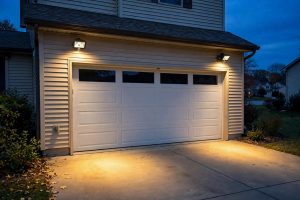
Garage lights deserve their own mention. A wide floodlight or a pair of coach lights above the garage door lights the apron where you park. Motion sensing is ideal here. The light greets you when you pull in and switches off when you go inside.
Cost and Price of Top Rated Exterior Lighting Fixtures
Prices vary widely, so plan by type. A single wall sconce of good quality costs between thirty and one hundred twenty dollars. Premium bronze or copper models can reach two hundred dollars. A motion-sensor floodlight costs between forty and one hundred fifty dollars. A set of six low-voltage path lights with a transformer runs from one hundred to three hundred dollars. A post lamp with the post included costs between one hundred and four hundred dollars.
Installation is the other half of the cost. Replacing an old fixture on the same box is often a one-hour DIY job. Running new wire to a new spot costs more. An electrician may charge one hundred fifty to four hundred dollars per fixture for new runs, depending on distance and wall material. Get two or three quotes.
The top rated exterior lighting fixtures for midwest homes are not always the priciest. Mid-range aluminum fixtures with gasketed lenses often outlast expensive designer models with thin steel housings. Read reviews that mention your climate. A fixture with hundreds of happy reviews from Texas may still fail in Minnesota. Look for reviews from buyers in your own state.
Think about running costs too. A 9-watt LED sconce left on all night costs only a few dollars a year to run. Replacing three old 60-watt bulbs with LEDs can cut outdoor lighting power by more than eighty percent. The savings pay for the new fixtures within a couple of years.
Care and Upkeep Through the Seasons
Midwestern fixtures need a little care to last. Plan two short maintenance visits each year, one in fall and one in spring.
In fall, before the first hard freeze, wipe each lens with a damp cloth. Dirty lenses block light and make bulbs work harder. Check the gaskets for cracks. A cracked gasket lets water in during winter storms. Tighten any loose mounting screws. Wind loosens them over time. Replace any burned-out bulbs now, while the weather is still mild.
In spring, after the snow melts, inspect for winter damage. Look for rust spots, cracked lenses, and peeling paint. Touch up paint chips on steel fixtures to stop rust from spreading. If meltwater is seeping where it should not, our top rated basement waterproofing services reviews can point you toward professional help. Trim bushes and shrubs that grew over path lights. Clear mulch that piled up against fixtures. If a motion sensor got knocked out of aim by ice or a snow shovel, re-aim it.
Bug nests are a common spring problem. Wasps love open fixtures. A quick check in April saves trouble later. Detailed seasonal checklists from Bob Vila cover these steps in order.
For homes with fiber cement siding, keep fixtures and their mounting blocks sealed against the wall. Guides from James Hardie explain how flashing and sealant protect the siding behind a fixture. Siding maker CertainTeed also publishes exterior care notes worth a look.
Safety Tips for Installing and Using Outdoor Lights
Electricity and water are a bad mix, so safety comes first. Always turn off the power at the breaker before you touch a fixture. Test with a non-contact voltage tester. Wires that look dead can surprise you.
Use only fixtures rated for wet locations in open areas. Use weatherproof boxes and covers. Seal the top and sides of the mounting box with silicone, but leave the bottom open so any water can drain out. A sealed box that traps water is worse than one that breathes.
Keep outdoor lights away from dry leaves, mulch, and wood piles. LEDs run cool and are the safer choice near plants and trim.
Ladder safety matters in every season. In winter, ice on the rungs is a real hazard. Set the ladder on clear ground. Have someone hold it. Do not stretch to reach a fixture. Move the ladder instead.
If your project involves new wiring, new circuits, or a service panel change, call a licensed electrician. The cost is small compared to the risk of a house fire. A quick call to the local building office clears up permit rules, and project guides at This Old House explain what most codes require.
Frequently Asked Questions
How long do outdoor light fixtures last in the midwest? A good fixture lasts ten to twenty years with basic care. Cheap steel fixtures may rust through in two or three winters. Cast aluminum and polycarbonate housings last the longest. Replaceable bulbs let you keep the fixture while swapping the light source.
Are solar lights a good choice for midwest winters? They are a weak choice for year-round use. Midwest winters bring short days, cloudy skies, and snow on the panels. Many solar lights fade by midnight in January. Low-voltage wired lights are the better pick. Solar lights are fine as summer patio accents.
What color temperature is best for a front porch? Warm white around 2700K is best for porches and entry doors. It flatters skin tones and makes the entry feel welcoming. Save cooler light around 4000K to 5000K for security floodlights at the garage or back of the lot.
Do motion-sensor lights work in freezing weather? Yes. Most modern sensors work far below zero. Brush snow off the sensor after storms, and set the sensitivity a touch lower in winter. Blowing snow can trigger false alarms.
Can I install exterior lights myself? You can replace an existing fixture yourself if you are comfortable with basic wiring and you shut off the breaker first. Running new wire, adding circuits, or working in the panel calls for a licensed electrician. When in doubt, hire the work out.
How many fixtures does a typical midwest home need? Most homes do well with five to eight fixtures. Two sconces at the front door, one light at the garage, one motion light at the back or side door, and three to five path or landscape lights. Walk your property at night to find the dark spots before you buy.
A Short Final Word
The top rated exterior lighting fixtures for midwest homes are not the fanciest ones on the shelf. They are the toughest. They are sealed against rain and snow. They burn efficient LEDs. They fit the house and light the paths people actually walk. Spend your money on weather ratings and solid housings first, and on style second. Do that, and your lights will shine for many winters to come.
References
Bob Vila. (n.d.). Home improvement advice. https://www.bobvila.com CertainTeed. (n.d.). Building materials and exterior products. https://www.certainteed.com Family Handyman. (n.d.). DIY home repair and maintenance. https://www.familyhandyman.com James Hardie. (n.d.). Fiber cement siding and exterior products. https://www.jameshardie.com Lowe’s. (n.d.). Home improvement products. https://www.lowes.com The Home Depot. (n.d.). Home improvement products. https://www.homedepot.com The Spruce. (n.d.). Home and garden advice. https://www.thespruce.com This Old House. (n.d.). Home renovation guidance. https://www.thisoldhouse.com
Was this guide helpful?

About Lisa Anderson
The My Garden US editorial team writes practical, in-depth home and garden guides for American homeowners — tested advice, no fluff.
You May Also Like
Top Rated Insulated Vinyl Siding for Cold Climates
March 25, 2026 0 views
Low Maintenance Seamless Gutter Guards Buying Guide
January 26, 2026 0 views
How to Find Top Rated House Power Washing Services Near Me
July 4, 2026 0 views