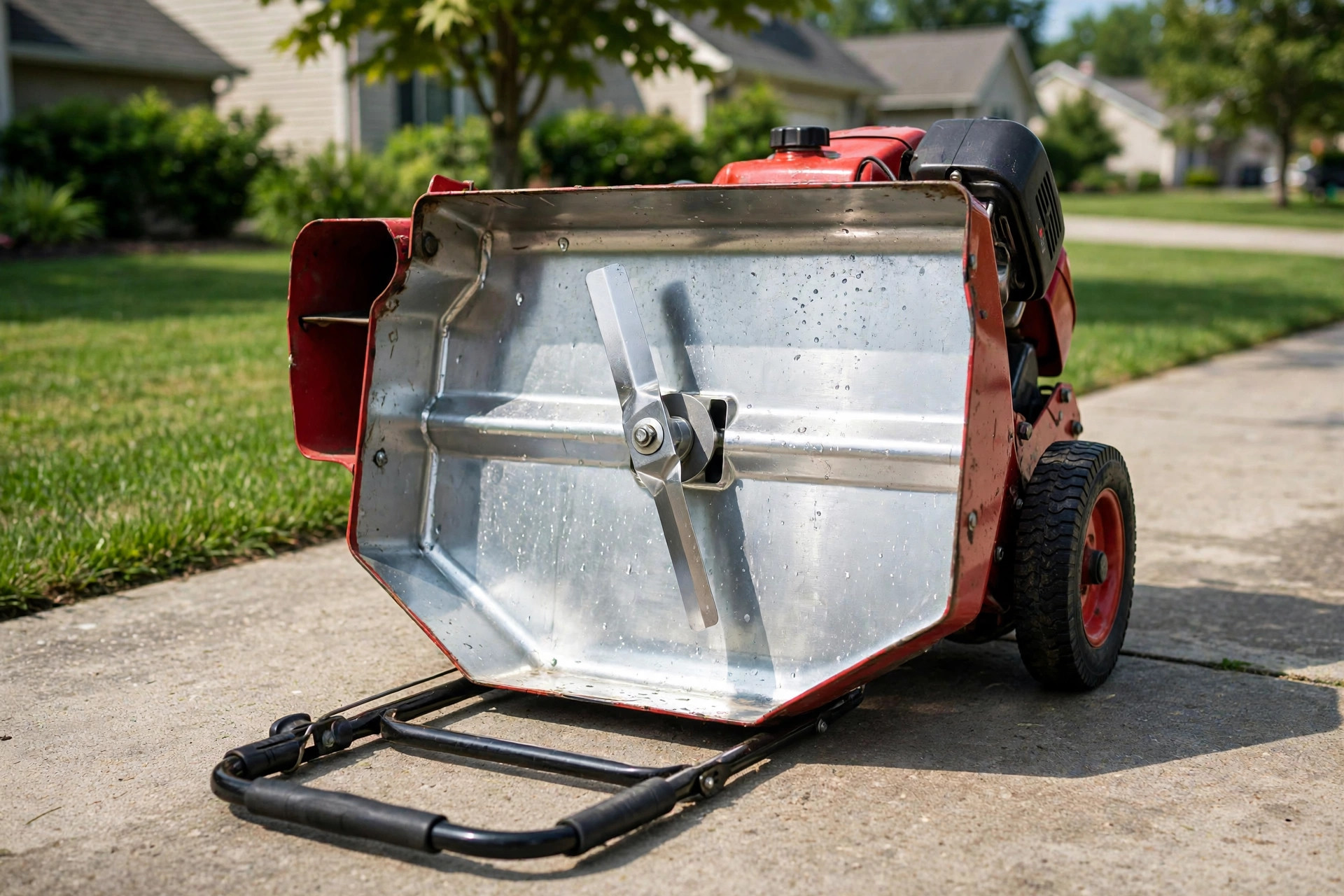
This lawn mower deck cleaning tips guide explains how to keep the underside of your mower clean. The deck is the metal housing that covers the blades. Grass clippings, moisture, and soil collect under it with every pass across the yard. Left alone, this buildup hardens into a thick mat. It blocks airflow, dulls the cut, and invites rust. Many homeowners never look under the deck until the mower starts to strain or leave ragged stripes on the lawn. A few minutes of care after each mow prevents most of these problems. The steps in this guide work for walk-behind mowers, self-propelled mowers, and riding mowers. Read through the safety rules first, then follow the steps in order. Your mower will cut better, last longer, and use less fuel.
Why Deck Cleaning Matters
A dirty deck does more harm than most owners expect. Fresh grass clippings are wet. When they pack under the deck, they hold moisture against bare metal. Over weeks and months, this causes rust. Rust eats through the deck shell and weakens the housing that holds the blades. A rusted deck is expensive to repair and often means the mower must be replaced.
A clean deck also cuts better. Mower blades need open space and moving air to lift grass and slice it evenly. A packed deck blocks that airflow. The result is clumps on the lawn, uneven height, and brown tips on the blades of grass. You may find yourself making two passes over the same ground. That doubles your work and doubles the fuel burned.
Heat is another concern. The engine works harder when the blades push through a wall of packed clippings. Extra load raises engine temperature. Over a long hot summer, this shortens engine life. A quick scrape after each mow keeps the load light and the engine cool.
Finally, a clean deck is safer. When you lift the mower and look under it, you can see problems early. You can spot a bent blade, a loose bolt, or a crack before it becomes a hazard.
Tools You Will Need: Lawn Mower Deck Cleaning Tips Guide
Gather your tools before you begin. You will need a stiff putty knife or plastic scraper, a stiff bristle brush, a garden hose with a spray nozzle, a bucket of warm soapy water, clean rags, and work gloves. A plastic scraper is kinder to painted surfaces than a metal one. For stubborn buildup, a flat wood chisel also works well.
Some mowers have a deck wash port. This is a small fitting on top of the deck where a garden hose connects. If your mower has one, cleaning becomes much easier. Check the owner manual to confirm.
You may also want a can of spray lubricant or a silicone-based protectant. After cleaning, a light coat on the underside of the deck helps fresh clippings slide off instead of sticking. Avoid used motor oil for this purpose. It drips onto the lawn and stains the grass.
For safety, keep a short block of wood handy to brace the blade. Never hold a blade with your bare hand while you scrape near it. Thick work gloves protect your hands from sharp edges and old dried clippings.
Safety Rules Before You Start
Safety comes first every time. A mower blade can spin even when the engine is off, and a stored engine can still fire if the spark plug is connected. Follow these rules without exception.
First, turn the engine off and let it cool for at least fifteen minutes. Hot metal and hot oil cause burns. Second, disconnect the spark plug wire on a gas mower. Push it away from the plug so it cannot touch by accident. On an electric or battery mower, remove the battery or unplug the cord completely.
Third, work on flat ground. Chock the wheels of a riding mower or set the parking brake. Fourth, tilt a walk-behind mower only toward the side shown in the owner manual. Most mowers must be tilted with the air filter side up. Tilting the wrong way floods the filter with oil and can ruin the engine.
Fifth, wear gloves and eye protection. Dried grass dust gets into eyes and lungs. Old clippings can hide sharp twigs and wire. Keep children and pets away from the work area. When in doubt, check the manufacturer guide for your model. Brands such as Toro publish clear mower maintenance advice for their machines, and the habit of checking the manual pays for itself.
How to Clean the Deck: Step by Step
Step 1: Prepare the Mower
Move the mower to a flat spot on the driveway or a bare patch of yard. Let the engine cool. Disconnect the spark plug wire or remove the battery. Drain or run the fuel low if you plan to tilt the mower for a long cleaning session. Less fuel means less chance of a spill.
Step 2: Reach the Underside
For a walk-behind mower, tip it back or to the side per the manual. For riding mowers, raising the front end safely or driving the front wheels onto low ramps gives you room to work. Some owners prefer to remove the deck entirely. That takes more time but gives full access to every corner. Larger decks, like those found on the best riding lawn mower for one acre lots, reward the extra effort because their wide undersides collect the most buildup.
Step 3: Scrape Off the Loose Layer
Start with the putty knife or plastic scraper. Push, do not pull, toward yourself away from the blade edge. Work in short strokes. Remove the thick cake of grass in large pieces. Drop the waste into a bucket or onto a tarp. A stiff brush follows to sweep away the finer dust. Take your time around the spindle housings and the edges where clippings pack the hardest.
Step 4: Wash With Water
Attach the garden hose and rinse the underside. If your mower has a deck wash port, connect the hose, start the engine briefly, and let the spinning blades throw water through the deck. Follow the manual for the exact steps. If there is no wash port, spray the deck by hand with the nozzle. Warm soapy water and a brush cut through grease and sap that plain water leaves behind.
Step 5: Dry the Deck Completely
This step matters more than most people think. Water left on bare metal starts rust within hours. Wipe the underside dry with clean rags. Then let the mower sit in the sun or a dry garage for at least an hour. Point a fan at the deck if you are in a hurry. Touch the metal before you move on. It should feel dry everywhere.
Step 6: Protect the Surface
Once dry, spray a light coat of silicone-based protectant on the underside of the deck. Some owners use a commercial deck spray sold at lawn equipment shops. Others wipe on a thin film of vegetable-based cooking spray. Both help wet grass slide off during the next mow. Keep the spray off the blade cutting edges. A slick blade edge can change how grass is cut.
Step 7: Inspect While You Are There
A clean deck is easy to inspect. Look at the blades. Are the edges chipped or bent? Do the bolts look tight? Spin each blade by hand with the wood block ready. It should turn freely without wobble. Check for cracks in the deck shell, especially around the spindle mounts. If you find a bent or damaged blade, replace it before the next mow. A guide on where to buy lawn mower blades near me can help you find the right part quickly. Manufacturers like Briggs & Stratton also share engine maintenance tips that cover blade care for many common engines.
Ways to Keep the Deck Cleaner Longer
Cleaning after every mow is the best habit, but a few extra habits slow the buildup between cleanings. Mow only when the grass is dry. Wet grass clumps and sticks far worse than dry grass. Morning mows after the dew has burned off give the cleanest results.
Cut no more than one third of the grass height in a single pass. Tall, heavy clippings overload the deck and pack into every seam. If the lawn has grown too long, raise the deck and make a first high pass, then lower it for a second pass a few days later.
Keep the blades sharp. Sharp blades slice cleanly and throw light, fine clippings. Dull blades tear the grass into heavy shreds that stick to the deck. Sharpen or replace blades at least once per season, more often if you mow sandy or weedy ground.
Slow down in thick patches. Racing through heavy grass packs the deck in minutes. A steady, even pace lets the deck throw clippings out the discharge chute instead of pressing them against the metal. If you use a mulching plug, empty or clear it when clippings start to bunch.
Owners of robot mowers face smaller decks but the same rule. Wipe the small cutting disc and deck area weekly. Small machines clog fast, and a clogged robot mower stops cutting evenly.
Cost and Price
Deck cleaning itself costs almost nothing. The tools are a putty knife, a brush, a hose, soap, and rags. Most households already own them. A silicone deck spray costs a few dollars a can and lasts many cleanings.
Neglect costs far more. A rusted-through deck on a walk-behind mower can cost more to weld or replace than the mower is worth. New decks for riding mowers run into the hundreds of dollars plus labor. New lawn mower blades and spindle repairs add to the bill. Fuel waste from an overloaded engine adds up quietly over a season.
Professional cleaning services exist in some areas. A shop may charge a small fee to clean and inspect the deck during a seasonal tune-up. For most owners, the do-it-yourself steps in this lawn mower deck cleaning tips guide take less than twenty minutes and save the service charge entirely.
Care and Upkeep Through the Season
In spring, start the season with a full cleaning and inspection. Sharpen the blades, check the belt, and look for winter rust. Coat the underside with protectant before the first mow.
Through summer, scrape the deck after every two or three mows at minimum. After every mow is better. Wash it fully once a month. Watch for grass types that stick more. Thick, juicy spring grass and late summer weeds are the worst offenders.
In fall, leaves add a new problem. Leaf mulch packs under the deck just like grass. Clean the deck before it sits through the winter. A fall cleaning followed by a light coat of oil or protectant on bare metal stops rust during storage. Store the mower in a dry place with the deck clean and dry.
In winter, check the stored mower once. Look for moisture under a cover. A damp cover pressed against the deck all winter invites rust. A breathable cover or a dry corner of the garage is the better choice.
Frequently Asked Questions
How often should I clean my mower deck?
Scrape the deck after every mow if you can. At minimum, clean it every two or three mows. Wash it fully once a month during the mowing season. Mowers used on wet or weedy lawns need cleaning more often.
Can I use a pressure washer on the deck?
A gentle rinse is fine, but a strong pressure washer can force water into bearings and seals. It can also strip paint off the deck. Use a garden hose with a spray nozzle instead. If you must use a pressure washer, keep the stream moving and stay well back from spindles and seals.
What is the best thing to scrape a mower deck with?
A plastic putty knife is the safest choice for painted decks. A stiff metal putty knife cuts through heavy buildup faster but can scratch paint. Scratches expose bare metal to rust. A flat wood chisel sits in the middle. It is firm enough for stubborn cake and softer than steel.
Should I spray oil under the mower deck?
A light silicone spray or a commercial deck protectant works well. It helps clippings slide off. Avoid heavy oils and used motor oil. They drip onto the lawn, stain the grass, and attract dirt. Keep any spray off the blade cutting edges.
Why does grass stick to my mower deck even after cleaning?
Wet grass is the main cause. Mow when the lawn is dry. Dull blades and mowing too fast also make sticking worse. A fresh coat of deck protectant after each full wash helps a great deal. If buildup returns after a single mow, check that the discharge chute is clear and the blades are sharp.
Is it safe to tip my mower on its side?
It is safe only if you tilt toward the side the manual allows. Most gas mowers must be tilted with the air filter and carburetor side up. Tilting the wrong way sends oil into the filter and can damage the engine. Always disconnect the spark plug wire first. Electric and battery mowers have no oil to spill, but you should still remove the battery before tilting.
A Final Word
A clean mower deck is one of the simplest ways to keep a mower running well. The work takes minutes, the tools are basic, and the payoff is real. Better cuts, lower fuel use, less rust, and a longer life for the machine. Pick a schedule you can keep. Scrape after each mow, wash once a month, and inspect the blades while the deck is clean. This lawn mower deck cleaning tips guide gives you every step. The rest is habit. Start this weekend and your lawn will show the difference by midsummer.
References
Toro. (n.d.). Lawn mower maintenance. https://www.toro.com Deere. (n.d.). Mower deck care. https://www.deere.com Briggs & Stratton. (n.d.). Small engine maintenance. https://www.briggsandstratton.com
Was this guide helpful?

About Sarah Mitchell
The My Garden US editorial team writes practical, in-depth home and garden guides for American homeowners — tested advice, no fluff.