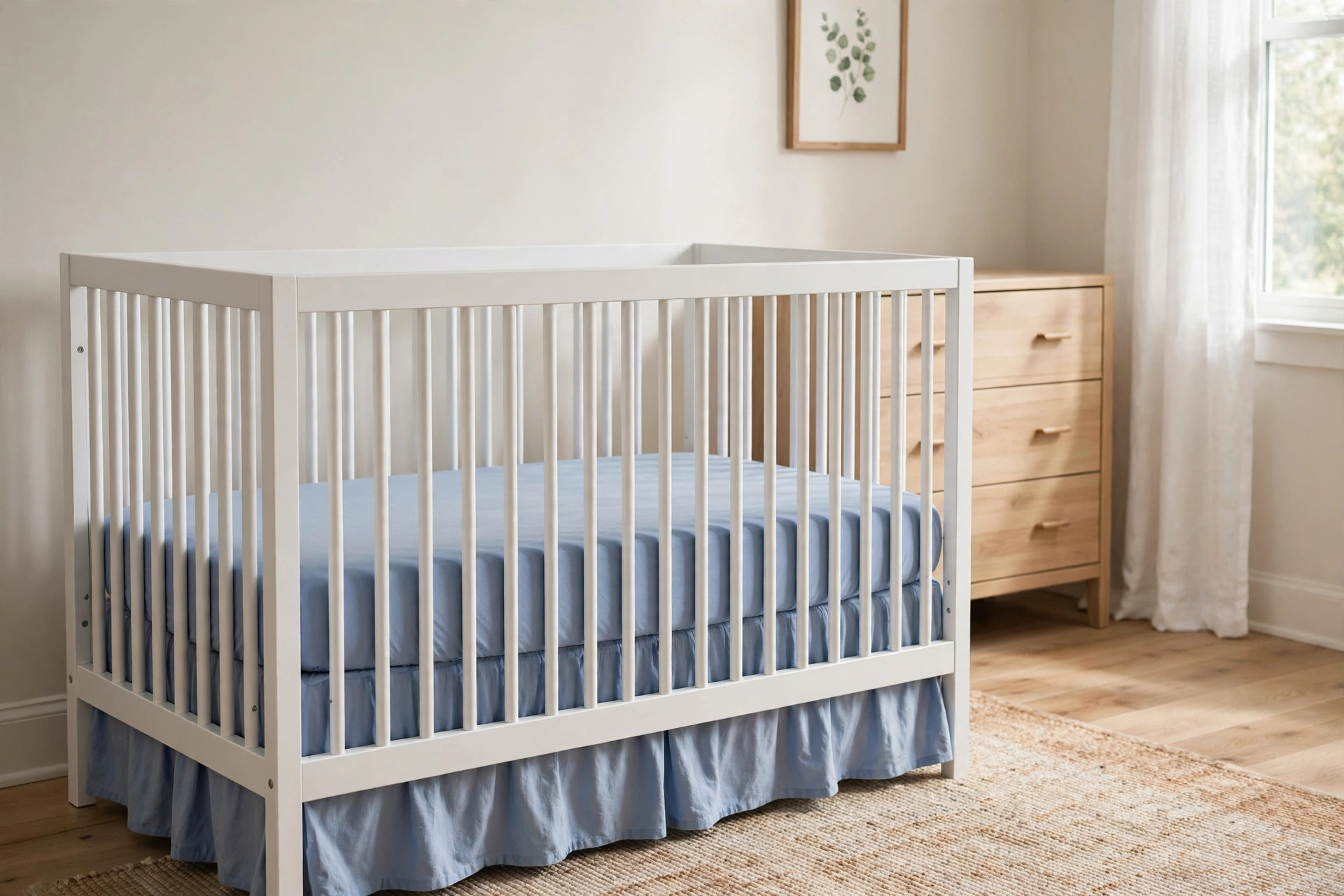

New parents often hear the phrase crib bedding bumper free safe sleep set and wonder what it means. The idea is simple. It is a set of crib bedding made for safe sleep, and it leaves out the bumper pads that older bedding sets once included. For many years, crib bumpers were sold as a standard part of baby bedding. Soft pads tied to the rails of the crib, meant to stop a baby from bumping a small head or arm against the wood. Today the advice from doctors and safety groups is clear: leave bumpers out of the crib. A safe sleep set follows that advice. It gives the nursery a soft, pretty look while keeping the crib free of extra items that can harm a baby.
Why Safe Sleep Matters
Each year in the United States, thousands of babies die in sleep-related incidents. Many of these deaths involve soft bedding, pillows, or crib bumpers. Studies reviewed by pediatric groups have linked bumpers to suffocation and to babies getting stuck between the bumper and the crib. The risk is real even with bumpers sold as “breathable.” Thin mesh liners were once offered as a safer choice, but experts now say that the safest crib is a bare one, with nothing but a firm mattress and a fitted sheet.
Safe sleep rules are easy to remember. Place the baby on the back for every sleep. Use a firm, flat mattress with a tight-fitting sheet. Keep blankets, pillows, stuffed animals, and bumpers out of the crib. Share the room with the baby for the first months, but not the bed. These steps lower the risk of sudden infant death and accidental suffocation. A crib bedding bumper free safe sleep set is built around these rules from the start, so parents do not have to guess which parts are safe.
What a Bumper-Free Safe Sleep Set Includes: Crib Bedding Bumper Free Safe Sleep Set
A typical bumper free set comes with three to five pieces. The main piece is the fitted crib sheet. It should fit a standard crib mattress snugly, with elastic all the way around so no loose fabric can bunch up. Many sets include two fitted sheets, which is a practical touch for night changes.
The second common piece is a crib skirt, also called a dust ruffle. It hangs from the mattress platform and hides the space under the crib. It sits outside the baby’s sleep area, so it adds style without risk.
Some sets add a wearable blanket or sleep sack instead of a quilt. This is a smart swap. A sleep sack keeps the baby warm without loose blankets in the crib. A few sets also include a small fitted changing-pad cover. The one thing a true safe sleep set never includes is a bumper, a quilt, or a pillow for the crib. If you see those items in the box, the set is not following safe sleep guidance, whatever its name may say.
How to Choose the Right Set
Start with fabric. Cotton and cotton blends are the most common choices. They feel soft, wash well, and let air move through. Muslin is light and airy, a good pick for warm rooms. For cool rooms, look for brushed cotton or flannel. Organic cotton is widely sold now and may matter to parents who want fewer chemicals on baby’s skin. Whatever you pick, the fabric should feel smooth and hold its shape after washing.
Check the fit before you buy. Standard crib mattresses in the United States measure about 52 inches long and 28 inches wide. The fitted sheet should grip the corners firmly with no slack. Read the size printed on the package and match it to your mattress depth. A sheet made for a thin mattress may ride up on a thick one.
Look at how the set closes. Avoid sheets with long ties, ribbons, or buttons inside the sleep area. Elastic edges are the safest closure. For sleep sacks, choose ones with a zipper that runs from top to bottom or with a two-way zipper for easy diaper changes.
Color and pattern matter less for safety, but they matter for your home. Light colors show stains early, which some parents like because it tells them when to wash. Darker prints hide small marks. If the nursery gets strong sun, know that bright prints can fade with many washings.
You may also find nursery pieces to match the set. A crib rail cover for teething protection padded can protect the wood from a teething baby without filling the crib with loose padding. Many parents also plan the rest of the room, and a best nursery chair for small living room pairs well with a simple safe sleep setup when the nursery shares space with the living area.
Types and Options
Bumper free sets come in a few common styles. The basic three-piece set holds two fitted sheets and one crib skirt. This is often the best value and all most families need.
The four-piece set usually adds a sleep sack or a fitted changing pad cover. The sleep sack version is worth the extra cost. It replaces the need for blankets, which safety groups advise against for babies under one year.
Some brands sell “build your own” sets, where you pick sheet prints and add pieces one by one. This route costs more but lets you match the room exactly. It also suits families who want organic fabric for the sheets that touch the baby’s skin.
For warmer climates, look for sets labeled for heat or summer use. These use thin muslin or percale cotton that breathe well. For winter, flannel sets hold warmth. No matter the season, never add extra blankets or quilts to the crib to make up for a thin sheet. Dress the baby in a sleep sack of the right warmth instead.
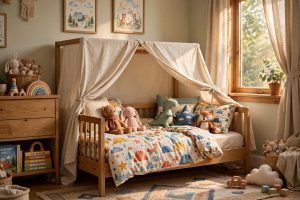
When the baby grows, the same rules carry over. If you move to a toddler bed with tent canopy for imagination, keep the sleep area just as simple: a firm mattress, a fitted sheet, and nothing loose around the child’s face.
Cost and Price
Prices for bumper free safe sleep sets cover a wide range. Basic cotton three-piece sets from large retailers often sell for fifteen to forty dollars. Mid-range sets with organic cotton or licensed prints run forty to eighty dollars. Premium sets from nursery brands can reach one hundred dollars or more, especially when a sleep sack is included.
Sleep sacks sold on their own cost about twenty to fifty dollars, based on fabric and warmth level. Crib skirts run ten to thirty dollars. Fitted sheets sold singly cost eight to twenty-five dollars each.
A few tips can keep costs down. Buy one full set plus two spare fitted sheets. Sheets need frequent washing, and spares save late-night trips to the laundry. Watch for sales at big baby retailers around holidays. And skip the fancy extras. A safe sleep set does not need a quilt, a pillow, or a bumper, so you save money by leaving them out.
Care and Upkeep
Wash all new bedding before the first use. Factory sizing and dust can irritate a baby’s skin, and one wash removes them. Use a mild, fragrance-free detergent made for babies or sensitive skin. Wash in warm water and rinse well.
Crib sheets need washing at least once a week, and sooner after spills or diaper leaks. Crib skirts wash far less often, once every month or two, since they sit outside the sleep area. Sleep sacks wash about as often as sheets.
Dry on medium or low heat. High heat can shrink cotton and wear out elastic faster. Check the elastic on fitted sheets every few months. When a sheet no longer grips the corners, replace it. A loose sheet is a safety problem, not just a neatness problem.
Store spare sheets folded in a dry place. Keep one full spare set ready so a night change takes two minutes. Throw out any sheet with torn elastic, holes, or frayed edges.
Safety Notes
Safety is the whole point of a bumper free set, so a few rules deserve repeating. Never put bumpers back into the crib, even if a grandparent or friend offers them. Old bumpers are not safer than new ones. Never add pillows, quilts, or stuffed animals to the crib. The bare-crib rule holds for naps and for night sleep alike.
Keep the crib away from windows. Blind cords are a known hazard, and cordless window coverings are the safer pick. Keep the crib away from shelves and wall hangings that could fall. Lower the mattress to its lowest setting as soon as the baby can pull up to stand.
Check for product recalls before you buy and now and then after. Safety groups keep public lists of recalled nursery items. If a set you own is recalled, stop using it at once and follow the maker’s instructions for a refund or fix.
Room temperature matters too. Keep the nursery between sixty-eight and seventy-two degrees Fahrenheit. Dress the baby in light sleep clothes and a sleep sack rather than piling on blankets. A baby who is too warm may sweat, so check the back of the neck; it should feel warm and dry, not hot and damp.
Frequently Asked Questions
Are crib bumpers really unsafe? Yes. Safety groups and pediatric doctors advise against all crib bumpers, including mesh liners. Bumpers have been linked to suffocation and to babies trapped between the bumper and the crib side. A bare crib is the safest place for a baby to sleep.
What should be in the crib instead? A firm, flat mattress with a tight fitted sheet is all the crib needs. For warmth, add a wearable blanket or sleep sack on the baby, not in the crib. Nothing else belongs inside.
Can I use a quilt or blanket for decoration? You can hang a quilt on the wall or drape it over a chair, but keep it out of the crib. Loose bedding in the crib raises the risk of suffocation for babies under one year.
How many fitted sheets do I need? Three fitted sheets are a good number for most families. One on the crib, one in the wash, and one spare. Buy more if laundry day is far off.
Do sleep sacks replace blankets? Yes. A sleep sack of the right warmth keeps the baby comfortable without loose fabric near the face. They come in light, medium, and warm weights for different seasons.
When can my child have a pillow or blanket? Most guidance says to wait until after the first birthday for a small pillow and until the child moves to a toddler bed for loose blankets. Ask your pediatrician for advice about your own child.
A Final Word
A crib bedding bumper free safe sleep set is a small purchase with a large job. It sets up the crib the safe way from day one, so parents never have to wonder which pieces belong and which do not. Pick soft, washable fabric, check the fit, skip the extras, and follow the simple rules of safe sleep. The nursery will still look warm and welcoming. More important, it will be a safe place for your baby to rest.
For more background, see IKEA, U.S. Consumer Product Safety Commission, and Wayfair. For more background, see Pottery Barn Kids, American Academy of Pediatrics, and The Spruce. See What to Expect for more detail. See also Target for further detail.
References
American Academy of Pediatrics. (n.d.). HealthyChildren.org. https://www.healthychildren.org IKEA. (n.d.). Home furnishings. https://www.ikea.com Pottery Barn Kids. (n.d.). Kids furniture and decor. https://www.potterybarnkids.com Target. (n.d.). Retail store. https://www.target.com The Spruce. (n.d.). Home and garden advice. https://www.thespruce.com U.S. Consumer Product Safety Commission. (n.d.). Product safety information. https://www.cpsc.gov Wayfair. (n.d.). Furniture and home goods. https://www.wayfair.com What to Expect. (n.d.). Pregnancy and parenting guidance. https://www.whattoexpect.com
Was this guide helpful?

About Michael Thompson
The My Garden US editorial team writes practical, in-depth home and garden guides for American homeowners — tested advice, no fluff.
You May Also Like
Nursery Bookcase Narrow for Small Corner: A Practical Guide
July 29, 2026 0 views
Best Nursery Storage for Small Apartment Living
January 18, 2026 0 views
Crib Sheet Saver for Quick Diaper Changes: A Parent Guide
June 29, 2026 0 views