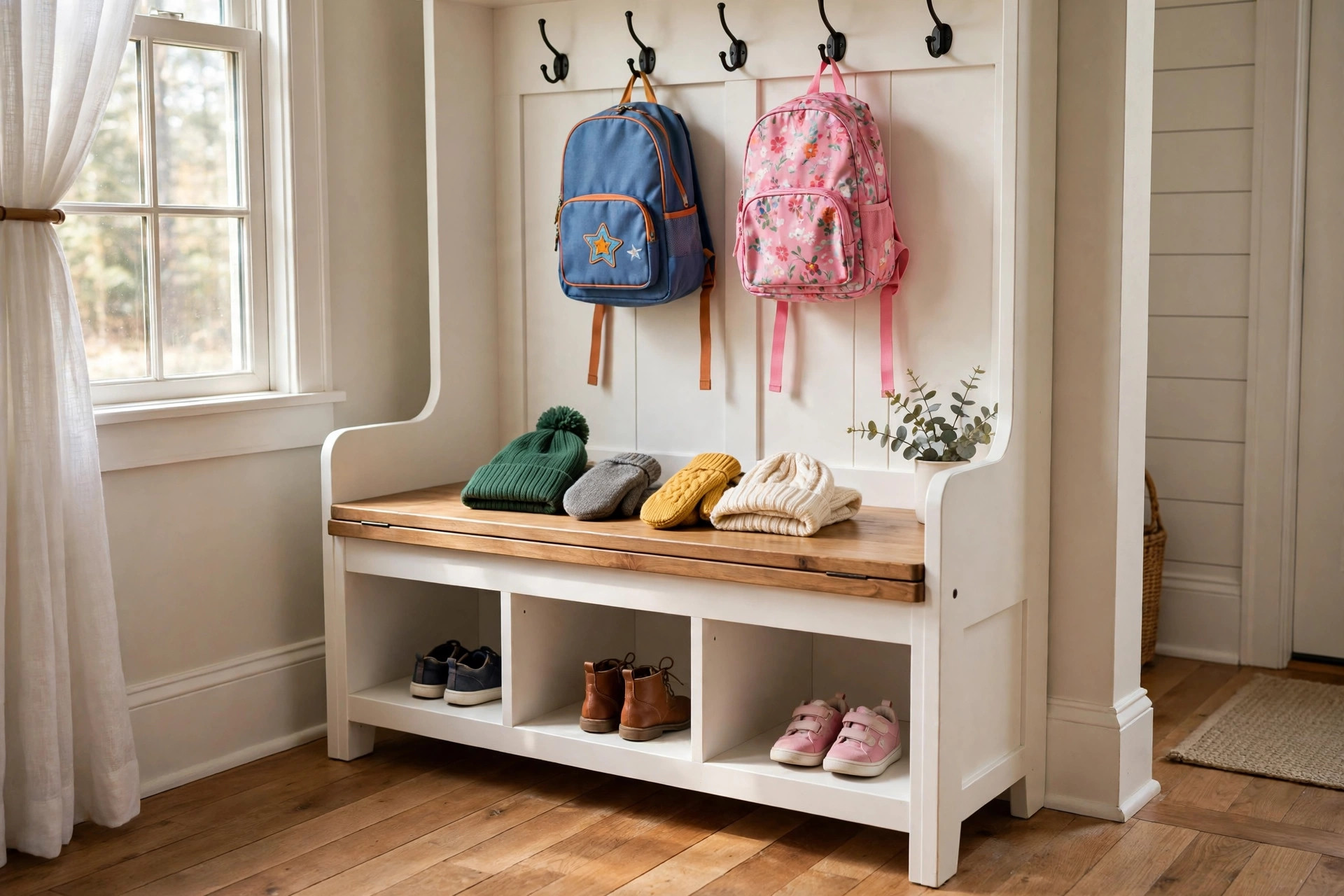

An entryway mudroom can turn into a mess fast. Coats drop on the floor. Shoes pile by the door. Backpacks block the path. The best kids storage bench for entryway mudroom spaces fixes this problem. It gives children one spot to sit, store, and organize their things. This guide explains what to look for, how much to spend, and how to keep it safe.
Why a Kids Storage Bench Matters in a Mudroom
A mudroom is the busiest small room in many homes. Every family member passes through it each day. Children are the biggest source of clutter. They arrive home from school and shed layers as they walk.
A storage bench solves three problems at once. First, it gives a place to sit. Small children need a low seat to take off boots. Second, it hides storage. Shoes, hats, and gloves go inside the bench, out of sight. Third, it teaches order. Each child can have their own cubby or bin.
A mudroom without a bench feels crowded. Coats fall off hooks. Shoes spread across the floor. The room looks worse and works worse. A bench changes that. It anchors the room and sets the tone for the whole entryway.
What to Look for When You Shop: Best Kids Storage Bench for Entryway Mudroom
Shopping for the best kids storage bench for entryway mudroom use starts with size. Measure your wall space before you buy. Most benches run 30 to 48 inches wide. Allow at least 18 inches of depth for the bench plus legroom in front.
Height and Fit for Children
The seat height matters most. For children ages two to six, a seat 12 to 14 inches high works well. Older children up to age ten can use seats 14 to 18 inches high. A bench that is too tall makes small children climb. A bench that is too short forces older kids to bend.
Test the reach too. Open the storage lid or pull out a bin. Make sure your child can reach every part without strain.
Storage Style: Cubbies, Bins, or Lift Top
Storage benches come in three main styles. Each has its own strengths.
Open cubbies give each child a square slot. Shoes slide in. Bags sit on top. Cubbies are easy to clean and easy to see into. They also collect dust, so wipe them often.
Removable bins add flexibility. Each child gets a labeled bin. Pull the bin out to pack for a trip or to tidy fast. Bins work well when you want to hide the clutter.
Lift-top benches hide a deep storage space under the seat. They hold bulky items like winter boots and sports gear. They cost more but store more.
Many families pair the bench with other storage pieces. A kids bookshelf with bins for toy storage nearby can hold indoor shoes and seasonal items.
Material and Build Quality
Solid wood costs more but lasts longer. Pine and rubberwood are common in kids furniture. Engineered wood, such as MDF, costs less and comes in many finishes. Look for thick panels and smooth edges. Avoid sharp corners near small children.
Check the hardware. Hinges should move freely without pinching fingers. Soft-close hinges are a smart extra. They slow the lid so it never slams. Screws should sit flush, not stick out.
Weight capacity tells you how strong the bench is. Most kids benches hold 150 to 250 pounds. That covers one or two children sitting at once. If adults will sit on it too, choose a higher rating.
Types of Kids Storage Benches
Wooden Bench With Cubbies
This is the classic choice. A wooden frame holds two to four open cubbies under a flat seat. It fits farmhouse, traditional, and modern rooms. Wood looks warm and ages well. It also scratches, so add felt pads to shoes if marks bother you.
Hall Tree Bench Combo
A hall tree adds a back panel with hooks above the bench. Coats hang on the hooks. Storage sits below. This combo uses vertical space well. It suits narrow mudrooms that lack wall space for a separate coat rack. The tall back needs wall anchoring for safety.
Upholstered Storage Bench
An upholstered bench has a padded seat. It feels soft and looks like real furniture. The padding adds comfort but also stains. Choose a washable cover if you have young children. These benches fit entryways that open straight into the living room.
Plastic or Wicker Bench
Plastic benches resist water and clean fast. They suit muddy garages and busy families. Wicker and woven benches look light and airy. They dent less than wood. They also hold less weight, so check the rating.
Double Duty: Bench With Shoe Shelf
Some benches add a low shoe shelf under the cubbies. Boots and sneakers sit there. This keeps wet shoes off the wood. It adds one more step to daily clean up, but it keeps the floor clear.
Cost and Price: What to Expect
Prices vary by size, material, and brand. Here is a rough guide based on common retail prices.
Simple small benches start around 60 to 120 dollars. These are compact, with one or two cubbies. They suit apartments and small entryways.
Mid-range benches cost 120 to 250 dollars. You get solid wood or good engineered wood, soft-close hinges, and two to four cubbies. This is the sweet spot for most families.
Large hall tree combos run 250 to 500 dollars or more. The price rises with height, material, and finish quality. Custom-built benches cost even more.
Do not forget add-ons. Baskets or bins cost 10 to 25 dollars each. Wall anchors cost a few dollars. A seat cushion runs 20 to 50 dollars. Plan for these extras in your budget.
Watch for sales at big home stores. Prices often drop during back-to-school season and spring cleaning events. Reading honest reviews helps too. Many shoppers post photos that show real colors and wear.
Setting Up Your Mudroom Bench
Measure Twice
Write down your measurements. Width of the wall. Depth of the space. Height to the nearest shelf or hook. Bring these numbers when you shop. A bench that is one inch too wide can ruin the plan.
Anchor It to the Wall
Tall and narrow benches can tip. Anchor every bench to a wall stud with the hardware that comes in the box. This is the single most important safety step. It takes ten minutes and prevents accidents.
Give Each Child a Zone
Label each cubby or bin with a name. Use hooks above each spot for coats and bags. When children know their zone, they use it. Clean up time drops. Fights over space drop too.
Keep It Light and Simple
Resist the urge to fill every inch. Leave one open spot for guests or growth. Rotate seasonal gear in and out. Store heavy winter items in summer and light rain gear in winter.
If the bench shares space with a bedroom storage piece, match the style for a calm look. A best kids bed with storage drawers underneath can use the same bins as the mudroom bench.
Care and Upkeep
Wipe the bench weekly with a damp cloth. Dust gathers in cubbies fast. Use mild soap on sticky spots. Dry wood after wiping so it never stays wet.
Check hardware every few months. Tighten loose screws. Oil squeaky hinges with a drop of mineral oil. Replace worn felt pads on feet.
For upholstered seats, vacuum the fabric monthly. Treat stains at once with a damp cloth and mild cleaner. Keep a washable cover on hand for muddy seasons.
Rotate the bins when they crack. Plastic bins wear at the handles first. Replace them before they break and drop items.
Teach children to close lids gently. Soft-close hinges help, but habits matter more. A bench cared for well can last ten years or more.
Safety Tips for Families
Safety comes first with any kids furniture. Follow these steps to keep your mudroom safe.
First, always anchor the bench to the wall. Children climb. A free-standing bench can tip when a child pulls on it or sits on the edge.
Second, watch for pinch points. Lift-top lids and folding parts can trap small fingers. Soft-close hinges lower the risk. Teach children to keep fingers clear of edges.
Third, check for sharp edges and splinters. Run your hand along every edge before your child uses the bench. Sand rough spots smooth.
Fourth, mind the weight limit. Do not let three children sit on a bench rated for two. Overloading bends frames and breaks joints over time.
Fifth, keep cleaning products out of reach. Many families store supplies in a low bench. Move chemicals to a high locked cabinet instead.
Safety rules for children’s products are set by the government. You can read the official guidance on the CPSC website before you buy.
How This Bench Fits a Growing Family
Children grow fast. A bench bought for a toddler may feel small by age eight. Plan ahead when you shop.
Look for benches with adjustable or roomy storage. Cubbies that hold toddler shoes now can hold sports gear later. Bins can be swapped for larger baskets as needs change.
Match the bench to the room’s life. A family with one baby needs diaper bag space. A family with three school kids needs hooks for three backpacks. A family with teens needs room for boots and gym bags.
You may also move the bench as the family changes. A kids bench can later serve the hallway, the garage, or a guest room. Wooden benches adapt to many rooms. Paint it a new color and it looks fresh.
Some parents pair the mudroom bench with a closet system for small clothes and gear. A nursery closet organizer for baby clothes uses the same bin logic in a different room.
Common Mistakes to Avoid
Many shoppers pick the wrong size. They guess the wall space and order a bench that blocks a door. Measure first.
Many ignore the seat height. A bench that looks right can feel wrong for a three-year-old. Check the height in the product specs.
Many skip the wall anchor. The bracket sits in the box, unused. Do not skip it. It protects your child.
Many overload the bench. The top becomes a shelf for plants and frames. The bench turns into a catch-all. Keep the top clear for sitting.
Many forget lighting. A dark corner stays messy. Add a small lamp or battery light so children can see their cubby.
Where to Find Good Options
Home stores carry a wide range of kids benches. You can compare finishes side by side. Big retailers also list customer reviews with photos. These reviews show how the bench looks in real homes.
Online furniture stores often sell styles that stores do not stock. Read the full dimensions before you order. Check the return policy too. A bench is hard to ship back.
Kids furniture brands offer designs made for small children. These often have rounded edges and bright colors. Compare prices across stores before you decide.
You can also look at secondhand shops. Solid wood benches hold up well over time. Check joints and hardware before you buy used. A fresh coat of paint can make an old bench look new.
FAQ
How wide should a kids storage bench be for two children? A bench 36 to 42 inches wide gives two children about 18 to 21 inches each. That is enough for a seat plus a cubby or bin. For three children, look at 48 inches or more.
What is better, a lift top or open cubbies? Open cubbies suit young children. They are simple and easy to reach. Lift tops suit older kids and teens. They hide large gear like boots and sports bags. Many families mix both styles in one mudroom.
Can adults sit on a kids storage bench? It depends on the weight rating. Many kids benches hold 150 to 250 pounds, so one adult can sit briefly. Check the product specs. A higher rating is safer for daily use by grownups.
How do I keep a mudroom bench from looking messy? Give each child a labeled bin. Limit each zone to a few items. Wipe the bench weekly. Leave the seat clear so it invites sitting, not stacking.
Is a bench with hooks safe for small children? Yes, if it is anchored and hooks are low. Place hooks at child height so little arms do not reach over their heads. Use rounded hook ends. Never hang heavy bags on hooks rated for light use.
Do I need to assemble the bench myself? Most benches need assembly. Expect 30 to 60 minutes with basic tools. Two people make the job easier. Read the manual first. Keep the wall anchor parts until the end.
A Short Final Word
The best kids storage bench for entryway mudroom spaces is the one your family will actually use. It should fit your wall, suit your children’s ages, and hold the gear you own. Measure first. Anchor it to the wall. Give each child a zone. Keep it simple.
A good bench brings calm to the busiest room in the house. Shoes find their home. Coats hang in place. Mornings run smoother. That is worth the price and the small effort to set it up.
For more background, see Wayfair, Pottery Barn Kids, and American Academy of Pediatrics. Buying guides are also published by The Spruce and IKEA. See also Target for further detail.
References
American Academy of Pediatrics. (n.d.). HealthyChildren.org. https://www.healthychildren.org IKEA. (n.d.). Home furnishings. https://www.ikea.com Pottery Barn Kids. (n.d.). Kids furniture and decor. https://www.potterybarnkids.com Target. (n.d.). Retail store. https://www.target.com The Spruce. (n.d.). Home and garden advice. https://www.thespruce.com U.S. Consumer Product Safety Commission. (n.d.). Product safety information. https://www.cpsc.gov Wayfair. (n.d.). Furniture and home goods. https://www.wayfair.com What to Expect. (n.d.). Pregnancy and parenting guidance. https://www.whattoexpect.com
Was this guide helpful?

About Michael Thompson
The My Garden US editorial team writes practical, in-depth home and garden guides for American homeowners — tested advice, no fluff.
You May Also Like

Nursery Glider Replacement Cushions for Comfort: A Parent’s Guide
May 7, 2026 0 views
How to Choose a Crib Mobile Arm for Attaching to Crib
May 10, 2026 0 views
Kids Room Divider Curtain for Shared Bedroom: A Parent’s Guide
July 13, 2026 0 views