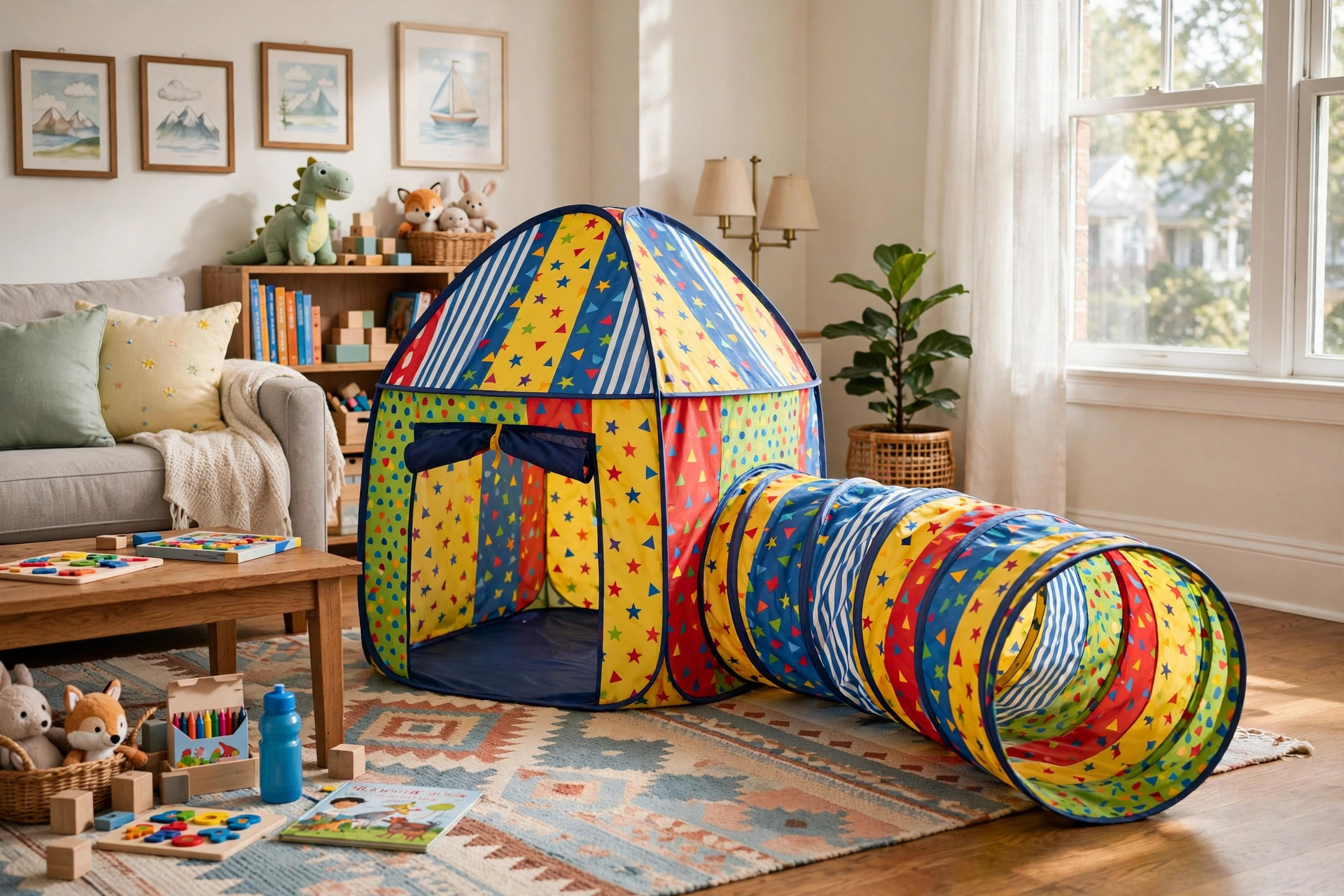

A kids play tent with tunnel for indoor fun can turn a dull afternoon into a small adventure. Rain may fall outside. Cold may keep the family indoors. Yet children still need to move, to climb, and to play. This simple toy gives them a tent to hide in and a tunnel to crawl through. It costs little. It folds flat when the day is done. Parents in small apartments and large houses both find room for it.
Why It Matters
Children learn through play. A tent and tunnel set gives them a place to build a fort, run an errand route, or host a quiet reading spot. Crawling through a tunnel builds arm and leg strength. It also helps balance. These are simple skills that matter a great deal at a young age.
The tent gives a child a small space of their own. Many young children like a cozy corner. It feels safe. It calms them when the house feels busy. The tunnel adds motion. Children crawl in one side and come out the other. They laugh. They crawl again. This loop keeps them active without a screen.
Pediatric health groups note that young children should be active through the day. Indoor toys that invite movement help on days when the weather keeps everyone inside. A kids play tent with tunnel for indoor fun meets that need in a plain and honest way.
How to Choose the Right Set: Kids Play Tent with Tunnel for Indoor Fun
Not all tent and tunnel sets are the same. The best choice depends on the age of your child, the size of your room, and your budget. Take time to read the details before you buy.
What to Look for in the Fabric
Most sets use light polyester cloth. It should feel smooth, not rough. Check that the seams are sewn cleanly. Loose threads can snag small fingers. A darker color hides dirt. A lighter color brightens a room. Both work fine.
Breathability matters. Children sit and play inside for long stretches. The tent should have mesh windows or open panels. Fresh air should flow through. If the maker lists the fabric as machine washable, that is a plus. If not, choose one you can wipe clean with a damp cloth.
What to Look for in the Frame
Most tents use thin steel wire or fiberglass rods. The wire should be covered well by the fabric sleeve. No wire end should poke through. Test the joints when you first open the box. The frame should snap open with ease and hold its shape.
The tunnel often has a spring-style coil. It should fold flat but spring back into a round tube. Look for tunnels with padded edges at each opening. These protect heads and hands as children crawl in and out.
Types and Options
Shoppers will find a few common styles. Each has its own strengths.
Pop-Up Tent and Tunnel Sets
This is the most common type. The tent pops open in seconds. The tunnel attaches with ties or Velcro straps. The set works well for toddlers and preschoolers. It folds into a small round bag for storage. Families with little closet space like this type.
Larger Tunnel Play Systems
Some sets link two tents with a long tunnel in the middle. Children crawl from one hideout to the other. This style suits homes with a large living room or basement play area. It also works well when two or three children play together. The extra space means less crowding.
Themed Sets
Themed sets print fun scenes on the fabric. A circus tent, a fire station, or a castle can spark hours of pretend play. Children who love stories may enjoy these most. Plain sets work just as well and match any room decor.
If you are building a full play corner, you may also like a kids play kitchen set for pretend cooking. It pairs well with a tent and gives children another world to explore.
Cost and Price
Prices range from about twenty dollars to over one hundred. A basic pop-up tent with tunnel for indoor play often costs between twenty and forty dollars. These sets last through a year or two of hard use. They suit toddlers who will outgrow them soon.
Mid-range sets cost between forty and seventy dollars. The fabric is thicker. The frames feel sturdier. The tunnels are often longer. Many of these come with carry bags and extra parts.
High-end sets pass one hundred dollars. They may include ball pits, extra tents, or licensed themes. They make good gifts for birthdays or holidays. For most families, the mid-range sets offer the best value.
Watch for sales during holiday seasons. Large retailers often cut prices on play toys in the fall and spring. You can compare current prices on Walmart before you buy. Reading reviews from other parents also helps you judge real quality.
Setting Up and Using the Tent
Setup takes only a few minutes. Take the tent out of its bag. Shake it gently. The frame will pop into shape. Tie or strap the tunnel to the tent opening. Place the set on a rug or carpet if you can. A soft surface makes crawling more comfortable.
Give children time to explore on their own terms. Some rush right in. Others watch for a while first. Both are normal. You can join the game by calling through the tunnel or waiting at the other end. The game is simple, and that is the point.
Rotate the toys around the tent to keep play fresh. Put books in the tent one day. Add stuffed animals the next. A small flashlight can turn the tent into a cave. These little changes keep a toddler play tent indoor routine feeling new.
Care and Upkeep
Regular care keeps the set safe and clean. Shake out crumbs once a week. Children often bring snacks into their tents. Wipe the fabric with a damp cloth and mild soap when it looks dirty. Let it air dry fully before folding it away. Trapped dampness can cause a musty smell.
Check the frame each month. Look for bent wire, torn sleeves, or broken straps. A bent frame may poke through the fabric. Fix small tears with fabric tape right away. If a spring coil breaks, stop using the tunnel until you repair or replace it.
Store the set in its bag when not in use. Keep it in a dry closet or under a bed. Folding takes practice. Follow the twist-fold steps on the bag. Most adults learn the fold after two or three tries.
Stores such as IKEA and Wayfair offer storage boxes that fit folded tents well. A simple basket near the play area also works.
Game Ideas to Try at Home
A tent and tunnel set stays fun longer when parents suggest new games. Children love a fresh idea. You do not need extra toys. A few simple games can fill a whole afternoon.
The Mail Run
Ask your child to carry a soft toy through the tunnel and deliver it to the tent. The tent is the post office. The child is the mail carrier. Name each delivery. “One package for Bear.” The child crawls back for the next one. This game builds memory and gives crawling a purpose. Older siblings can write small notes to deliver.
The Quiet Cave
Some days call for calm. Put a few books and a soft blanket in the tent. Hang a small night light inside if the set allows it. Tell your child the tent is a quiet cave. Many children enjoy reading in a small space. It feels like a secret spot. This works well before nap time or bedtime. Keep the tunnel open so the child can come and go with ease.
The Color Hunt
Place colored blocks or soft toys around the room. Call out a color. Your child crawls through the tunnel, finds the right toy, and brings it back to the tent. This game teaches colors and keeps legs moving. It works well for two children taking turns.
The Flashlight Trail
Turn down the room lights in the evening. Give your child a small flashlight. They shine it through the tunnel and crawl toward the light. An adult can wait at the far end with a stuffed animal. The game feels like a real adventure. Keep the room free of clutter so the child can move with care.
Vary the games through the week. Monday can be the mail run. Wednesday can be the quiet cave. Children look forward to the pattern. A kids play tent with tunnel for indoor fun grows more valuable as you use it in new ways.
Safety Comes First
Safety rules are simple but important. Follow the age guide on the box. Most sets suit children from three years up, though some are made for younger toddlers with adult watch. Never leave a baby alone inside a tent.
Watch for small parts. Ball pits and connector clips should be large enough that a child cannot swallow them. Check the tunnel each time you set it up. Make sure it lies flat on the floor with no twists.
Keep the tent away from stairs, heaters, and sharp furniture edges. Children get excited and run. A clear space around the set prevents bumps and falls.
The United States safety agency offers clear guides on toy safety for young children. Parents can review current advice on the CPSC website before buying any new play toy. The HealthyChildren.org site from pediatricians also shares tips on safe play at home.
If you want ideas for quiet time after active play, a toddler reading nook canopy tent for bedroom can make a calm corner for books.
Frequently Asked Questions
What age is right for a kids play tent with tunnel for indoor fun?
Most sets are made for ages three and up. Some toddler sets start at eighteen months. Always read the label. Younger children need an adult close by during play.
Can my toddler use the tunnel without help?
Toddlers can crawl through short tunnels on their own once they crawl well. Stay nearby for the first few uses. Make sure the tunnel is straight and stable before each use.
How much floor space do I need?
A basic set needs about six feet by six feet. Larger linked sets may need ten feet or more. Measure your room first. Many families set up the tent in the living room and fold it away each night.
Can I wash the tent fabric?
Many sets are spot-clean only. Some list machine washable fabric. Read the care tag. When in doubt, wipe with a damp cloth and mild soap, then air dry.
Is it safe for babies under one year?
Most makers advise against it for babies. Small parts, fabric folds, and frame wires pose risks for infants. Wait until your child can sit and crawl with ease.
How do I stop the tent from sliding on hard floors?
Place a rug or mat under the set. You can also find non-slip mats at The Home Depot. Keep the floor dry and clean so the tent sits flat.
Choosing Colors and Themes
Color choice matters more than it seems. Bright colors excite toddlers. Soft colors calm them. Many parents match the tent to the playroom. A teepee style looks nice in a nursery. If you like that look, see the kids teepee tent for indoor playroom decor guide for ideas.
Themed prints can spark story play. A fire truck tent turns a child into a hero. A space tent turns a child into an explorer. Plain tents work well too. They let a child invent their own stories without a script.
Shops like Pottery Barn Kids carry themed nursery and play items that match well. Step2 and Little Tikes are known for sturdy play toys for young children. Lakeshore Learning offers play items that many preschools trust.
A Final Word
A kids play tent with tunnel for indoor fun is a simple gift with real value. It gives children motion on rainy days. It gives them a private corner when the house feels loud. It costs little and stores flat. Choose a safe set, keep it clean, and join the game now and then. The tunnel will ring with laughter for a long time.
For more guidance on play and early learning, visit What to Expect. Their parenting guides cover toys, milestones, and daily routines for young children.
References
American Academy of Pediatrics. (n.d.). HealthyChildren.org. https://www.healthychildren.org IKEA. (n.d.). Home furnishings. https://www.ikea.com Lakeshore Learning. (n.d.). Educational toys and classroom materials. https://www.lakeshorelearning.com Little Tikes. (n.d.). Toys for toddlers and young children. https://www.littletikes.com Pottery Barn Kids. (n.d.). Kids furniture and decor. https://www.potterybarnkids.com Step2. (n.d.). Play toys and kids outdoor products. https://www.step2.com The Home Depot. (n.d.). Home improvement products. https://www.homedepot.com U.S. Consumer Product Safety Commission. (n.d.). Product safety information. https://www.cpsc.gov Walmart. (n.d.). Everyday low prices. https://www.walmart.com Wayfair. (n.d.). Furniture and home goods. https://www.wayfair.com What to Expect. (n.d.). Pregnancy and parenting guidance. https://www.whattoexpect.com
Was this guide helpful?

About Emily Rodriguez
The My Garden US editorial team writes practical, in-depth home and garden guides for American homeowners — tested advice, no fluff.
You May Also Like
The Best Kids Bed With Storage Drawers Underneath: A Simple Buying Guide
July 30, 2026 0 views
Best Kids Chair for Gaming and Homework: A Complete Guide
January 11, 2026 0 views
Nursery Dresser Changing Table Combo for Small Space
April 10, 2026 0 views