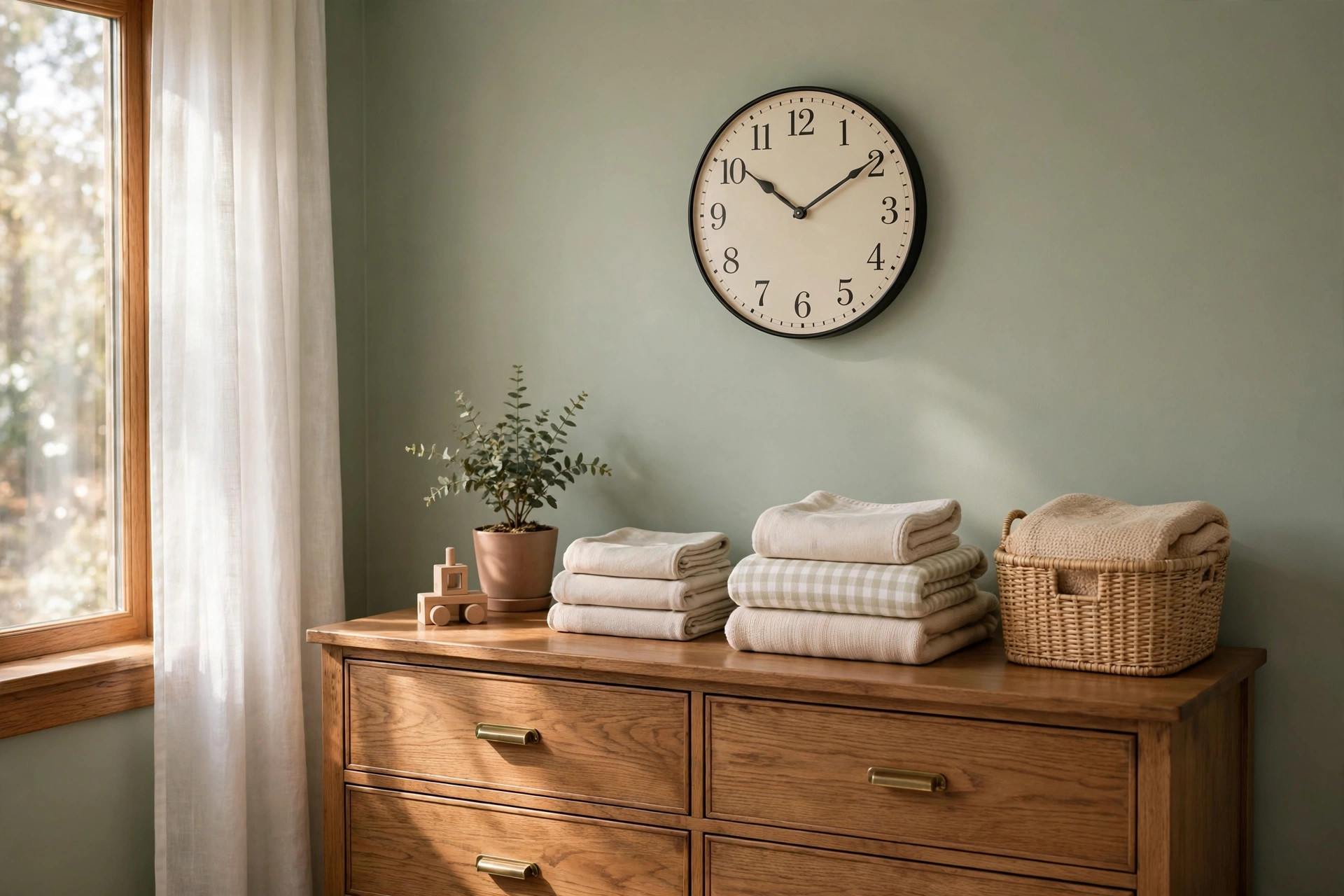

A nursery wall clock silent for baby sleep is one of those small buys that makes a big change in a tired home. A baby needs a room that feels calm at rest time. Light noise, hard light, and bright color can all wake a child. The steady tick of a cheap clock is one more sound in the room. Many parents do not notice it until the baby is down and the house is still. Then each tick sounds loud in the hall.
A silent wall clock fixes this one worry. It still shows the time. It still looks nice on the wall. It just moves without the tick. When the room is set for sleep, you want as few sounds as possible. A good silent clock gives you the hour without adding to the noise.
This guide walks through why a silent clock matters, what to look for when you shop, the main types on the shelf, what they cost, and how to keep one running well. It also covers safe hanging and answers the questions parents ask most.
Why a Silent Clock Matters in the Nursery
Babies sleep light. In the first months a baby can wake at small sounds that an adult would not hear. A ticking clock sits close to the crib in many rooms. Its sound does not stop. Over a two-hour nap that is thousands of ticks. Some babies sleep through it. Many do not.
There is also the parent to think of. Night feeds are long and hard. A parent sits in a dim chair at two in the morning with a clock ticking in the dark. The sound can feel sharp when you are tired. It can make it harder to rest when the baby is back down. A nursery wall clock that runs silent takes this stress away.
A silent clock also helps with sleep training. Older babies learn day from night by habit. The room goes dark, the sounds drop, and the clock shows that rest time is here. Parents use the clock to keep feed times even without looking at a bright phone. A phone screen throws light in the room. A wall clock does not. It is a calm way to check the hour.
Many moms and dads add a silent clock when they build the full room. It hangs above the dresser or close to the rocker, and becomes part of the room’s rest routine.
What to Look for When You Choose One: Nursery Wall Clock Silent for Baby Sleep
Shopping for a nursery wall clock silent for baby sleep is simple once you know the marks of a good one. Keep these points in mind.
The Movement
The movement is the part inside that moves the hands. Look for a label that says “silent sweep,” “no tick,” or “continuous sweep.” These words mean the second hand glides around the face instead of jumping once per second. The jump is what makes the tick sound. A sweep movement is near silent. This is the single most key point in the whole buy.
Be wary of clocks that say “quiet” but do not say “silent sweep.” Some are only a bit softer than a ticking clock. Read the box and, if you shop online, read the reviews with care. Parents will tell you fast if a clock still ticks.
The Sound Test
If you buy in a store, hold the clock to your ear. A true silent clock makes almost no sound. You may hear a very soft hum if you press it to your ear in a dead-quiet shop. That is fine. In the nursery you will stand feet away, and the room has its own soft sounds. A soft hum at arm’s length is not the same as a tick heard across the room.
Size and Readability
Nursery clocks are often small, eight to twelve inches wide. A small clock reads fine from the rocking chair. Large numbers help in dim light. Dark hands on a light face are the easiest to read. Avoid faces with too much art over the numbers. At 3 a.m. you want the time at a glance.
The Frame and the Face
Wood, plastic, or metal all work. Wood fits a warm room. Plastic is light and easy to hang. Metal suits a modern room. The face should be plain and calm. Soft whites, creams, pastels, and light gray keep the room restful. Bright red or neon faces can feel loud even when the clock is silent.
Battery Life
Most silent clocks take one AA battery and run for a year or more. Check that the battery door closes tight. In a nursery you do not want small parts loose where a toddler can reach them later.
A Nightlight or Glow Feature
Some nursery clocks glow softly in the dark. This can help a parent check the time without a lamp. But a glow that is too bright works against sleep. If you pick a glow clock, make sure the light is very soft and warm, or one you can switch off. A soft glow face can also serve as a tiny comfort light for a child who wakes in the dark.
Types of Silent Nursery Clocks
Shops carry a few main kinds. Each has its own strong points.
Classic Round Analog
The classic round clock with numbers and hands is the most common pick. It runs on a silent sweep movement, costs little, and fits any wall. Parents like it because it is easy to read and easy to replace. It hangs on one nail and needs one battery. For most rooms this is the right choice.
Woodland and Animal Designs
Many nursery decor shops sell clocks shaped like bears, owls, moons, and stars. Many of these have silent movements. They double as decor and match the room theme. The shape can be fun for an older child. Check the size before you buy. Some shaped clocks are small and hard to read from across the room. Make sure the movement is truly silent, since some gift-style clocks tick.
Modern Minimal Faces
These clocks have no numbers, just dots or lines for the hours. They look clean and calm on the wall. They suit parents who want the nursery to feel grown-up and quiet. The lack of numbers can make night reading harder, so think about who will use the clock most. If grandma helps with night feeds, clear numbers may serve better.
Digital Silent Clocks
A digital clock shows the numbers with no hands at all, so there is no tick by design. The catch is light. Look for one with a dimmer or a face that only lights when you tap it. Keep it away from the crib so the light does not reach the baby’s eyes.
Clock and Sound Machine in One
A few baby products pair a clock with white noise or lullabies. These can be handy in a small room. But they add cost and add one more cord or battery to manage. Many parents find a plain silent clock plus a separate sound machine is simpler and easier to replace if one breaks.
Cost and Price
A nursery wall clock silent for baby sleep is a low-cost buy. Here is what to expect.
Basic silent clocks from big stores and online sellers run about eight to twenty dollars. These are simple round faces with silent sweep movements. They do the job well. A mid-range clock with a nicer frame or a soft glow face runs about twenty to forty dollars. Designer nursery clocks from baby boutiques can run forty to eighty dollars or more.
Price does not always track silence. A ten-dollar clock with a true silent sweep movement beats a fifty-dollar clock that only claims to be quiet. Read reviews and check the movement type before you pay more. A low-cost nursery clock from a trusted retailer is often all a family needs.
Batteries add a small yearly cost. One AA battery per year is the norm. Keep a spare in the drawer so a dead clock does not leave you guessing at night.
Where to Hang the Clock
Placement matters as much as the clock itself. A good spot is on the wall near the nursing chair or rocker, at a height where a seated parent can read it. This keeps the clock useful without putting it over the crib.
Do not hang a clock directly above the crib. Safety groups advise that nothing heavy should hang over a baby’s sleep space. A clock can fall. Hang it on a side wall instead. Make sure the hook or nail is set firm in the wall, and use a wall anchor if the wall is drywall.
Keep the clock out of a toddler’s reach as the baby grows. A clock at toddler height will be pulled, spun, and tested. Hang it high enough that small hands cannot grab it. This also keeps the battery door out of reach.
Think about light too. A clock face near a window may catch glare in the day. A spot on an inside wall reads well at all hours. If the clock has a glow face, keep it where the soft light will not shine on the baby.
When you set up the room, plan the clock with the other wall pieces, like a nursery wall shelf for books and decor and your wall art. A clock hung too close to a busy shelf looks crowded. Give it its own patch of wall.
Care and Upkeep
A silent clock needs little care, but a few habits keep it running true.
Dust the face once a month with a soft dry cloth. Dust on the hands can slow an old movement. Wipe the frame with a damp cloth if it gets marked. Do not spray cleaner straight on the face. Spray the cloth first.
Change the battery once a year, even if the clock still runs. A weak battery can make the hands drag and lose time. Mark the date on a bit of tape on the back so you know when it is due. Use a fresh brand-name battery rather than an old one from a drawer.
If the second hand starts to stutter or tick, the movement may be wearing out or the battery may be low. Try a new battery first. If the tick stays, it is time for a new clock. Movements are cheap to replace on some models, but most parents just buy a new clock.
Keep the clock away from heat vents and damp spots. Heat can warp a plastic face. Damp can rust a metal movement. A nursery should be neither hot nor damp anyway, so this is rarely a problem.
As the room changes, the clock can move with it. When the baby outgrows the nursery, the same silent clock works in a kids bookshelf corner unit for small bedroom area or a playroom. A good silent clock lasts for years.
Safety Notes for the Nursery
A wall clock is a simple thing, but in a baby’s room every item on the wall deserves a safety check.
Hang the clock with a proper hook, not a bit of tape or a weak sticky strip. Clocks fall when sticky strips age. A falling clock can hit a child or break into sharp bits. Use a nail or screw in a stud, or a rated wall anchor.
Check the battery door. Small round batteries are a choke risk. The door should screw shut or snap tight. If the door is loose, tape it or replace the clock. Child health experts warn that button batteries can cause grave harm if swallowed, so keep spares locked away too.
Pick a clock with a shatter-safe face if you can. Glass faces can break into sharp shards. Many nursery clocks use clear plastic instead. Plastic is lighter and safer if the clock ever falls.
Keep cords away. Most silent clocks are battery run, which is best for a nursery. If you pick a plug-in digital clock, run the cord behind furniture and out of reach. Loose cords near a crib are a known hazard.
Re-check the hang once or twice a year. Walls shift, hooks loosen, and toddlers test everything. A quick tug test takes ten seconds.
Parents setting up the full room often pair the clock with storage pieces like a nursery hamper for dirty baby clothes. The same safety rules apply to all of it: anchor tall pieces, keep small parts out of reach, and re-check as the child grows.
Frequently Asked Questions
Do silent nursery clocks really make no sound at all?
Almost. A true silent sweep clock makes no tick. If you press your ear to it in a dead-quiet room you may hear a very faint hum from the motor. At normal room distance you will not hear it. This is as silent as a wall clock gets, and it is silent enough for baby sleep.
What is the difference between “silent” and “quiet” on the box?
“Silent” or “silent sweep” means the second hand moves in a smooth glide with no tick. “Quiet” is a soft claim with no fixed meaning. A clock marked only “quiet” may still tick, just more softly. For a nursery, buy only a clock that says silent sweep or no tick.
Where is the best place to hang a nursery wall clock?
On a side wall near the nursing chair, at seated eye height, and never directly over the crib. This keeps the time easy to read during night feeds and keeps a falling clock away from the baby. Keep it out of toddler reach as the child grows.
Are glow-in-the-dark nursery clocks safe for sleep?
A very soft, warm glow is fine and can help night feeds. A bright glow can disturb sleep, so pick a clock with a dimmer or an off switch. Keep any glowing face turned away from the crib so the light does not fall on the baby’s face.
How often should I change the battery?
Once a year is a good rule. A weak battery makes the clock lose time and can make the movement stutter. Write the change date on tape on the back of the clock so you do not forget.
Can I use a regular ticking clock if the baby sleeps through it?
You can, but many parents find the tick bothers them even when the baby sleeps. Night feeds are long, and a ticking clock in a quiet house can feel loud and tense. A silent clock costs little and removes the question for good.
A Final Word
A nursery wall clock silent for baby sleep is a small, cheap change with a real payoff. It keeps the room calm, it lets you check the time without a bright phone, and it takes one more worry out of the long nights. Pick a true silent sweep movement, hang it safe and high on a side wall, and change the battery once a year. The clock will do its quiet job for years, from the first nights home to the day the nursery becomes a big-kid room. Parenting guides, nursery decor ideas, and sleep experts all list a calm, low-stimulus room as a base for good sleep, and a silent clock is a plain part of that plan. Your baby will not thank you for it. But you will feel the peace each time the room falls still and the clock says nothing at all.
References
Amazon. (n.d.). Online shopping. https://www.amazon.com American Academy of Pediatrics. (n.d.). HealthyChildren.org. https://www.healthychildren.org IKEA. (n.d.). Home furnishings. https://www.ikea.com Pottery Barn Kids. (n.d.). Kids furniture and decor. https://www.potterybarnkids.com Sleep Foundation. (n.d.). Sleep information and guidance. https://www.sleepfoundation.org Target. (n.d.). Retail store. https://www.target.com The Spruce. (n.d.). Home and garden advice. https://www.thespruce.com U.S. Consumer Product Safety Commission. (n.d.). Product safety information. https://www.cpsc.gov Wayfair. (n.d.). Furniture and home goods. https://www.wayfair.com What to Expect. (n.d.). Pregnancy and parenting guidance. https://www.whattoexpect.com
Was this guide helpful?

About Michael Thompson
The My Garden US editorial team writes practical, in-depth home and garden guides for American homeowners — tested advice, no fluff.
You May Also Like

Crib Rail Teething Guard Cover for Safety: A Parent’s Guide to Choosing the Right One
August 19, 2026 0 views
Toddler Bed With Tent Canopy for Imagination: A Guide for Parents
August 14, 2026 0 views
Toddler Duvet Cover Set for First Big Bed: A Simple Guide for Parents
April 7, 2026 0 views