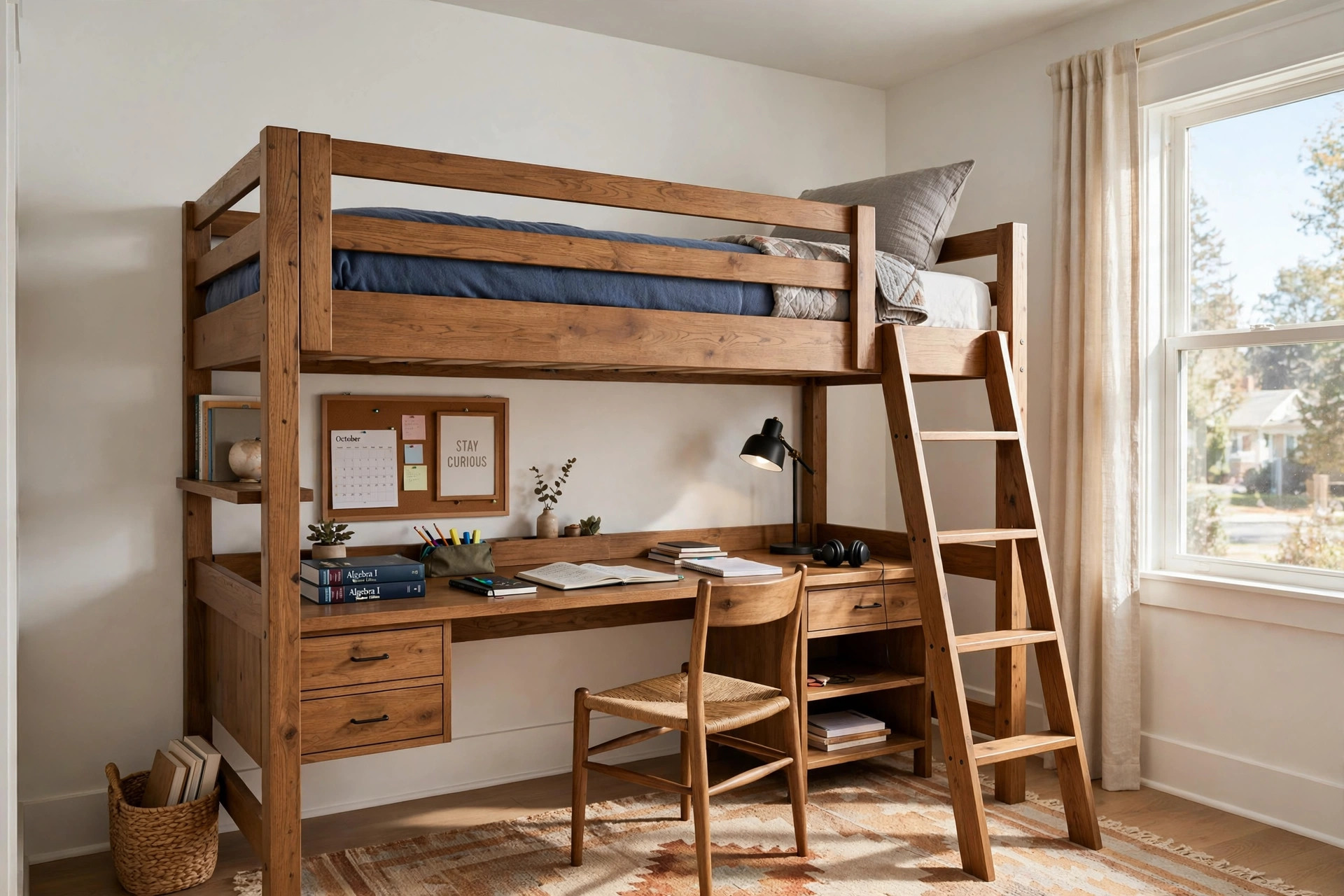

A kids loft bed with desk underneath for teens solves two problems at once. Teenagers need a comfortable place to sleep. They also need a real place to do homework. In a small room, both things rarely fit side by side. A loft bed raises the sleeping space toward the ceiling. The floor space below becomes free. A desk fills that space. The result is a bedroom that works twice as hard.
This guide explains what these beds offer, what to check before you buy, and how much you can expect to pay. It also covers safety, care, and the questions parents ask most.
Why a Loft Bed with a Desk Makes Sense for Teens
The teenage years bring more schoolwork, longer projects, and hours at a computer. A desk in the bedroom stops being a luxury. It becomes a daily need. At the same time, bedrooms often stay the same size while the child grows. Clothes, books, and hobbies take up more room each year.
A kids loft bed with desk underneath for teens answers this squeeze. The bed occupies the upper half of the room’s air. The desk occupies the floor beneath it. A single footprint of about 40 by 75 inches holds both furniture pieces. That leaves the rest of the room open for a dresser, a chair, or simply space to walk.
There is another benefit. Teens like their own zone. A desk tucked under the bed feels separate from the rest of the house. It gives a young person a defined place to focus. Parents notice the change. Homework gets done in one spot instead of spreading across the kitchen table. Room-layout ideas on The Spruce show how small shifts in furniture placement can reshape a room’s feel, and a loft bed is one of the strongest shifts available.
Teens also value style. Many models come in clean white, warm wood, or dark metal finishes. The look fits both boys and girls, and most designs stay tasteful through the high school years. A small bedroom loft bed for teenagers can look grown up, not childish.
What to Look for Before You Buy: Kids Loft Bed with Desk Underneath for Teens
Weight Capacity and Size
Start with the numbers. A teen loft bed must hold the weight of a growing teenager plus the mattress, bedding, and the occasional friend sitting on the edge. Look for a stated weight capacity of at least 200 pounds for the bed frame. Stronger frames list 250 to 300 pounds. These figures come from the maker, so compare them directly across models.
Check the mattress size too. Most teen models use a twin bed. Some use a twin XL, which adds five inches of length. Tall teens appreciate the extra room. Whatever size you choose, confirm that the mattress is no thicker than the maker allows. Guard rails must rise at least five inches above the top of the mattress. Testing notes from Consumer Reports often stress that fit between mattress and rails matters as much as the frame itself.
Frame Material
Loft beds come in wood and metal. Solid wood frames feel heavy and stable. They hold screws tightly and resist wobble for years. Pine is common and affordable. Hardwoods like maple or beech cost more but last longer.
Metal frames use steel tubing. They are lighter, cheaper, and often easier to move. A good metal frame with welded joints feels solid. A thin one with only bolts can creak and sway. Shake the frame in the store if you can. Ask about the thickness of the posts.
The Desk Below
The desk is half the point of this purchase. Measure its surface. A teen doing real homework needs room for a laptop, books, and a lamp. A depth of 20 inches is the minimum for comfort. A width of 40 inches works for most schoolwork.
Some desks attach to the frame. Some stand free beneath it. Attached desks stay put and feel like one unit. Free-standing desks can move with the room later. Check the desk height. The standard of about 29 to 30 inches suits most teens. Pair it with a kids desk chair adjustable for growing children so the seat height can rise as the teen grows.
Look for built-in storage. Shelves on the side of the frame hold books and supplies. A small drawer in the desk keeps papers out of sight. These details cut clutter fast.
Ladder or Stairs
The teen climbs up every night. The climbing method matters. A simple ladder saves space and costs less. Angled ladders feel safer than straight vertical ones. Stairs take more floor space but offer the safest climb. If the room has the room, stairs are worth it. For families comparing options, a best bunk bed with stairs for kids room guide covers the same stair-versus-ladder trade-offs in detail.
Ceiling Height
Measure the ceiling before you shop. The teen needs to sit up in bed without hitting the ceiling. A rule of thumb: allow at least 33 to 36 inches between the top of the mattress and the ceiling. Most ceilings are eight feet high. Most loft beds stand five to six feet tall. Do the math with the actual mattress in mind. A low ceiling can rule out the tallest models.
Types and Options
Basic Wood Loft with Desk
The classic model uses four wooden posts, a twin bed on top, and a simple desk below. The desk may be part of the frame or a separate piece that slides underneath. These models suit most teens and most budgets. Flat-pack collections at IKEA include several versions that parents assemble at home over a weekend.
L-Shaped Loft with Desk
An L-shaped unit turns the desk at a right angle to the bed. This shape fits well into corners. It also creates a little more desk space than a straight model. The corner position feels private. Teens who spend long hours at homework like this layout.
Loft with Desk and Storage Tower
Some models add a tall shelving tower on one side. The tower holds books, games, and clothes. It can take the place of a separate bookcase. In a tight room, this all-in-one design replaces two or three pieces of furniture at once. It pairs well with a best kids bed with storage drawers underneath mindset: every inch should store something.
Metal Loft with Desk
Metal frames with a desk below suit teens who like a modern or industrial look. They assemble quickly. They weigh less, which helps in apartments and rental homes. Look for powder-coated finishes that resist chips and scratches. Furniture retailers such as Wayfair carry a wide range of these in many colors.
Custom and DIY Builds
Handy parents sometimes build their own. Plans exist for simple loft beds with desks. DIY guidance at Bob Vila walks through framing basics and hardware choices. A custom build fits odd room shapes and lets you choose the exact desk size. It takes a weekend and solid carpentry skills. It must still meet safety rules.
Cost and Price
Prices vary widely. A simple metal loft bed with a basic desk can cost as little as 200 to 300 dollars. These models work fine for lighter teens and short-term use. Big-box stores like Target stock them, especially around back-to-school season.
Mid-range models run 400 to 800 dollars. This is where most families land. Solid wood frames, better hardware, and smarter desk layouts appear in this range. The bed will likely last through all four years of high school.
High-end models pass 1,000 dollars and can reach 2,000. These use hardwood, dovetail drawers, and finished backs meant to face the room. Some come with built-in lighting and cable routing for computers. Home centers such as Home Depot and specialty kids furniture shops sell them.
Watch for extra costs. Mattress, bedding, and a desk chair are rarely included. Delivery fees for heavy furniture add up. Professional assembly runs 100 to 200 dollars if you do not want to build it yourself. A teen loft bed with study desk becomes a real bargain only when you count the furniture it replaces.
Care and Upkeep
A loft bed takes more stress than a normal bed. The teen climbs it daily. Books pile on the desk below. Check the frame every few months. Tighten all bolts with a wrench. Loose joints cause wobble, and wobble leads to wear.
Dust the guard rails and ladder rungs. Teens touch these constantly, and oils from hands build up. Wipe wood frames with a damp cloth. Avoid soaking the joints. For metal frames, touch up paint chips to stop rust in damp rooms.
Check the desk surface for water rings and pen marks. A simple desk mat or a piece of glass cut to size protects the top. Replace the desk chair’s casters when they wear. Good lighting matters too. A clip lamp on the desk saves the teen’s eyes during long study sessions.
Move the bed only when you must. Disassemble it partway before moving. Dragging a tall frame across the floor stresses the joints. Keep the assembly manual in a drawer. You will need it the next time the room changes.
Safety
Safety comes first with any raised bed. The federal safety rules for bunk and loft beds published by the CPSC set the standard. Guard rails must run on both sides of the bed, even the side against the wall. The gap between the mattress and the rail must be small enough that a teen’s body cannot slip through.
Teach the teen the basic rules. Use the ladder every time. Never jump off the bed. Do not hang belts, scarves, or cords from the rails. Keep the area under the bed lit so the desk stays visible at night. Parenting resources like What to Expect remind parents that even older children need clear house rules around raised beds.
Place the bed in a stable spot. It should not rock. Anchor it to the wall if the maker provides brackets. Keep the ceiling fan away from the sleeping level. Check that the mattress support slats sit firmly in their brackets. A teen rolling in sleep can shift a loose slat.
Sleep guidance from HealthyChildren.org adds another point. Teens need eight to ten hours of sleep. A loft bed should feel safe enough that the teen relaxes at night. If the teen feels uneasy about the height, the bed is not the right choice. Comfort with the height is part of safety.
Also watch the desk below. Keep cords tied back. A desk lamp with a stable base will not tip. Leave headroom under the bed so the teen does not bump the desk when sitting down. Good design prevents most accidents before they happen.
Frequently Asked Questions
What age is right for a loft bed with a desk?
Most makers rate these beds for ages six and up, but the desk models suit teens best. A teen has the judgment to use the ladder safely and the schoolwork to justify the desk. Many families buy them for the start of middle school and keep them through high school graduation.
Can a loft bed with a desk fit in a small room?
Yes. That is its main strength. A standard twin loft uses about 42 by 78 inches of floor. That is no more than a regular twin bed. The desk lives inside that same footprint. The rest of the room stays open.
How much weight can a teen loft bed hold?
It depends on the model. Basic metal frames often rate 200 pounds. Strong wood frames rate 250 to 400 pounds. Always check the maker’s listed limit. Include the mattress, bedding, and the teen in your count. When in doubt, choose the stronger frame.
Is assembly hard?
Most models take two adults two to four hours. The instructions run long. A second person holds parts steady while the other fastens them. Power tools speed the work, but hand tools give more control and strip fewer screws. Some stores offer assembly for a fee.
Can the desk be used as a computer station?
Yes. Most desks are deep enough for a laptop. Some fit a full monitor and keyboard. Check for a hole or notch for cable routing. Keep the power strip on the desk, not on the floor. A teen loft bed with study desk works well as a gaming or homework station with the right lighting.
What if my teen outgrows the look?
Many models come apart into a standard bed and a separate desk. Check whether the model you buy allows this. It extends the life of the purchase. A loft frame can also move to a younger sibling while the teen keeps the desk.
A Short Final Word
A kids loft bed with desk underneath for teens is one of the smartest buys for a small bedroom. It stacks sleep above and study below. It frees floor space. It gives the teen a private corner that feels grown up. Choose a strong frame, a desk with real working space, and rails that meet the rules. Measure the room first. Tighten the bolts twice a year. With a little care, the bed will serve from the first day of middle school to the last day of high school.
References
American Academy of Pediatrics. (n.d.). HealthyChildren.org. https://www.healthychildren.org Bob Vila. (n.d.). Home improvement advice. https://www.bobvila.com Consumer Reports. (n.d.). Product reviews and ratings. https://www.consumerreports.org IKEA. (n.d.). Home furnishings. https://www.ikea.com Target. (n.d.). Retail store. https://www.target.com The Home Depot. (n.d.). Home improvement products. https://www.homedepot.com The Spruce. (n.d.). Home and garden advice. https://www.thespruce.com U.S. Consumer Product Safety Commission. (n.d.). Product safety information. https://www.cpsc.gov Wayfair. (n.d.). Furniture and home goods. https://www.wayfair.com What to Expect. (n.d.). Pregnancy and parenting guidance. https://www.whattoexpect.com
Was this guide helpful?

About Robert Taylor
The My Garden US editorial team writes practical, in-depth home and garden guides for American homeowners — tested advice, no fluff.
You May Also Like
Nursery Wall Decals Clouds for Ceiling Decor: A Calm Sky Above the Crib
April 22, 2026 0 views
Crib Mattress Protector Waterproof Breathable: The Complete Parent Guide
September 28, 2026 0 views
Toddler Bedding Set with Pillow for Crib: A Plain Guide for Parents
August 4, 2026 0 views