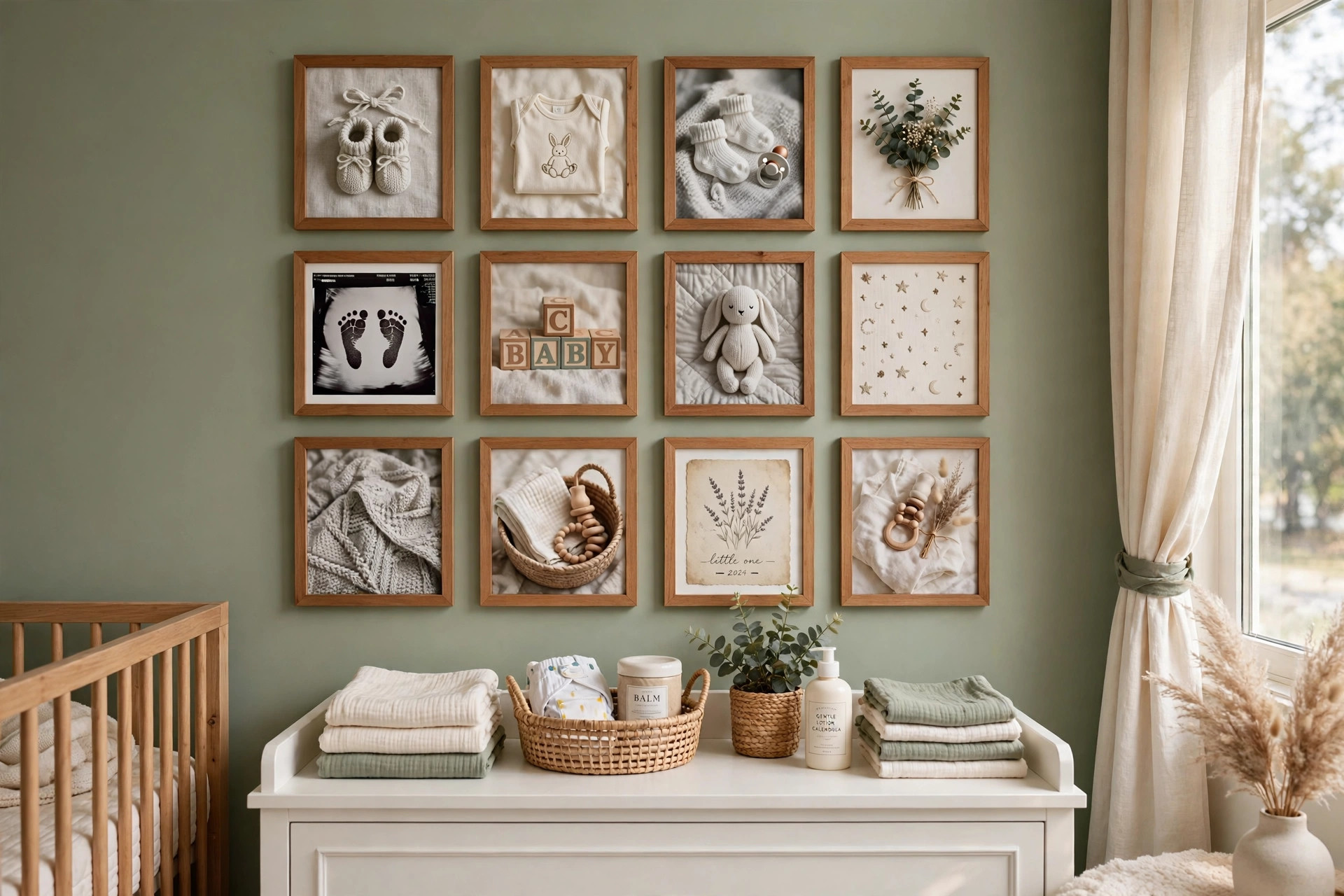

A nursery wall frame gallery for baby photos turns an ordinary wall into a story. In the first year of life, so much changes that parents can barely keep up. A gallery of framed pictures holds those changes still. Month by month, the small face in the frames grows, and the wall becomes a record of it. Many parents say the nursery feels unfinished until the walls have something personal on them.
The idea is simple. A group of frames hangs together on one wall. The frames hold photographs of the baby: the first day at home, the first bath, the first smile. Together they make the room feel warm and lived in. This guide explains how to plan a gallery wall for a nursery, how to choose frames, how to hang them with safety in mind, and how to care for the display as the child grows.
Why a Photo Gallery Belongs in the Nursery
A nursery is a working room. It holds the crib, the changing table, and the chair where a tired parent sits at three in the morning. A wall of baby photographs reminds everyone why the room exists.
A nursery wall frame gallery for baby photos also grows with the child. In the early months, the frames hold newborn pictures. Later they hold birthday and holiday pictures. When the child is old enough to point, the frames become a game: that is me, that is mother, that is the dog. For advice on healthy nursery design, the healthychildren.org nursery safety guide offers useful reading.
What to Look for When Choosing Frames: Nursery Wall Frame Gallery for Baby Photos
Frames for a nursery must meet two tests. They must look right in the room, and they must be safe around a small child. These two tests matter more than brand names or price tags.
First, consider weight. Heavy glass frames look grand, but they are a risk on a nursery wall. If a heavy frame falls, it can hurt a child or break into sharp pieces. Light frames with shatterproof acrylic instead of glass are the safer choice. Acrylic looks like glass from a few feet away, and it will not shatter. The cpsc.gov site has clear guidance on nursery hazards worth reading before you hang anything.
Second, consider the frame depth and back. Frames with thin backs and secure clips hold the photograph tight. Loose backs rattle. Check that the hanging hardware is strong and that the frame closes fully. A frame that opens easily is a risk, since small fingers can pry it open and pull out the photograph or the backing board.
Third, consider the finish. Nursery frames should be easy to wipe clean. Painted wood, molded plastic, and metal finishes all wipe down with a damp cloth. Avoid rough or unfinished wood, which can splinter. Also avoid frames with sharp corner points or rough edges. Run a hand along the frame before you buy it.
Matching Versus Mixed Frames
Some parents buy a set of identical frames. This gives a neat, orderly look. It suits modern nurseries and small walls. A matching set also makes the planning easier, since every frame takes up the same space.
Other parents mix frames of different sizes and colors. This gives a warm, collected look, as if the gallery grew over time. Mixing works well when there is one unifying element: the same wood tone, the same white mat, or the same photograph style. Without one common thread, a mixed gallery can look untidy.
There is no wrong answer here. The choice depends on the room. A small nursery often looks best with matching frames in one color. A large wall above the crib or changing table can carry a mixed arrangement well. When you pair the gallery with other nursery pieces, a nursery chair for tall parents or a washable nursery rug can help set the tone of the corner.
Types of Gallery Layouts
A gallery wall can take many shapes. The best shape depends on the wall, the number of frames, and the style of the room. Before buying anything, cut paper templates the size of your frames and tape them to the wall. This small step prevents most mistakes.
The Grid
The grid is the simplest layout. Four, six, or nine frames of the same size hang in even rows and columns. The spacing between frames stays constant, usually two to three inches. The grid looks calm and organized. It is the best choice for the monthly baby photograph series described above. The grid also suits small walls, since it makes a small wall look taller and wider.
The Salon Style Cluster
Salon style means a cluster of frames of different sizes that fill an irregular area. Start with the largest frame in the middle, then build outward. Keep the gaps between frames small and even. Salon style looks rich and full. It suits a large bare wall. The risk is clutter, so step back often and check the balance from across the room.
The Horizontal Row
One long horizontal row of frames suits the wall above a crib or changing table. Three to five frames of similar size, hung at one height, make a clean line. This layout works well in narrow rooms where a tall arrangement would feel crowded. Keep the row centered on the furniture below it.
For ideas on arranging nursery walls around other decor, the wayfair.com nursery ideas and ikea.com children’s room guides pages show many styled examples.
Choosing and Printing Baby Photographs
The photographs are the heart of the gallery. Good prints make even simple frames look fine. Poor prints waste good frames. Take care with this step.
Use high-resolution photographs. A telephone picture can look fine on a screen and soft on paper. For prints up to eight by ten inches, the original file should be sharp at full size. If a picture looks blurry when zoomed in on the telephone, it will look blurry in print. Choose the sharpest pictures for the largest frames.
Consider black and white for some or all of the pictures. Black and white baby photographs have a timeless quality. They also unify a set of pictures taken in different light and different places. A gallery of black and white prints in white frames with white mats is a classic nursery look. Color pictures work too, especially when the room itself is colorful.
Mats matter more than many parents expect. A mat is the paper border between the photograph and the frame. It gives the picture breathing room. It also keeps the photograph from touching the glass or acrylic, which prevents sticking over time. White or cream mats suit almost every nursery. Pre-cut mats save money and time.
Sizing the Photographs
Small frames suit close-up faces and details like tiny hands and feet. Medium frames suit full baby portraits. Large frames suit a favorite hero picture. Keep one size for the anchor pictures, such as a monthly series.
Cost and Price
A nursery photo gallery can cost very little or a great deal. The spread is wide because frames and prints come at every price level.
A budget gallery uses store-brand frames and home or drugstore prints. Six to nine frames in standard sizes, with prints, can cost between thirty and eighty dollars. Acrylic-front frames at this price level are common and perfectly safe for the nursery.
A mid-range gallery uses better frames with wood moldings and professional prints. The same number of frames can cost between one hundred and two hundred fifty dollars. The difference shows in the weight and finish of the frames and in the color quality of the prints.
A high-end gallery uses custom frames, museum-quality mats, and professional photography prints. Costs can run above four hundred dollars. This is a choice, not a need. A budget gallery planned with care looks better than an expensive gallery hung without thought.
The amazon.com picture frame selection, target.com wall decor, homedepot.com home decor, and lowes.com decor pages all carry nursery-suitable frame sets at many price points.
How to Hang the Gallery Safely
Hanging pictures in a nursery calls for more care than hanging pictures in a living room. The room holds a small child who will soon pull up, cruise along the furniture, and reach for anything interesting. Plan for the toddler, not just the newborn.
Hang frames high enough that a standing toddler cannot reach them. As a rule, the bottom edge of the lowest frame should sit well above the top of the crib rail or changing table. Never hang frames directly above the crib where they could fall onto the sleeping child. The wall beside the crib or above a low dresser is safer than the wall above the crib itself.
Use proper wall anchors. A single small nail is not enough for a gallery that must stay put for years. Use picture-hanging hooks rated for the frame weight, and use wall anchors in drywall. For heavier arrangements, screw into a wall stud. Test each frame with a firm tug after hanging. If it moves, fix it before the child arrives.
Check the frames once a month. Nursery walls take knocks from doors, toys, and furniture moves. A frame that was secure last month may have loosened. Make the check part of the monthly routine, perhaps when the new monthly photograph goes up. The whattoexpect.com nursery checklist includes wall decor in its babyproofing guidance.
Hanging Without Damage
Renters often cannot put many holes in the wall. Adhesive picture-hanging strips solve this problem. They hold light to medium frames and come off the wall cleanly. Follow the weight ratings on the package. Clean the wall with rubbing alcohol first, and press the strips firmly for the time the instructions require. In a nursery, use the strips rated for the next weight level up, for extra security.
Care and Upkeep of the Gallery
A nursery wall frame gallery for baby photos needs little care. Dust the frames monthly with a soft dry cloth. Never spray cleaner directly onto the frame; spray onto the cloth instead, so no liquid seeps behind the acrylic and spots the photograph.
Avoid hanging the gallery on a wall that gets strong direct sun all afternoon. Sunlight fades photographs over time. If the only free wall is sunny, choose black and white prints, which show fading less.
Update the gallery as the baby grows. Swap in new photographs every few months. Keep the old ones in an album or storage box, with dates and names labeled on the back.
Styling the Gallery With the Room
A gallery wall should feel like part of the room, not an afterthought. Match the gallery to the nursery in three ways: color, scale, and mood.
Color: pull one or two colors from the room into the frames or mats. If the nursery bedding is sage green and cream, white frames with cream mats will sit naturally on the wall. If the room is bold and bright, black frames can anchor the display. Avoid introducing a brand-new color through the frames alone.
Scale: the gallery should fit the wall. A tiny cluster of small frames lost on a huge wall looks unfinished. A sprawling cluster crowded onto a small wall looks chaotic. As a rough guide, the gallery should fill about two-thirds of the open wall space where it hangs. Measure the wall and the furniture below it before choosing the number of frames.
Mood: a calm nursery suits a calm gallery, with even spacing and soft colors. A playful nursery suits a livelier cluster, with mixed sizes and cheerful pictures. The gallery and the room should tell the same story. When a wall shelf for nursery books and decor sits nearby, keep the shelf styling in the same color family as the frames for a pulled-together look.
The thespruce.com nursery ideas pages offer room tours that show how galleries sit with cribs, chairs, and rugs in real nurseries.
Safety Rules to Remember
Safety comes first in every nursery decision, and a frame gallery is no exception. Keep these rules in mind.
Never use glass in frames hung low or near the crib. Shatterproof acrylic is the nursery standard. Even high on the wall, acrylic is the safer choice.
Never hang frames with wire alone on a single nail above the changing table. A bump from an elbow can knock a wire-hung frame off a nail. Use two hooks or a locking hanger.
Keep small hanging hardware away from the child. When you open a new frame, throw away the packaging at once. Tiny screws, plastic corners, and silica packets are all choking hazards.
Check for recalls. Frame manufacturers sometimes recall products with unsafe hardware or finishes. A quick check on cpsc.gov before a big purchase takes a minute and can prevent a problem.
Frequently Asked Questions
How many frames should a nursery gallery wall have? There is no fixed number. Three to five frames make a fine small gallery. Six to twelve make a full statement wall. Start with fewer than you think you need. You can always add more. It is harder to take away once the holes are in the wall.
Where is the best wall for a nursery photo gallery? The wall beside the crib or above a dresser or changing table works well. Avoid the wall directly above the crib. The gallery should be visible from the nursing chair, since that is where the parents spend the most time.
What size frames work best for baby photographs? Five by seven and eight by ten inches are the workhorse sizes. They are large enough to show the baby’s face clearly and small enough to group in numbers. Add one eleven by fourteen frame as an anchor if the wall is large.
Should nursery frames have glass or acrylic? Acrylic. It is lighter than glass, it does not shatter, and it looks nearly identical from normal viewing distance. In a room with a small child, the safety difference matters more than any small difference in clarity.
How do I keep the gallery looking good as my child grows? Plan the gallery as a living display. Swap photographs every few months and store the old ones in a dated album. Keep the frames and layout, and let the pictures change.
A Final Word
A nursery wall frame gallery for baby photos is one of the simplest ways to make the room feel like home. It costs little, it takes an afternoon, and it gives back every day. The baby in the frames will grow, the pictures will change, and the wall will hold the story. Years later, when the nursery has become a bedroom, the gallery may move to the hallway. The frames will still hold the beginning. That is worth an afternoon with a hammer, a level, and a stack of photographs.
References
Amazon. (n.d.). Online shopping. https://www.amazon.com American Academy of Pediatrics. (n.d.). HealthyChildren.org. https://www.healthychildren.org IKEA. (n.d.). Home furnishings. https://www.ikea.com Lowe’s. (n.d.). Home improvement products. https://www.lowes.com Target. (n.d.). Retail store. https://www.target.com The Home Depot. (n.d.). Home improvement products. https://www.homedepot.com The Spruce. (n.d.). Home and garden advice. https://www.thespruce.com U.S. Consumer Product Safety Commission. (n.d.). Product safety information. https://www.cpsc.gov Wayfair. (n.d.). Furniture and home goods. https://www.wayfair.com What to Expect. (n.d.). Pregnancy and parenting guidance. https://www.whattoexpect.com
Was this guide helpful?

About Emily Rodriguez
The My Garden US editorial team writes practical, in-depth home and garden guides for American homeowners — tested advice, no fluff.
You May Also Like
Nursery Dresser Changing Table Combo for Small Space
April 10, 2026 0 views
A Toddler Bedding Set with Curtains Matching: A Calm Room for Your Little One
May 11, 2026 0 views
Nursery Wall Sconce for Soft Ambient Light: A Parent’s Guide
June 11, 2026 0 views