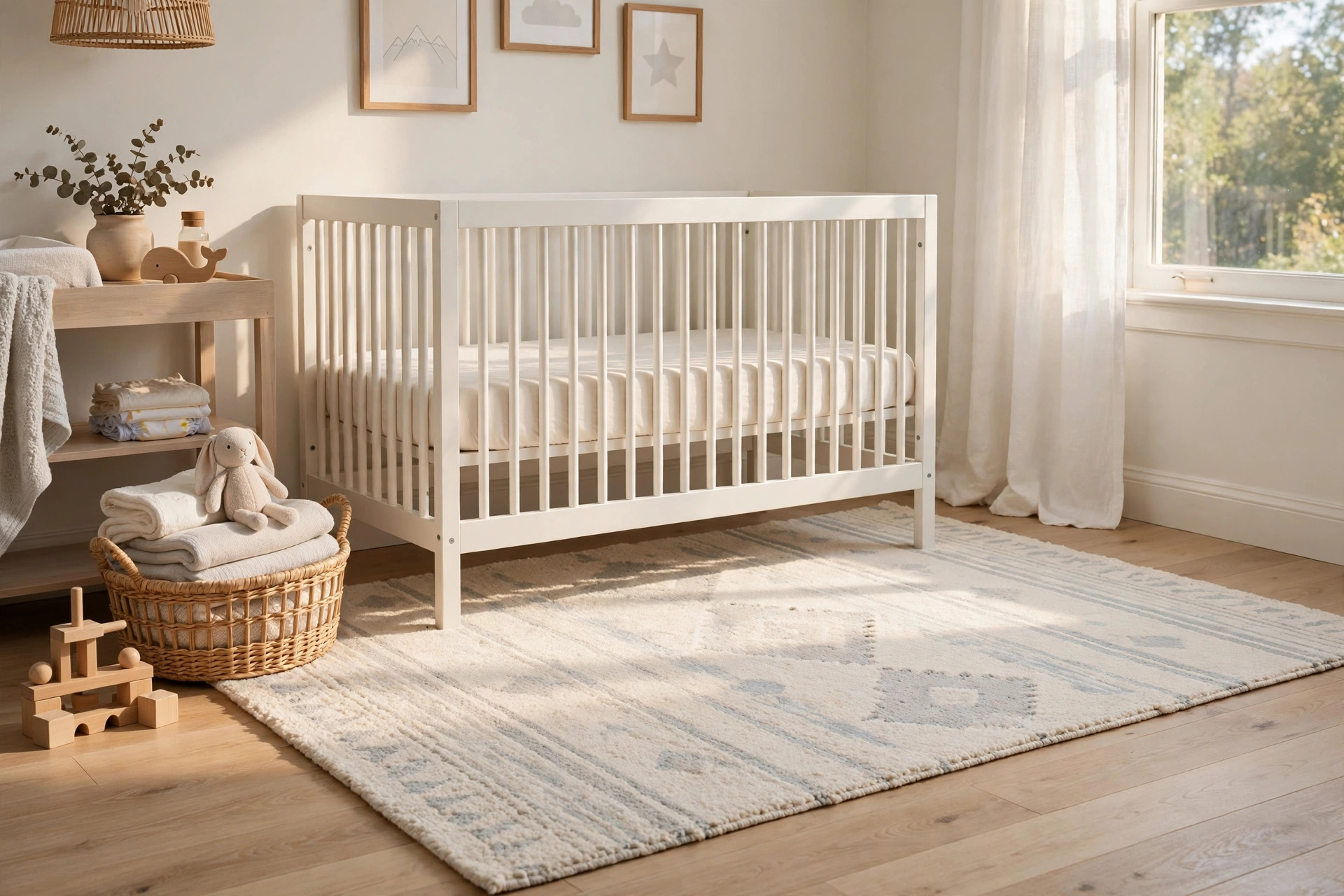

A baby makes a happy mess. Milk spills. Diapers leak. Tiny hands drop food on the floor. The best nursery rug washable for easy cleaning takes all of that in stride. You roll it up, put it in the washing machine, and lay it back down. This guide will help you choose a rug that fits your room, your budget, and your daily life.
Why a Washable Nursery Rug Matters
A nursery rug does more than decorate a room. It gives your baby a soft place to lie, roll, and play. Hard floors are cold and loud. A rug warms the room and quiets the sound of small feet and dropped toys.
But nurseries are messy places. Studies of young families show that the floor of a nursery sees more spills than any other room in the home. A regular rug holds stains and smells. A washable rug lets you start fresh whenever you need to.
Parents who buy the best nursery rug washable for easy cleaning often say the same thing: they wish they had bought it sooner. Tummy time becomes calmer when the mat is fresh. Nap time feels cleaner. And when a guest visits, the room looks cared for with little effort.
A washable rug also helps if the family pet shares the nursery. Cats and dogs shed hair and track dirt. A rug that washes clean keeps pet dander under control. Many parents of pets say a washable nursery rug is the one nursery item they would never give up.
A washable rug also saves money over time. Instead of replacing a stained rug every year, you wash it. Many families use the same washable nursery rug for two or three children. That is a real saving, and it keeps one more rug out of the trash.
What to Look For When You Choose One: Best Nursery Rug Washable for Easy Cleaning
Size and Shape
Measure your room before you shop. A rug that is too small looks lost under the crib. A rug that is too large may bunch up against the walls. For most nurseries, a rug between five and eight feet wide works well.
Think about where the rug will sit. Many parents place a round rug under a rocking chair. A rectangle often works better under a crib and dresser. Leave at least a foot of floor showing on each side so the rug frames the space instead of filling it.
Material
Cotton rugs are soft and easy to wash. They feel kind under bare feet and baby skin. Cotton does fade in strong sun, so keep it out of direct light when you can.
Polyester rugs resist stains and hold color well. They wash without shrinking. Many machine washable rugs for the baby room are made from polyester or a polyester blend.
Wool is warm and strong, but most wool rugs cannot go in the washing machine. If wool is your choice, look for rugs marked as washable and follow the label with care.
Backing and Grip
A rug that slides is a hazard. Look for a rug with a built-in non-slip backing, or plan to buy a separate rug pad. The pad should be thin and made for washable rugs, since a thick pad may not fit in the machine with the rug.
Check the label for weight. Heavy rugs are hard to lift into a front-load washer. A rug that weighs under ten pounds is much easier for one person to handle on wash day.
Types of Washable Nursery Rugs
Two-piece washable rugs have a top cover and a thin pad. You peel the cover off and wash only that part. Brands such as Ruggable made this design popular. The cover dries fast, and the pad stays in place on the floor.
One-piece washable rugs go into the machine whole. They are simpler to use but heavier to lift. Many cotton nursery rugs and play mats fall into this group.
Play mats and foam rugs are a third choice. They are not rugs in the old sense, but they serve the same purpose. A foam mat wipes clean in seconds. It does not go in the washing machine, so it suits parents who want daily wipe-downs more than deep washes.
Flat-weave rugs are thin and light. They wash with ease and dry fast. They offer less cushion than a plush rug, so they pair well with a foam mat underneath during the crawling months.
Shag and plush rugs feel wonderful, but they trap crumbs and dust. Only buy a shag rug if the label clearly says it is machine washable. Some shed in the wash, and loose fibers can bother a baby who puts everything in the mouth.
Cost and Price
A washable nursery rug costs between forty and three hundred dollars. The price depends on size, material, and brand.
Budget rugs from large stores such as Walmart often cost under eighty dollars. These work fine for small rooms and light use. They may wear faster, but at this price a replacement after two years is still a fair deal.
Mid-range rugs cost between one hundred and two hundred dollars. This is where most families shop. Rugs in this range often come from makers like Loloi, which offers many washable lines with clear care labels. You get better color choices and stronger stitching.
Premium rugs from stores like Pottery Barn Kids cost two hundred dollars and up. These rugs often use better cotton and finer designs. They suit parents who want the rug to match the nursery theme for years.
Watch for sales in January and July. Many stores clear home goods after the holidays and at mid-year. A mid-range rug bought on sale often costs the same as a budget rug at full price.
Remember to include the rug pad in your budget. A thin pad for a washable rug costs about twenty to forty dollars. It protects the floor and keeps the rug in place. It is a small cost that pays off every day the rug stays flat and safe.
Care and Upkeep
Read the care label before the first wash. It tells you the water temperature and the right cycle. Most washable rugs use cold water and a gentle cycle. Hot water can shrink cotton and warp thin backings.
Vacuum the rug once a week. Use a vacuum without a beater bar, or set the brush to its highest setting. A harsh brush pulls fibers loose and shortens the life of the rug.
Treat spills fast. Blot with a clean cloth. Do not rub, because rubbing pushes the stain deeper. For milk and formula, rinse with cold water first. Warm water can set protein stains and make them permanent.
Wash the rug every two to four weeks, or sooner after a big spill. Do not overload the washer. The rug needs room to move so the soap can reach every part. Use a mild detergent with no strong perfume, since babies spend hours face-down on the rug.
Dry with care. Many washable rugs do best when laid flat to dry. A dryer on low heat works for some rugs, but high heat can melt synthetic fibers and shrink cotton. Check the label each time.
Between washes, shake the rug outside to remove dust. Sunlight for an hour or two freshens the fabric and kills mild odors. Do not leave the rug in full sun all day, or the colors may fade.
Rotate the rug twice a year. Turn it a half circle so the wear spreads evenly. The side under the crib gets less sun and less traffic. Rotation keeps one end from fading or thinning faster than the other. Mark your calendar in spring and fall so you do not forget.
Safety in the Nursery
Safety comes first in any room where a baby sleeps and plays. The U.S. Consumer Product Safety Commission warns that loose rugs and sliding mats can cause falls. A non-slip backing or a proper rug pad is not a luxury. It is a must.
Choose low-VOC materials. Some rugs give off strong chemical smells when new. These are called volatile organic compounds. The Environmental Protection Agency offers guidance on safer products for the home. Air a new rug in a garage or porch for a day before you place it in the nursery.
Check for small parts. Some decorative rugs have tassels, beads, or glued-on shapes. A crawling baby can pull these loose and put them in the mouth. Plain edges are the safest choice.
Keep the rug flat. Curled edges are a trip hazard for toddlers who are learning to walk. If the edge curls after a wash, lay the rug flat under furniture for a day to press it back into shape.
The American Academy of Pediatrics, through its parent site, reminds families to keep soft items out of the crib. A rug belongs on the floor, never inside the crib or bassinet.
Frequently Asked Questions
Can I wash a nursery rug in a regular home washing machine?
Yes, if the label says machine washable. Check your washer size first. A large rug may need a laundromat machine with a bigger drum. Do not force a heavy rug into a small washer. It can damage both the rug and the machine.
How often should I wash a washable nursery rug?
Every two to four weeks is a good rule. Wash sooner after spills, diaper leaks, or illness. A washable nursery rug that is washed on a steady schedule lasts longer than one that is washed only when it looks dirty, because ground-in grime wears fibers down.
Are washable rugs as soft as regular rugs?
They are close. Cotton washable rugs feel very soft. Thin flat-weave rugs feel firmer but still kind to knees and elbows. If softness matters most, choose a plush cotton rug marked as machine washable and add a thin pad under it.
Will a washable rug fade or shrink?
Some fading is normal over many washes. Cold water and mild soap slow it down. Shrinkage is rare if you follow the label. Never use hot water unless the label allows it, and never use high dryer heat.
What size rug works best for a small nursery?
A four-by-six-foot rug fits most small nurseries. Place it under the crib with a few feet showing at the front. This gives your baby a soft landing spot when you lift them from the crib. For very small rooms, a round five-foot rug under the nursing chair works well.
Do I need a rug pad under a washable rug?
Yes, in most cases. A pad keeps the rug from sliding and adds cushion. Choose a thin pad made for washable rugs. Thick pads are hard to wash and may not fit through the machine with the rug.
A Final Word
The best nursery rug washable for easy cleaning is the one you will actually wash. A simple cotton rug that goes in the machine without a struggle beats a fancy rug that stays dirty because washing it is a chore. Measure your room, read the labels, and pick a rug that fits your daily life.
While you plan the room, you may also enjoy personalized baby name wall letters for the wall above the crib, or safari animal wall art for a gender-neutral nursery to set a calm theme. And if your entryway needs order for all that baby gear, a storage bench for the entryway keeps shoes and bags in their place.
Guides from The Spruce, Parents, and Good Housekeeping offer more nursery ideas when you are ready to decorate the rest of the room.
References
American Academy of Pediatrics. (n.d.). HealthyChildren.org. https://www.healthychildren.org Good Housekeeping. (n.d.). Product reviews and home advice. https://www.goodhousekeeping.com Loloi. (n.d.). Area rugs and home collections. https://www.loloi.com Parents. (n.d.). Parenting advice and family life. https://www.parents.com Pottery Barn Kids. (n.d.). Kids furniture and decor. https://www.potterybarnkids.com Ruggable. (n.d.). Washable rugs. https://www.ruggable.com The Spruce. (n.d.). Home and garden advice. https://www.thespruce.com U.S. Consumer Product Safety Commission. (n.d.). Product safety information. https://www.cpsc.gov U.S. Environmental Protection Agency. (n.d.). Protecting human health and the environment. https://www.epa.gov Walmart. (n.d.). Everyday low prices. https://www.walmart.com
Was this guide helpful?

About Emily Rodriguez
The My Garden US editorial team writes practical, in-depth home and garden guides for American homeowners — tested advice, no fluff.
You May Also Like
How to Choose a Kids Desk Chair Adjustable for Growing Children
July 23, 2026 0 views
Kids Play Tent with Tunnel for Indoor Fun
April 16, 2026 0 views
Kids Desk Organizer for School Supplies Storage: A Parent Guide
July 13, 2026 0 views