
Onion sets planting for sale USA listings appear each year as winter loosens its hold. A set is a small, half-grown onion bulb. Gardeners plant these sets in spring, and the sets grow into full-size onions by summer. Many beginners start with sets because they are easy to handle and quick to plant. You push each small bulb into the soil, tip up, and the green tops appear within days.
Shoppers searching for onion sets planting for sale USA want good bulbs at a fair price. They want sets that are firm, free of rot, and suited to their climate. This guide explains what onion sets are, how to choose them, where to buy them, and how to plant them for the best harvest. The advice follows plain garden practice tested over many seasons.
Why Onion Sets Matter to the Home Garden
Onions are one of the oldest garden crops in America. They keep well, cook well, and add flavor to almost every dish. Growing your own gives you fresh onions through summer and into fall.
An Easy Start for New Gardeners
Seeds are slow. Transplants are tender. Sets are neither. A set already holds a season of growth inside it. It sprouts fast and forgives small mistakes in planting depth or watering. New gardeners gain confidence because results show early. A row of green shoots in April is a fine reward for a March afternoon of work.
A Faster Path to Harvest
Onion sets reach harvest weeks before seed-grown onions in most regions. In cold climates, this speed matters. The growing season is short, and a head start can mean the difference between large bulbs and thin ones. Gardeners in northern states rely on sets to beat the first frost.
Stronger Bulbs for Short Seasons
Sets produce sturdy plants that stand up to wind and spring rain. They also store longer after harvest than many seed-grown types. A well-cured onion from a set can keep in a cool pantry for months. Families that cook daily value this steady supply.
What to Look For When You Buy: Onion Sets Planting for Sale Usa
Not all sets are equal. Quality shows in firmness, size, and variety name. The buying tips below help you choose well.
Firm, Clean Bulbs
Good sets feel hard and solid. They wear dry, papery skins without soft spots or mold. Avoid sets that feel light or spongy. Spongy sets often fail to sprout. A healthy set looks like a small walnut in shape and weight.
The Right Size
Sets range from pea size to walnut size. Mid-size sets, about the width of a dime to a penny, perform best. Very small sets grow slowly. Very large sets often bolt, which means they send up a flower stalk instead of forming a bulb. A bolted onion grows thick in the neck and stores poorly.
Named Varieties
Buy sets sold by variety name, not by color alone. Named varieties carry known day-length needs. Long-day onions suit the North. Short-day onions suit the South. Intermediate types suit the middle states. Planting the wrong type for your zone gives poor bulbs. Catalogs from Burpee, the well-known seed house, list variety details for each region.
Fresh Stock From a Trusted Seller
Sets dry out in storage. Buy from sellers with quick turnover and fresh stock each spring. Farm stores, garden centers, and mail-order nurseries all serve well. Gardening guides at Gardening Know How note that firm, recently packed sets sprout best. Check the pack date when you can.
Types of Onion Sets
Shoppers meet three main kinds of sets at the store. Each fits a different kitchen need and climate.
Yellow Onion Sets
Yellow sets are the workhorse of the home garden. They grow into strong-flavored bulbs for cooking, soup, and storage. Varieties like Stuttgarter and Ebenezer keep for months after harvest. Most yellow sets are long-day types, so they fit northern gardens best.
White Onion Sets
White sets give mild, clean-flavored onions. Cooks use them fresh in salads, salsas, and sandwiches. They store for a shorter time than yellow onions, often two to three months. White sets also serve well for green onions when planted close and picked young.
Red Onion Sets
Red sets grow sweet, colorful bulbs for slicing and grilling. They add color to salads and relishes. Most red sets are short-day or intermediate types. Southern gardeners choose them for early spring planting. Their skins make them easy to spot in the bin.
Specialty Sets
Some sellers offer specialty sets: sweet types, shallot sets, and Egyptian walking onions. Sweet sets suit fresh eating. Shallot sets give small, fine-flavored clusters for gourmet cooking. Egyptian walking onions return year after year with little care. The Park Seed catalog lists these specialty types each season alongside common sets.
Where to Find Onion Sets Planting For Sale USA
Local Garden Centers
Garden centers stock sets in late winter and early spring. Staff can point you to varieties that suit your zone. You can inspect the bulbs by hand before you buy. This is the main advantage of shopping in person.
Farm Supply Stores
Farm and feed stores sell sets in bulk at low prices. A fifty-pound bag suits large gardens. Smaller bags serve family plots. Prices here are often the lowest in town. Check that bulk bins are kept dry and cool.
Mail-Order Nurseries
Mail-order sellers ship sets directly to your door. This helps gardeners far from a good nursery. Gurney’s, a long-running nursery company, ships onion sets each spring with planting notes. Order early, because popular varieties sell out.
Online Seed Houses
Online stores offer the widest choice of varieties. You can compare day-length ratings and storage notes at your desk. Growers listed with Proven Winners and similar networks give clear product details. Read the shipping dates, since sets must arrive before your planting window.
Timing Your Purchase
Buy sets as close to planting time as you can. Sets stored too long dry out and sprout weak. In the South, buy in January or February. In the North, buy in March or April. If you must hold sets, keep them cool, dry, and well aired.
Cost and Price Guide
Onion sets rank among the cheapest garden crops. A small outlay yields pounds of onions.
Typical Retail Prices
Home garden packs of fifty to eighty sets sell for about three to six dollars. Bulk bags of one pound cost about six to ten dollars. One pound holds roughly seventy to ninety sets, enough for a forty-foot row. Prices rise a little each year, but sets remain a bargain compared to transplants.
Mail-Order and Shipping Costs
Mail-order sets cost a bit more, often eight to twelve dollars per pound before shipping. Shipping adds a few dollars. The extra cost buys wider variety choice and timed delivery. Many gardeners find the trade worth it.
Cost Per Bulb at Harvest
A well-grown row of sets returns twenty to forty pounds of onions. Even counting fertilizer and water, the cost per pound stays well under store price. Home-grown onions also taste fresher. For families on a budget, few crops pay back better.
How to Plant Onion Sets
Planting sets takes one afternoon. The steps below fit most gardens.
Prepare the Soil
Onions need loose, rich soil. Dig or till the bed eight to ten inches deep. Mix in two to three inches of compost. Soil pH should sit between 6.0 and 7.0. A simple soil test from your state extension service tells you the pH. The National Institute of Food and Agriculture supports extension programs that offer these tests.
Plant at the Right Depth
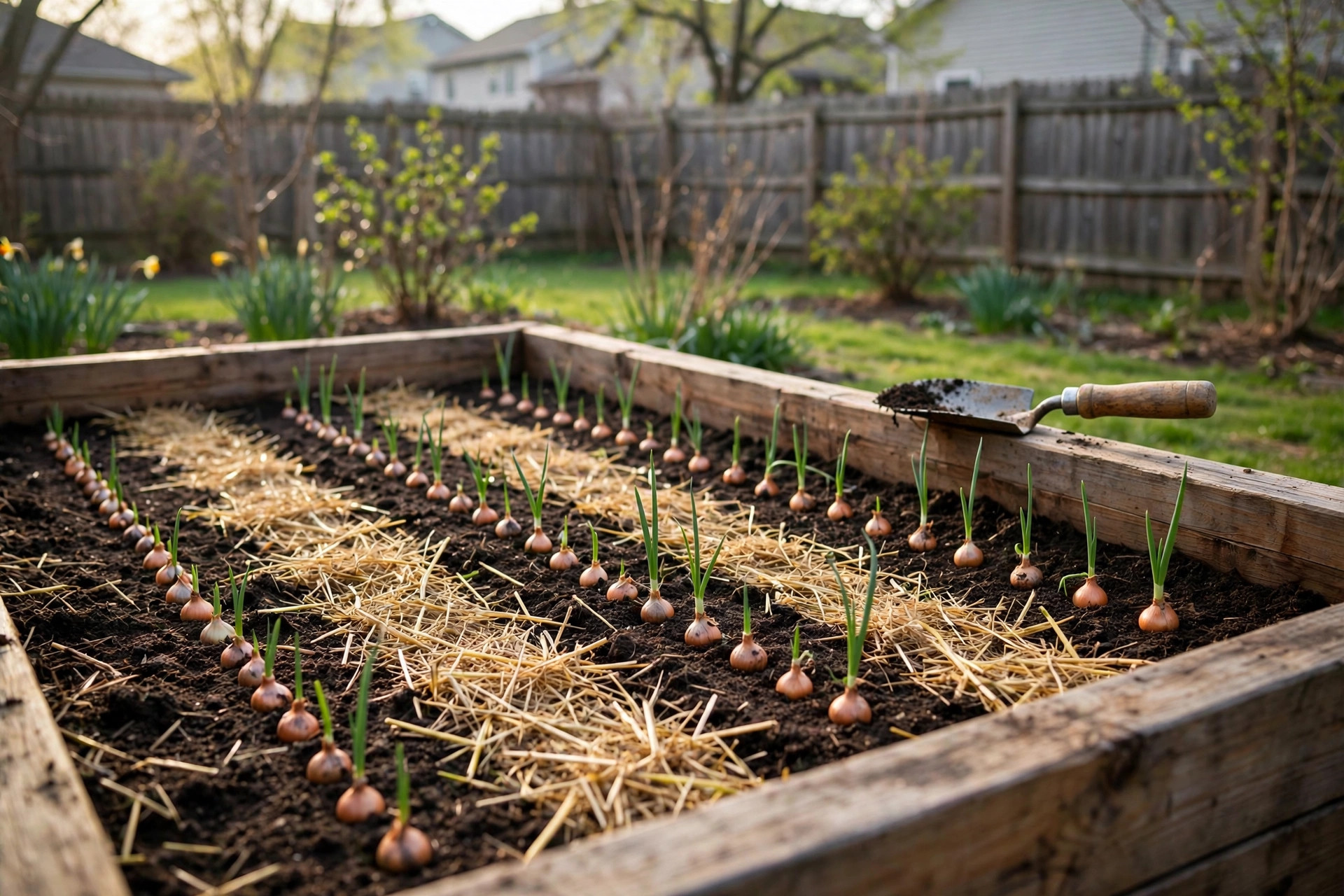
Push each set into the soil so the tip sits just at the surface. The top of the bulb should show. Set spacing at three to four inches apart for large bulbs, or two inches apart for green onions. Space rows twelve to fifteen inches apart. Firm the soil gently around each set.
Water After Planting
Water the bed well after planting. Keep the soil moist, not soaked, through spring. Onions have shallow roots. They suffer fast in dry soil. An inch of water per week suits most beds. Mulch with straw once shoots reach six inches tall to hold moisture and block weeds.
Feed for Growth
Onions feed heavily in spring. Side-dress with a balanced fertilizer or compost tea when shoots are six inches tall, then again a month later. Stop feeding once bulbs start to swell. Late feeding keeps necks thick and hurts storage.
Care and Upkeep Through the Season
A little steady care brings a big harvest.
Weeding
Weeds compete hard with onions. Pull them by hand each week. Shallow roots mean rough hoeing can damage the crop. Mulch helps a lot. Keep the bed clean until the tops fall over near harvest.
Watching for Pests
Onion maggots and thrips are the main pests. Row covers block the flies that lay maggot eggs. Thrips show as silver streaks on leaves. A strong spray of water knocks them off. Rotate your onion bed each year to break pest cycles. Articles at The Spruce describe these pests with clear photos for home gardeners.
Watching for Disease
Wet weather brings downy mildew and botrytis. Space plants well and water the soil, not the leaves. Remove sick leaves at once. Good air flow keeps most trouble away. Never plant sets where onions grew last year.
Harvest Time
Harvest when half the tops have fallen over. Loosen bulbs with a fork and lay them on dry ground for a day or two. Then cure them in a warm, airy place for two to three weeks until necks are dry. Trim tops and roots, and store in mesh bags in a cool, dark place. Well-cured bulbs keep for months.
Safety Notes for Home Gardeners
Gardening with onion sets is safe work, but a few cautions help.
Skin and Eye Care
Cut onions release gases that sting the eyes. Whole sets do not cause this, but harvest day can bring tears. Wash hands after handling fertilizer. Wear gloves when spreading amendments. Keep dust from bone meal or lime out of your eyes and mouth.
Tool Safety
Tines and forks injure feet each year. Wear closed shoes in the garden. Keep tools sharp so they cut cleanly. Store tools off the ground and out of reach of small children. A clean, organized shed prevents most accidents.
Food Safety After Harvest
Cure onions fully before storage. Damp bulbs rot and can grow mold. Throw out any bulb that smells off or feels soft. Wash fresh onions before eating. Home gardeners who pair onions with other produce may also browse daffodil bulb packs for fall color or lavender seed packets for herb beds in the same order.
Frequently Asked Questions
When should I plant onion sets?
Plant sets as soon as the soil can be worked in spring. Southern gardeners plant in January or February. Northern gardeners plant in March or April. Sets take light frost, so early planting is fine. The Old Farmer’s Almanac planting calendar gives dates by zip code.
How deep do onion sets go?
Plant sets so the pointed tip sits just at or slightly above the soil surface. Planting too deep makes narrow necks and small bulbs. Planting too shallow lets birds pull the sets. Firm the soil around each bulb.
Can I plant onion sets in containers?
Yes. Use a pot at least eight inches deep with drainage holes. Fill it with quality potting mix. Space sets three inches apart. Containers dry fast, so water them daily in warm weather. Container onions suit patios and small yards.
Why did my onions flower instead of bulbing?
Flowering, called bolting, comes from stress. Large sets, cold snaps after planting, or late feeding all trigger it. Use mid-size sets and plant at the right time. Pinch off flower stalks at once, and use bolted onions fresh, since they store poorly.
How long do onion sets keep before planting?
Sets keep a few weeks in cool, dry, airy storage. They keep longer in a refrigerator vegetable drawer. Do not store them in sealed plastic, which traps moisture and starts rot. Buy close to planting day for the strongest start. Nursery stock from Monrovia and similar growers ships fresh each spring.
Can I save my own sets for next year?
You can, but it takes care. Grow small bulbs late in the season, cure them well, and store them cool and dry through winter. Home-saved sets vary in size and may carry disease. Most gardeners buy fresh sets each year for steady results. Those who want more indoor growing options sometimes add pothos plants in bulk to the same spring order.
A Final Word
Onion sets give the home gardener a simple, sure crop. They cost little, plant fast, and reward steady care with months of fresh onions. Choose firm, named varieties suited to your day length. Plant early, weed often, water steady, and cure the harvest well. Whether you buy from a farm store, a garden center, or a mail-order nursery, the steps stay the same. This spring, put a row of sets in the ground and watch green shoots rise. Few garden tasks pay off so well for so little work.
References
Burpee. (n.d.). Seeds, plants, and gardening supplies. https://www.burpee.com Gardening Know How. (n.d.). Gardening guides and plant care. https://www.gardeningknowhow.com Gurney’s Seed & Nursery Co. (n.d.). Seeds, plants, and garden supplies. https://www.gurneys.com Monrovia. (n.d.). Plants for home gardens. https://www.monrovia.com National Institute of Food and Agriculture. (n.d.). Agricultural research and extension. https://www.nifa.usda.gov Park Seed. (n.d.). Seeds, plants, and gardening supplies. https://www.parkseed.com Proven Winners. (n.d.). Plants and gardening inspiration. https://www.provenwinners.com The Old Farmer’s Almanac. (n.d.). Gardening calendars and advice. https://www.almanac.com The Spruce. (n.d.). Home and garden advice. https://www.thespruce.com
Was this guide helpful?

About Emily Rodriguez
The My Garden US editorial team writes practical, in-depth home and garden guides for American homeowners — tested advice, no fluff.
You May Also Like
How to Grow Zinnias: Cut Flowers All Summer
October 6, 2026 5 views
How to Grow Grapes: Vines for Home Gardens
October 7, 2026 2 views
Morning Glory Seeds for California Homes: A Plain Guide to Sowing and Growing
August 28, 2026 0 views