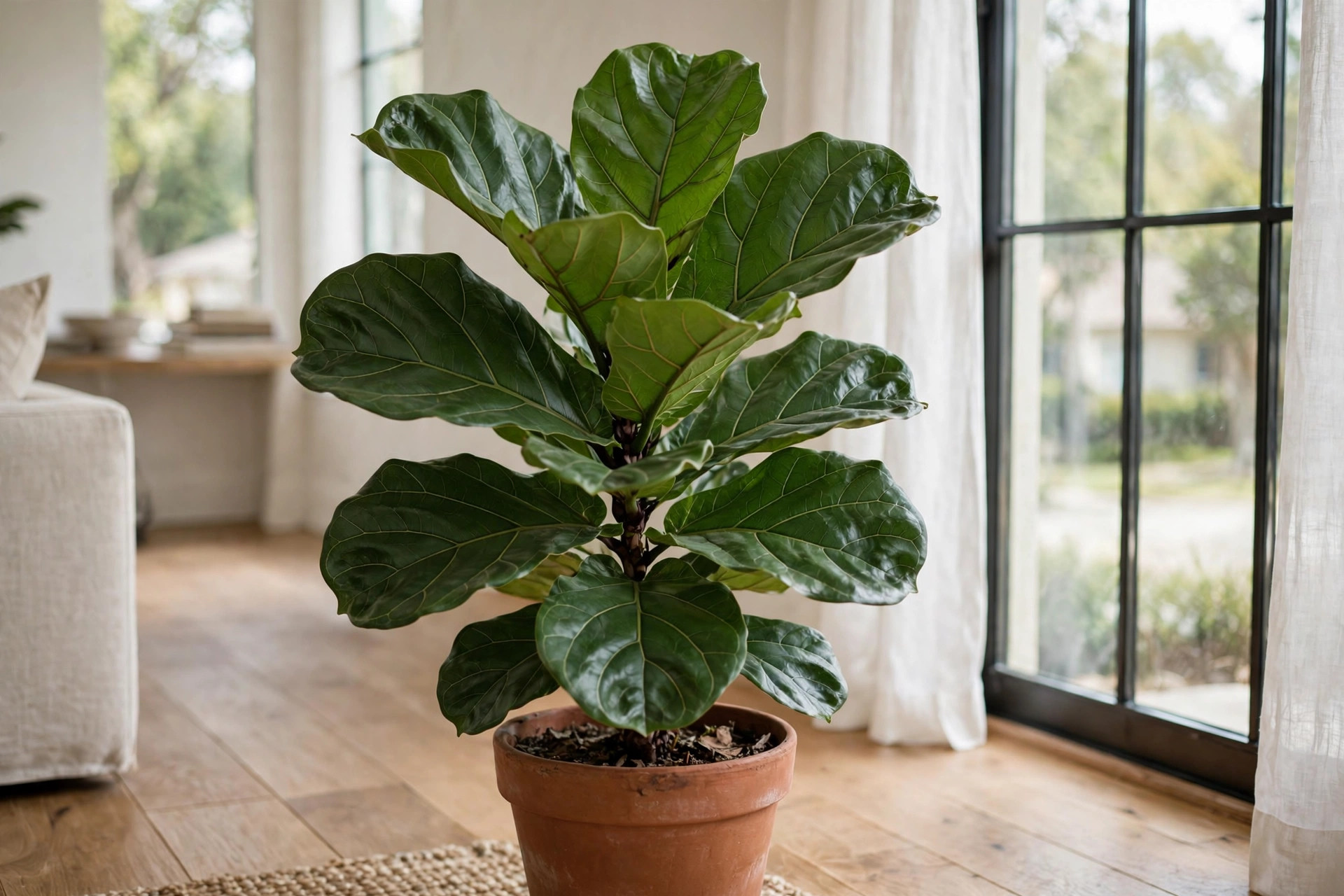

The fiddle leaf fig is one of the most wanted indoor plants in America today. Its large, violin-shaped leaves give a room a tall, graceful shape that few other plants can match. This fiddle leaf figs buying guide usa gives you a plain plan for picking a strong plant, knowing what to pay, and keeping it healthy after you bring it home.
Why It Matters
A good start is the main cause of a long-lived fiddle leaf fig. A weak plant may drop leaves no matter how well you treat it. A strong plant will forgive small mistakes and grow with you for years. When you take time at the shop or read a nursery page with care, you raise your chance of success by a wide margin.
The fiddle leaf fig, known as Ficus lyrata, came from the warm woods of West Africa. It likes bright light and steady care. It does not like cold air, rough moves, or sitting in wet soil. That is why the plant you pick matters so much. A plant grown in good light and shipped with care will settle fast. A plant kept too long in a dark box may never recover.
Money matters too. These plants are not cheap. When you pay good money for a tree, you want to know what a fair price looks like and what warning signs to avoid.
What to Look For When You Choose: Fiddle Leaf Figs Buying Guide Usa
The leaves tell you the most. Pick a plant with deep green leaves that feel firm when you touch them. The top leaves should point up toward the light. Look for new growth at the top, which shows the plant is still putting out fresh leaves. Stay away from plants with yellow spots, brown edges, or leaves that hang flat and lifeless.
Check the stems as well. A healthy fiddle leaf fig has straight, firm stems. The trunk of a larger plant should stand upright without a stake to prop it up. If the stem bends or feels soft, the plant may be weak at its base.
Look at the soil and the pot. The soil should be damp but not soaked. If water pools on top or the pot sits in a tray of standing water, the roots may be rotting. Lift the plant if you can. A plant that feels solid in its pot has a good root system. If it wobbles loosely, the roots may be thin.
Ask about the plant’s history. A good nursery can tell you how long it has had the plant and where it was grown. Plants that have lived in bright nursery light adjust well to a bright American home. When you are buying a fiddle leaf fig online, read the reviews and ask how the plant is packed for shipping.
Check for pests before you buy. Look under the leaves for tiny webs, white cotton-like spots, or small sticky dots. These are signs of spider mites, mealybugs, or scale. A plant with a heavy pest problem is not worth taking home, even at a low price.
Types and Options
Fiddle leaf figs come in several shapes and sizes. The common choice is the full-size Ficus lyrata. It grows tall, up to six feet or more indoors, with large broad leaves. This is the plant most people picture when they think of a fiddle leaf fig. It makes a fine floor plant for a bright living room or office corner.
The dwarf form grows shorter and bushier. Its leaves are smaller, and it stays at a size that fits a table or a small shelf. If you live in a flat with low ceilings, the dwarf form may suit you better. It needs the same care as the full-size plant but takes up less room.
You will also find plants trained as a single trunk tree or as a bushy clump. The tree form has one main trunk with leaves near the top, like a small shade tree. The bush form has several stems with leaves all the way down. Pick the shape that fits the spot where the plant will live.
Plants are sold by pot size. A four-inch pot holds a young plant, often under a foot tall. A six-inch pot holds a plant of one to two feet. A ten-inch pot holds a three-foot plant, and a fourteen-inch pot holds a tall tree of four to six feet. Young plants cost less but take years to reach full size. Large plants give you the look at once but cost far more and need more care in the move.
If you are building a larger plant collection, you may also want to read a guide for another bold indoor plant, such as the monstera plants sale buying guide usa, before you spend.
Where to Buy in the USA
Local garden centers are often the best place to buy. The staff know the plants and can answer hard questions. You can hold the plant, check its leaves, and smell the soil. Prices run a little higher than at big-box stores, but the advice is worth the difference.
Big-box stores carry fiddle leaf figs at low prices. Check the plant with extra care at these stores. Look for fresh stock that just arrived rather than plants that have sat for weeks.
Online nurseries ship plants to your door. This is a fine choice if you live far from a good nursery. Pick a seller with clear photos of the actual plant you will get, not a stock photo. A good seller ships in a firm box with heat packs in cold weather. Plants sold through trusted plant nurseries often arrive in strong shape because the growers know how to pack them.
Whichever way you buy, shop in spring or early summer when you can. Warm weather makes shipping safe, and the plant gets a full growing season to settle before winter.
Cost and Price
Prices for fiddle leaf figs in the USA follow size. A young plant in a four-inch pot often costs between fifteen and thirty dollars. A medium plant in a six-inch or eight-inch pot runs from thirty to seventy dollars. A large plant in a ten-inch pot may cost seventy to one hundred fifty dollars. A full tree of five or six feet can cost one hundred fifty to four hundred dollars.
Shipping adds to the cost of online plants. Expect ten to thirty dollars for shipping a small plant, and more for a large one. If you want to compare nursery standards, plant nursery buying guides can help you see what quality stock looks like across the country.
Beware of prices that seem too low. A six-foot tree sold for twenty dollars is likely weak or pest-ridden. Fair prices come from the size chart above.
Care and Upkeep
Once you bring the plant home, place it in the brightest spot you have. A window that faces east or south gives the strong, soft light the plant loves. Keep it a few feet back from the glass so the leaves do not scorch in harsh midday sun.
Water with care. Feel the top two inches of soil. If they are dry, water the plant until water runs out of the drainage holes. If they are still damp, wait. Over-watering is the most common cause of death for fiddle leaf figs. In winter, when growth slows, the plant needs even less water. A simple moisture meter takes the guesswork out of the job.
Keep the air around the plant steady. Fiddle leaf figs dislike cold drafts and sudden heat. Keep them away from doors that open to the cold, from heating vents, and from air conditioners.
Feed the plant in the growing season. From spring to early fall, give it a balanced liquid houseplant fertilizer once a month, mixed at half the strength shown on the label. Do not feed in winter. Wipe the large leaves with a damp cloth every few weeks, since dust blocks light.
Turn the pot a quarter turn every week or two so all sides get light. This keeps the plant growing straight instead of leaning toward the window. For steady, season-by-season plant care advice, the Old Farmer’s Almanac offers planting calendars and care notes that many American gardeners trust.
Potting and Repotting
Your fiddle leaf fig will need a new pot as it grows. Repot in spring, when the plant is waking up. Pick a pot one size larger, with drainage holes at the bottom. A pot that is too large holds too much wet soil, which can rot the roots.
Use a well-draining indoor potting mix. The mix should feel light and crumbly, not heavy like garden dirt. Put a layer of mix at the bottom of the new pot, set the plant in, and fill around the root ball. Water well after repotting. Keep it in bright light, water with care, and do not feed it until you see new growth. Most plants bounce back within a month.
Safety
The fiddle leaf fig is toxic if eaten. Its leaves and sap hold compounds that can cause mouth pain, drooling, and stomach upset in cats, dogs, and people. If you have pets that chew plants, keep the fig where they cannot reach it, or pick a safer plant instead.
The milky sap can also irk the skin of some people. Wear gloves when you prune the plant or handle broken stems. Keep the plant away from small children who might put leaves in their mouths. The ASPCA plant pages list which common houseplants are safe around animals, and many pet plant care guides note the fiddle leaf fig as one to keep out of reach.
Common Problems and Fixes
Leaf drop is the most common complaint. A new plant may drop a few leaves as it adjusts to your home. This is normal for the first two or three weeks. If leaves keep falling after a month, look at light and water. Move the plant closer to a bright window, and check that you are not watering too often.
Brown spots on the leaves often point to over-watering or root rot. Let the soil dry out more between waterings. If many leaves have brown spots and the soil smells sour, check the roots. Cut away brown, mushy roots with clean shears and repot in fresh mix.
Pests are less common indoors but do happen. Spider mites leave fine webs and speckled leaves. Wipe the leaves with a damp cloth and spray with insecticidal soap. Mealybugs look like small bits of cotton. Dab them with a cotton swab dipped in rubbing alcohol. For step-by-step pest fixes, gardening know-how guides walk through safe home treatments.
FAQ
How big will a fiddle leaf fig grow indoors? In a bright American home, a fiddle leaf fig can reach six to ten feet over several years. You can keep it shorter by pruning the top in spring. The plant grows slowly, often less than a foot a year.
Can I keep a fiddle leaf fig in a low-light room? It will struggle. The plant needs bright, indirect light to keep its leaves. If your only spot is dark, add a full-spectrum grow light for eight to twelve hours a day, or pick a tougher plant like those in the snake plants indoor buying guide usa or the pothos plants bulk buying guide usa.
How often should I water my fiddle leaf fig? There is no fixed schedule. Check the soil with your finger. Water only when the top two inches feel dry. In summer this may be once a week. In winter it may be once every two or three weeks. When you do water, water deeply so it flows from the drainage holes.
Is the fiddle leaf fig hard to keep alive? It has a hard name, but most of the trouble comes from too much water and too little light. Give it bright light, steady warmth, and careful watering, and it is no harder than most large houseplants.
When is the best time to buy a fiddle leaf fig in the USA? Spring is best. Warm weather keeps shipping safe, and the plant gets months of strong light to settle before winter. Fall is second best. Winter buying is risky for shipped plants, so buy local in the cold months if you must buy then.
Should I buy a small plant or a large tree? A medium plant in a six to ten inch pot is the best start for most people. It is past the fragile young stage, costs less than a full tree, and adjusts to a new home faster than a large specimen. Big trees look grand at once but lose more leaves in the move and cost far more.
A Short Final Word
Pick your plant with open eyes: firm green leaves, a straight stem, damp but not soaked soil. Pay a fair price for its size. Give it the brightest spot in your home and water it with a light hand.
If you follow this fiddle leaf figs buying guide usa, you will start with a plant that has every chance to thrive. For wider reading on indoor plants, Burpee’s plant guides, Park Seed resources, and Gurney’s growing advice each offer plain, tested tips. University research through NIFA and the growers at White Flower Farm round out the shelf of trusted voices on plant care.
References
ASPCA. (n.d.). Pet care and animal welfare resources. https://www.aspca.org Burpee. (n.d.). Seeds, plants, and gardening supplies. https://www.burpee.com Gardening Know How. (n.d.). Gardening guides and plant care. https://www.gardeningknowhow.com Gurney’s Seed & Nursery Co. (n.d.). Seeds, plants, and garden supplies. https://www.gurneys.com Monrovia. (n.d.). Plants for home gardens. https://www.monrovia.com National Institute of Food and Agriculture. (n.d.). Agricultural research and extension. https://www.nifa.usda.gov Park Seed. (n.d.). Seeds, plants, and gardening supplies. https://www.parkseed.com Proven Winners. (n.d.). Plants and gardening inspiration. https://www.provenwinners.com The Old Farmer’s Almanac. (n.d.). Gardening calendars and advice. https://www.almanac.com The Spruce. (n.d.). Home and garden advice. https://www.thespruce.com White Flower Farm. (n.d.). Plants, bulbs, and garden supplies. https://www.whiteflowerfarm.com
Was this guide helpful?

About Sarah Mitchell
The My Garden US editorial team writes practical, in-depth home and garden guides for American homeowners — tested advice, no fluff.
You May Also Like
Finding Heirloom Vegetable Seeds Deals Near Me: A Simple Guide
January 22, 2026 1 views
Tulip Bulbs Fall: Where to Buy in the USA
January 22, 2026 0 views
Onion Sets Planting Buying Guide USA: How to Choose, Buy, and Plant
May 20, 2026 0 views