
The search for the best charcoal grill for backyard bbq usually begins with a simple wish. You want real fire, real smoke, and food that tastes like summer. A charcoal grill gives you that. It is the oldest kind of outdoor cooker, and it still has loyal fans across the country. This guide will walk you through the choices in plain language, so you can buy with confidence and cook with joy.
Charcoal cooking is different from gas. The coals take time to light. The heat is less even. Yet the flavor is richer. Many backyard cooks believe no gas burner can match the taste of a steak or a rack of ribs touched by wood smoke. If that sounds like you, charcoal is the right path.
Why a Charcoal Grill Matters for the Backyard
A backyard barbecue is more than a meal. It is an event. Friends gather. Children play on the lawn. The cook stands at the grill with tongs in hand, in charge of the fire. A charcoal grill fits this scene well. It is simple, tough, and social.
Charcoal grills are also cheap to buy and cheap to run. A bag of briquettes costs less than a tank of propane. Repairs are rare because there are few parts to break. Many families pass a sturdy kettle grill down for years.
The flavor is the main prize. Charcoal burns hotter than most home gas grills. That heat gives meat a dark, tasty crust. The smoke adds depth that gas cannot copy. When you learn how to smoke ribs on charcoal, you will see what a backyard charcoal grill can really do.
What to Look For When You Choose: Best Charcoal Grill for Backyard Bbq
Do not buy the first grill you see at the store. A few details make a large difference in daily use. Take time to compare these points before you spend your money.
Cooking Area
Cooking area is measured in square inches. For a family of four, about 350 to 450 square inches is enough. That space holds a dozen burgers or several steaks at once. If you host large parties, look for 600 square inches or more. Larger grates are harder to heat evenly, so match the size to your real needs.
Build Quality and Material
The body of the grill must stand up to heat, rain, and time. Porcelain-coated steel is the most common choice and it works well. Thicker metal holds heat better and lasts longer. Check the legs and the wheels. A grill that wobbles on the patio is a bad buy at any price.
Airflow Control
Air vents are the steering wheel of a charcoal grill. Lower vents feed the fire. The top vent lets smoke out. Precise dampers let you raise or lower the heat by small amounts. Cheap grills often have loose, rusty vents that are hard to adjust. Test them with your hands in the store if you can.
Ease of Cleaning
Ash builds up with every cook. Look for a grill with an ash catcher or a removable ash pan. A hinged cooking grate is also useful, because it lets you add fresh coals without lifting off all the food. These small features save you time after every meal.
Lid and Thermometer
A tight lid traps heat and smoke. That is what turns a grill into an outdoor oven. A built-in lid thermometer helps you track the heat without opening the grill and losing it. If the grill you like has no thermometer, you can buy a separate one, but a built-in gauge is a nice touch.
Types of Charcoal Grills
Not all charcoal grills are shaped the same. Each style has strengths and trade-offs. Knowing them helps you pick the best charcoal grill for backyard bbq for your own cooking habits.
Kettle Grills
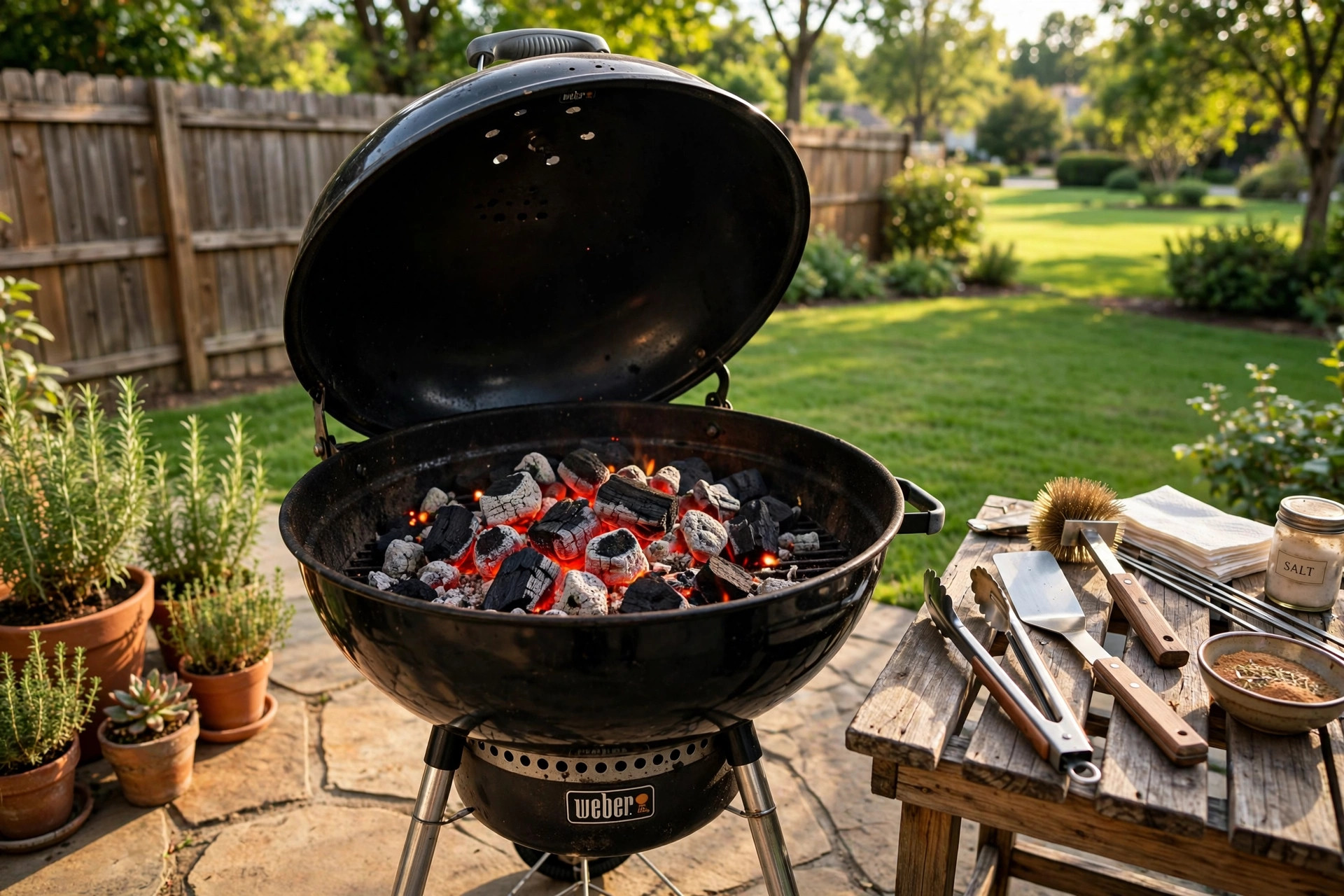
The kettle is the classic round grill with a lid. It is light, cheap, and very versatile. You can grill burgers directly over the coals or bank the coals to one side for slower roasting. For most beginners, a 22-inch kettle is the smart first buy. Weber made this shape famous, and many other brands now copy it.
Barrel and Offset Grills
Barrel grills are wide and roomy, good for feeding a crowd. Some have an offset firebox on the side for true low-and-slow smoking. These units are heavier and cost more. They suit cooks who love long sessions with brisket or pork shoulder.
Kamado Grills
A kamado is a thick ceramic egg-shaped cooker. It holds heat for hours and can sear at very high temperatures. It is heavy and costly, but it is also the most versatile charcoal cooker you can own. If your budget allows, read a guide to the best kamado grill for the money before you decide between a kamado and a standard kettle.
Portable and Tabletop Grills
Small portable grills use charcoal too. They are fine for picnics and tailgates, but most are too small for a real backyard barbecue. If you need one for trips, the broil king bbq lineup and similar brands offer sturdy small models worth a look.
Charcoal: Briquettes or Lump?
The fuel matters as much as the grill. There are two main kinds of charcoal, and each has fans.
Briquettes are the small pillow-shaped blocks sold in big bags. They burn at a steady, even heat for a long time. That makes them good for beginners and for long cooks. Look for brands with few fillers. Char-Broil and other grill makers share tips on fuel choice on their sites, and the amazing ribs site has deep tests on how different fuels burn.
Lump charcoal is made from pieces of real hardwood. It lights fast and burns hotter than briquettes. It gives a cleaner, woodier smoke flavor. The heat is less even, though, and a bag may contain small chips that fall through the grate. Many experienced cooks mix the two: briquettes for steady heat, a handful of lump on top for extra flavor.
Avoid charcoal that is pre-soaked in lighter fluid. It lights fast but can leave a chemical taste on food. A chimney starter and a bit of newspaper light clean charcoal just as fast.
How to Light and Control the Fire
Good fire control is a skill, but it is not hard to learn. Follow these steps and your cooks will be steady from the start.
First, fill a chimney starter with charcoal and light it from below with crumpled newspaper. Wait until the top coals are gray with ash, about 15 to 20 minutes. Then pour them into the grill.
Second, set up zones. Pile the coals on one half of the grill for a hot direct zone, and leave the other half empty for a cooler indirect zone. Sear meat over the hot side, then move it to the cool side to finish with the lid on.
Third, use the vents. Open vents feed the fire and raise the heat. Close them halfway to calm it down. Small moves work best. Wait five minutes between changes so the grill can respond.
Fourth, keep the lid on as much as you can. Every peek lets heat escape. Trust your thermometer and your timer.
Once your fire skills grow, season your cast iron grates so food releases cleanly and the metal stays rust-free.
Cost and Price Ranges
Charcoal grills fit almost any budget. Here is what you can expect at each level.
Entry-level kettle grills cost about 100 to 180 dollars. They cook well but may have thin metal and simple vents. For a first backyard grill, this range is fine.
Mid-range models cost about 200 to 400 dollars. You get thicker steel, better dampers, larger cooking areas, and ash systems that make cleanup easy. Napoleon and Traeger both offer charcoal-capable cookers in and above this range, and comparing them side by side in a store teaches you a lot.
Premium kamado and barrel cookers cost 500 to 1,500 dollars or more. They last for many years and hold heat like an oven. The Big Green Egg is the best-known kamado brand, and its owners often keep the same cooker for a decade.
Running costs are low. A 20-pound bag of briquettes costs roughly 15 to 25 dollars and fuels several cooks. Lump charcoal costs a bit more per bag. Over a summer of weekend barbecues, most families spend less on charcoal than a single propane refill would cost.
Care and Upkeep
A little care after each cook will add years to your grill. Make it a habit.
Brush the grates while they are still warm. A stiff grill brush knocks off stuck food in seconds. For deep cleans, soak the grates in hot soapy water and scrub them once or twice a season.
Empty the ash after the grill is fully cold. Ash holds moisture and can rust the bottom of the bowl. Never dump hot ash into a plastic trash can or near dry leaves.
Oil the grates lightly before each cook. A paper towel dipped in cooking oil, held with tongs, wiped over the hot grate, keeps food from sticking.
Cover the grill between uses. A fitted cover costs little and blocks rain and sun. Even a tough kettle grill lasts far longer under a cover. You can find covers and other parts at Home Depot or any large hardware store.
Check the vents and legs once a year. Tighten loose bolts. Replace a rusted vent damper before it seizes. Small fixes now prevent big problems later.
Safety Rules for Backyard Charcoal Cooking
Fire deserves respect. These rules keep your family and your home safe.
Place the grill on a flat, stable surface, at least 10 feet from the house, deck railings, and overhanging branches. Never use a charcoal grill indoors, in a garage, or under a covered patio with a low roof. Charcoal gives off carbon monoxide, a gas you cannot see or smell.
Keep children and pets at a safe distance from the hot grill. A curious hand can reach a grate in a second. Set up a clear zone and keep it.
Use long-handled tools and heat-proof gloves. A standard oven mitt is not enough for a 500-degree grill. Buy gloves made for grilling.
Let coals cool fully before you throw ash away. Coals can stay hot for many hours. A metal bucket with a lid is the safe place to store used ash. The Spruce Eats grilling guides include handy safety checklists worth reading before your first cook of the season.
Never pour lighter fluid on lit coals. The flame can travel up the stream and burn your hand. Use a chimney starter instead, every time.
Frequently Asked Questions
How long does charcoal take to be ready?
A full chimney of charcoal is usually ready in 15 to 20 minutes. The coals should be covered in light gray ash. If the wind is strong or the air is damp, allow a few extra minutes.
How much charcoal do I need for a cook?
For a short grilling session, fill the chimney about three-quarters full. For a long low-and-slow cook, you may need a full chimney plus a second load halfway through. Start with less than you think. You can always add more coals, but you cannot take heat away fast.
Can I reuse leftover charcoal?
Yes. Close all the vents after cooking to starve the fire. The leftover coals can be reused next time. Knock off the loose ash and mix them with fresh charcoal. Old coals light a bit slower, but they still burn well.
Is charcoal grilling bad for health?
Charred meat and heavy smoke are best kept in check. Do not burn meat black, trim excess fat so it does not drip and flare, and cook in a well-ventilated yard. Enjoyed in moderation with these habits, backyard charcoal cooking is a normal, safe part of American outdoor life.
What is the best charcoal grill for a beginner?
A 22-inch kettle grill is the best start for most beginners. It is cheap, simple, and forgiving. You can grill, roast, and even smoke on it once you learn two-zone cooking. Buy one quality kettle rather than a fancy grill with features you will not use.
How do I stop flare-ups?
Flare-ups come from fat dripping onto hot coals. Trim fat from meat, keep a cool zone on the grill, and move food there when flames rise. Do not squirt water on a grease fire. Close the lid and the vents partly to calm it down.
A Short Final Word
The best charcoal grill for backyard bbq is not the most costly one. It is the one that fits your space, your budget, and the way you like to cook. A solid kettle, good charcoal, and a little practice will give you meals your guests talk about for weeks. Start simple, learn your fire, and enjoy every cook.
References
AmazingRibs.com. (n.d.). Barbecue and grilling science. https://www.amazingribs.com Big Green Egg. (n.d.). Kamado grills and outdoor cooking. https://www.biggreenegg.com Broil King. (n.d.). Gas and charcoal grills. https://www.broilkingbbq.com Char-Broil. (n.d.). Gas and charcoal grills. https://www.charbroil.com Napoleon. (n.d.). Fireplaces, grills, and heating products. https://www.napoleon.com The Home Depot. (n.d.). Home improvement products. https://www.homedepot.com The Spruce Eats. (n.d.). Recipes and cooking guides. https://www.thespruceeats.com Traeger. (n.d.). Wood pellet grills. https://www.traeger.com Weber. (n.d.). Grills and outdoor cooking. https://www.weber.com
Was this guide helpful?

About Sarah Mitchell
The My Garden US editorial team writes practical, in-depth home and garden guides for American homeowners — tested advice, no fluff.
You May Also Like
Finding the Best BBQ for Memorial Day Sale Season
March 22, 2026 0 views
The Best BBQ for Birthday Party Backyard Cookouts
January 5, 2026 0 views
The Best BBQ Injector for Brisket Reviews: What Real Cooks Look For
February 18, 2026 0 views