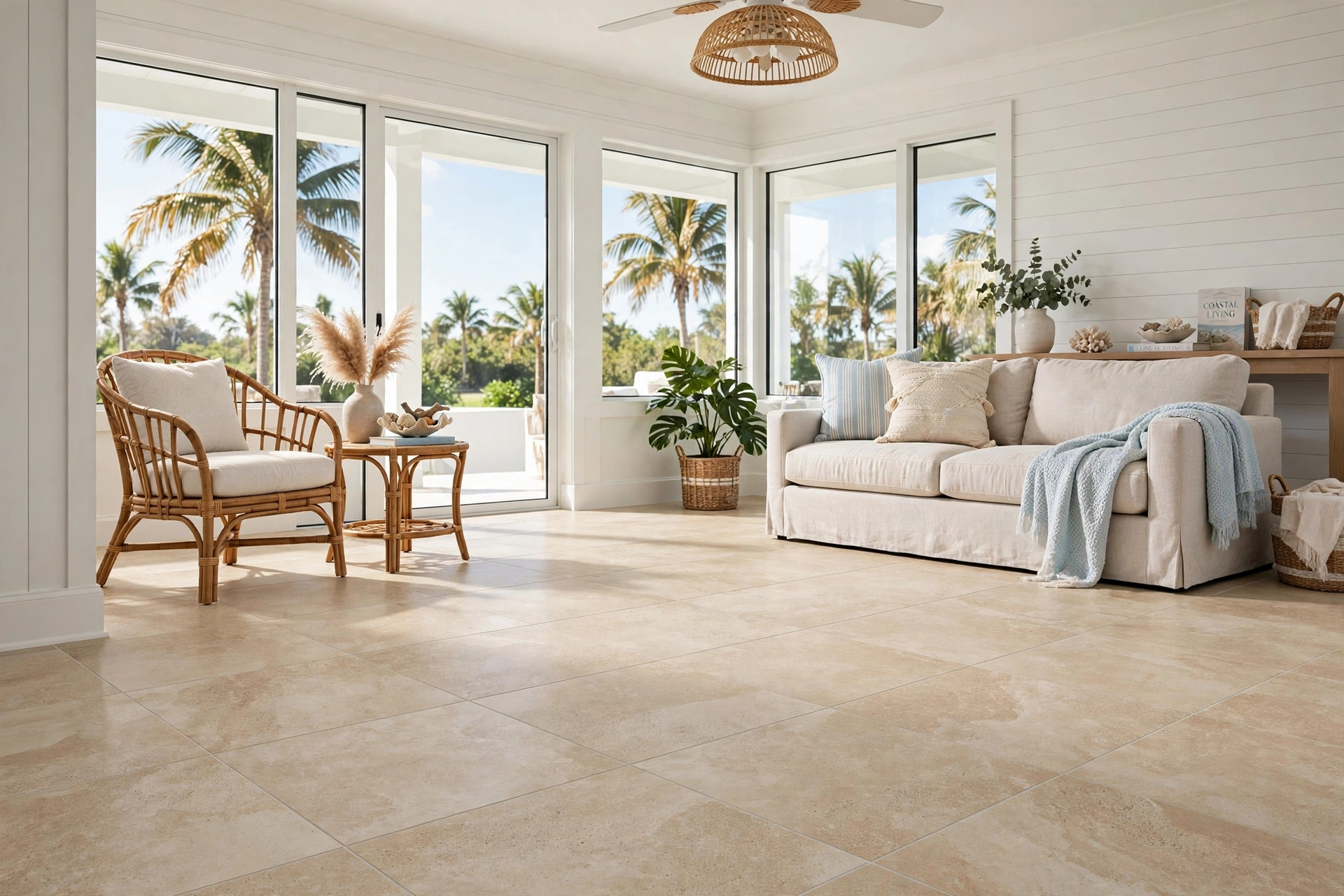

The best flooring for Florida homes humidity must do one job above all others. It must stand up to damp air. Florida homes sit in heat for much of the year. Indoor air stays moist even with air conditioning. Floors take the worst of it. They meet wet feet, tracked rain, and spills every day. The right floor keeps its shape and its looks. The wrong floor buckles, swells, or grows mold.
This guide walks through the top options for flooring for humid climate homes. It explains what to look for, what each choice costs, and how to keep floors in good shape. The advice stays plain and practical.
Why Humidity Matters for Florida Floors
Florida is one of the most humid states in the country. Summer days often carry very high relative humidity. Air conditioning helps, but it does not fix the problem on its own. Moisture still works its way into floor materials. It enters through the subfloor, through grout lines, and from the air itself.
Some materials drink in water. Solid wood is a good example. Its fibers swell when wet and shrink when dry. In Florida that cycle never stops. The result is gaps, cupping, and boards that lift at the edges. Carpet has its own trouble. Its fibers and pad hold moisture for hours. Damp carpet is a fine home for dust mites and mold. The EPA offers guidance on how indoor dampness feeds mold growth. Homeowners in wet climates should take that advice to heart.
A floor that works in Florida keeps water out. It does not change size with the seasons. It lets spills sit on the surface until they can be wiped up. That is the core test for the best flooring for Florida homes humidity.
What to Look for in a Humidity-Proof Floor: Best Flooring for Florida Homes Humidity
Shoppers should check a few plain facts before they buy. The first is water resistance. The label should say waterproof or water resistant. A floor that only “resists spills for a time” is not enough for a Florida home.
The second fact is dimensional stability. That is a dry way of saying the floor keeps its shape. Materials like porcelain tile and vinyl plank barely move as humidity rises and falls. Wood moves a lot.
The third fact is the warranty. Many floors carry a warranty that fails when the floor is installed in a very damp setting. Read the fine print. A warranty that covers damp rooms and slab foundations is a good sign.
The fourth fact is the surface. Smooth hard surfaces release water and dirt. Soft, rough, or porous surfaces hold them. In a humid home, easy to clean beats warm and soft every time.
Test ratings from independent labs can help sort the claims from the facts. Consumer Reports publishes side by side tests of popular flooring lines. Their results show which products hold up under real use.
The Best Flooring Options for Florida Homes
Porcelain Tile
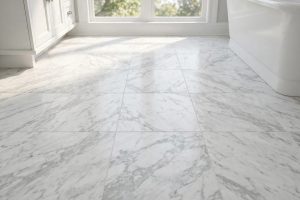
Porcelain tile stands at the top of most lists for flooring in humid climates. It is baked at high heat until it is dense and hard. It absorbs almost no water. It will not swell, buckle, or rot. It also stays cool under bare feet, which many Florida homeowners love in summer.
Tile comes in almost any look. Modern prints mimic wood, stone, and concrete so well that guests must look twice. It costs more to install than many other floors, but the tiles themselves can be had at fair prices from national chains like Home Depot and Lowes.
The weak point of tile is the grout. Grout can stain and can hold mildew if it is not sealed. Use a good grout sealer and reapply it every year or two. That simple step keeps tile floors strong for decades.
Tile makers such as Daltile publish care and install guides that help homeowners pick the right grout and the right pattern for a busy home.
Luxury Vinyl Plank and Tile
Luxury vinyl plank, often called LVP, is the fastest growing choice in Florida homes. It is made in layers with a waterproof core. The top layer carries a photo of wood or stone. The result looks like hardwood but acts like plastic.
Vinyl plank handles water with ease. Spills wipe up. Wet feet leave no mark. Many lines are rated for full kitchens, baths, and laundry rooms. That is why waterproof vinyl flooring for kitchens has become such a popular search among Florida shoppers. Vinyl also feels softer and warmer underfoot than tile, which matters in bedrooms.
Look for a thick wear layer. Twelve mil and up suits most homes. Twenty mil suits homes with dogs or heavy traffic. Major makers like Shaw Floors and Mohawk Flooring list wear layer thickness and water ratings on their product pages.
One caution applies. Cheap vinyl can fade in strong sun. Rooms with large south or west windows may need a line rated for UV light. Good blinds or window film help too.
Sealed Concrete
Many newer Florida homes sit on concrete slabs. Sealed concrete turns that slab into the finished floor. A clear sealer locks out water. The surface is hard, smooth, and simple to mop.
Concrete costs little when the slab is already there. It can be stained, stamped, or polished for a modern look. It is also among the toughest floors in a humid house. Water cannot hurt it. Pets cannot scratch through it.
The downside is comfort. Concrete is hard underfoot and feels cold on winter mornings. Rugs help, and entry areas do well with a washable runner or jute rugs for entryways, which add warmth without trapping damp air for long.
High Quality Laminate
Laminate has changed in recent years. Older laminate swelled when wet. Newer lines carry waterproof cores and tight click locks that block water. They are not as water safe as tile or vinyl, but they do far better than the laminate of twenty years ago.
Laminate appeals to homeowners who want the look of wood at a lower price. It installs fast over a slab. For dry rooms such as bedrooms and living rooms, a good waterproof laminate is a fair pick. In baths and near exterior doors, tile or vinyl remains the safer bet.
What to Avoid in Humid Homes
Solid hardwood is the classic mistake in Florida. It is beautiful, but it fights the climate every day of its life. Boards gap in winter and swell in summer. The best flooring for Florida homes humidity almost never includes solid wood on the ground floor.
Carpet is the other common regret. It feels nice under bare feet, but it holds moisture and soil deep in its pad. In a state where rain falls most afternoons, carpet near an exterior door turns musty fast. If carpet is wanted in a bedroom, keep it small, keep it off the slab with a good pad, and clean it often.
Cost and Price Guide
Prices move by region and by store, but the ranges below give a fair picture for a typical Florida job. Costs include both materials and basic install.
Porcelain tile runs about four to ten dollars per square foot installed. Large format tile and skilled labor push the price up. Basic tile with a plain pattern sits near the low end.
Luxury vinyl plank runs about three to seven dollars per square foot installed. Thicker wear layers and rigid cores cost more. Glue down sheet vinyl costs less but looks less like wood.
Sealed and stained concrete runs about two to six dollars per square foot when the slab is in good shape. Crack repair and heavy polishing raise the bill.
Waterproof laminate runs about two to five dollars per square foot installed. It is often the lowest cost choice that still fights humidity.
These are rough figures. Homeowners should get three written quotes before they sign. National retailers such as LL Flooring post price ranges online that make a fair starting point for comparison shopping.
Care and Upkeep in a Humid Climate
Even the best floor needs care. The good news is that humid climate floors ask for simple habits, not hard work.
Run the air conditioner or a dehumidifier to keep indoor humidity near forty to fifty percent. This single step does more for floors than any product. It slows grout mildew, keeps click locks tight, and helps every surface dry after a spill.
Wipe spills at once. Waterproof does not mean maintenance free. Standing water finds seams and edges in time. A quick wipe with a dry cloth solves the problem.
Mop with a damp mop, not a wet one. Tile and vinyl both clean well with a small amount of water and a mild cleaner. Steam mops can force water into seams on vinyl plank, so many makers warn against them. Check the maker care sheet first.
Reseal grout on tile floors every one to two years. The job takes an afternoon and a bottle of sealer. It keeps water out of the grout lines and keeps mildew from taking hold.
Use mats at every exterior door. They catch rain and sand before they reach the floor. Washable mats are best. Heavy rubber backed rugs can trap moisture under them on humid days.
Advice columns at The Spruce and This Old House carry step by step care guides for tile, vinyl, and laminate. Their seasonal checklists are worth a read for new Florida homeowners.
Safety Notes for Humid Homes
Wet floors cause falls. That is the main safety fact in any Florida home. Tile is hard and can be slick when wet. Choose tile with a slip resistant rating for baths, entries, and pool decks. Rugs near doors help, but they must lie flat to avoid trips.
Mold is the second concern. Any floor that traps moisture can grow mold under it. Keep the home dry, fix leaks at once, and pull up any soft flooring that smells musty. The EPA notes that mold can start growing on damp materials within a day or two. Fast action matters.
Some older floors may hold asbestos in their glue or tiles. Homes built before the 1980s should be tested before any tear out begins. A local lab can test a small sample for a modest fee.
Frequently Asked Questions
Is tile or vinyl better for a Florida home?
Both are strong picks. Tile lasts longer and handles water best. It is the top choice for baths, kitchens, and entries. Vinyl plank is warmer, softer, and cheaper to install. It suits bedrooms and living rooms well. Many Florida homes use tile in the wet rooms and vinyl in the dry rooms.
Can hardwood work in Florida at all?
Solid hardwood is a poor pick for most Florida homes. Engineered wood does better because its layered core resists some movement. Even so, it needs strict humidity control and care. For most buyers, tile or vinyl gives the wood look with far less worry.
What is the cheapest flooring for a humid climate?
Waterproof laminate and glue down vinyl are usually the lowest cost options. Both fight humidity better than solid wood or carpet. They do not last as long as tile, but they suit tight budgets and rental homes well.
Does tile make a home feel cold?
Tile stays cool, which most Floridians count as a plus in summer. In winter it can feel cool underfoot in the morning. Area rugs in living rooms and bedrooms solve the problem without giving up the benefits of tile.
How do I stop mildew on tile grout?
Seal the grout when the floor is new. Ventilate baths with a fan. Wipe down shower floors after use. Clean grout lines with a mild cleaner once a month. If mildew keeps coming back, the sealer may be worn and due for a new coat.
Should flooring match the kitchen tile?
It does not have to match, but it should blend. Many homeowners pick a floor tone that sits well with their cabinets and walls. Shoppers who like tile floors often pair them with kitchen tile options for white cabinets for a clean, coastal look.
A Short Final Word
The best flooring for Florida homes humidity is the floor that meets water without fear. Porcelain tile and luxury vinyl plank lead the field. Sealed concrete and good waterproof laminate earn a place too. Solid wood and carpet do not.
Pick a floor that is truly waterproof, keep indoor air dry, and clean spills fast. Do these three things and the floor will serve the home for many years. Florida weather will not change. The right floor makes sure that fact does not matter.
References
Consumer Reports. (n.d.). Product reviews and ratings. https://www.consumerreports.org Daltile. (n.d.). Ceramic and porcelain tile. https://www.daltile.com LL Flooring. (n.d.). Hardwood, vinyl, and tile flooring. https://www.llflooring.com Lowe’s. (n.d.). Home improvement products. https://www.lowes.com Mohawk Flooring. (n.d.). Flooring products. https://www.mohawkflooring.com Shaw Floors. (n.d.). Flooring products. https://www.shawfloors.com The Home Depot. (n.d.). Home improvement products. https://www.homedepot.com The Spruce. (n.d.). Home and garden advice. https://www.thespruce.com This Old House. (n.d.). Home renovation guidance. https://www.thisoldhouse.com U.S. Environmental Protection Agency. (n.d.). Protecting human health and the environment. https://www.epa.gov
Was this guide helpful?

About David Wilson
The My Garden US editorial team writes practical, in-depth home and garden guides for American homeowners — tested advice, no fluff.
You May Also Like
Best Tile Saw for DIY Homeowners: A Complete Buying Guide
March 2, 2026 0 views
Walk In Shower Installation Cost Near Me: A Plain Guide for Homeowners
August 5, 2026 0 views
Zellige Tile Backsplash Cost and Reviews: A Plain Guide for Homeowners
July 20, 2026 0 views