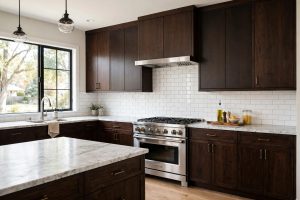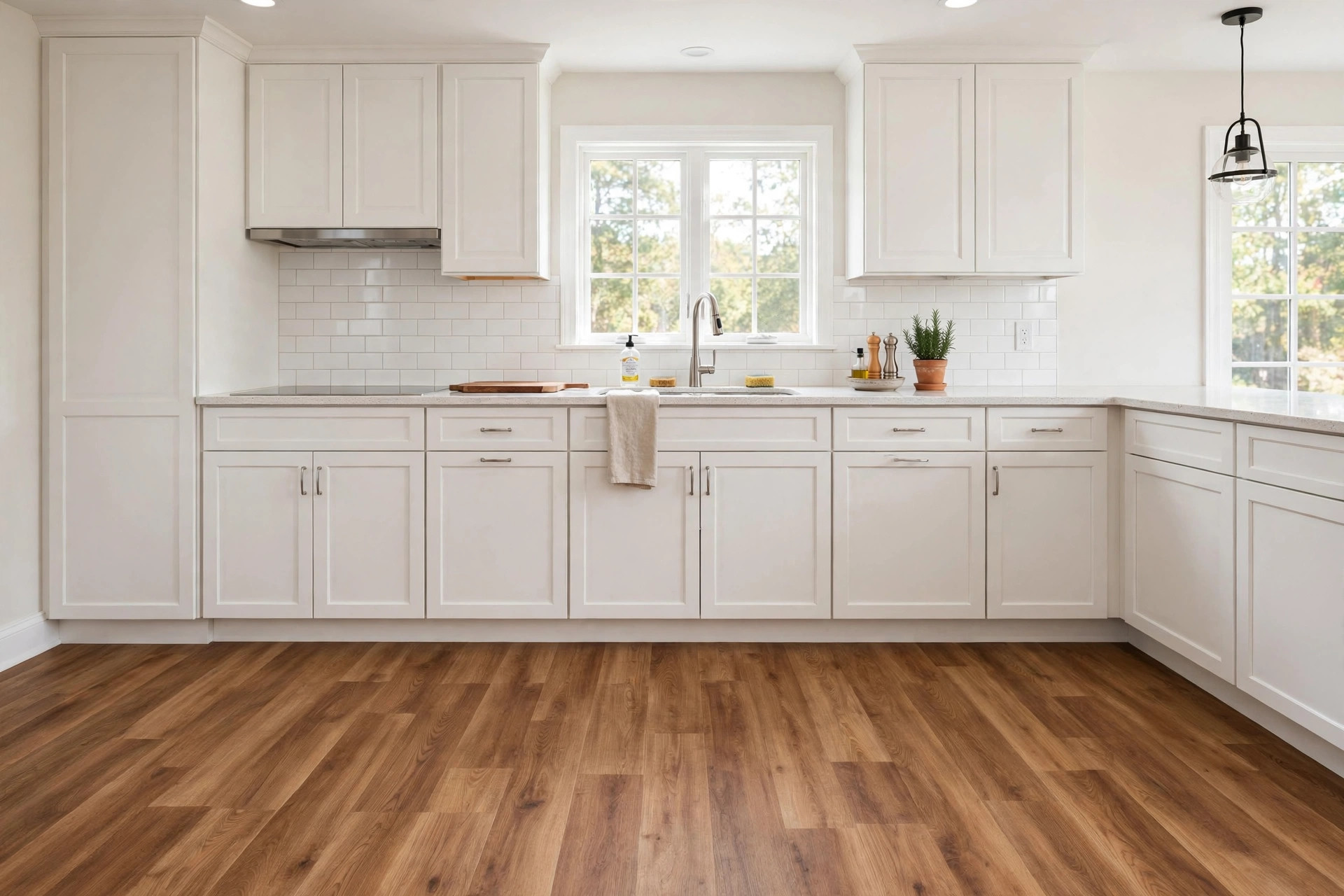

If you are thinking about new kitchen floors, waterproof vinyl flooring for kitchen reviews can help you decide. Buyers across the country have tested these floors in real kitchens. They have spilled soup, dropped pans, and let dogs run across the planks. Their reviews tell a clear story. This article pulls those reviews together. It explains what matters, what to look for, and what it costs.
Why Waterproof Vinyl Flooring for Kitchen Reviews Matter
Kitchens take a beating. Water splashes from the sink. Ice cubes melt on the floor. Mops drag across the surface every week. Regular wood floors do not like this kind of treatment. They swell, warp, and stain. Tile floors handle water well, but they feel cold and hard underfoot. Dropped dishes break on tile.
Waterproof vinyl flooring answers both problems. It stands up to water the way tile does. It feels warmer and softer the way wood does. Reviews from kitchen owners confirm this. Many buyers say they wish they had made the switch sooner. They praise the comfort underfoot. They note how easy cleanup is after a spill.
Reviews also warn about mistakes. Some buyers chose the wrong thickness. Others skipped underlayment and regretted it. Reading waterproof vinyl flooring for kitchen reviews before you buy helps you avoid these errors. You learn from other people’s kitchens.
What to Look For When You Choose: Waterproof Vinyl Flooring for Kitchen Reviews
The Wear Layer
The wear layer is the clear top coat that protects the design below. Reviewers mention it often. A wear layer of 12 mil suits light use. Most kitchen buyers prefer 20 mil. Busy homes with pets or kids may want 28 mil. Thicker wear layers resist scratches and scuffs better. They also cost more.
The Core Type
Vinyl flooring comes with different cores. WPC cores feel softer and warmer. SPC cores are harder and denser. Kitchen reviews often favor SPC for its strength. Heavy items like refrigerators sit on the floor for years. SPC cores resist dents better. WPC cores give a slightly more comfortable feel underfoot. Both are waterproof.
Plank Thickness
Overall plank thickness ranges from about 4 mm to 8 mm. Thicker planks hide small bumps in the subfloor. They also feel more solid. Reviewers in older homes often pick thicker planks. The old subfloor is rarely flat. A 6.5 mm plank with an attached pad works well in many kitchens.
The Look
Modern vinyl looks very close to real wood or stone. Reviews praise the printed designs. Embossed texture adds realism. Some buyers say guests cannot tell it is vinyl. Darker tones hide dirt between cleanings. Lighter tones make small kitchens feel larger. Choose what fits your cabinets and wall color.
Waterproof Claims
Almost every vinyl floor sold today calls itself waterproof. But reviews show that the seams matter. Planks lock together with click joints. Standing water can seep through weak joints. Look for reviews that mention long-term water exposure. Good floors survive dishwasher leaks and pet bowl spills without damage.
Types and Options
Luxury Vinyl Plank
Luxury vinyl plank is the most popular choice for kitchens. The planks are long and narrow, like wood boards. They come in oak, walnut, and hickory looks. Installation is simple. Most products use a click-lock system. No glue is needed. Many reviews rate luxury vinyl plank flooring as the best value for kitchens in 2026.
Luxury Vinyl Tile
Luxury vinyl tile copies the look of ceramic or stone tile. The tiles are usually square. They grout lines can be printed right on the tile. Real grout is not needed. This saves money and cuts maintenance. Stone looks in gray and beige are popular. Reviews say the stone patterns look best in large kitchens with lots of light.
Sheet Vinyl
Sheet vinyl comes in large rolls. It covers the whole kitchen in one piece. Fewer seams mean fewer places for water to enter. It is the least expensive option. The downside is style. Sheet vinyl looks less like real wood than plank products. Reviews rate it well for rental units and budget projects.
Loose Lay Vinyl
Loose lay vinyl is a newer option. The planks are heavy and thick. They stay in place by weight and friction. No locking system is used. This makes single planks easy to replace. If one plank gets damaged, you lift it out and drop in a new one. Reviews from buyers who value easy repair give this type high marks.
Cost and Price
Waterproof vinyl flooring costs less than hardwood and most tile. Material prices run from about $2 to $10 per square foot. Budget products sit near $2 to $4. Mid-range products cost $4 to $6. Premium brands run $6 to $10. Reviews suggest the sweet spot is $4 to $6 per square foot. In that range, you get a 20 mil wear layer and an SPC core.
Installation adds cost. Professional installation runs about $2 to $5 per square foot. Many buyers install it themselves. Click-lock planks are friendly to do-it-yourself projects. A 200 square foot kitchen needs about $800 to $1,200 in materials at mid-range prices. Add $400 to $1,000 for professional labor.
Do not forget the extras. Underlayment may be needed if the product has no attached pad. Transition strips connect the kitchen floor to other rooms. Moldings finish the edges. These small items add $100 to $300 to a typical kitchen project.
Prices at major retailers give a useful baseline. The flooring departments at Home Depot and Lowes stock dozens of vinyl options. Their customer reviews are a rich source of real-world feedback. Specialty sellers like LL Flooring focus on flooring and offer expert help. Manufacturer sites such as Shaw Floors and Mohawk Flooring list full product lines with specs. Daltile is known for tile but also carries hard surface options. Advice sites like This Old House and The Spruce publish buying guides worth reading.
Installation Tips From Reviews
Reviews are full of installation advice. The most common tip is to prepare the subfloor. Vinyl shows every bump underneath. Clean the floor. Fill holes. Sand down high spots. A flat subfloor makes the job much easier.
Acclimate the planks before you start. Leave the boxes in the kitchen for 48 hours. This lets the material adjust to the room temperature. Skipping this step can cause gaps later.
Measure twice and cut once. Start along the longest straight wall. Stagger the end joints by at least six inches. This pattern looks better and locks stronger. Use a tapping block to close the joints. Do not hammer directly on the plank edge.
Leave an expansion gap around the room edge. A quarter inch is standard. The floor needs room to expand in warm weather. Baseboards cover the gap when you finish.
Many reviewers say the job took one weekend for an average kitchen. Remove the old floor first. Move the appliances out. Work in sections. Take breaks. Rushing leads to poor joints. If you cut around a kitchen island, make a paper template first. Test the fit before you cut the plank. Small errors are easy to fix when you catch them early. Keep a few spare planks after the job is done. Stores change product lines over time. Spare planks from the same batch make future repairs simple and invisible.
Care and Upkeep
Waterproof vinyl is easy to care for. That is one of its biggest selling points in reviews. Sweep or vacuum weekly. Damp mop as needed. Use a cleaner made for vinyl floors. Avoid harsh chemicals.
Never use a steam mop. The heat can damage the wear layer and weaken the click joints. This warning appears in many reviews. Buyers who used steam mops report peeling edges.
Place felt pads under chair legs. Chairs drag across kitchen floors daily. Felt pads prevent scratches. Use a mat in front of the sink. This is where most water lands. A mat catches drips before they reach the floor.
Clean spills right away. The floor is waterproof, but standing water can still find its way into seams. Wipe up large spills within a few hours. Pet owners should pay special attention. If you have dogs, read about the best flooring for kitchens with dogs for breed-specific tips.
Most reviewers say their floors still look new after three to five years. Proper care makes the difference. Floors that are swept often and mopped gently age well. Floors that are neglected show wear sooner.
Safety
Vinyl flooring is generally safe for home kitchens. Look for products certified for low chemical emissions. FloorScore certification is a good sign. It means the product passed tests for indoor air quality.
Slip resistance matters in kitchens. Water and cooking oil make floors slick. Check the slip rating before you buy. Textured surfaces grip better than smooth ones. Reviews often mention slipperiness. A floor that looks great but slides under wet shoes is a poor choice.
Some buyers worry about off-gassing. New vinyl can have a smell for a few days. Air out the room during and after installation. Open windows. Run a fan. The smell fades quickly in most cases.
Keep the floor away from high heat. Do not place hot pans directly on vinyl. Use trivets. Keep space heaters away from the floor surface. Extreme heat can warp the planks.
Frequently Asked Questions
Is waterproof vinyl flooring really waterproof?
The planks themselves are waterproof. They will not swell or rot when wet. But water can seep through the seams between planks. Wipe up standing water within a few hours. For areas with constant moisture, like under a leaking dishwasher, fix the leak first. No floor survives standing water forever.
How long does waterproof vinyl flooring last in a kitchen?
Most products carry warranties of 15 to 25 years for homes. Real-world reviews suggest 10 to 20 years of good looks in a busy kitchen. Thicker wear layers last longer. Proper care extends the life. High-traffic homes may see wear sooner.
Can I install waterproof vinyl over my old kitchen floor?
Often yes. Many products install over existing tile, vinyl, or wood. The old floor must be flat, clean, and firmly attached. Remove loose tiles. Fill grout lines on old tile floors. Check the product instructions. Some warranties require a specific subfloor.
Does waterproof vinyl flooring increase home value?
It helps, but less than hardwood. Buyers like new, clean floors. Vinyl is a strong selling point in mid-price homes. In luxury homes, buyers expect hardwood or stone. For most kitchens, good vinyl is a smart investment.
What is the difference between waterproof and water-resistant vinyl?
Waterproof means the core will not absorb water. Water-resistant means it resists water for a time but may absorb it eventually. For kitchens, choose waterproof. The price difference is small. The protection is much better.
Can waterproof vinyl go in a basement kitchen too?
Yes, with care. Basements can have moisture from below. Use a moisture barrier under the floor. Check for dampness before you install. Reviews of waterproof flooring for basements cover the extra steps needed below grade.
A Short Final Word
Waterproof vinyl flooring for kitchen reviews point to a clear winner for most homes. It handles water, feels good underfoot, and costs less than wood or tile. Choose a 20 mil wear layer. Pick an SPC core for strength. Prepare your subfloor well. Read buyer reviews for the exact product you want. Do these things and your kitchen floor should serve you well for many years.
References
Daltile. (n.d.). Ceramic and porcelain tile. https://www.daltile.com LL Flooring. (n.d.). Hardwood, vinyl, and tile flooring. https://www.llflooring.com Lowe’s. (n.d.). Home improvement products. https://www.lowes.com Mohawk Flooring. (n.d.). Flooring products. https://www.mohawkflooring.com Shaw Floors. (n.d.). Flooring products. https://www.shawfloors.com The Home Depot. (n.d.). Home improvement products. https://www.homedepot.com The Spruce. (n.d.). Home and garden advice. https://www.thespruce.com This Old House. (n.d.). Home renovation guidance. https://www.thisoldhouse.com
Was this guide helpful?

About James Carter
The My Garden US editorial team writes practical, in-depth home and garden guides for American homeowners — tested advice, no fluff.
You May Also Like
Trex vs TimberTech Decking Comparison for USA Homeowners
June 20, 2026 0 views
Bluestone Patio Cost Per Square Foot USA: A Plain Guide for Homeowners
July 22, 2026 0 views
Flooring That Increases Home Value Most in the USA
July 26, 2026 0 views