
Many cooks want to know how to clean grill grates with onion. The method is simple. It uses a common kitchen item. It costs almost nothing. And it works well on hot grates. Grill owners have used this trick for many years. It came from a time before fancy brushes. It still has a place in a modern backyard. The onion holds up on a fork. You rub it on the hot metal. The juice steams off grease. The skin scrubs at stuck food. In this guide, you will learn each step. You will learn which grates work best. You will learn when to skip the onion and use a brush instead. By the end, you will have a clear plan for clean grates and better food.
Why Clean Grates Matter
Dirty grates do more than look bad. Old grease turns bitter. It sticks to fresh food. It can give steaks and chicken a burnt taste. A dirty grate also grips food. Fish and burgers tear when you turn them. That ruins the meal. Clean grates heat food more evenly. They give clear sear marks. They last longer too. Grease buildup can cause flare-ups. Flare-ups are bursts of flame from dripping fat. They char food on the outside. They leave it raw inside. Regular cleaning keeps the grill safe. It keeps the flavor true. Most grill makers agree on one rule. Clean the grates after each use. A quick scrub takes five minutes. A deep clean takes longer. The onion method is a quick clean. It fits into the cooking session. You do it while the grill is still hot. That is when food comes off easiest.
What You Need: How to Clean Grill Grates with Onion
You need only a few things. They are cheap. Most homes have them.
– One large onion, white or yellow – A long grill fork or sturdy tongs – A hot grill with the lid open – A heat-safe glove, if you like
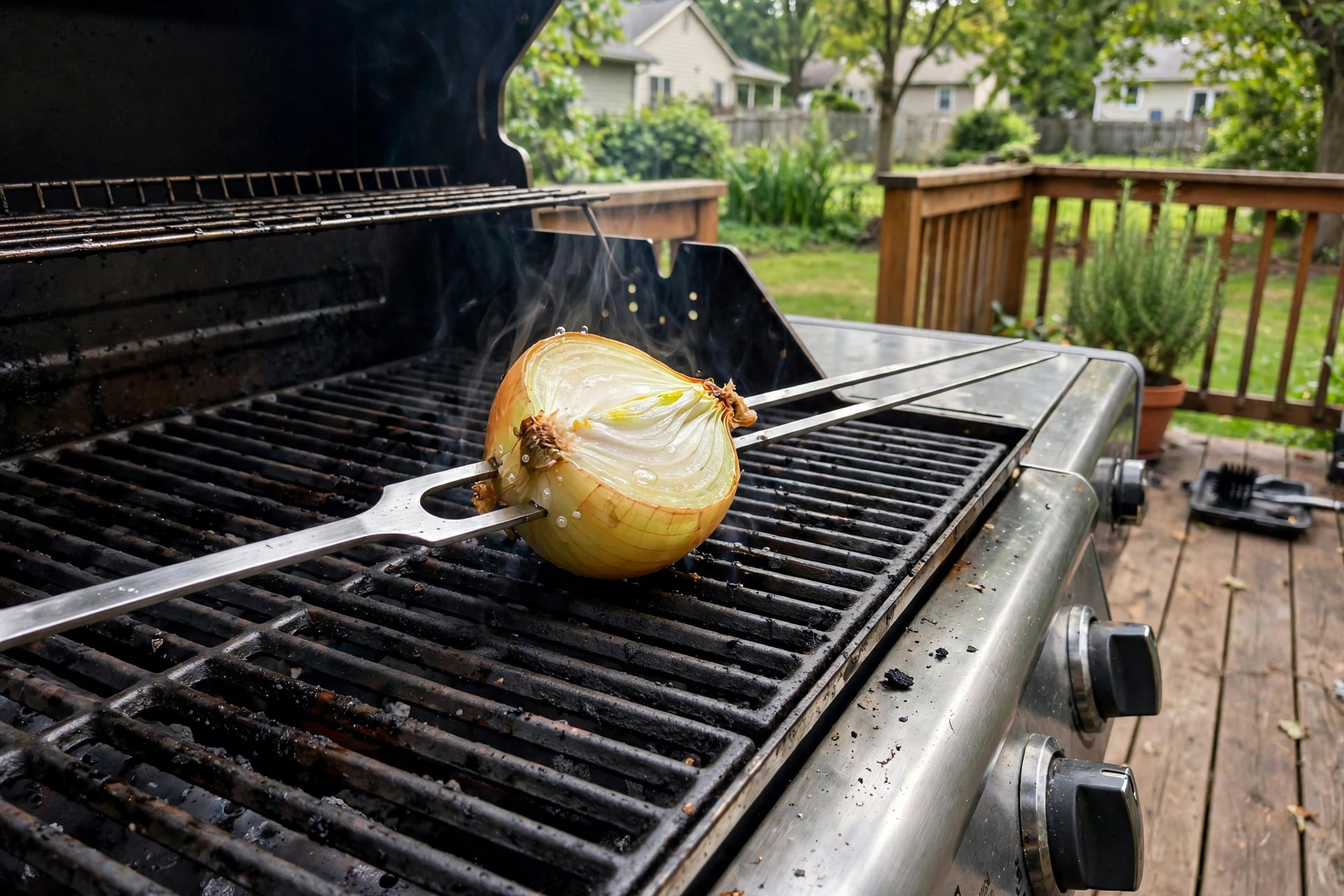
White and yellow onions work best. They are firm. They hold their shape. Sweet onions are soft. They fall apart fast. Red onions work, but they may stain. A large onion covers more grate in each pass. Cut it in half from top to bottom. Push a fork into the round end. The fork is your handle. It keeps your hand far from the heat. Long tongs work too. Grip the onion hard. Do not use your fingers. The grates will be very hot. Have the onion ready before the grill heats. Many cooks clean in two passes. Once before cooking. Once after cooking. The onion before cooking removes old residue. The onion after cooking removes fresh grease.
How to Clean Grill Grates with Onion: Step by Step
Follow these steps in order. Take care with the heat.
Step 1: Heat the grill
Light the grill. Turn the burners to high. Close the lid. Wait ten to fifteen minutes. The grates should be very hot. Heat burns loose food to ash. It loosens grease. On a charcoal grill, spread the coals in one layer. Let them turn gray with ash. Heat is the key. A cold grate will not clean well. The onion needs steam. Steam comes from heat.
Step 2: Cut and mount the onion
Cut the onion in half. Keep the skin on. The skin adds scrubbing power. Push the grill fork deep into the round back of one half. It should sit firm. If it wobbles, use tongs instead. Some cooks rub a little cooking oil on the onion face. Oil helps the onion glide. It is optional. Plain onion works fine.
Step 3: Scrub the grates
Hold the fork by the handle. Press the cut face of the onion on the grates. Rub back and forth along each bar. Use firm pressure. Move with the direction of the bars. The onion will hiss and steam. That steam lifts grease. You will see brown juice run off. Turn the onion to a fresh face when it gets soft. Use the second half if needed. Take your time. Cover every bar. Pay care to the spots between bars. Work in small sections. The whole job takes about five minutes.
Step 4: Check your work
Look at the grates. They should look dark and clean. Wipe one bar with a dry cloth to test. If black bits remain, repeat the pass. Some buildup may need a brush. The onion is gentle. It will not remove years of neglect. But it handles normal cooking grime well.
Step 5: Oil the grates lightly
After scrubbing, oil the grates. Fold a paper towel. Grip it with tongs. Dip it in a high-heat oil. Canola oil works. Rub it on the hot bars. A thin film is enough. This stops food from sticking. It also guards cast iron from rust. Grill maker Weber and others give the same advice. Clean grates, then a light coat of oil.
Step 6: Cook, then repeat
Cook your food as usual. After cooking, burn off the residue. Turn the heat to high for five minutes. Then scrub with the onion again. Close the lid. Let the grill cool. This two-pass habit keeps grates in good shape all season.
Which Grates Suit the Onion Method
Not all grates are the same. The onion method works on most types. But some need extra care.
Stainless steel grates
These are the most common. They are tough. The onion works well on them. Rub firmly. Stainless steel can take the pressure. It does not need seasoning like cast iron.
Cast iron grates
Cast iron holds heat well. It gives great sear marks. But it can rust. The onion method suits it. The moisture is brief. Dry heat follows. After the onion pass, oil the grates. If your grates are new or bare, learn how to season cast iron grill grates before you cook. Seasoning builds a dark nonstick layer. It keeps rust away.
Porcelain-coated grates
These have a smooth glass-like coat. They clean easily. Use light pressure with the onion. Hard scrubbing can chip the coat. Chips lead to rust. If the coat is already chipped, a brush may be safer.
Chrome-plated grates
These are thin and light. They appear on small or cheap grills. The onion works, but be gentle. Heavy pressure can bend thin wire grates.
Onion vs. Other Cleaning Methods
The onion is one of several options. Each has strong points.
Wire brushes are fast. They cut through tough buildup. But bristles can break off. Loose bristles can land on food. That is a real hazard. If you use a brush, check it often. Replace it when bristles bend. Read reviews of the best grill brush for cast iron grates to pick a safe one. Some cooks use the onion as a follow-up after the brush. It sweeps away loose bits.
Ball-of-foil scrubbing is another old trick. You crumple aluminum foil. You grip it with tongs. You scrub the hot grates. It works. But foil tears. It leaves shreds. The onion is cleaner.
Steam cleaners use water on hot metal. They work well. They cost more. They need storage space.
Nylon brushes are safe for porcelain coats. But they melt on very hot grates. You must let the grill cool first.
The onion stands out for three reasons. It is food-safe. No chemicals touch your grates. It is cheap. One onion costs little. And it smells good. The steam carries a mild onion scent. It fades fast. Many cooks at Napoleon events and backyard contests swear by it. Guides at Broil King note the same steam-clean effect.
Cost and Price
The onion method is nearly free. A large yellow onion costs under one dollar at most stores. Compare that with a good wire brush at fifteen to thirty dollars. Compare it with a grill stone at ten dollars. A grill stone wears down. You buy a new one each season. Onions never run out. They sit in your pantry. For a cook who grills twice a week, the yearly cost is under ten dollars. That is hard to beat. If you want to compare gear prices, check the big retailers like Home Depot. But the onion itself needs no store trip. You likely have one at home.
Care and Upkeep Through the Season
A clean grate is part of a clean grill. Keep up with the whole unit.
After each cook: Burn off residue on high heat. Scrub with the onion. Empty the grease tray on a gas grill. Grease trays cause most flare-ups.
Each month: Check the burners. Spiders and dirt can block the small holes. A blocked burner heats unevenly. Learn how to clean gas grill burners properly for a full walkthrough. Wipe the inside of the lid. Soot builds up there. It can flake onto food.
Each season: Wash the grates with warm soapy water. Rinse well. Dry them fully. Check for rust. Touch up cast iron with oil. Cover the grill when not in use. A good cover doubles the life of the grates. Char-Broil and Traeger both sell fitted covers. Pellet grill owners can find upkeep checklists through Traeger cooking guides as well.
Storage: In cold states, store the grill in a dry spot. If it stays outside, use a waterproof cover. Remove the propane tank. Store it upright in a ventilated place. Never store it indoors.
Safety Notes
Heat is the main risk. Grates can reach 500 degrees or more. Always use a long fork or tongs. Never hold the onion with bare hands. Wear a heat-safe glove on the fork hand. Keep children and pets away from the grill. The steam from the onion can burn. Keep your face back. Rub with the bars, not across them. This keeps the fork steady. Let the grill cool before you touch any part of it. If you use oil on the onion, use a small amount. Too much oil drips. Drips cause flare-ups. Keep a spray bottle of water nearby. It tames small flames. The safety team at Big Green Egg reminds cooks to keep the lid open when oiling. Closed lids trap heat and flame.
One more note. The onion method uses a real food item on a hot surface. That is safe. But do not serve the used onion. It has picked up old grease and ash. Throw it away when done. Use a fresh onion for cooking.
Frequently Asked Questions
Does the onion really clean, or is it just a myth?
It really works. The science is simple. Heat turns the onion juice to steam. Steam loosens grease. The firm flesh scrubs stuck bits. The mild acid in onion helps break down residue. It will not replace a deep scrub on a neglected grill. But for normal use, it cleans well. Testers at AmazingRibs have noted the same steam effect in their grill care guides.
Can I use this method on a charcoal grill?
Yes. Wait until the coals are hot and ashed over. Then scrub. The method is the same. Charcoal grates often have more ash. Brush the ash off first with a dry pass. Then use the onion.
Will the onion leave a taste on my food?
No. The onion scent fades in minutes. The high heat burns it off. Your steaks will not taste like onion. If you are sensitive, do the scrub ten minutes before cooking. That gives extra time for the scent to clear.
What if I do not have an onion?
A lemon half works in a pinch. It gives the same steam and acid. A potato half works too. It is firm and starchy. But the onion is best. It is firmer than lemon. It is juicier than potato. Keep a bag of yellow onions in the pantry during grill season. Recipe ideas for grill night are easy to find at The Spruce Eats.
How often should I clean with the onion?
Do a quick pass before and after each cook. That is the best habit. It takes five minutes. It stops buildup from hardening. A hard layer of old grease is much tougher to remove. It may need a brush or a soak.
Is the onion method safe for a smoker?
It works on smoker grates too. Heat the smoker to at least 300 degrees first. Then scrub. Smoker grates collect sticky residue. The onion handles light layers. For heavy buildup, remove the grates and soak them. Then scrub and oil.
A Short Final Word
Learning how to clean grill grates with onion is a small skill with a big payoff. It keeps your food tasting right. It keeps your grill safe. It costs almost nothing. All it takes is a hot grill, a halved onion, and five minutes. Make it a habit. Clean before you cook. Clean after you cook. Oil the grates. Cover the grill. Your food will thank you. Your grill will last for years.
References
AmazingRibs.com. (n.d.). Barbecue and grilling science. https://www.amazingribs.com Big Green Egg. (n.d.). Kamado grills and outdoor cooking. https://www.biggreenegg.com Broil King. (n.d.). Gas and charcoal grills. https://www.broilkingbbq.com Char-Broil. (n.d.). Gas and charcoal grills. https://www.charbroil.com Napoleon. (n.d.). Fireplaces, grills, and heating products. https://www.napoleon.com The Home Depot. (n.d.). Home improvement products. https://www.homedepot.com The Spruce Eats. (n.d.). Recipes and cooking guides. https://www.thespruceeats.com Traeger. (n.d.). Wood pellet grills. https://www.traeger.com Weber. (n.d.). Grills and outdoor cooking. https://www.weber.com
Was this guide helpful?

About Jennifer Lee
The My Garden US editorial team writes practical, in-depth home and garden guides for American homeowners — tested advice, no fluff.
You May Also Like

Best BBQ for Small Backyards Reviews
June 24, 2026 0 views
The Best Pellet Grill Accessories Must Have for Great Backyard Cooking
October 4, 2026 0 views
The Best BBQ for Super Bowl Party: A Complete Guide
April 17, 2026 0 views