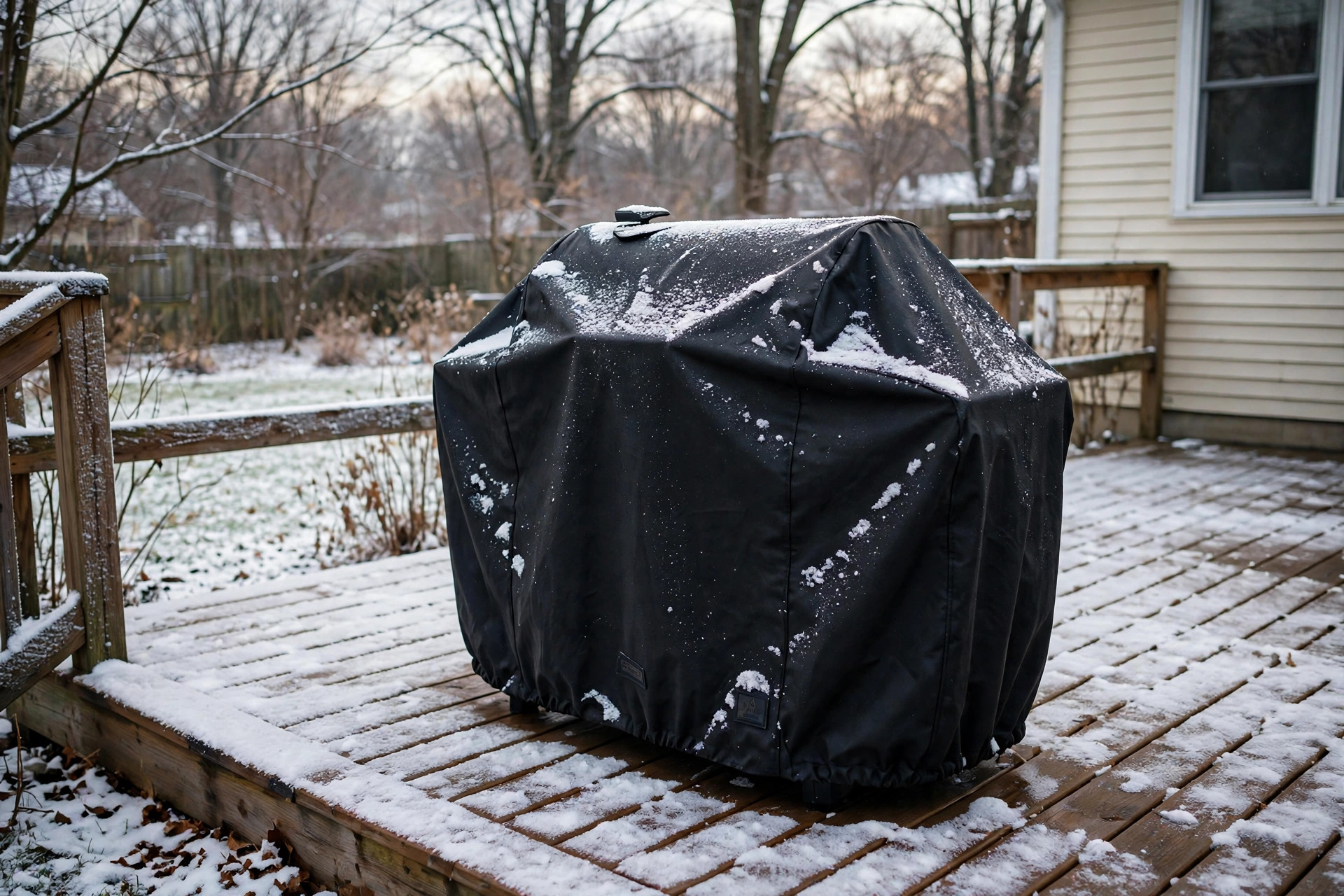
Winter is hard on outdoor cooking gear. A pellet grill that sits uncovered through December, January, and February will age faster than one that rests under a good cover. This pellet grill cover for winter reviews guide walks through what owners actually look for in a cover, how the common cover types differ, what prices look like today, and how to care for both the cover and the grill beneath it.
Why It Matters
A pellet grill is not a simple metal box. It has an electric auger, a control board, a fan, and a hopper full of wood pellets. Cold air alone does not ruin these parts. Water does. Snow melts into the seams. Ice pushes into small gaps. Spring brings a grill that will not start, a hopper full of swollen pellets, or rust along the leg joints.
A cover stops most of that damage. It keeps direct rain and snow off the grill body. It cuts the amount of meltwater that can reach the electronics. It slows rust by keeping the steel dry between storms. Reviews from owners in northern states return to this same point again and again. The cover does not need to be fancy. It needs to fit, stay put in wind, and shed water.
There is also a money question. Pellet grills cost several hundred dollars. A cover costs a small share of that. When owners read pellet grill cover for winter reviews before buying, they are really asking one question: will this cover last through more than one winter? A cheap cover that splits in February is not a bargain. It is a lesson.
What to Look for When You Choose a Cover: Pellet Grill Cover for Winter Reviews
Fit comes first. A cover that is too large will flap in wind and let rain blow in under the edges. A cover that is too small will pull tight and tear at the seams. Measure the grill from end to end, including the hopper and any side shelves that stay on through winter. Then match those numbers to the cover size chart. Many reviewers say the size chart matters more than the product photos.
Fabric comes next. Look for a heavy woven polyester or vinyl-coated fabric. Thin fabric will crack when ice forms on it and thaws. Heavy fabric holds its shape and keeps working year after year. Reviews often praise covers with a soft inner lining, because the lining keeps the cover from rubbing paint off the grill lid over a long winter.
The closure system is worth attention. Drawstrings, buckles, and Velcro straps all show up in reviews. Wind is the main enemy here. A cover with no straps will lift off in a January gust. Owners who grill all winter, especially those who follow guides for the best outdoor grill for winter grilling, often prefer buckle straps that clip under the cart or legs. They hold in wind and are easy to fasten with gloves on.
Vents matter more than most buyers expect. A sealed cover can trap damp air inside. That damp air then condenses on cold metal and starts rust. The best covers include small mesh vents near the top. They let moisture escape while keeping snow out. Reviewers who live near the coast or the Great Lakes mention this feature often.
Seams and stitching round out the list. Double-stitched seams last longer. Heat-sealed or taped seams block water better than plain stitching. Read the reviews with winter in mind. A cover that earns praise in Texas may earn complaints in Minnesota.
Types of Winter Covers
Brand-Specific Covers
Grill makers sell covers cut for their own models. These are the simplest choice for fit. A Traeger owner can buy a Traeger cover and know it will clear the hopper and the chimney. The official Traeger site lists covers for its pellet grill lines, and owners often start there. Weber, Char-Broil, and Napoleon sell fitted covers for their own grills as well. See Weber, Char-Broil, and Napoleon for current options. Brand covers cost more, but the fit is rarely wrong.
Universal Covers
Universal covers come in standard sizes, such as 36-inch, 52-inch, and 60-inch lengths. They fit many grill brands as long as the measurements line up. The trade is clear. The price is lower, but the fit may need adjustment with the straps. Universal covers from big retailers carry thousands of owner reviews, which makes them easy to research. The Home Depot grilling section stocks both brand and universal covers in stores and online, so you can compare fabric weight in person.
Heavy-Duty Winter Covers
Some covers are sold as winter or all-season models. They use thicker fabric, stronger straps, and full linings. A heavy duty pellet grill cover of this type is built for places where snow sits on the grill for weeks. These are the covers that show up most often in pellet grill cover for winter reviews from owners in the upper Midwest and New England. They cost the most, but reviewers report the longest life.
Budget Covers
Budget covers use thin fabric and simple drawstrings. They work for one mild winter or as a dust cover in a garage. Reviews warn that thin vinyl turns brittle in real cold. If you live where January stays below freezing, a budget cover is usually a false saving.
Cost and Price
Prices for pellet grill covers follow a clear ladder. Budget universal covers run about 25 to 40 dollars. Mid-range covers with buckle straps and vents run about 45 to 70 dollars. Brand-specific covers for large pellet grills run about 60 to 100 dollars. Heavy-duty winter covers from grill makers can reach 100 to 130 dollars.
Shipping and local stock affect the price you pay. Buying in fall often brings lower prices, because stores clear summer stock. Buying in January can mean thinner choice. Read reviews dated November through March for the most honest winter reports. A review posted in July may not speak to cold-weather life at all.
Think of the cover as protection for a larger purchase. A 600-dollar pellet grill guarded by an 80-dollar cover is a sound deal. A 600-dollar grill left to the snow is a gamble. Reviewers who track costs over time say the same thing: one cover that lasts three winters is cheaper than three covers that each last one.
Care and Upkeep
A cover needs little care, but it does need some. Brush snow off the top of the cover after each storm. A heavy snow load can stretch the fabric and pull at the straps. If ice forms on the cover, let it melt on its own. Chipping ice off with a tool can cut the fabric.
Wash the cover once or twice a year with mild soap and water. Let it dry fully before it goes back on the grill. A damp cover put back on a damp grill is a recipe for mildew. Check the straps and buckles each fall. Replace a cover whose straps have frayed before winter sets in, not after the first storm tears it free.
The grill itself needs care too. Empty the hopper of unused pellets before a long rest, or store the pellets in a dry sealed bin. Wood pellets absorb water and swell, and swollen pellets can jam the auger in spring. Clean the drip tray and the fire pot so old grease does not sit all winter. A thin coat of high-heat cooking oil on bare steel parts helps against rust. Owners who smoke through the cold months can find solid cold-weather method guides at AmazingRibs, and recipe help for grill sides at The Spruce Eats.
Store the cover in a dry place when the grill is in use. Folding a wet cover into a ball and leaving it on the patio shortens its life. Small habits like these are the difference between a cover that lasts one season and one that lasts five.
Safety
A cover is only safe on a cold grill. Never put a cover on a grill that is hot or still warm. The heat can melt the fabric or start a fire. Let the grill cool fully after cooking before the cover goes back on. This is the single most repeated safety note in pellet grill cover for winter reviews.
Keep the cover away from open flame and from patio heaters. Most cover fabrics are water-resistant, not fire-resistant. Check that the cover does not block the grill chimney when you fire up the grill. Always remove the cover fully before lighting the grill. A half-removed cover can catch on a hot surface.
Place the grill on a level, stable surface before covering it. A covered grill is top-heavy, and strong wind can push it over if the cart sits on soft ground. If your area sees heavy storms, roll the grill close to a wall or under an eave for extra shelter. Safety agencies such as Consumer Reports publish grilling and outdoor equipment safety guidance that is worth reading before winter sets in.
Frequently Asked Questions
Do pellet grills need a cover for winter? Yes, if the grill stays outdoors. The cover keeps snow, rain, and meltwater off the body, the hopper, and the electronics. Owners in dry, mild climates may get by without one, but most reviewers in snow country call a cover a must.
What size cover fits my pellet grill? Measure your grill with the lid closed. Note the width, depth, and height, including the hopper and chimney. Compare those numbers to the cover size chart. When two sizes seem close, choose the larger one and use the straps to take up slack.
Can I leave my pellet grill outside all winter with a cover on? Yes, in most cases. Empty the hopper or seal the pellets, clean the grease tray, and make sure the cover is strapped down. Brush off snow after storms. The grill will come through winter in working order.
Do brand covers fit better than universal covers? Usually, yes. A cover made for your exact grill model clears the hopper, chimney, and shelves without guesswork. Universal covers cost less and work well if you measure carefully, but read the reviews for fit notes on grills like yours.
How long does a winter grill cover last? Two to five years is the common range. Thin budget covers may last one winter. Heavy-duty covers with strong straps and vents often last four or five. Sun exposure in summer wears fabric too, so store the cover out of direct sun when it is not in use.
Can I use my pellet grill in winter without a cover between cooks? You can, but snow on an uncovered grill between cooks will find its way into seams and the hopper. Owners who follow the best bbq for small backyards reviews and cook on a patio year round often keep the cover on between sessions and remove it only to cook. This keeps the grill ready and dry.
A Short Final Word
Reading pellet grill cover for winter reviews is worth the time because the differences are real. Fit, fabric weight, straps, and vents separate the covers that survive winter from the ones that do not. Measure your grill, choose a cover built for real cold, and spend a little time on care. The reward is a grill that starts in April as easily as it did in October.
For shoppers comparing grill brands before they buy a cover, the range of pellet and kettle options is wide. Big Green Egg and Broil King both offer outdoor cooking lines with their own cover options, and browsing those pages shows how fitted covers are cut for each body style. Once the grill is sorted, the cover is the easy part: buy once, strap it down, and let winter do its worst. Even small cooking extras deserve winter care, so if you use one, read the best grill basket for vegetables reviews and store the basket dry as well.
References
AmazingRibs.com. (n.d.). Barbecue and grilling science. https://www.amazingribs.com Big Green Egg. (n.d.). Kamado grills and outdoor cooking. https://www.biggreenegg.com Broil King. (n.d.). Gas and charcoal grills. https://www.broilkingbbq.com Char-Broil. (n.d.). Gas and charcoal grills. https://www.charbroil.com Consumer Reports. (n.d.). Product reviews and ratings. https://www.consumerreports.org Napoleon. (n.d.). Fireplaces, grills, and heating products. https://www.napoleon.com The Home Depot. (n.d.). Home improvement products. https://www.homedepot.com The Spruce Eats. (n.d.). Recipes and cooking guides. https://www.thespruceeats.com Traeger. (n.d.). Wood pellet grills. https://www.traeger.com Weber. (n.d.). Grills and outdoor cooking. https://www.weber.com
Was this guide helpful?

About Lisa Anderson
The My Garden US editorial team writes practical, in-depth home and garden guides for American homeowners — tested advice, no fluff.