A Quiet Answer to a Loud Craving
If you have read any smoker box for gas grill reviews, you already know the central question. Gas grills cook fast and clean, but the food they make tastes like gas grill food. A smoker box is a small steel box that promises to fix that. You fill it with wood chips, set it on the hot grates, and let the smoke do its work. The ribs taste different. The chicken tastes different.
This article gathers what real owners report after months of use. It walks through how the boxes work, what separates a good one from a cheap one, which woods to buy, and how much to pay. If you want smoke flavor without buying a second grill, this is the cheapest honest way in.
Why It Matters: Smoker Box for Gas Grill Reviews
A gas grill is a fine tool. It heats in ten minutes. It holds a steady temperature. It cleans with a wire brush. But it has one honest weakness. Burning gas makes heat and a small amount of water vapor. It makes almost no flavor compounds. A charcoal fire or a wood fire makes hundreds of flavor compounds as the wood burns down. That is the whole reason barbecue tastes like barbecue.
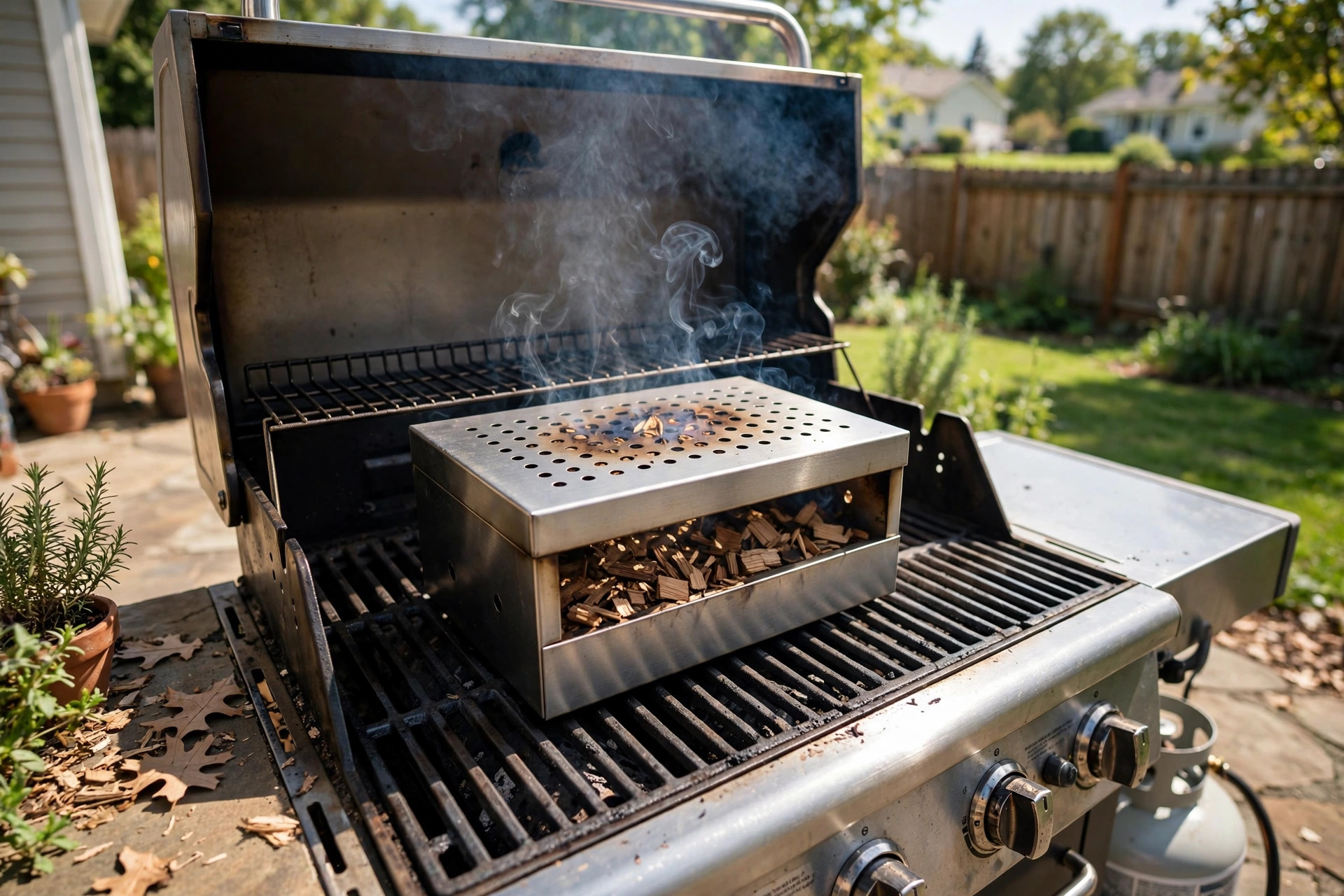
A smoker box borrows that flavor for a gas grill. The box sits in the heat, and the wood chips inside smolder instead of bursting into flame. Smoldering wood gives off a steady stream of smoke. That smoke settles on the meat, the fish, or the vegetables above it. The result is a real smoke ring and a real smoke taste, not the faint hint you get from a bottle of liquid smoke.
For most backyard cooks, this matters because of money and space. A dedicated smoker costs hundreds of dollars and needs a corner of the yard. Many families already own a gas grill. A smoker box costs the price of a bag of charcoal. It stores in a drawer. That simple math is why smoker box for gas grill reviews draw so many readers.
The box also matters for control. Gas grills hold low, steady heat with little effort. Long, slow, even heat turns tough cuts tender. Paired with real wood smoke, that steadiness gets close to the work of a much more expensive machine.
What to Look for Before You Buy
Reviews repeat the same four features. They decide whether a box works or sits in the garage.
Thick steel. Thin sheet metal warps after a few hot sessions. A warped lid lets chips catch fire instead of smolder. Look for stainless steel that feels heavy in the hand. Cast iron also works well and holds heat for a long time. Avoid anything that feels like a tin can.
A tight but vented lid. The lid must close firmly so flames stay out. It must also have holes or slots so smoke can escape. The best boxes have a hinged lid. The hinge keeps the lid attached when you lift it with tongs to check the chips. Loose lids get lost or fall into the grease pan.
Size and shape. Most boxes are the size of a paperback book. That fits between the grates of a two-burner or three-burner grill. Very small boxes need refilling too often. Very large boxes block heat and food space. Measure the open space on your grates before you order.
Chip capacity. A box that holds two handfuls of chips gives about thirty to forty minutes of smoke. A larger box that holds four handfuls stretches that to an hour or more. For short cooks like fish or burgers, the small box is fine. For ribs or a whole chicken, the bigger box saves you from opening the lid to refill.
Owners also mention the handle, or the lack of one. A box with no handle is hard to lift when it is hot. Tongs work, but a loop handle on the lid is easier. This is a small detail. It matters every time you use the box.
Price trackers at Consumer Reports and the grilling guides at Weber both stress the same point. Build quality beats brand name. A well-made no-name box outperforms a famous name with thin walls.
Types and Options
Three designs show up in nearly every roundup of smoker box for gas grill reviews. Each has a place.
The classic vented box
This is the standard design. A rectangular steel box with a perforated lid. You soak wood chips in water for thirty minutes, drain them, fill the box, and set it on the grates or directly over a burner. The lid keeps the chips from flaming while smoke escapes through the holes. Owners report this design gives the strongest, most reliable smoke of the three. It is also the most forgiving for beginners.
The V-shaped smoker box
This design sits between the heat tents of a gas grill, right above the burner. Its V shape funnels heat into the chips, so it starts smoking faster than the classic box. The trade-off is capacity. It holds fewer chips, so long smokes need a refill. Owners with three-burner grills like it because it wastes no grate space.
The tube smoker
The tube is a long metal cylinder filled with wood pellets instead of chips. You light one end with a torch and let it smolder like a cigar. It makes smoke for two to four hours with no grill heat at all, which suits cold smoking cheese or nuts. For hot smoking, owners are split. It makes plenty of smoke but takes up grate room and needs a torch to light.
There is also a do-it-yourself option. Heavy-duty aluminum foil, folded into a pouch and poked full of holes, works as a one-time smoker box. It costs almost nothing. Owners use it to test whether they like smoked food before spending real money. The pouch tears easily and cannot be reused. Think of it as a trial, not a solution.
Cost and Price
Smoker boxes are one of the cheapest upgrades in all of outdoor cooking. Prices run in a tight band.
The budget tier runs about ten to fifteen dollars. These boxes are simple stainless steel with a loose lid. They work, but they warp faster than premium boxes. For a cook who smokes twice a summer, they are enough.
The mid tier runs about fifteen to twenty-five dollars. This is where most reviews point buyers. The steel is thicker. The lid fits better. Many have hinged lids or handles. Boxes from established grill makers like Char-Broil and Napoleon sit in this range, and owners report them lasting several seasons.
The premium tier runs twenty-five to forty dollars and up. These are heavy cast iron or extra-thick stainless boxes. They hold heat like a small oven. They start smoking fast and keep smoking long. Owners who smoke every weekend say the extra money pays for itself in saved chip refills and fewer burned batches.
Wood chips add a running cost. A two-pound bag of hickory or apple chips costs a few dollars and fills a box four to six times. Pellets for tube smokers cost a little more per pound. Retailers such as Home Depot carry both, and seasonal sales in spring drop the price.
Put it together. A mid-tier box and two bags of chips cost less than one tank of propane. For that money, every gas grill you already own becomes a part-time smoker.
How to Use It Well
Buying the box is the easy part. Using it well takes a small routine.
Soak the chips first. Thirty minutes in water is the standard advice, and it holds up. Soaked chips smolder longer and are less likely to burst into flame. Drain them well. Wet chips steam instead of smoking.
Preheat the grill with the box inside. Set the box over a lit burner while the grill heats. A hot box starts smoking in ten to fifteen minutes. A cold box takes longer and smokes unevenly.
Keep the lid closed. Every time you open the grill lid, heat and smoke escape. Owners say the single biggest mistake is peeking. A wireless probe saves more batches than any accessory.
Refill without fear. When the smoke thins, lift the box lid with long tongs and add another handful of chips. The box is already hot, so new chips catch quickly. Close everything and walk away.
Match the wood to the meat. Hickory is the classic all-purpose smoke wood for pork and beef. Apple and cherry are milder and sweeter, and they suit chicken, fish, and pork. Mesquite is strong and earthy, so use it in small amounts. Alder is the gentle choice for fish. The recipe testers at The Spruce Eats keep a chart of these pairings, and it is worth printing for the garage wall.
The team at AmazingRibs adds one more tip. Keep the chips in a dry bucket with a lid between uses. Damp chips mold. Moldy chips ruin a whole afternoon of cooking.
Care and Upkeep
A smoker box asks for almost no maintenance. That is part of its charm.
After each cook, let the box cool completely. Dump the ash into a metal can, not the trash. Brush the inside with a stiff brush. Do not use soap on cast iron boxes. Soap strips the seasoning that keeps them from rusting. Stainless boxes can take soap and water when the grease builds up.
Check the lid holes once a season. Grease and creosote narrow them over time. A pipe cleaner or a thin wire clears them in a minute. Blocked holes trap smoke inside the box and starve the fire of air. The result is bitter, sooty flavor.
Store the box dry. A damp garage rusts even stainless steel at the welds. A shelf near the grill is fine if rain cannot reach it. Many owners keep the box inside the grill with the cover on. That works as long as the grill stays dry.
With this small care, a good box lasts five years or more. The budget boxes last two or three. Either way, the cost per use is pennies.
Safety
A smoker box is a metal box full of smoldering wood. Treat it with the same respect you give the grill itself.
Never leave a lit grill unattended for long stretches. Check it every thirty minutes. Keep a spray bottle of water near the grill for small flare-ups. Keep children and pets away from the hot grill, as the box stays hot long after the burners go off.
Use the box only outdoors. Wood smoke contains carbon monoxide. A garage with the door open is not enough ventilation. The Consumer Product Safety Commission warns that grills and smokers belong outside, away from walls and overhangs. Give the grill at least three feet of clear space on every side.
Empty ash only when it is fully cold. Ash can hide hot embers for hours. Use a metal container with a lid, and keep it away from the house until the next day.
Finally, clean the grease. A smoker box drips with rendered fat and creosote. Built-up grease is the most common cause of grill fires, and a few minutes of cleaning prevents it.
Related Gear Worth Knowing
A smoker box works best with a few companions. A wireless thermometer keeps the grill lid closed during long smokes. A drip pan under the meat catches fat and stops flare-ups. If the smoking habit grows, our guide to the best smoker for beginners under 300 compares dedicated machines. Those curious about other fuels can read how to smoke brisket on pellet grill, and the best rotisserie attachment for gas grill adds slow-turned roasts to your grill.
Frequently Asked Questions
Do smoker boxes really work on gas grills?
Yes. Owners report clear, real smoke flavor on ribs, chicken, and fish. The smoke is milder than a dedicated offset smoker, but it is unmistakable. Thin boxes with loose lids disappoint. Heavy boxes with good lids please.
Should I soak wood chips before putting them in the box?
Soak them for thirty minutes, then drain. Soaked chips smolder instead of flaming, which gives longer, cleaner smoke. Skipping the soak also works with small chips, but soaking is the safer start for beginners.
Where do I place the smoker box on a gas grill?
Set it directly over a lit burner, either on the grates or on the heat tents below them. The box needs direct heat to make the chips smolder. Put the food on the unlit side of the grill. Close the lid and let the smoke circulate.
How long does the smoke last per fill?
A standard box holds thirty to forty-five minutes of smoke per fill of chips. Larger boxes stretch to an hour or more. Most meats absorb the bulk of their smoke flavor in the first two hours, so endless refills are not needed.
Can I use wood pellets in a smoker box?
Pellets work, but chips work better in a box. Pellets are made for pellet grills and tube smokers, where air flows freely. In a closed box, pellets can smother and go out. If pellets are all you have, mix them with chips or use a tube smoker instead.
Will a smoker box damage my gas grill?
No. The box sits on the grates like any pan. It does not change the burners or the gas flow. Clean up the ash and grease after each use so nothing clogs the burner ports.
A Short Final Word
The smoker box is a humble thing. It is a steel box with holes in the lid. It holds no electronics and promises no miracles. Yet owners keep recommending it, year after year, because it does one job well. It puts real wood smoke into food cooked on a gas grill.
Buy a heavy one. Soak the chips. Keep the lid closed. Start with chicken thighs or a pork shoulder, the forgiving cuts that welcome smoke.
For deeper reading, the grilling labs at Traeger and the kettle masters at Big Green Egg both publish free smoking guides worth an evening of study.
References
AmazingRibs.com. (n.d.). Barbecue and grilling science. https://www.amazingribs.com Big Green Egg. (n.d.). Kamado grills and outdoor cooking. https://www.biggreenegg.com Char-Broil. (n.d.). Gas and charcoal grills. https://www.charbroil.com Consumer Reports. (n.d.). Product reviews and ratings. https://www.consumerreports.org Napoleon. (n.d.). Fireplaces, grills, and heating products. https://www.napoleon.com The Home Depot. (n.d.). Home improvement products. https://www.homedepot.com The Spruce Eats. (n.d.). Recipes and cooking guides. https://www.thespruceeats.com Traeger. (n.d.). Wood pellet grills. https://www.traeger.com U.S. Consumer Product Safety Commission. (n.d.). Product safety information. https://www.cpsc.gov Weber. (n.d.). Grills and outdoor cooking. https://www.weber.com
Was this guide helpful?

About David Wilson
The My Garden US editorial team writes practical, in-depth home and garden guides for American homeowners — tested advice, no fluff.