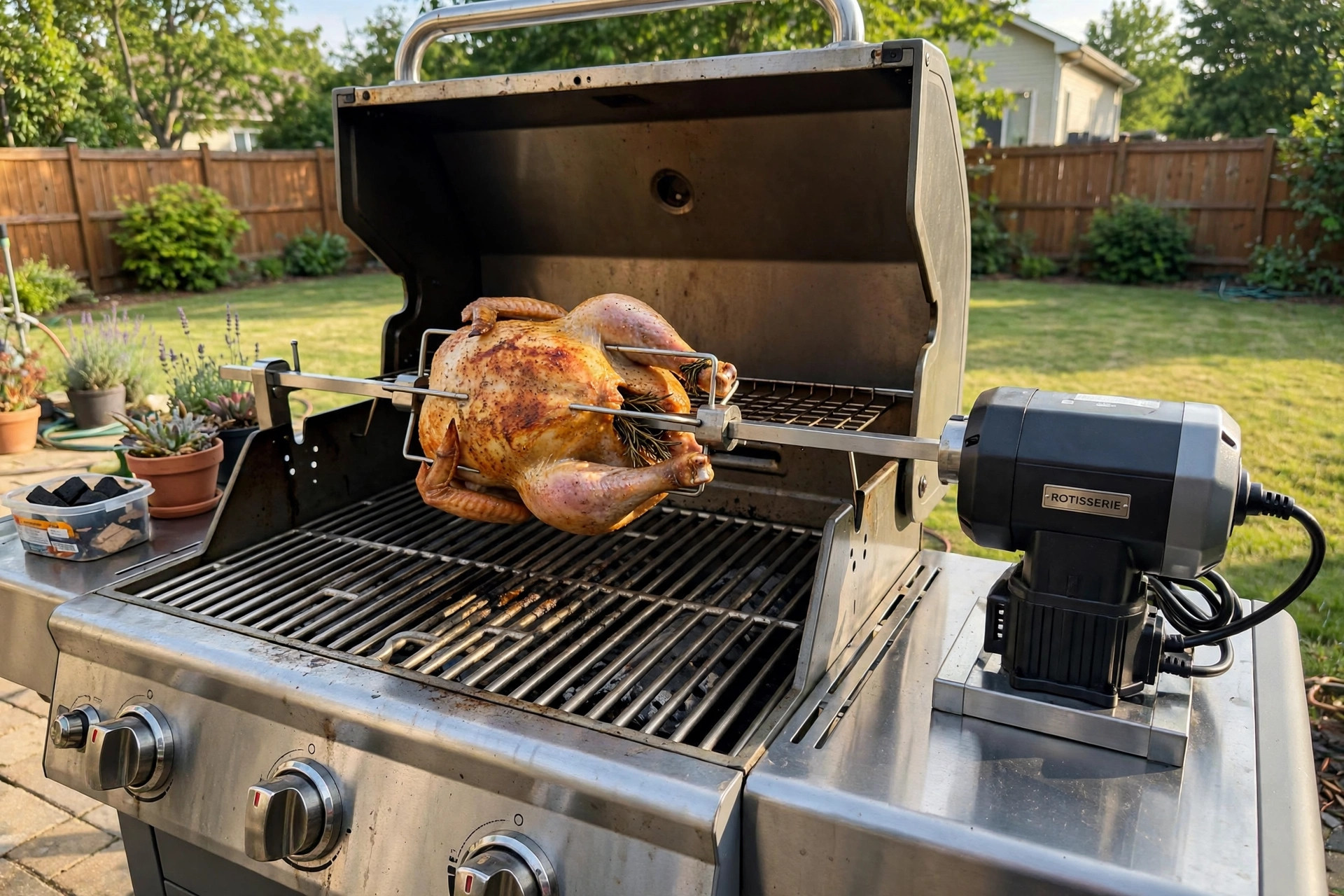

A gas grill can do far more than cook burgers and hot dogs. With the right add-on, it can roast a whole chicken or a beef joint slow and even, much like an oven on the back porch. That add-on is the rotisserie attachment. Finding the best rotisserie attachment for gas grill models takes a little care, because kits differ in size, motor strength, and fit. This guide walks through each point in plain words so you can buy with confidence.
Why a Rotisserie Attachment Matters
Rotisserie cooking means slow turning over heat. The meat turns on a long metal rod, called a spit. As it turns, juices flow back into the meat instead of dripping away. The outside browns in an even way. The inside stays moist.
A gas grill gives steady heat, which suits this style of cooking well. Charcoal needs tending, but a gas burner holds its heat with a simple knob. This makes long, slow roasts easy. A whole chicken, a turkey breast, or a pork loin comes out with crisp skin and soft meat.
Many people who own a gas grill never try this style of cooking. They think it is hard or needs special skill. In truth, a rotisserie kit is a simple tool. The motor turns the spit for you. You only need to season the meat, set the heat, and wait. Guides on slow-cooking chicken on a gas grill show how patient heat turns plain poultry into a meal worth sitting down for.
A good kit also saves money over time. A whole chicken costs less per pound than chicken parts. Roasting it at home on the grill gives a result as good as any store-bought bird, with seasoning you control.
What to Look For When You Choose: Best Rotisserie Attachment for Gas Grill
Not every kit fits every grill. Before you buy, learn the parts and how to judge them.
The Spit Rod
The spit rod is the long metal bar that holds the meat. Most are made of stainless steel, which resists rust and cleans well. Some rods are one long piece. Others break down into two parts for easy storage.
Check the length. A rod must reach from one side of your grill to the other, with room to rest in the motor on one side and a support bracket on the other. Measure the inside width of your grill from side to side, lid closed. Buy a kit made for that width or a bit more. A rod that is too short will not reach the motor. A rod that is too long will hit the lid.
Also check the shape of the rod. Most are square or hexagonal, not round. The flat sides grip the meat forks so the meat turns with the rod instead of slipping.
The Motor
The motor is the small electric box that turns the spit. It usually plugs into a standard outlet, so you need a safe outdoor outlet near your grill. Some motors run on batteries, which suits grills far from a plug, but electric motors run stronger and longer.
Motor strength matters most with heavy meats. A light chicken needs little force. A full turkey or a large roast needs more. Cheap motors can stall or slow down under a heavy load, which cooks the meat unevenly. Look for a motor rated for at least 20 pounds if you plan to roast turkeys. The weight rating is often printed on the box or in the manual.
The Meat Forks
Meat forks are the prongs that slide onto the rod and grip the meat on each side. Good forks are sturdy, with long prongs that dig deep into the meat. They should lock tight with a screw or a clamp. If the forks slip, the meat will not turn, and one side will burn.
Some kits add a counterweight. This is a small sliding weight that balances a lopsided roast, like a chicken with one thick side. A counterweight is a small part, but it helps the motor last longer and keeps the turn smooth.
Fit and Bracket
The kit must mount to your grill. Most kits include a motor bracket that bolts to the side of the grill body and a spit support that sits in the opposite side. Some grills have built-in slots for the spit. Others need the bracket that comes in the kit.
Check whether the kit is made by your grill maker. Brand kits, like those from Weber, Char-Broil, Napoleon, or Broil King, are shaped to fit their own grills. A brand kit often mounts in minutes with no extra parts. Universal kits fit many grills, but you may need to adjust the bracket or drill a small hole. Read the kit’s list of fits before you buy.
Types and Options
Rotisserie kits come in a few common forms. Each suits a different need.
Brand-specific kits. These are made for one grill maker. They fit best and the instructions match your grill. They cost more than universal kits. If you own a well-known grill, start here. Retailers like Home Depot carry many brand kits, and maker sites list exact grill models that fit.
Universal kits. These fit a wide range of grills with adjustable brackets. They cost less. They suit older or less common grills. The trade is more setup time and a fit that may need small changes.
Rear-burner kits. Some gas grills have a rear infrared burner made for rotisserie work. This burner sits at the back of the firebox and gives strong, even heat to the turning meat. If your grill has this burner, buy a kit that works with it. The result is closer to a true roast. Traeger and other makers describe how steady side or rear heat changes the cook.
Basket kits. Some kits add a flat basket instead of forks. The basket holds wings, vegetables, or small cuts that cannot sit on a spit. It turns with the rod and gives even cooking to foods that would fall through the grates.
When you shop, think about what you will roast most. Whole chickens and small roasts suit a standard kit. Large turkeys need a strong motor and a long rod. Mixed foods, like vegetables with the chicken, suit a basket kit.
Cooking guides at The Spruce Eats and AmazingRibs describe how turning heat builds flavor on poultry and roasts, which is the same principle at work here.
Cost and Price
Rotisserie kits cost less than most grill upgrades. A simple universal kit often sells for 30 to 60 dollars. A brand-specific kit with a strong motor and stainless parts often runs 80 to 150 dollars. Heavy-duty kits with counterweights and baskets can reach 150 to 250 dollars.
Price follows the parts. Stainless steel rods and forks cost more than plated steel, but they last longer and clean easier. A motor rated for heavy loads costs more than a light one. A kit that fits your grill with no changes is worth the extra money if you value your time.
Watch for the full cost. Some kits sell the motor and rod as a set. Others sell parts alone. Make sure the box holds the rod, motor, forks, and brackets. Buying missing parts later costs more than buying a full kit at once.
Independent testers, such as those at Consumer Reports, review grills and grill tools with lab tests. Their reports can help you judge build quality before you buy.
Care and Upkeep
A rotisserie kit lasts many years with simple care. Most parts are easy to clean.
After each cook, let the rod and forks cool. Wash them in hot, soapy water. A grill brush takes off stuck bits. Dry them well before you store them, since water spots can mark even stainless steel. If food is baked on, soak the parts in warm water with dish soap for twenty minutes, then scrub.
Keep the motor dry. Never wash the motor or let rain reach it. Wipe it with a damp cloth if it gets greasy. Store it indoors between uses. The motor is the costliest part of the kit, and water will kill it.
Oil the spit lightly before each cook with a high-heat oil. This keeps meat from sticking and makes cleanup faster. Store the rod hanging or lying flat so it does not bend. A bent rod wobbles as it turns and can slip out of the motor.
Many owners pair rotisserie cooking with smoke flavor. A small box of wood chips on the grill grates adds a gentle smoke while the meat turns. See reviews of smoker boxes for gas grills for ways to add this flavor with simple gear.
Safety
Rotisserie cooking is safe when you follow a few plain rules.
First, mind the heat. The spit rod and forks get very hot and stay hot long after the cook. Wear thick heat-resistant gloves when you handle them. Guides to heat-resistant grill gloves explain what to look for in a pair that protects your hands and wrists.
Second, protect the motor cord. Keep the cord away from hot surfaces and out of foot paths. Do not let it hang where it can catch. If your outlet lacks weather cover, cook only in dry weather.
Third, balance the load. Tie the meat tight with butcher twine so loose parts do not flop and catch. A loose wing or flap can hit the burner and flare. Truss chickens and tie roasts snug before they go on the spit.
Fourth, check the weight. Never hang more meat on the spit than the motor is rated for. An overloaded motor can stall in the middle of a cook, leaving one side of the meat near the heat too long.
Fifth, use a drip pan. A foil pan under the meat catches drips and keeps the burners clean. It also keeps fat from flaring. You can add water or stock to the pan to keep the grill moist inside.
FAQ
How long does it take to roast a chicken on a rotisserie?
A whole chicken of four pounds takes about one to one and a half hours over medium indirect heat. The grill should hold around 350 degrees. A meat thermometer tells the true answer: the thickest part of the thigh should reach 165 degrees. Time is only a guide. Temperature is the rule.
Do I need a rear burner for a rotisserie attachment?
No, a rear burner is not required. You can roast well with the main burners set to indirect heat, with the meat over an unlit burner. A rear infrared burner gives more even browning, but most owners get fine results without one.
Can any gas grill hold a rotisserie kit?
Most full-size gas grills can, as long as the kit matches the grill width and mounts to the body. Small two-burner grills can be tight, and the lid must close over the meat. Measure your grill and check the kit’s fit list before you buy.
Should I use a universal or a brand kit?
A brand kit fits best and sets up fast. A universal kit costs less and fits many grills. If your grill maker sells a kit for your model, choose it. If not, a well-reviewed universal kit with an adjustable bracket is a sound second choice.
How do I keep the meat from slipping on the spit?
Tighten the meat forks hard on both sides of the meat. Push the prongs deep into the meat. Truss the chicken with twine so wings and legs stay close to the body. For lopsided roasts, add a counterweight if your kit has one.
Is a rotisserie better than roasting in the oven?
Each has its place. The rotisserie gives crisper skin and even browning because the meat turns. The oven gives more room for side dishes. Many cooks use both: the grill rotisserie for poultry and large cuts, the oven for everything else.
A Final Word
The best rotisserie attachment for gas grill owners is the one that fits your grill, turns your heaviest roast with ease, and is built to last. Measure your grill, check the motor rating, and pick sturdy stainless parts. Start with a whole chicken. Learn the heat. Soon you will wonder why you waited so long to turn your grill into a roast kitchen.
References
AmazingRibs.com. (n.d.). Barbecue and grilling science. https://www.amazingribs.com Broil King. (n.d.). Gas and charcoal grills. https://www.broilkingbbq.com Char-Broil. (n.d.). Gas and charcoal grills. https://www.charbroil.com Consumer Reports. (n.d.). Product reviews and ratings. https://www.consumerreports.org Napoleon. (n.d.). Fireplaces, grills, and heating products. https://www.napoleon.com The Home Depot. (n.d.). Home improvement products. https://www.homedepot.com The Spruce Eats. (n.d.). Recipes and cooking guides. https://www.thespruceeats.com Traeger. (n.d.). Wood pellet grills. https://www.traeger.com Weber. (n.d.). Grills and outdoor cooking. https://www.weber.com
Was this guide helpful?

About Sarah Mitchell
The My Garden US editorial team writes practical, in-depth home and garden guides for American homeowners — tested advice, no fluff.
You May Also Like
Best Outdoor Grill Light Magnetic Reviews: A Buyer’s Guide
September 27, 2026 1 views
Best Grill Smoker Combo for Beginners: A Plain Guide
September 27, 2026 0 views
How to Make Pulled Pork on Smoker: A Simple Step-by-Step Guide
January 4, 2026 0 views