
Learning how to smoke chicken on gas grill may sound strange at first. Most people think of smoking as work for a big charcoal rig or a dedicated pellet smoker. The truth is simpler. A standard gas grill can give you real smoke flavor with only a few small tools and a little patience. You do not need a new cooker. You need wood chips, a smoker box or foil packet, and the right low heat.
This guide shows every step in plain words. You will learn what gear to gather, which wood to use, how to set up the grill for two-zone heat, and how long the bird needs to cook. It also covers cost, cleanup, safety, and the questions people ask most. By the end you will be able to turn out chicken that is juicy inside, golden outside, and kissed with smoke all the way through.
Why Smoke Chicken on a Gas Grill
A gas grill is built for heat control. The burners turn with a knob. The temperature holds steady. That is the hard part of smoking, and the gas grill solves it for you. Charcoal takes constant tending. A gas grill holds a low fire for hours with no work.
Smoking adds a flavor that plain grilling cannot match. Wood smoke lays a thin layer of taste on the skin and the meat under it. The chicken stays moist because it cooks low and slow. The skin turns deep amber or reddish brown. A smoked whole chicken at a family table gets more praise than any fast-cooked bird.
There is also the matter of cost. Buying a separate smoker means hundreds of dollars and more yard space. A small smoker box costs very little. Wood chips cost a few dollars a bag. If you already own a gas grill, you can start this weekend.
What You Need Before You Start: How to Smoke Chicken on Gas Grill
Good smoking starts with good setup. Gather these items before you light a single burner.
Any gas grill with at least two burners works, and three or four are better. More burners let you keep one side hot and one side cool, which is the heart of the method. Makers such as Weber, Char-Broil, Napoleon, and Broil King all build multi-burner grills that hold low heat well. If you are still shopping, our guide to the best gas grill under 500 for beginners can help, and Consumer Reports tests grills for heat control and build quality.
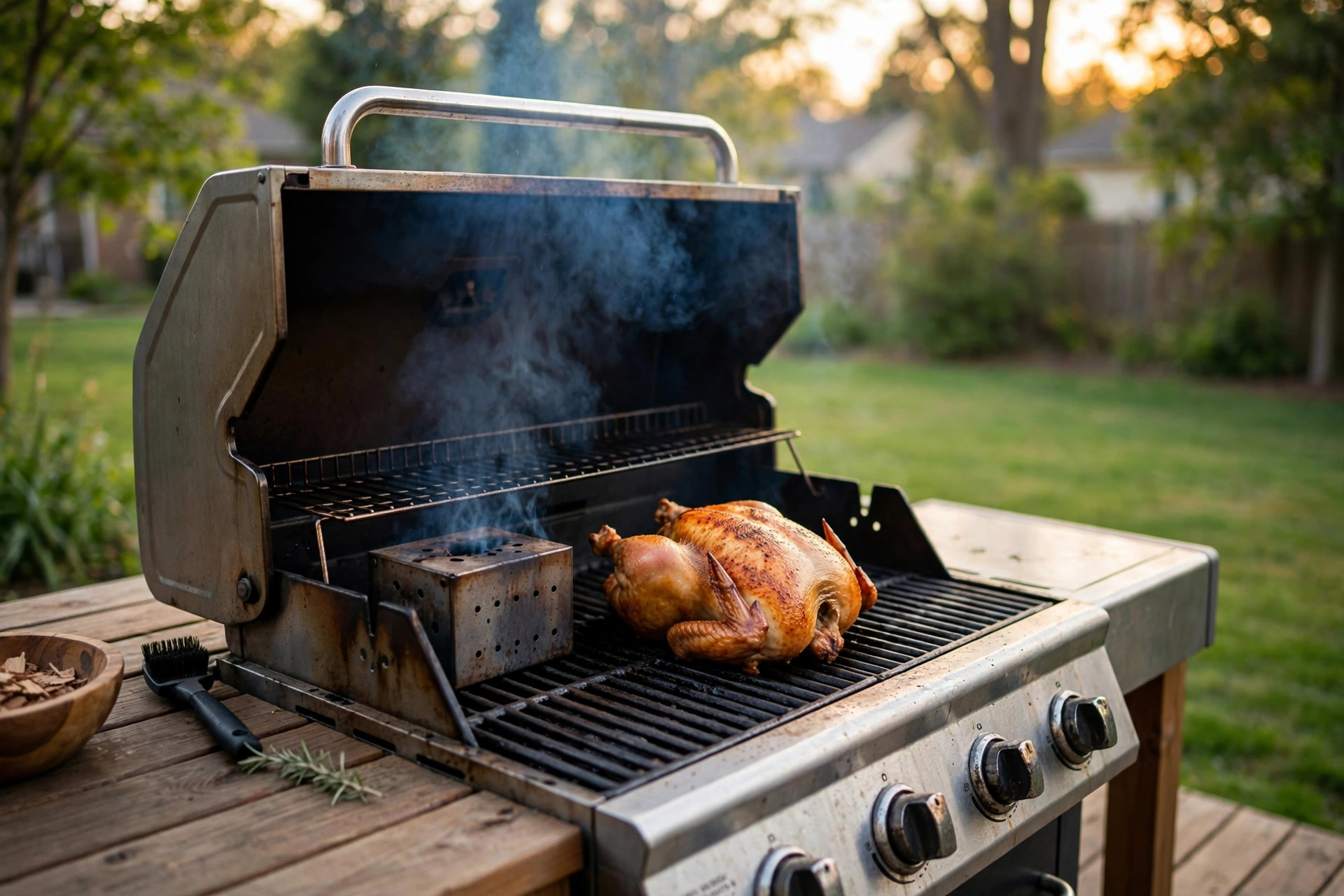
Wood chips cannot sit loose on the grates. They would fall through and catch fire in the bottom of the grill. A smoker box is a small metal box with a perforated lid. You fill it with soaked or dry chips and set it over a lit burner. The chips smolder and push smoke up into the cooking chamber. A foil packet works just as well for a beginner. Lay a handful of chips in the middle of a large sheet of heavy foil, fold it into a flat envelope, and poke a dozen holes in the top with a fork. Place the packet directly over the lit burner. When the chips burn out, swap in a fresh packet.
Wood Chips or Wood Chunks
Chips are thin flakes that light fast and smoke hard for about 30 to 45 minutes. Chunks are fist-sized pieces that smolder for an hour or more. Chips suit gas grilling because you can change packets as needed. Buy chips made for cooking, never scraps from a lumber yard. Builders’ lumber may hold glue, paint, or chemicals. You can find food-safe chips at any hardware store, including Home Depot, which stocks several hardwood types in small bags.
A Reliable Thermometer
Smoke cooking is done by temperature, not by the clock. A good instant-read thermometer is the single most important tool here. Chicken is safe at 165 degrees Fahrenheit in the thickest part of the breast. The legs can go a little higher, near 175, and will be more tender for it. Do not trust the lid gauge on the grill. Those gauges read the air at the top, far from the food. Clip-on probe thermometers work, too. Either way, keep one on hand.
Basic Prep Gear
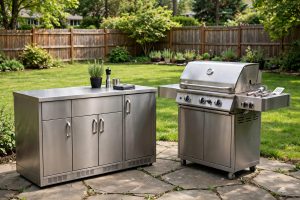
You need long tongs, a basting brush, a shallow pan, and plenty of paper towels. A sturdy work surface helps a great deal when you carry a raw bird out to the grill and a hot one back inside. A good outdoor prep table for bbq keeps everything steady and easy to reach.
Types of Wood and Flavor Options
Wood is the soul of smoking. Mild woods suit poultry best. Strong woods can turn bitter on a long cook. Hickory gives the classic smokehouse taste but use it in small amounts. Apple is sweet and light and paints the skin a red-gold color. Cherry is similar but a touch richer. Pecan is nutty and warm. Oak is a good steady choice. Avoid mesquite for chicken. It is very strong and can taste sharp.
You can also mix woods. A base of oak or apple with a small handful of hickory gives depth without bitterness. The site AmazingRibs runs one of the deepest free libraries on wood smoke and flavor pairing, and it is worth a read before you buy your first bag. Another fine cooking reference is The Spruce Eats, which publishes tested recipes for smoked poultry.
Do not use pine, cedar, or any softwood. They carry resin that tastes harsh and is not safe to eat. Do not use painted or treated wood of any kind.
Step by Step: How to Smoke Chicken on a Gas Grill
Here is the full method, from raw bird to resting platter. Read it once before you start, then work through it at your own pace.
Step 1: Prepare the Chicken
Take the chicken out of the bag. Pull out the giblets if any are inside. Rinse the bird under cold water and pat it dry, inside and out, with paper towels. Dry skin takes on smoke and crisps better than wet skin. Rub the whole bird with a thin coat of oil or soft butter. This helps the seasoning stick and the skin brown. Then coat it with salt, pepper, and your rub of choice. A simple mix works fine: two parts paprika, two parts brown sugar, one part salt, one part garlic powder, one part onion powder, and a half part black pepper. Let the seasoned bird rest in the refrigerator for at least one hour. Overnight is better.
Step 2: Soak the Chips (Optional)
Soaking chips in water for 30 minutes slows their burn, but wet chips steam before they smoke. If you soak, drain the chips well. If you skip the soak, the chips will smoke sooner and burn out sooner, so keep an extra packet ready.
Step 3: Set Up Two-Zone Heat
This is the key move for how to smoke chicken on gas grill. Light only one side of the grill. Set the lit burner or burners to medium-low. Close the lid and let the grill warm for ten minutes. Aim for 225 to 250 degrees Fahrenheit on the cool side. Adjust the knob in small moves and give the grill a few minutes to answer each change.
Place the smoker box or foil packet over the lit burner. It should start to smoke within ten minutes. Thick white clouds mean the heat is too high. Thin, pale blue smoke is the goal.
Step 4: Put the Chicken On
Set a drip pan on the cool side under where the bird will sit. The pan catches fat and keeps the grill clean. Place the chicken breast-side up over the cool side, above the drip pan. Close the lid. Do not open it for the first hour unless the smoke dies out. Each time you lift the lid, heat and smoke escape.
Step 5: Manage the Cook
A whole chicken of four to five pounds needs about three to four hours at 225 to 250 degrees. Refresh the smoker box or swap the foil packet once an hour. You only need smoke for the first two to three hours. After that, the meat has taken all the flavor it can hold. Extra smoke past that point adds bitterness, not taste.
Step 6: Check the Temperature
Start checking with your thermometer in the last hour. Push the probe into the thickest part of the thigh without touching the bone. When the thigh reads 175 and the breast reads 165, the chicken is done. If the breast hits 165 early, you can pull the bird right away. Carryover heat will lift the numbers a few degrees while it rests.
Step 7: Rest and Carve
Move the chicken to a cutting board. Tent it loosely with foil. Let it rest for 15 to 20 minutes. This rest lets the juices settle back into the meat. Cut it too soon and the juices run out onto the board. Carve the bird into breasts, thighs, drumsticks, and wings. Serve while warm.
Brine, Rub, and Sauce Options
A plain seasoned bird is good. A brined bird is better. A basic brine is one cup of kosher salt and one half cup of sugar dissolved in one gallon of cold water. Soak the chicken for six to twelve hours in the refrigerator, then rinse and pat dry. A simple overnight marinade of oil, lemon juice, garlic, and herbs also gives a bright taste under the smoke. If you want barbecue sauce, brush it on in the final 30 minutes only. Sauce has sugar, and sugar burns over a long cook.
Cost and Price
Smoking chicken on a gas grill is one of the cheapest ways to eat well. A whole chicken costs far less per pound than steaks or ribs. Wood chips run a few dollars for a bag that lasts many cooks. A smoker box is a one-time buy of modest price. Foil packets cost almost nothing.
The rub is pantry cheap: salt, pepper, paprika, sugar, garlic powder. A brine costs pennies. The thermometer is the one tool worth spending on. A good one lasts for years and pays for itself the first time it saves a bird from the trash. If you are thinking about dedicated gear, note that a pellet cooker from Traeger or a ceramic kamado from Big Green Egg costs far more than a smoker box. That is why the gas grill method is such a smart first step.
Care and Upkeep
Smoke leaves grease and soot on the grill. After each cook, let the grill cool a little, then brush the grates with a stiff brush. After a few smokes, take out the grates and heat tents and scrape the inside walls. Fat that pools in the bottom can catch fire on a later cook. Empty the drip pan after every session, and wash the smoker box and let it dry fully. Store wood chips in a dry, sealed bag. Damp chips mold, and moldy wood must be thrown away. At the start of each season, check the burners for a steady blue flame. Many owners also read up on how to season a new smoker before use before a new cooker’s first real cook.
Safety
Fire and food safety both matter here. Place the grill on a flat, stable surface at least ten feet from the house and any wooden fence. Never smoke chicken in a garage or under a low roof. Carbon monoxide from a gas grill is odorless and deadly.
Keep a spray bottle of water and a fire extinguisher within reach. If flames jump, turn off the burners, close the lid, and wait. Keep raw chicken cold until it goes on the grill, and wash your hands, the board, and the tools after touching it. Do not put cooked chicken back on the plate that held the raw bird.
Frequently Asked Questions
How long does it take to smoke chicken on a gas grill? A four to five pound whole chicken takes three to four hours at 225 to 250 degrees Fahrenheit. Chicken pieces take less time. Always cook to temperature, not to the clock.
What temperature should the grill be? Hold the cooking side at 225 to 250 degrees. Lower heat gives more smoke time but risks drying the skin before it sets. Higher heat cooks faster but gives less smoke flavor. The 225 to 250 range is the sweet spot for most birds.
Can I use wood pellets in a gas grill? Yes. Pellets work in a smoker box or a foil packet just like chips. They give a steady, clean smoke. Do not pour pellets loose onto the burners. They will fall through and clog the gas ports.
Should I soak the wood chips? You can, but you do not have to. Soaked chips smoke later and longer. Dry chips smoke sooner and burn out faster. Pick one method and keep spare chips ready either way.
Why is my smoked chicken skin rubbery? Low heat can leave the skin soft. To crisp it, raise the grill to 375 degrees for the last 15 to 20 minutes of the cook. Patting the skin very dry before seasoning also helps a great deal.
Can I smoke a frozen chicken? No. Thaw the chicken fully in the refrigerator first. A frozen bird spends too long in the danger zone between 40 and 140 degrees, where germs grow fast. Thawing takes about 24 hours for every four to five pounds.
A Short Final Word
Smoked chicken from a gas grill can stand beside the work of any big smoker. The method asks for little: two-zone heat, a smoker box, wood chips, and a thermometer. Keep the fire low, keep the lid closed, and let the smoke do its quiet work.
References
AmazingRibs.com. (n.d.). Barbecue and grilling science. https://www.amazingribs.com Big Green Egg. (n.d.). Kamado grills and outdoor cooking. https://www.biggreenegg.com Broil King. (n.d.). Gas and charcoal grills. https://www.broilkingbbq.com Char-Broil. (n.d.). Gas and charcoal grills. https://www.charbroil.com Consumer Reports. (n.d.). Product reviews and ratings. https://www.consumerreports.org Napoleon. (n.d.). Fireplaces, grills, and heating products. https://www.napoleon.com The Home Depot. (n.d.). Home improvement products. https://www.homedepot.com The Spruce Eats. (n.d.). Recipes and cooking guides. https://www.thespruceeats.com Traeger. (n.d.). Wood pellet grills. https://www.traeger.com Weber. (n.d.). Grills and outdoor cooking. https://www.weber.com
Was this guide helpful?

About James Carter
The My Garden US editorial team writes practical, in-depth home and garden guides for American homeowners — tested advice, no fluff.
You May Also Like
How to Smoke Tri Tip on Grill: A Plain Guide to Tender, Smoky Beef
April 22, 2026 0 views
How to Smoke Cheese on Pellet Grill: A Plain Guide for Home Cooks
August 10, 2026 0 views
Pellet Grill for Beginners Buying Guide: How to Choose Your First Grill
April 2, 2026 0 views