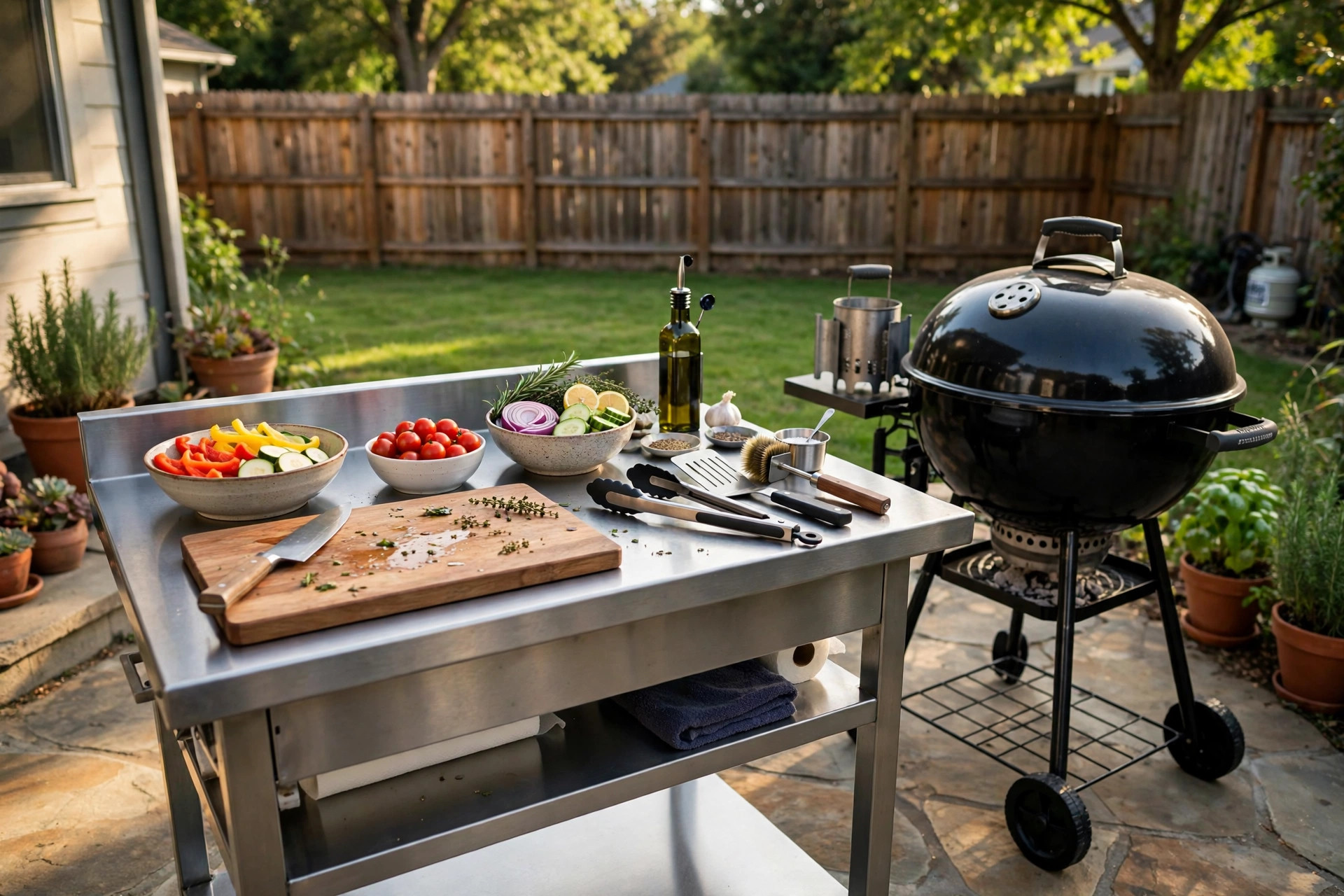

Finding the best outdoor prep table for bbq starts with a simple truth. A grill alone is not enough for a smooth cookout. When raw meat, vegetables, sauces, and tools have no proper home near the fire, the cook spends the whole afternoon walking back and forth to the kitchen. A good prep table changes that. It puts a clean, sturdy work surface right where the action is, so chopping, seasoning, and resting can all happen a few steps from the grates.
Why an Outdoor Prep Table Matters for BBQ
Anyone who has cooked for a crowd knows the scene. The grill is hot. Burgers need flipping. Guests are arriving. And the plate of raw chicken is sitting on the railing because there is nowhere else to put it. That is the exact problem a prep table solves. It gives the cook a safe, clean station for everything that happens before and after the food touches the grill.
Food safety is the first reason. Raw meat should never rest on the same surface as finished food. With a prep table, one side can hold the raw ingredients and the other can hold the cooked meal. Reviews from Consumer Reports often stress that proper food handling is just as important as the grill itself, and a clean work surface is a big part of that.
Convenience is the second reason. Chopped onions, rubs, tongs, and thermometers stay within arm’s reach. The cook stays by the fire instead of running inside. The meal moves faster, and the food tastes better because it is served hot and fresh.
A third reason is comfort. Bending over a low cooler or balancing a cutting board on the knee gets old after an hour. A table at the right height saves the back. When a cookout lasts four or five hours, that comfort matters a great deal.
What to Look for When Choosing the Best Outdoor Prep Table for BBQ
Not every table works well outdoors. A dining table borrowed from the kitchen can warp, stain, or simply fall apart in the weather. The right prep table is built for outdoor life. Here are the main points to check.
Size and Work Surface
Measure the space before you shop. A full backyard patio can hold a large table with room to spare. A small apartment balcony may only fit a narrow folding model. A good rule is to pick the largest table that still leaves a clear path of at least three feet around the grill. This keeps the cook safe from bumps and spills.
The work surface itself should be at least 30 inches wide and 24 inches deep. Anything smaller makes it hard to hold a cutting board, a tray, and a bowl at the same time. Serious pitmasters who smoke brisket or ribs for hours often want even more room. Guides on sites like AmazingRibs describe the long, slow nature of barbecue cooking, and a wide surface helps manage the many trays and tools such cooks require.
Material and Build
The material decides how long the table will last. Stainless steel is the top choice for most buyers. It resists rust, wipes clean in seconds, and handles heat well. A 304-grade stainless top is ideal, but any solid stainless steel will serve a home cook for years.
Powder-coated steel is a strong second choice. It looks good, costs less, and stands up to rain if the coating stays intact. Check the welds and joints when you shop. A table that wobbles in the store will only get worse on an uneven patio.
Plastic and wood tables have their place, but they need more care. Plastic can sag under heavy loads on a hot day. Wood looks warm and natural, yet it must be sealed and re-oiled to survive the seasons. Whatever material you pick, make sure the top is rated food safe so it can touch ingredients without worry.
Storage and Shelves
Shelves turn a simple table into a true grill station. A lower shelf holds charcoal bags, wood chips, or a spare propane tank. A side hook keeps tongs and spatulas off the work top. Some tables add a paper towel holder, which sounds small until you are elbow-deep in barbecue sauce with no way to clean your hands.
Think about your own habits. If you keep many spices near the grill station, look for a table with a raised rail or a small side shelf for them. If you cook with lots of pans, a deep lower shelf matters more. The best table matches the way you already cook.
Mobility
Locking caster wheels are worth the extra cost. They let you roll the table out for a party and tuck it away for storage. Lock them during cooking so the table never moves under a heavy load. If your patio is uneven, adjustable feet or sturdy legs beat wheels. A table that rocks will spill a tray of marinated ribs, and no one wants that.
Types of Outdoor Prep Tables for BBQ
Most tables on the market fall into three groups. Each suits a different kind of cook.
Stainless Steel Work Tables
These are the workhorses. A flat stainless top, a lower shelf, and sometimes a small drawer. They are easy to clean, tough, and they look at home next to any grill. Brands that specialize in outdoor cooking, such as Weber and Char-Broil, offer models that pair well with their grills. These tables cost more than basic folding models, but they last far longer.
Folding and Portable Tables
Lightweight folding tables fold flat in seconds. They suit renters, tailgaters, and anyone short on storage space. They are not as sturdy as a fixed table, and most lack shelves, but they beat balancing food on a cooler. Choose one with a heat-resistant top and a weight rating of at least 50 pounds.
Cart-Style Tables With Drawers
A cart blends a prep table with storage furniture. Drawers hold knives, thermometers, and a grill basket for vegetables without a trip inside. A cabinet door can hide a trash bin or a propane tank. These carts cost the most, but for the dedicated cook who grills several nights a week, they are a pleasure to use.
Cost and Price
Prices range widely. A basic folding table costs about 40 to 80 dollars. A solid stainless steel work table runs from 100 to 250 dollars. A cart-style station with drawers and cabinets can reach 300 to 600 dollars or more. Specialty brands like Napoleon and Broil King sell premium outdoor kitchen pieces at the upper end of that range.
The mid-range is the sweet spot for most families. A table near 150 dollars usually brings stainless steel, a lower shelf, and wheels. Cheaper tables work fine for occasional use. If you grill every weekend, spend a little more. The table will pay for itself in saved trips to the kitchen and in years of service.
Watch for seasonal sales. Retailers such as Home Depot often discount outdoor living gear at the end of summer. Buying in August or September can save a third of the price. Check the return policy too. If the table wobbles or the surface stains on the first cookout, you should be able to send it back.
Care and Upkeep
A prep table is easy to keep in good shape. After each cookout, wipe the top with warm soapy water and dry it fully. Standing water is the main cause of rust, even on stainless steel. For stuck-on sauce, a plastic scraper works better than a wire brush, which can scratch the surface.
Once a month, check the wheels, bolts, and joints. Tighten anything loose. If you see a small rust spot on a coated steel frame, sand it lightly and touch it up with outdoor paint. Caught early, rust never spreads.
Cover the table when it is not in use, or store it under a patio roof. A simple waterproof cover costs little and doubles the life of the table. In cold climates, roll the table into a garage or shed for the winter. Ice and freeze-thaw cycles are hard on every material.
Recipes and technique sites like The Spruce Eats remind cooks that great barbecue comes from care at every step. That care should extend to the equipment. A clean table is a safe table.
Safety Around the Grill
A prep table sits close to fire, so a few safety rules are wise.
First, keep the table at a safe distance from the grill itself. Hot grease can splatter, and a plastic cutting board can melt if it sits too close to the heat. Leave at least two feet between the grill and the table edge.
Second, never put a lit chimney starter or a hot pan directly on a plastic or wooden table top. Use a trivet or a stone slab as a heat barrier. Even stainless steel benefits from a trivet, since extreme heat can discolor it.
Third, keep raw and cooked food apart. Use one side of the table, or one color of cutting board, for raw meat and the other for finished food. This simple habit prevents cross-contamination.
Fourth, lock the wheels before you start cooking. A table that rolls away under a heavy tray is a burn risk.
Finally, store fuel safely. Charcoal and wood chips are fine on a lower shelf, but keep lighter fluid and extra propane away from the heat of the grill. Many guides from pellet grill makers like Traeger echo the same point: fuel storage deserves respect.
Pairing Your Table With the Right Grill Gear
A prep table works best as part of a full setup. An outdoor spice rack at the grill station keeps seasonings dry and handy. A grill basket for vegetables lets you cook corn and peppers right beside the meat. If you are hunting for a bargain on a smoker, checking used smokers for sale near you can free up budget for a better table.
Think of the grill area as a small outdoor kitchen. The grill is the stove. The prep table is the counter. The cooler is the refrigerator. When each piece has its place, the whole cookout runs smoothly.
Frequently Asked Questions
What size outdoor prep table is best for a family cookout?
A top of about 36 inches wide and 24 inches deep suits most families. It holds a cutting board, a sheet pan, and a few bowls at once. If you often cook for ten or more guests, go larger, up to 48 inches wide.
Can I use a prep table in the rain?
Stainless steel and powder-coated steel tables handle light rain well. Wipe them dry afterward to prevent spots and rust. Plastic tops are fine too. Wood tops should be covered or moved under shelter, since standing water damages them over time.
Is stainless steel really better than plastic for bbq prep?
For most cooks, yes. Stainless steel resists heat, will not stain from barbecue sauce, and wipes clean fast. Plastic is lighter and cheaper, and it works fine for occasional use, but it can warp near heat and stain permanently.
Do I need wheels on my prep table?
Wheels help if you move the table for storage or parties. They are not a must if the table stays in one spot all season. If you do choose wheels, make sure they lock firmly.
How do I clean grease off a stainless prep table?
Warm water, dish soap, and a soft cloth handle most grease. For heavy buildup, a paste of baking soda and water lifts the rest without scratching. Dry the surface well after cleaning.
Where should the prep table stand relative to the grill?
Place it within easy reach but not in the splash zone. Two to three feet from the grill is ideal. This keeps food safe from stray heat while keeping everything within arm’s reach.
A Final Word
The best outdoor prep table for bbq is the one that fits your space, your budget, and the way you cook. A family that grills burgers on Saturdays needs something different from a pitmaster who smokes brisket for twelve hours. Start with size and material, check the storage, and buy the sturdiest table your budget allows. With the right table beside the grill, every cookout gets easier, safer, and more enjoyable. The food lands on the plate hot, the cook stays relaxed, and the guests never know how much smoother the whole afternoon felt.
References
AmazingRibs.com. (n.d.). Barbecue and grilling science. https://www.amazingribs.com Broil King. (n.d.). Gas and charcoal grills. https://www.broilkingbbq.com Char-Broil. (n.d.). Gas and charcoal grills. https://www.charbroil.com Consumer Reports. (n.d.). Product reviews and ratings. https://www.consumerreports.org Napoleon. (n.d.). Fireplaces, grills, and heating products. https://www.napoleon.com The Home Depot. (n.d.). Home improvement products. https://www.homedepot.com The Spruce Eats. (n.d.). Recipes and cooking guides. https://www.thespruceeats.com Traeger. (n.d.). Wood pellet grills. https://www.traeger.com Weber. (n.d.). Grills and outdoor cooking. https://www.weber.com
Was this guide helpful?

About Michael Thompson
The My Garden US editorial team writes practical, in-depth home and garden guides for American homeowners — tested advice, no fluff.
You May Also Like
How to Clean Grill Grates with Onion: A Simple Guide
February 19, 2026 0 views
Best BBQ for Graduation Party Ideas: How to Host a Cookout Worth the Diploma
April 20, 2026 0 views
How to Smoke Chicken on a Gas Grill: A Complete Guide
June 20, 2026 0 views