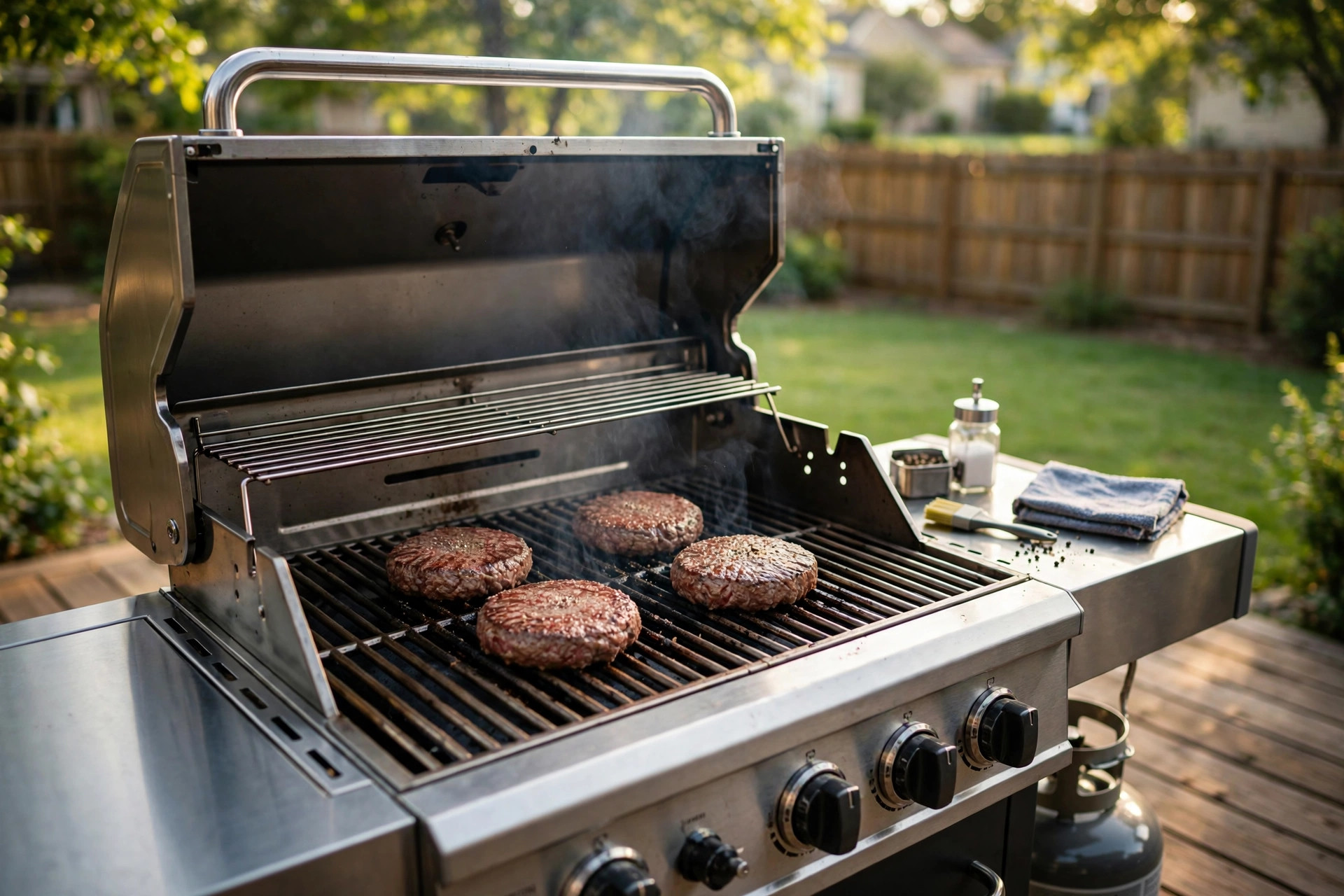
Nothing spoils a cookout faster than learning how to grill burgers without flare ups the hard way. One moment the patties sit calmly over the heat. The next, tall flames rise and lick the meat. The outside chars. The inside stays raw. Most grill owners have faced this scene. Flare ups come from dripping fat. When fat lands on hot metal or glowing coals, it catches fire. That burst of flame covers the food with soot and fills the air with smoke. The good news is plain. With the right setup and a few steady habits, you can stop most flare ups before they start. This guide gives you the full method for gas, charcoal, and pellet grills.
Why Flare Ups Happen
A flare up is a small fire caused by grease. Ground beef holds a good deal of fat. An 80/20 patty is eighty percent meat and twenty percent fat. As the patty warms, the fat melts and runs down onto the heat source, where it flashes into flame. The more fat that drips at once, the taller the flame. A dirty grill makes things worse. Old grease coats the burners, the heat shields, and the drip pan, and fresh fat landing on that old layer can light all at once. That is why many cooks ask why does my gas grill flare up even on low heat. The answer is often a grill that needs a deep clean, not a burner that runs too hot. You do not need a new grill. You need a clean grill, the right meat, and a method that keeps flames away from the food.
What to Look for Before You Cook: How to Grill Burgers Without Flare Ups
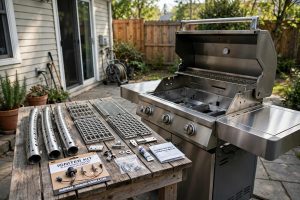
A calm cook begins with a grill that is ready. Check the grates. They should be free of old food and black crust. Run a wire brush across them while the grill is cold. Then look under the grates. On a gas grill, find the heat shields over the burners. If they wear a thick coat of old grease, scrape them with a putty knife. Pull out the drip pan and grease tray and empty them. A full tray is one of the most common causes of big fires. For a full walkthrough of burner care, see our guide on how to clean gas grill burners properly. Clean burners give even heat, and even heat means fewer surprise flames. On a charcoal grill, dump the old ash. Ash blocks airflow and makes the fire uneven. Make sure the vents open and close freely. Good vents let you tame the heat in seconds.
Choosing the Right Meat
The meat you buy matters more than most cooks think. Leaner beef drips less fat and flares less. A 90/10 blend gives you a firm patty with little dripping. An 85/15 blend is a good middle ground. It stays juicy with less risk than 80/20. If you love the rich taste of 80/20, you can still use it. Just know it will drip more, so the method below matters even more. Keep the patties cold until they meet the grill. Cold fat melts slower, which gives the meat time to form a crust before the fat starts to run. Shape the patties with a light hand and do not pack them hard. Many cooks press the patty flat with a spatula during cooking. This squeezes juice onto the fire and causes the very flare ups they want to stop. Never press.
Setting Up for Calm Cooking
Set the grill at least ten feet from the house, the fence, and any overhanging trees, on level ground. Gather your tools before you start: long tongs, a spatula, a spray bottle of plain water, and a clean tray for cooked food. The spray bottle is your small helper. A short mist can calm a small flame lick. Use it sparingly. Do not use water on a large grease fire; the safety section below explains why. Preheat the grill for ten to fifteen minutes with the lid closed. Aim for 400 to 450 degrees at the grate. This is the sweet spot for burgers: hot enough to sear, cool enough to keep fat from flashing all at once. Many guides from Weber grill experts land on this same range, and testing groups such as Consumer Reports have long said steady mid-high heat beats a raging fire for even cooking.
The Two Zone Method
The single best trick to stop flames when grilling burgers is the two zone setup. It gives you a hot side and a safe side. The hot side sears. The safe side finishes the cook. When a flame rises, you slide the patty to the safe side. The flame dies down with nothing to burn. You lose no time and no food.
On a Gas Grill
Turn on only half the burners. On a three burner grill, light the left and middle burners and leave the right one off. Set the lit burners to medium high, close the lid, and preheat for ten minutes. The lit side becomes your direct zone. The dark side becomes your indirect zone, hot enough to cook the meat gently with no dripping fat on a live burner. Many modern gas grills, like those built by Napoleon and Char-Broil, hold a steady 350 degrees on the indirect side. That is plenty for finishing burgers.
On a Charcoal Grill
Bank all the coals to one side of the kettle and leave the other side empty. Open the bottom vent about halfway. Put the lid on with the top vent over the empty side. This pulls heat across the grate and keeps the cool side steady. After ten minutes, the coals will wear a light gray ash coat. That is your sign to start. The hot side sears. The empty side cooks with calm, indirect warmth. Kamado style cookers, such as those from Big Green Egg, hold this two zone heat very well because their thick walls keep the temperature steady.
How to Grill Burgers Without Flare Ups, Step by Step
Follow this order every time. It takes a little practice, then becomes habit.
1. Clean the grates and empty the drip pan while the grill is cold. 2. Set up two zones, then preheat with the lid closed for ten to fifteen minutes. 3. Oil the grates, not the meat. Fold a paper towel, dip it in canola oil, and wipe the grates with tongs. Oil on the meat drips and feeds flames. Oil on the grates keeps the patty from sticking. 4. Place cold patties on the hot zone. Leave them alone for two to three minutes and let the crust form. 5. Flip once with a spatula. Do not press. If small flames lick up, slide the patty to the cool zone for thirty seconds, then slide it back. 6. Finish on the indirect side if flames keep rising. Close the lid and let the patty cook through with gentle heat. This takes a few extra minutes but keeps the outside from burning. 7. Check the temperature. Burgers are safe at 160 degrees inside. Use a quick read thermometer. The Thespruce Eats test kitchen notes that pulling a burger at the right temp keeps it juicy without guesswork. 8. Rest the patties for five minutes on a clean tray. The juices settle back into the meat and the crust stays crisp.
The Lid Is Your Friend
Keep the lid closed as much as you can. An open lid feeds oxygen to small flames. A closed lid starves them. It also traps heat, so the burger cooks from all sides at once. Open the lid only to flip or move the food. Pellet grill makers like Traeger build their cookers around this closed lid idea, and the same rule helps every grill type. If a flare up starts under a closed lid, the flame often dies on its own within seconds. Many cooks panic, throw the lid open, and feed the fire they wanted to kill.
Types of Grills and What Each Needs
Every grill can cook a calm burger. Each type asks for a slightly different touch.
Gas grills are the easiest to control. You can cut a burner in seconds. Keep the grease tray empty and the burners clean. If flames keep rising no matter what you do, the problem may run deeper than technique. Our guide to gas grill flare up causes and fixes walks through clogged burners, worn heat shields, and regulator trouble. The same two zone skill also helps with thick cuts; our walkthrough on how to grill steak on gas grill shows how to sear and finish without burning.
Charcoal grills give deep flavor but need more attention. Use the banked coal method above and add coals a few at a time rather than dumping a full chimney at once. A smaller, steadier fire drips less and flares less. AmazingRibs has long taught that fire control, not fire size, makes the meal.
Pellet grills and kamados run steady by design. Set the temperature to 400 degrees and let the cooker do the work. Grease still drips, so keep the drip tray lined with foil and change it often. The indirect heat in these cookers means flare ups are rare. When one starts, it is almost always a full drip tray. Empty it and the problem ends.
Cost and Price
Stopping flare ups costs very little. Most of the fix is method, and method is free. A two zone setup needs no new parts. A stiff grill brush costs about ten to twenty dollars at stores like The Home Depot. A quick read thermometer, the single best tool for juicy burgers, runs fifteen to thirty dollars. A spray bottle costs a dollar. If your heat shields are rusted through, a replacement set runs twenty to fifty dollars. Makers such as Broil King sell fitted parts that drop right in. One saved cookout pays for the brush and the thermometer. There is no need to buy a new grill to fix flare ups. A clean old grill with a two zone setup beats a dirty new one every time.
Care and Upkeep
A grill that stays clean flares less. After every cook, while the grates are still warm, brush them hard. Turn the burners to high for five minutes with the lid closed to burn off the last bits of fat. Then brush once more, turn the grill off, let it cool, and cover it. Once a month in grilling season, go deeper. Pull the grates and heat shields and scrape both sides. Empty and wash the grease tray with hot soapy water. Check the burner holes for clogs and clear them with a thin wire. On a charcoal grill, scrub the inside walls and empty all ash. Once a year, give the whole grill a full service: take it apart as far as the manual allows, wash every part, and replace worn parts before they fail mid cook.
Safety
Flare ups are small and normal. Grease fires are bigger and dangerous. Know the difference. A flare up is a quick tongue of flame under the food. It dies in seconds. A grease fire is a lasting fire in the drip tray or under the grates. If a grease fire starts, turn off the burners if you can reach the knobs safely and close the lid to cut off air. Never throw water on a grease fire. Water turns to steam at once and throws flaming grease into the air. Use a fire extinguisher rated for grease. Keep an extinguisher within reach every time you grill. Never leave a lit grill alone. Keep children and pets at least three feet away. After a big fire, let the grill cool fully, then clean it well before the next cook. Old grease is fuel. A clean grill is a safe grill.
FAQ
Why do my burgers cause flames but chicken does not? Burgers drip more fat than most chicken cuts. Ground beef, especially 80/20, releases fat fast as it cooks. Chicken breast is lean and drips little. The fix is the same: clean grill, two zones, no pressing.
Should I use leaner beef? Leaner beef is the simple answer. Move from 80/20 to 85/15 or 90/10 and you will see fewer flames. You give up a little richness and gain control.
Does a spray bottle of water really help? A light mist can calm small flame licks. It is a helper, not a fix. If you need the bottle every minute, the real problem is a dirty grill or too much direct heat. Fix the setup first.
Is it safe to eat a burger that caught fire? A brief flare up is safe. It chars the outside a little. The danger is taste, not health. It is still safe if it reached 160 degrees inside, but you may not enjoy it.
Why does my gas grill flare up even with the lid closed? The most common cause is a full grease tray or clogged burners. Heat builds, fat pools, and it lights all at once. Clean the tray, clear the burner holes, and check the heat shields. If the trouble stays, the regulator may feed too much gas.
Can I stop flare ups on a cheap grill? Yes. Price does not decide this. A clean, well set up budget grill cooks calmer than a dirty premium one. Two zones, clean grates, cold patties, and no pressing work on any grill.
A Short Final Word
Learning how to grill burgers without flare ups comes down to a few plain habits. Keep the grill clean. Set up two zones. Use cold patties and never press them. Keep the lid closed. Move the food to the cool side when flames rise. Your burgers will cook evenly, hold their juice, and carry a clean sear instead of a bitter char.
References
AmazingRibs.com. (n.d.). Barbecue and grilling science. https://www.amazingribs.com Big Green Egg. (n.d.). Kamado grills and outdoor cooking. https://www.biggreenegg.com Broil King. (n.d.). Gas and charcoal grills. https://www.broilkingbbq.com Char-Broil. (n.d.). Gas and charcoal grills. https://www.charbroil.com Consumer Reports. (n.d.). Product reviews and ratings. https://www.consumerreports.org Napoleon. (n.d.). Fireplaces, grills, and heating products. https://www.napoleon.com The Home Depot. (n.d.). Home improvement products. https://www.homedepot.com The Spruce Eats. (n.d.). Recipes and cooking guides. https://www.thespruceeats.com Traeger. (n.d.). Wood pellet grills. https://www.traeger.com Weber. (n.d.). Grills and outdoor cooking. https://www.weber.com
Was this guide helpful?

About Jennifer Lee
The My Garden US editorial team writes practical, in-depth home and garden guides for American homeowners — tested advice, no fluff.