
The best under sink filter for apartments usa renters is a compact, easy-to-install unit that fits a small cabinet and can be removed when the lease ends. It should cut chlorine taste and odor, reduce lead and other common tap water problems, and use replacement cartridges that are easy to buy. This guide explains what to look for, the types sold, the costs, and how to care for the system.
Why an Under Sink Filter Matters in an Apartment
Apartment tap water is treated at a city plant, but problems can still reach the glass. Old pipes add lead and copper. Chlorine and chloramine leave a bad taste and smell. Rust gives the water a brown tint at times. A point of use filter treats only the drinking tap, so it does not waste space or money on the whole home. Many renters also like a faucet water filter for a quick fix, but a fixed under sink unit gives better flow and longer filter life.
Clean tap water changes daily habits. Coffee tastes better. Tea brews clear. Cooking water has no chemical smell. Some renters also cut their bottled water bill to near zero. Over one year, a small filter can pay for itself many times over.
What to Look For When You Rent: Best under Sink Filter for Apartments Usa
Renter-friendly design is the first rule. The best under sink filter for apartments usa buyers does not need a hole drilled in the counter. It does not need the faucet changed. It connects to the cold water line with a simple tee or a quick connector. When you move out, you can disconnect it and leave the plumbing as you found it. Keep the old parts in a bag so you can restore the lines on moving day.
Size comes next. Apartment cabinets are small. Measure the space under the sink before you buy. Note the height, the width, and the depth. Leave room for the water shutoff valves and the trap. A slim single-cartridge unit often fits where a big twin-tank system will not.
Certification matters more than the label claims. Look for testing to NSF/ANSI standards for the things you care about, such as lead reduction, chlorine taste and odor, or cyst removal. NSF runs these testing programs, and certified models carry the NSF mark on the box. A model tested by an outside lab is more trustworthy than one that makes big claims with no proof.
Cartridge life is also worth checking. Most under sink cartridges last six to twelve months. Some last longer. Write the change date on the cartridge with a marker. A filter used past its rated life can slow to a drip, and old cartridges can shed what they once caught.
Check Your Lease First
Read your lease before you install. Most leases allow small plumbing changes that can be reversed. Some ask for written permission. A short email to the landlord with a photo of the unit usually settles the matter. Keep the reply with your lease papers.
Types of Under Sink Filters for Apartments
Single-Stage Carbon Filters
These are the most common choice for renters. One cartridge holds carbon that takes out chlorine taste and odor and many organic chemicals. They are small, cheap, and easy to change. They work well where the main complaint is taste and smell. They are the base for the search term best under sink filter for apartments usa because they meet most city water needs.
Reverse Osmosis Systems
A reverse osmosis unit pushes water through a fine membrane. It removes a wide range of dissolved solids, including lead, fluoride, and many salts. The trade-off is size and waste. These systems need a small storage tank and a drain connection. They also send some water down the drain as brine. New compact models with pump-free designs fit better in apartments, and many owners of city rentals choose them for the clean taste. Reviews of a reverse osmosis system help here because build quality varies.
Two-Stage and Three-Stage Filters
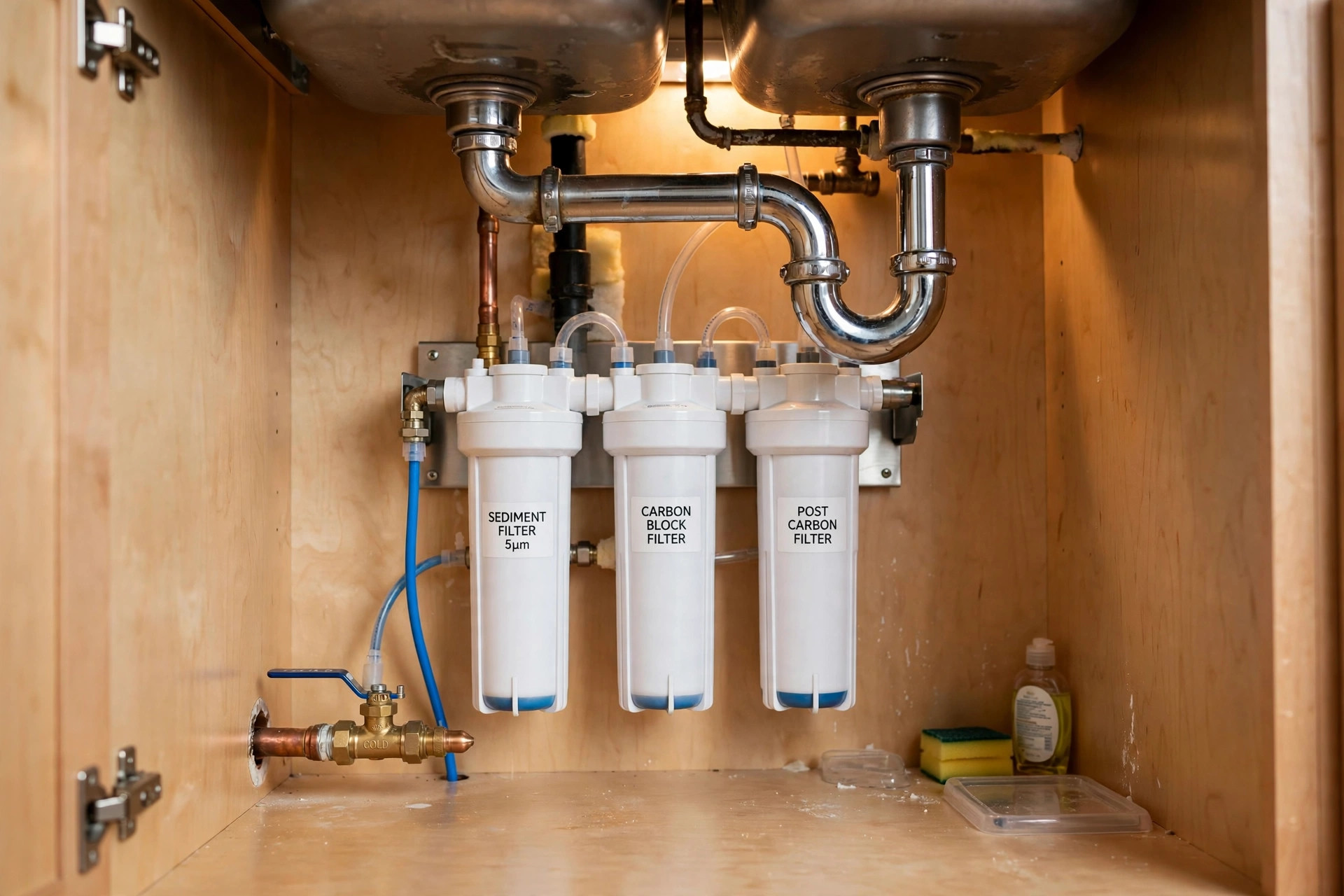
Multi-stage units run water through a sediment filter, then carbon, and sometimes a specialty media for lead or chloramine. They last longer between cartridge changes and handle a wider set of problems. They are still renter-friendly as long as the housing is small enough for the cabinet.
Specialty Lead-Reduction Filters
Older buildings may have lead service lines or lead solder. If your water test shows lead, choose a filter certified to NSF/ANSI 53 for lead reduction. The EPA notes that there is no safe level of lead in drinking water for children, so this choice matters most in homes with kids.
Some renters start with a countertop water filter and later move to an under sink unit. Both beat a pitcher for daily flow, but the under sink model keeps the counter clear.
How to Choose: A Simple Checklist
Start with your water. Order a low-cost home test or ask the local water utility for its yearly quality report. Know whether you face lead, chlorine, hard water, or just bad taste. Then match the filter to the problem. A carbon filter handles taste. A certified lead filter handles lead. Do not buy more system than your water needs.
Next, check the cabinet. Measure twice. Note where the shutoff valves sit. Make sure the filter housing clears the garbage disposal, if you have one. Many apartment kitchens have a disposal on one side of the sink; plan the unit for the free side.
Then compare three numbers: the price of the unit, the price of replacement cartridges, and the rated cartridge life in gallons. A cheap unit with costly cartridges is not a bargain. The Consumer Reports water filter ratings compare yearly operating cost, which is the honest way to shop.
Also check the faucet flow. Most under sink filters need their own small faucet or a three-way tap. If drilling is not allowed, choose a model that feeds an existing faucet or a unit with a compact dedicated tap that mounts in the soap dispenser hole. Many apartment sinks already have that spare hole.
Cost and Price in the USA
A basic single-stage carbon under sink filter costs between 40 and 120 dollars. A good two-stage unit runs 80 to 200 dollars. Compact reverse osmosis systems run 150 to 400 dollars. Installation by a plumber adds 100 to 200 dollars, but most renters install a basic unit themselves in under an hour.
Yearly upkeep is the real cost to watch. Replacement cartridges run 20 to 60 dollars each for carbon models. Reverse osmosis membrane sets run 60 to 150 dollars per year. Retailers such as Home Depot and Lowe’s list cartridge prices online, so you can plan the yearly cost before you buy the housing.
Installing It in a Rental Without Damage
Turn off the cold water shutoff under the sink. Open the cold tap to release pressure. Place a bucket under the connections. Most kits include a tee that fits between the shutoff valve and the faucet supply line. Hand-tighten the plastic fittings, then give a small turn with a wrench. Do not overtighten.
Mount the filter housing on the cabinet wall with the screws from the kit, or set it on the cabinet floor with the bracket feet if the lease forbids screws. Run the tubing from the tee to the filter inlet, then from the outlet back up to the faucet line or to the dedicated tap. Check every joint for drips. Run the water for five minutes to flush the new cartridge before drinking. Guides at Family Handyman show each step with clear photos for common plumbing types. Flush the line again for one minute after any long vacation.
Keep all original parts. When you move, shut off the water, remove the tee, and reconnect the original supply line. The sink should look as it did on move-in day. Take a photo of the plumbing before you start and another after the install. These photos help if the landlord asks questions later, and they make reassembly on move-out day much easier.
Care and Upkeep
Change the cartridge on schedule. Most makers give a gallon rating and a month rating; use whichever comes first. Mark the date on the housing with tape. If the flow slows to a trickle, the cartridge is likely spent.
Wipe the housing now and then. Check the tubing for kinks. Once a year, look at the fittings for salt-like crust or damp spots, which can signal a slow leak. A tiny leak under a sink can ruin a cabinet, so catch it early.
Do not use the filter on water that is unsafe by itself. If the building has a boil notice, boil the water first. Filters are not made to treat water with unknown germs. This rule holds for every brand on the shelf.
Safety Notes for Apartment Dwellers
Pressure spikes can hurt plastic filter housings. If your building has high water pressure, a small pressure regulator on the cold line protects the unit. Most apartments run at safe pressure, but older buildings can run high.
Use only cold water through the filter. Hot water damages carbon and membranes and shortens their life. If the unit feeds a dedicated tap, mark it cold-only so guests do not run hot water through it.
Keep the manual. It lists the certified claims, the change schedule, and the warranty terms. If a part cracks in the first year, most makers send a free replacement.
Faucet brands such as Kohler and Delta Faucet publish plumbing diagrams that help when you plan the tubing path. Filter makers like Aquasana sell under sink models with clear install guides for renters.
FAQ
Can a renter install an under sink filter?
Yes, in most cases. Choose a model that connects to the existing cold line and needs no new holes. Get written permission from the landlord if the lease asks for it. Keep the old parts for move-out day.
What is the best under sink filter for apartments usa with lead in the water?
Choose a unit certified to NSF/ANSI 53 for lead reduction. Test the water first so you know the filter matches the problem. Change the cartridge on schedule, because a spent filter does not protect.
Under sink filter or countertop filter for a small apartment?
An under sink unit saves counter space and usually flows faster. A countertop unit is easier to move and needs no plumbing work. Many renters pick the under sink route for daily drinking water and keep a pitcher as backup.
How long does installation take?
A single-stage unit takes about 30 to 60 minutes with basic tools. A reverse osmosis system takes one to two hours because of the tank and drain line. First-timers should allow extra time.
How often do I change the cartridge?
Most cartridges last six to twelve months. High-use homes reach the gallon limit sooner. Mark the install date on the housing and set a phone reminder.
Will it work if my building has a water softener?
Yes. A softener handles hardness for the whole building. The under sink filter still improves taste and removes chlorine and lead at the drinking tap. The two systems do different jobs.
A Final Word
The best under sink filter for apartments usa renters is the one that fits the cabinet, matches the water problem, and can be removed without a trace. Start with a water test, buy a certified unit, and keep up with cartridge changes. Good tap water is a small daily comfort, and in a rented home it is one of the easiest upgrades you can make.
References
Aquasana. (n.d.). Water filtration systems. https://www.aquasana.com Consumer Reports. (n.d.). Product reviews and ratings. https://www.consumerreports.org Delta Faucet. (n.d.). Kitchen and bathroom faucets. https://www.deltafaucet.com Family Handyman. (n.d.). DIY home repair and maintenance. https://www.familyhandyman.com Kohler. (n.d.). Bathroom and kitchen fixtures. https://www.kohler.com Lowe’s. (n.d.). Home improvement products. https://www.lowes.com NSF International. (n.d.). Product certification standards. https://www.nsf.org The Home Depot. (n.d.). Home improvement products. https://www.homedepot.com U.S. Environmental Protection Agency. (n.d.). Protecting human health and the environment. https://www.epa.gov
Was this guide helpful?

About Michael Thompson
The My Garden US editorial team writes practical, in-depth home and garden guides for American homeowners — tested advice, no fluff.
You May Also Like
How Long Do Water Heaters Last? USA Guide
April 1, 2026 0 views
Hybrid Water Heater vs Gas Comparison USA
February 25, 2026 0 views
Iron Filter for Well Water Reviews: What American Homeowners Report
February 14, 2026 0 views