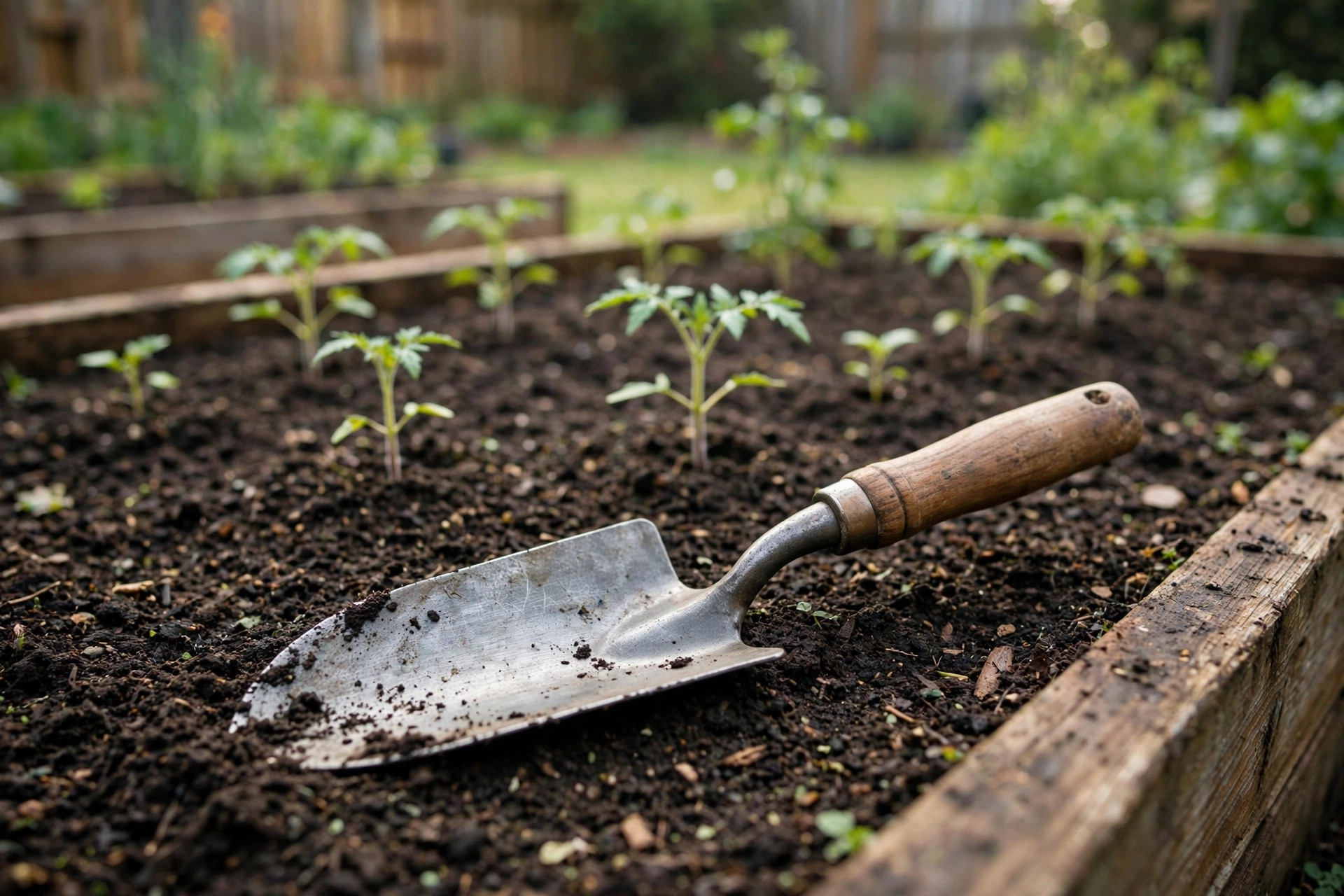

A garden trowel is the smallest tool in the shed and the one you will reach for most. It digs the holes, sets the transplants, and scoops the fertilizer. Yet most gardeners choose one in a hurry and then fight it for years. These best garden trowel for planting reviews will help you slow down and choose well. The right trowel fits your hand, holds a sharp edge, and will still be with you ten seasons from now.
The work of planting is quiet and plain. A trowel that bends in hard soil or snaps at the handle turns a simple task into a chore. A good one makes planting feel easy. This guide looks at what matters in a planting trowel: the steel, the shape of the blade, the handle, and the comfort. It also covers types, prices, care, and safety. By the end, you will know which trowel suits your garden and your hand.
Why the Humble Trowel Matters
Every garden, large or small, runs on small tasks. You dig a hole for a tomato start. You lift a clump of flowers. You mix compost into the soil. A trowel does all of this. Many gardeners own fine best garden fork for clay soil and sharp shears, yet they plant with a cheap trowel that slows them down. The tool fails because the blade is thin or the handle is weak. Then planting takes longer than it should.
A good planting trowel saves time and saves your hands. It enters the soil cleanly. It moves enough earth in one scoop. It does not flex or rattle. When the tool works well, your mind stays on the plants, not the pain in your wrist. Reviewers of hand tools at Consumer Reports often stress the same point: the best tool is the one you can use for hours without complaint.
The trowel also sets the tone for your garden work. A strong tool invites you out to plant. A weak one keeps you inside. That is a small matter in dollars but a large one in pleasure.
What to Look for When Choosing a Trowel: Best Garden Trowel for Planting Reviews
The Blade and Its Steel
The blade is the heart of the trowel. Most blades are steel, but not all steel is equal. High-carbon steel holds an edge and resists bending. Stainless steel resists rust and wipes clean, which matters in wet soil. Aluminum trowels are light and will not rust, but they bend more easily in hard ground. Avoid thin stamped blades with no temper. They twist at the first rock.
Blade shape matters too. A broad blade moves more soil and is good for digging holes. A narrow, pointed blade works between tight plants and in pots. Many planting trowels carry depth marks stamped on the blade. These marks help you set seeds and bulbs at the right depth. A forged blade, shaped from one piece of hot steel, is stronger than a welded one. Garden tool makers at Fiskars and Corona Tools both note that one-piece forged construction is the mark of a serious hand tool.
The Handle
The handle is what your hand meets for hours. Wood handles, often ash or hickory, feel warm and classic. They can split if left out in the rain. Cushioned synthetic grips reduce blisters and absorb shock. Some handles have a palm rest or an ergonomic curve that keeps the wrist straight. If your hands are small, look for a slimmer grip. If arthritis troubles you, a larger, soft grip is kinder. Comfort is personal, so hold the trowel before you buy when you can.
The joint between blade and handle is the weak point of cheap trowels. A full tang, where the steel runs the full length of the handle, is the strongest design. A riveted or welded joint can work if it is well made, but it deserves a close look. Give the trowel a firm twist in the store. If it creaks or flexes, put it back.
Weight and Balance
A planting trowel should feel like part of your hand. Too heavy, and your arm tires. Too light, and it will not bite into firm soil. Most gardeners prefer a trowel between six and ten ounces. Balance matters as much as weight. The tool should sit level in your grip, neither head-heavy nor tail-heavy. A balanced trowel digs with less effort.
Types of Trowels for Planting
The Standard Planting Trowel
This is the classic shape: a broad, slightly cupped blade with a straight handle. It digs holes, scoops soil, and moves compost. For most home gardens, this is the trowel to buy. It is the shape most often praised in best garden trowel for planting reviews, because it handles the widest range of jobs.
The Transplant Trowel
A transplant trowel has a long, narrow blade. It slips between close plants without harming roots. It is the right choice for moving seedlings and setting out young starts. If you raise plants from seed, as described in many guides at Burpee, a transplant trowel belongs in your kit. Pair it with best garden hoe for weeding reviews for a full bed-maintenance set.
The Potting Trowel
A potting trowel is smaller and lighter, with a deep scoop. It fills pots, moves potting mix, and feeds houseplants. It is not built for digging in the ground. Keep one on the potting bench and a full-size trowel in the garden basket.
The Japanese Hori-Hori Knife
The hori-hori is a long, serrated digging knife from Japan. One edge cuts roots, the other saws. It digs, weeds, and measures depth. It is a favorite of serious gardeners, though it is more knife than trowel. Use it with care and a sheath.
The Weeding Trowel
Weeding trowels have forked or notched tips for lifting weeds with taproots. They are handy but not a substitute for a true planting trowel. If weeds are your main battle, a dedicated weeder does the job better.
Cost and Price: What Should You Pay
A garden trowel costs less than most tools, but price still tells a story. Cheap trowels, often under five dollars, use thin steel and glued handles. They may last one season. Mid-range trowels, from ten to twenty-five dollars, are the sweet spot. They offer forged blades, solid joints, and comfortable grips. Premium trowels, above thirty dollars, often carry lifetime warranties and the finest steel.
Do not judge a trowel by price alone. A twelve-dollar trowel from a trusted maker often outlasts a twenty-dollar one from a poor one. Read reviews from gardeners who have used the tool for more than one season. First impressions mean little with hand tools. How a trowel feels after a year of mud and rain is what counts. Retailers such as Home Depot and Lowe’s carry long review threads that show how tools hold up over time.
For the average home garden, a budget of fifteen to twenty dollars buys an excellent planting trowel. Spend more only if you garden daily or work in hard, rocky soil. Remember that a trowel is a lifetime tool when chosen well. The cost per year is tiny.
How to Use a Trowel for Planting
Good technique protects both the tool and your hands. Push the trowel into the soil with a straight wrist, not a bent one. For a planting hole, drive the blade in at an angle, then lever the soil out toward you. Do not pry sideways against rocks. That is how blades bend and handles snap. In hard soil, water the spot first or work it with a fork before you dig.
Keep your other hand clear of the blade path. Work from a kneeling pad or a low stool to save your back. A sturdy best garden kneeler with handles reviews pad makes long planting sessions far easier on the knees. Set plants at the same depth they grew in their pots. Use the depth marks on the blade if your trowel has them. Firm the soil gently around the roots, then water well. Guides at The Spruce and Gardener’s Supply both stress that firm, even soil contact is what helps new plants settle.
Care and Upkeep
A trowel lasts decades if you care for it. After each use, knock off the soil and wipe the blade. For a deeper clean, wash with water and a stiff brush, then dry at once. Steel rusts fast when left wet. A light coat of oil on the blade keeps rust away. Camellia oil or even vegetable oil will do.
Store tools indoors, hung on a wall or stood blade-down in a bucket of sand mixed with a little oil. The sand scrubs the blade each time you plunge it in. Never leave a trowel out in the rain. Wooden handles benefit from a yearly rub of linseed oil, which keeps them from drying and splitting.
Sharpen the blade once or twice a season. A flat mill file works well. File the edges at the factory angle, usually about twenty degrees, and only on the bevel side. A sharp trowel cuts through roots and sod with ease. The repair experts at Family Handyman and Bob Vila note that sharpening is the most neglected and most rewarding garden tool task.
Safety
A trowel is a simple tool, but it deserves respect. Keep the blade away from your body when digging. Wear gloves to guard against blisters and hidden sharp objects in the soil. Tetanus lives in soil, so keep your vaccination current and clean any cut at once. Do not leave trowels lying blade-up in the garden where a bare foot or a pet could find them. Hang them or stand them in a bucket when you pause. Teach children to carry the trowel pointed down and to set it down flat.
If you garden in old urban soil, wear gloves and consider a soil test. Old lots can hold lead and other metals. A mask helps when you work dry, dusty soil. These are small habits that keep gardening safe for years.
Frequently Asked Questions
What is the best garden trowel for planting in heavy clay soil? Choose a forged, one-piece trowel with a thick high-carbon steel blade. Thin blades bend in clay. A slightly narrower blade also enters heavy soil more easily than a wide scoop.
Are stainless steel trowels better than carbon steel ones? Each has a strength. Stainless steel resists rust and is easy to clean, which suits wet climates. Carbon steel holds a sharper edge and is tougher, but it needs oiling after use. For most gardeners, either serves well if the build is solid.
How long should a good trowel last? A well-made trowel should last ten years or more, and many last a lifetime. The blade may need sharpening and the handle may need oiling, but the tool itself should not bend or break under normal garden use.
Do depth marks on the blade really matter? They help, especially for bulbs and seeds. Planting at the right depth is one of the simplest ways to raise healthy plants. If your trowel lacks marks, a piece of tape on the handle works as a guide.
What is the difference between a trowel and a transplanter? A trowel has a broad blade for digging and scooping. A transplanter has a long, narrow blade for slipping between plants and lifting seedlings with their roots intact. Many gardeners own both.
Should I buy a trowel set or a single trowel? A single excellent trowel beats a set of poor ones. Start with one strong planting trowel. Add a transplant trowel or a potting trowel later, when a clear need appears.
A Short Final Word
The search behind these best garden trowel for planting reviews ends in a simple truth. The best trowel is not the most costly or the most clever. It is the one with honest steel, a joint that will not fail, and a handle that fits your hand. Hold a few in the store. Read the long-term reviews. Then buy once and plant for years. A good trowel asks little and gives much, season after season.
References
Bob Vila. (n.d.). Home improvement advice. https://www.bobvila.com Burpee. (n.d.). Seeds, plants, and gardening supplies. https://www.burpee.com Consumer Reports. (n.d.). Product reviews and ratings. https://www.consumerreports.org Corona Tools. (n.d.). Garden and landscape tools. https://www.corona-tools.com Family Handyman. (n.d.). DIY home repair and maintenance. https://www.familyhandyman.com Fiskars. (n.d.). Garden and cutting tools. https://www.fiskars.com Gardener’s Supply Company. (n.d.). Gardening tools and supplies. https://www.gardeners.com Lowe’s. (n.d.). Home improvement products. https://www.lowes.com The Home Depot. (n.d.). Home improvement products. https://www.homedepot.com The Spruce. (n.d.). Home and garden advice. https://www.thespruce.com
Was this guide helpful?

About David Wilson
The My Garden US editorial team writes practical, in-depth home and garden guides for American homeowners — tested advice, no fluff.
You May Also Like
Drip Irrigation Kit for Raised Beds: How to Choose, Install, and Care for One
August 29, 2026 0 views
The Best Garden Trowel Set for Beginners: How to Choose Well
March 24, 2026 0 views
Best Garden Gloves for Cactus Handling: A Plain Guide
July 27, 2026 0 views