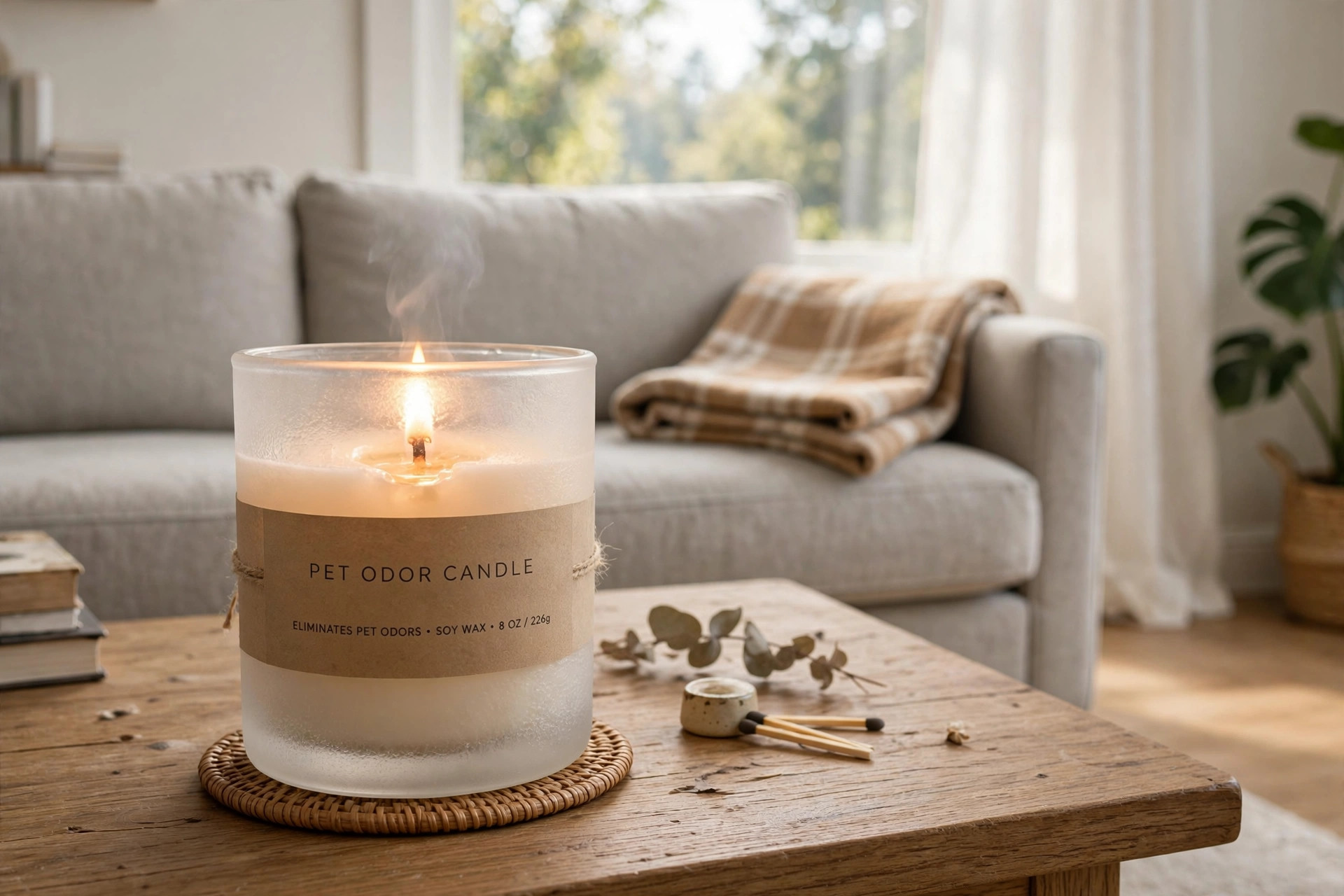

A house with a dog has a smell. Every dog owner knows it. Wet coats, damp paws, bedding that needs a wash, and the faint musk that lives in the sofa cushions. Still, no one wants a home that smells like a kennel. The best pet odor candle for dog smell removal is one small tool that can help. It does not replace cleaning. It does not replace baths. But used the right way, it can make a room smell fresh without hiding the problem under heavy perfume.
This guide explains what these candles are, how they work, and how to choose one.
Why Dog Odor Is Hard to Remove
Dog smell is stubborn for a few plain reasons. A dog’s skin has natural oils. These oils keep the coat healthy, but they carry odor. When a dog gets wet, the smell grows stronger. Yeast and bacteria live on the skin in small numbers. In a healthy dog this is normal. In a damp dog it can smell strong.
The smell also moves. It settles into fabrics. Sofa covers, rugs, curtains, and the dog’s own bed hold odor for weeks. Hard floors hold less. Carpet holds the most. This is why a room can smell of dog even when the dog is outside.
Regular cleaning takes care of the source. Wash the dog bed every week or two. Mop hard floors. Vacuum rugs with a good pet vacuum. Some owners also keep a pet odor eliminator spray for carpets on hand for fast work between deep cleans. The candle handles the air. Together they cover both the source and the symptom.
A normal scented candle only adds fragrance. It sits on top of the odor. Many pet owners have learned this the hard way. They burn a sweet vanilla candle and end up with a room that smells like vanilla and wet dog. A candle made for pet odor works in a different way. It is built to trap or break down odor molecules, not just cover them.
How Pet Odor Candles Work: Best Pet Odor Candle for Dog Smell Removal
Most pet odor candles use one of two systems. Some use odor-neutralizing compounds. These are special ingredients mixed into the wax. When the candle burns, the heat releases them into the air. They bond with odor molecules and change them. The smell does not just get covered. It gets removed at a chemical level.
The other type uses activated charcoal or baking soda in the wax. These materials are famous for absorbing smells. A refrigerator box of baking soda works on the same idea.
Many brands combine both systems. The wax carries a neutralizing agent. The scent is light and fresh, often citrus, linen, or green tea. The best pet odor candle for dog smell removal usually keeps the fragrance gentle. A strong scent fights the odor instead of removing it, and strong scents can bother a dog’s nose.
What to Look for When You Shop
Shopping for these candles is simple once you know the signs of a good one. Keep this list in mind.
Wax type. Soy wax is the most common choice. It burns clean and slow. Beeswax is another good pick. It has a light natural scent of its own. Paraffin wax is cheaper, but it can release more soot. For a home with a dog, soy or a soy blend is the safer, cleaner choice.
Odor-neutralizing claim. Look for words like “odor eliminating,” “odor neutralizing,” or “enzyme based.” These signal that the candle is built for the job. A candle that only lists a fragrance name, with no mention of odor control, is probably just a regular candle.
Scent strength. Light and fresh beats strong and sweet. Heavy floral or bakery scents can irritate a dog’s sense of smell. What is pleasant to you may be loud to them. Citrus, fresh linen, cucumber, and green tea are common safe-feeling choices.
Burn time. A good jar candle gives 40 to 80 hours of burn time. Larger jars last longer. For daily use in a living room, a bigger candle is better value.
Pet-safe labeling. Some brands test their products around pets and say so on the label. This is a good sign. It shows the maker thought about animals, not just people.
Essential oils. This needs care. Some essential oils are toxic to dogs, such as tea tree oil, pennyroyal, and wintergreen. A candle with a mild fragrance oil is usually fine in a ventilated room. A candle loaded with strong essential oils is not. If your dog shows signs of distress, such as sneezing, drooling, or leaving the room, blow out the candle at once. The ASPCA’s guidance on household products around pets is worth reading before you buy anything heavily scented.
Types and Options on the Market
Pet odor candles come in a few common forms. Each suits a different room and habit.
Jar candles. The classic form. A glass jar with a lid, easy to move from room to room. Good for living rooms and bedrooms. The lid keeps dust out when the candle is not in use.
Tin candles. Small metal tins, often sold in sets. Good for bathrooms or a laundry room where the dog’s towels dry.
Wax melts. Small scented cubes warmed in an electric warmer. No open flame. This is the safest form around a curious dog or a wagging tail.
Large multi-wick candles. Big jars with two or three wicks. They cover larger rooms like a great room or open-plan living area. They cost more but last longer per hour of burn.
Unscented neutralizers. A few brands sell candles with almost no fragrance. Best pick for homes where someone has allergies or where the dog is sensitive to smells.
Prices run from about five dollars for a small tin to forty dollars or more for a large premium jar. The middle range, twelve to twenty-five dollars, holds most of the well-reviewed options. Sets of three or four small candles often give the best value for trying different scents.
Cost and Value: What Is Fair to Pay
Candle prices can be hard to judge. A higher price does not always mean a better candle. Here is a plain guide.
Small tins and melts, five to ten dollars, are fine for testing a scent. Do not expect them to clear a large room. Medium jars, twelve to twenty dollars, are the workhorse size. They handle a normal living room. Large jars, twenty-five to forty-five dollars, suit big open spaces and heavy odor.
Watch the price per hour of burn. A twenty-dollar candle that burns for 60 hours costs about thirty-three cents per hour. A ten-dollar candle that burns for 15 hours costs about sixty-seven cents per hour. The bigger candle is the better deal. Labels often list burn time. Use it.
Sales are common. Home fragrance goes on sale often, so there is no need to pay full price if you can wait a week or two.
Remember that the candle is only part of the plan. Money spent on washing the dog bed, a good vacuum, and an odor eliminator for the yard and grass may do more for the smell than any candle. The candle is the finishing touch, not the foundation.
How to Use the Candle for Best Results
Burn the candle in the room where the smell is strongest, usually the living room or the room with the dog bed. Light it about thirty minutes before guests arrive. Let it burn for one to two hours. That is enough to freshen the air.
Trim the wick to about a quarter inch before each burn. A long wick makes a tall flame, and a tall flame makes soot. Let the wax melt all the way to the edge of the jar on the first burn. This stops tunneling, where the wick burns a hole down the middle and wastes wax.
Do not burn a candle all day. Two to four hours at a time is plenty. Long burns overheat the jar and waste fragrance. Ventilate the room a little. Crack a window or run a fan on low. The EPA’s indoor air guidance explains why a little fresh air matters in any room where candles burn.
Keep the candle away from the dog’s reach. Put candles on high shelves or sturdy tables. Never leave a burning candle alone in a room with a dog. This rule has no exceptions.
Care and Upkeep of the Candle Itself
Candles need small care to burn well. Keep the lid on when the candle is cool. Dust settles into open jars and dulls the scent. Wipe the rim of the jar now and then.
If the wick leans to one side, straighten it while the wax is soft. If the flame smokes, blow it out, trim the wick, and relight.
Store spare candles in a cool, dark place. Heat softens wax and weakens scent. Most candles keep their scent for about a year if stored well.
When the candle is done, clean the jar. Pour out the last bit of warm wax, wash with hot soapy water, and reuse the jar for cotton balls or dog treats.
Safety Around Dogs
This section matters most. A candle is an open flame and a source of chemicals. Dogs deserve care on both counts.
Flame safety. Never leave a lit candle where a dog can reach it. Use the candle only when you are in the room. Blow it out when you leave, even for a minute. The Consumer Product Safety Commission tracks candle fires each year, and unattended candles are a leading cause.
Air safety. Dogs breathe the same air you do, but their noses are far more sensitive. Watch your dog when you first burn a new candle. Signs of trouble include sneezing, watery eyes, drooling, coughing, or the dog leaving the room. If you see these signs, put out the candle and air out the room.
Ingestion. Dogs chew things. Keep unlit candles out of reach too. Eaten wax can cause stomach upset. If your dog eats part of a candle, call your veterinarian. PetMD has a clear overview of common household risks for dogs that is worth a look.
Puppies and old dogs. Young puppies and senior dogs are more sensitive. Use unscented or very lightly scented options around them, or skip the flame and use an electric wax warmer placed high up.
Cats in the home. Many dog homes also have cats, and cats are sensitive to more substances than dogs. If you have both, choose your products with the cat in mind as well. A cat litter for odor control in a multi-cat home does quiet work that no candle can replace.
Common Mistakes to Avoid
First, buying on scent alone. Read the label for odor-neutralizing claims. Second, burning too many at once. One good candle per room is enough. Third, skipping the cleaning. No candle can fix a dog bed that has not been washed in two months. Fourth, placing the candle too close to fabrics. Keep a foot of clear space around any lit candle. Fifth, ignoring the dog’s reaction. A dog that avoids the room is giving you a clear message.
Frequently Asked Questions
Do pet odor candles really work, or are they just regular candles? It depends on the candle. True pet odor candles contain neutralizing agents that break down odor molecules. Regular scented candles only add fragrance. Read the label. If it talks about eliminating or neutralizing odor, it is built for the job. Product tests from Good Housekeeping can show which claims hold up.
Are these candles safe to burn around dogs? In most cases, yes, with care. Use them in a ventilated room, keep the flame away from the dog, and watch for signs of irritation. Choose soy wax, a cotton wick, and a light scent. When in doubt, ask your veterinarian. The American Kennel Club offers general guidance on keeping a dog-safe home.
How long should I burn the candle each day? One to three hours is enough for most rooms. Light it when the odor is worst, such as after a walk in the rain or before guests come.
Can I use a pet odor candle in a small apartment? Yes, but ventilate. Small rooms build up scent fast. Crack a window or run the kitchen fan for a few minutes. A wax melt in an electric warmer is a good flame-free choice for tight spaces.
What scent works best for dog smell? Fresh, clean scents work best. Citrus, linen, green tea, and light herbal blends are popular. Avoid heavy sweet scents. They mix with dog odor instead of clearing it.
Will one candle handle a whole house? No. A candle freshens one room. For a whole house, you need one candle per main living space, plus real cleaning. Wash bedding, vacuum often, and mop floors.
A Short Final Word
The best pet odor candle for dog smell removal is a helper, not a cure. Pick a soy-wax candle with a real odor-neutralizing formula and a light, fresh scent. Burn it for an hour or two in the rooms that need it. Keep the flame away from your dog, and never skip the cleaning that removes odor at its source.
A fresh-smelling home and a happy dog go together. With the right candle and a simple routine, you can have both. Retailers like Chewy and Home Depot carry wide selections, so comparing a few options side by side is easy. Take your time and read the labels.
References
American Kennel Club. (n.d.). Dog care and training resources. https://www.akc.org ASPCA. (n.d.). Pet care and animal welfare resources. https://www.aspca.org Chewy. (n.d.). Pet supplies. https://www.chewy.com Good Housekeeping. (n.d.). Product reviews and home advice. https://www.goodhousekeeping.com PetMD. (n.d.). Pet health information. https://www.petmd.com The Home Depot. (n.d.). Home improvement products. https://www.homedepot.com U.S. Consumer Product Safety Commission. (n.d.). Product safety information. https://www.cpsc.gov U.S. Environmental Protection Agency. (n.d.). Protecting human health and the environment. https://www.epa.gov
Was this guide helpful?

About James Carter
The My Garden US editorial team writes practical, in-depth home and garden guides for American homeowners — tested advice, no fluff.
You May Also Like
Best Dog Ear Wipes for Weekly Cleaning Routine
August 22, 2026 0 views
Best Litter Genie Refill for Odor Control USA: A Plain Guide for Cat Owners
September 4, 2026 0 views
The Best GPS Dog Collar for Escape Artist Dogs: A Practical Guide
September 25, 2026 0 views