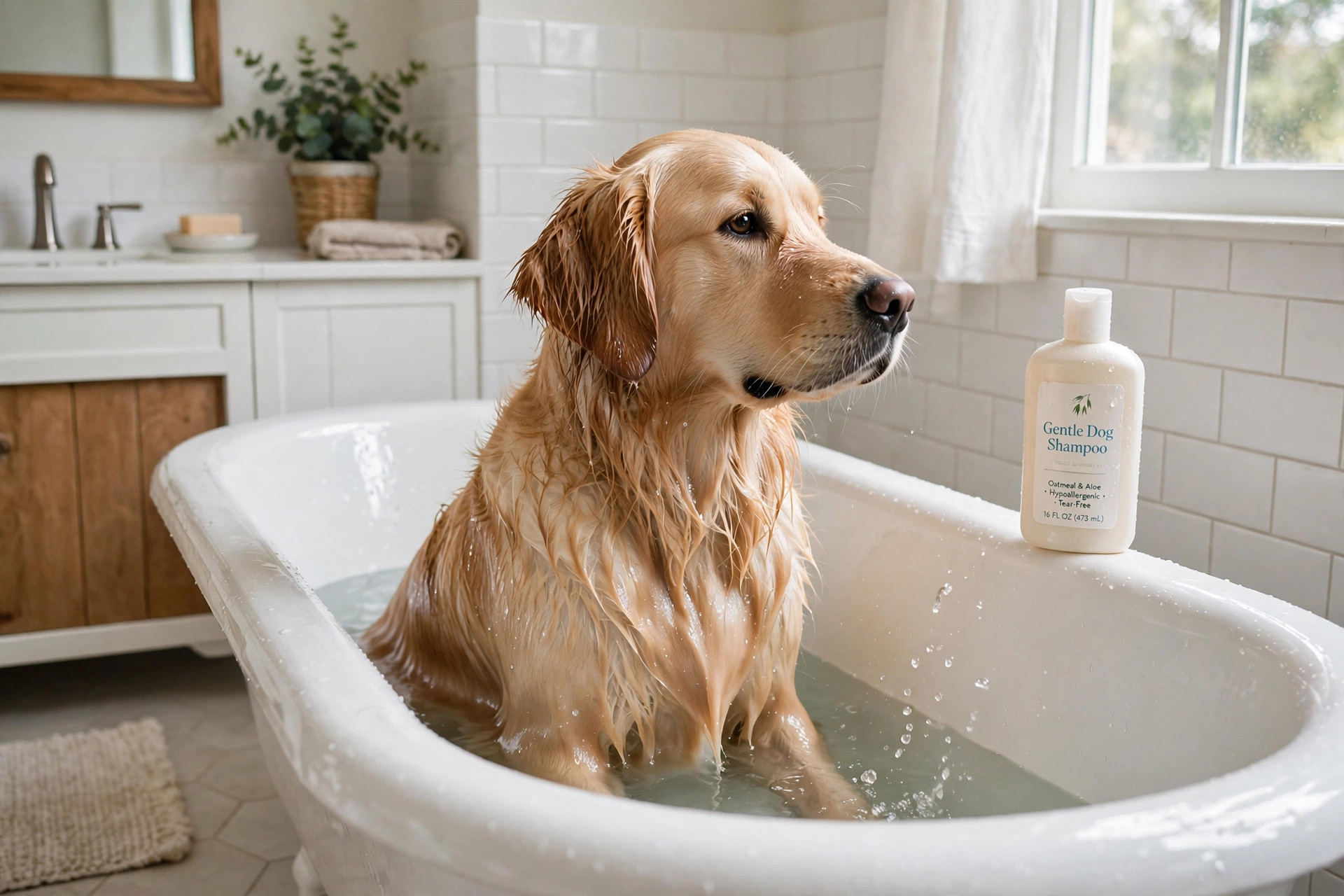

Finding the best dog shampoo for dry flaky skin relief can make a real difference for a dog that scratches all day, sheds white flakes, or wears a dull, lifeless coat. Dry skin is one of the most common skin troubles in dogs. The good news is that it is often simple to manage at home with the right shampoo and the right bath routine. This guide explains why flakes appear, which ingredients help, which types of shampoos work best, what they cost, and how to bathe your dog the safe way.
Why Dry, Flaky Skin Matters
A dog’s skin is its largest organ. It protects the body from germs, keeps water in, and holds the coat in place. When the skin dries out, it cracks and flakes. The dog feels itch and scratch. Scratching then breaks the skin further, and the cycle grows worse. Flakes on a dark coat look like dandruff in people, and many owners first notice them on bedding or furniture.
Cold winter air is a common cause. Indoor heating pulls moisture from the air, and the skin follows. Low humidity in summer can do the same in dry states. Bathing too often with a harsh shampoo strips the natural oils that keep skin soft. Diet can play a role as well. A diet low in good fats may leave the coat dry. Allergies, parasites, and skin infections can also cause flaking, so a vet visit is wise if the problem is severe or does not improve. Resources from groups like the ASPCA and PetMD can help owners tell simple dryness apart from signs that need a vet.
Left alone, dry skin makes a dog restless and unhappy. Regular grooming and a gentle bath routine often turn it around in a few weeks. A dog that lives much of its life in an outdoor kennel may need extra skin care, since wind and cold dry the skin faster.
What to Look for in a Shampoo: Best Dog Shampoo for Dry Flaky Skin Relief
Not every shampoo sold for dogs suits a dog with dry, flaky skin. Many basic shampoos clean well but leave the skin tighter and drier than before. Look for words like “moisturizing,” “oatmeal,” “soothing,” or “for dry skin” on the label. A shampoo made for puppies is often gentler than one made for adults, though a puppy formula may not clean a very dirty coat.
Ingredients That Help
Oatmeal is the classic soother. It calms itch and leaves a thin film that holds moisture in the skin. Aloe vera does much the same and cools hot spots. Coconut oil, shea butter, and vitamin E add softness back to a rough coat. Glycerin is a humectant, which means it pulls a small amount of moisture into the skin and holds it there. Some shampoos add essential fatty acids, which feed the skin from the outside.
Medicated options exist for tougher cases. Shampoos with chlorhexidine or ketoconazole fight yeast and bacteria that can grow on damaged skin. Salicylic acid helps lift heavy flakes so the skin can heal. These are strong products, and a vet should guide their use. Guides at the American Kennel Club describe how owners can pick gentle formulas for everyday care.
Ingredients to Avoid
Stay away from shampoos with strong perfume or dye. Both can irritate skin that is already sore. Sodium lauryl sulfate and similar harsh detergents clean well but strip oil. Parabens and phthalates are best avoided in any product used on a dog often. Never use human shampoo on a dog. Human skin has a different pH, and human products are too acidic for dogs. They dry canine skin quickly and can cause a rash. The same care applies when cleaning around the home; even a mild indoor dog potty area should be washed with pet-safe cleaners.
Types of Shampoos for Dry Flaky Skin
Oatmeal shampoos are the most common choice. They suit mild dryness and can be used on a regular schedule. Aloe and oatmeal blends add a bit more soothing power for dogs that scratch at night.
Hypoallergenic shampoos contain no perfume and no dye. They are a safe pick for dogs with allergies or very sensitive skin. Soap-free shampoos are another gentle class. They clean without the detergents that dry skin out, though they may not cut through heavy grease.
Medicated shampoos are the third type. They treat specific troubles such as yeast, bacteria, or heavy scaling. A vet often prescribes these for a short course. They cost more and are not meant for weekly use unless the vet says so. Pet retailers such as Chewy carry all three types, from gentle oatmeal washes to vet-grade formulas.
Leave-in conditioners and sprays round out the picture. They are not shampoos, but they help between baths. A light oatmeal spray can calm itch for a few days. A rinse-out conditioner after the shampoo seals moisture into the coat and makes brushing easier.
How to Choose the Right One
Start with the cause. If the dog simply has winter dryness, a mild oatmeal shampoo is enough. If flakes come with red skin, odor, or sores, see a vet before you shop. The vet may find an infection or allergy that a plain shampoo cannot fix. The American Veterinary Medical Association reminds owners that skin troubles often have more than one cause, and treating only the flakes can miss the real problem.
Read the full ingredient list, not just the front label. Short lists are usually gentler. Pick a formula that matches the coat. Long coats need more conditioning than short coats. Dark coats show flakes more, so owners of black or brown dogs often judge results by how the coat looks after a week of use.
Think about how often you will bathe. A dog bathed every week needs a very mild formula. A dog bathed once a month can use a slightly stronger one. Dogs that spend time in a dog pen in the garage or basement pick up dust and may need a middle schedule.
Price matters, but the cheapest bottle is rarely the best value. A concentrated shampoo that dilutes with water can last months. Check reviews from other owners, and prefer brands that publish full ingredient lists. When in doubt, ask your vet for two or three names that suit your dog’s breed and skin.
Cost and Price
Gentle oatmeal shampoos for dry skin usually cost between eight and twenty dollars for a sixteen-ounce bottle. Well-known brands sit near the middle of that range. Hypoallergenic and soap-free formulas cost a little more, often twelve to twenty-five dollars. Medicated shampoos are the priciest, from fifteen to forty dollars, and vet-prescribed brands can cost more still.
Concentrated formulas change the math. A sixteen-ounce bottle of concentrate may dilute to a gallon or more, bringing the cost per bath under a dollar. Buying a larger size or a multi-pack also cuts the price per ounce. Stores like The Home Depot and online shops often run sales on pet care, so watch for deals.
Do not judge a shampoo by price alone. An eight-dollar oatmeal shampoo with a short, clean ingredient list can beat a thirty-dollar bottle full of perfume. Spend your money on gentle ingredients, not on fancy packaging.
Bathing Steps That Protect the Skin
How you bathe matters as much as what you use. Brush the dog before the bath. Brushing lifts loose flakes and keeps the coat from tangling in the water. Use lukewarm water, never hot. Hot water feels good for a moment but dries the skin badly.
Wet the coat fully, then apply a small amount of shampoo. Work it in with your fingertips, not your nails. Spend extra time on dry patches but keep the lather away from the eyes and ears. Let a medicated shampoo sit for the time the label says, often five to ten minutes. Rinse twice. Leftover shampoo is a common cause of itch after a bath. Plain water rinses are cheap and effective.
Towel dry gently instead of rubbing hard. A low, cool blow dryer held at a distance works for thick coats. Brush again once the coat is dry. Between baths, a damp cloth can clean paws and belly without a full wash. Most dogs with dry skin do well with a bath every three to four weeks. Bathing more often can undo the good the shampoo does.
Safety Notes
Keep shampoo out of the eyes, ears, and mouth. If the product touches the eyes, rinse with plain water right away. Do not use flea shampoos, tar shampoos, or any medicated wash on puppies, pregnant dogs, or very old dogs unless a vet approves. These products are strong and can harm a weak animal.
Watch for reactions after the first use. Redness, swelling, or heavier scratching within a day means the shampoo does not agree with your dog. Stop using it and rinse the coat with plain water. Severe reactions, such as trouble breathing or swelling of the face, need a vet at once. Product safety pages from the U.S. Food and Drug Administration explain how to report a bad reaction to an animal product.
Store shampoos where pets and small children cannot reach them. A spilled bottle is a slipping hazard, and swallowed shampoo can upset a stomach. Keep the bath area warm and free of drafts so a wet dog does not chill.
Frequently Asked Questions
How often should I bathe a dog with dry, flaky skin? Every three to four weeks suits most dogs. Bathing weekly can dry the skin further unless the vet orders it for a medicated course. Between baths, brush often and use a damp cloth for spot cleaning.
Can I use human dandruff shampoo on my dog? No. Human shampoos have the wrong pH for dogs and contain ingredients that irritate canine skin. They may stop flakes for a day and then make dryness worse. Use only shampoos made for dogs. Pet health sites such as Vetstreet and WebMD give the same warning.
Does diet help with flaky skin? It can. Fats such as omega-3 and omega-6 feed the skin from the inside. Many owners add fish oil to food on a vet’s advice. A balanced diet built for the dog’s age and size is the base. Sudden diet changes can upset the stomach, so shift foods slowly.
What if the flakes do not go away after a month? See a vet. Lasting flakes can point to allergies, thyroid trouble, parasites, or infection. The vet may run skin scrapings or blood tests. Home care works for simple dryness, but deeper causes need diagnosis. Grooming guides at The Spruce Pets list the warning signs that call for a visit.
Are oatmeal shampoos safe for puppies? Most are, but check the label for a minimum age. Very young puppies chill fast and dry out fast, so keep baths short and the room warm. When a puppy is only a few weeks old, a damp cloth is often enough.
Should I use a conditioner too? A light rinse-out conditioner helps many dry-skinned dogs. It seals moisture in after the shampoo and cuts down on tangles. Pick one made for dogs, and rinse it well so no film stays on the skin.
A Final Word
The best dog shampoo for dry flaky skin relief is a gentle one with short, honest ingredients and no harsh perfume. Oatmeal and aloe formulas suit most dogs, and a careful bath routine does the rest. Start mild, watch the skin for two or three weeks, and let a vet step in if flakes persist. A calm dog with a soft, flake-free coat is the reward, and it is well within reach.
References
American Kennel Club. (n.d.). Dog care and training resources. https://www.akc.org American Veterinary Medical Association. (n.d.). Pet care resources. https://www.avma.org ASPCA. (n.d.). Pet care and animal welfare resources. https://www.aspca.org Chewy. (n.d.). Pet supplies. https://www.chewy.com PetMD. (n.d.). Pet health information. https://www.petmd.com The Home Depot. (n.d.). Home improvement products. https://www.homedepot.com The Spruce Pets. (n.d.). Pet care guides and product reviews. https://www.thesprucepets.com U.S. Food and Drug Administration. (n.d.). Antibacterial product information. https://www.fda.gov Vetstreet. (n.d.). Veterinary advice for pet owners. https://www.vetstreet.com WebMD. (n.d.). Health and wellness information. https://www.webmd.com
Was this guide helpful?

About James Carter
The My Garden US editorial team writes practical, in-depth home and garden guides for American homeowners — tested advice, no fluff.
You May Also Like
Best Dog Ear Wipes for Weekly Cleaning Routine
August 22, 2026 0 views
Best Dog Brush for Short Hair Deshedding: What Every Owner Should Know
September 2, 2026 0 views
Dog Booties for Hot Pavement Summer Walks
July 27, 2026 0 views