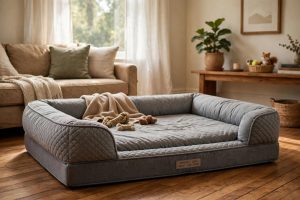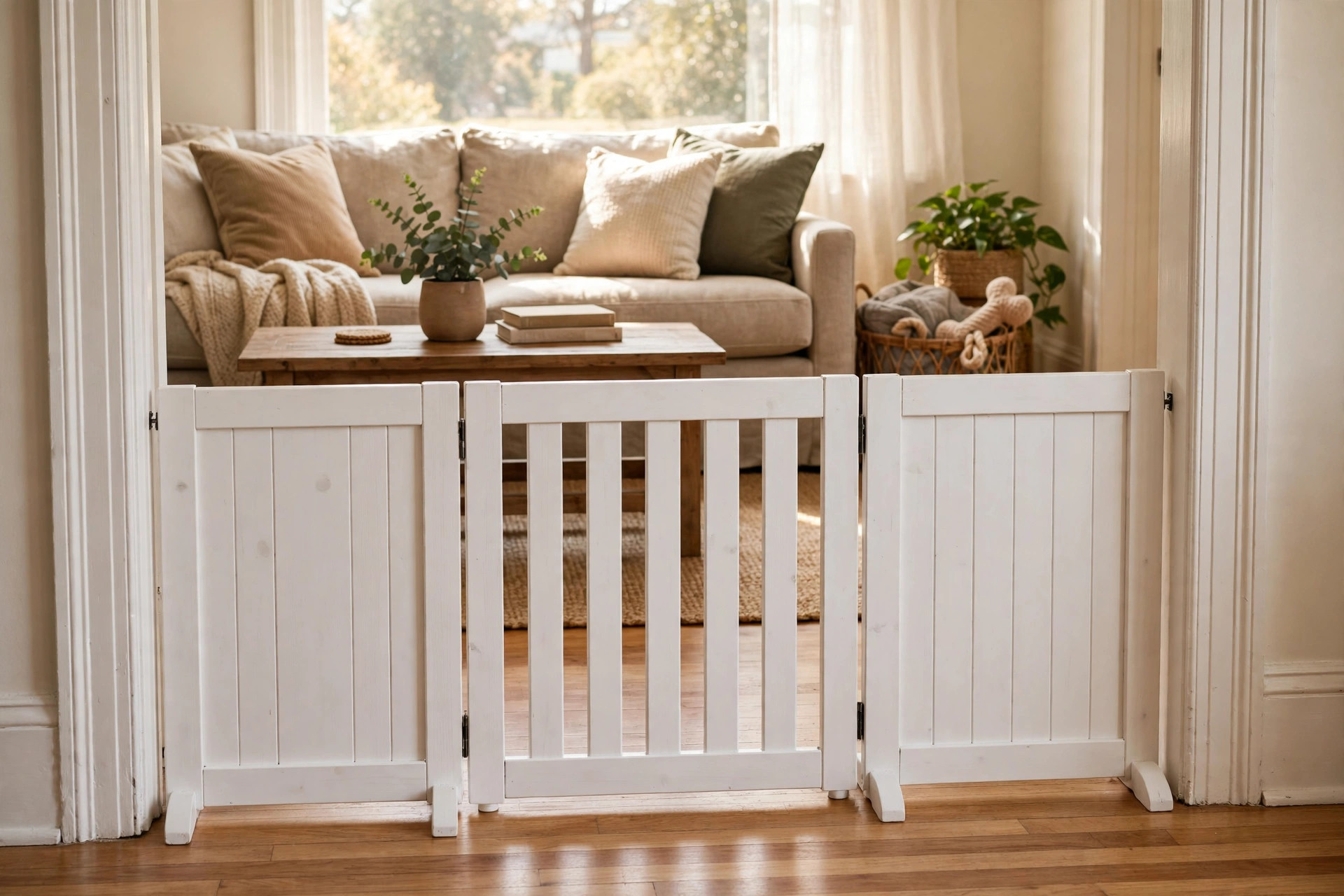

A dog that wanders where he should not go can cause real trouble. He may scratch the door of a bedroom, raid a trash can in the kitchen, or tear into a sofa cushion while no one is home. Many owners love their dogs dearly but still need a way to set clear limits inside the house. This is where the best pet fence indoor for keeping dogs out earns its place.
An indoor pet fence is a simple barrier. It blocks a doorway, a hall, or a wide open space. It keeps a dog out of rooms that are off limits. It also keeps a puppy safe in one area while the family is away. The right fence brings peace of mind. The wrong fence brings frustration, escape, and more trouble.
This guide explains what an indoor dog fence is, the types on the market, what to look for, what it costs, how to care for it, and how to use it with care. It also answers common questions from dog owners across the country.
Why an Indoor Pet Fence Matters
A dog needs order as much as love. In the wild, dogs live in dens. They learn which places are safe and which places are not. A house with no clear lines can confuse a dog. He does not know where he may go and where he may not. He will test every door.
An indoor pet fence draws a line the dog can see and understand. A kitchen stays clean when the dog is fed elsewhere. A nursery stays calm when a newborn sleeps. A home office stays quiet when an owner works. A mudroom holds a wet dog after a rainy walk while the rest of the house stays dry.
There is also the matter of safety. Some rooms hold real danger for dogs. A kitchen has hot stoves, sharp knives, and food that can poison a dog, such as chocolate and onions. A garage holds car fluids and tools. The American Kennel Club lists many common household items that are toxic to dogs, and a fence is the simplest way to keep a dog away from them (American Kennel Club, n.d.).
Training matters too. A fence does not replace training. It supports training. A dog learns faster when the rules stay the same each day. A fence makes the rules the same each day.
Types of Indoor Pet Fences for Dogs: Best Pet Fence Indoor for Keeping Dogs Out
Shoppers will find several kinds of indoor fences. Each has its own strengths. The best choice depends on the dog, the home, and the budget.
Freestanding Fences
A freestanding fence stands on its own. It has feet or a base that holds it up. There is no need to drill into a wall. This type suits renters well. It also suits people who move the fence from room to room. Many freestanding models come in wood or plastic. They fold up for storage. The drawback is that a large, strong dog can push a light model over. Heavy dogs need heavy bases.
Pressure-Mounted Gates
A pressure-mounted fence presses between two walls or a door frame. Rubber pads grip each side. No screws are needed. These work best in standard doorways. They come down fast when guests arrive. The drawback is width. Most models fit doorways up to about 40 inches wide. For wider openings, two units may join together. A very strong dog that leans or jumps can force a weak mount loose.
Hardware-Mounted Fences
A hardware-mounted fence screws into the wall or door frame. It is the strongest option. It suits the top of stairs and wide halls. It stays put when a large dog pushes on it. The cost is a few small holes in the wall. For owners who rent, that can be a problem. For owners who want the best pet fence indoor for keeping dogs out of danger zones like stairways, it is often the right pick. When the stair has a handrail, a pet gate for stairs with a banister kit mounts without drilling into the rail. Safety groups advise hardware-mounted gates at the top of stairs for both children and pets (U.S. Consumer Product Safety Commission, n.d.).
Playpens and Exercise Pens
An exercise pen is a ring of panels that forms a small yard inside the house. A dog stays in the pen while the owner cooks or cleans. Panels can fold out into a long straight fence across a wide room. This type suits puppies and small dogs. Large dogs can tip a light pen or simply step out of a short one. Pens come in heights from 24 inches to 48 inches.
Foldable Panel Fences
A foldable panel fence works like an accordion. Panels link together and fold into a zigzag. This type is easy to carry and store. It works well to block a fireplace, a tree at the holidays, or a wide arch. It is not the strongest type. It is best for calm dogs and short visits.
How to Choose the Right Indoor Fence
Buying the best pet fence indoor for keeping dogs out starts with honest answers to a few simple questions.
How big is the dog? Height and weight matter most. A fence should stand taller than the dog can jump. A good rule: the fence top should reach at least the dog’s chest when he stands on his hind legs. Small breeds do fine with 24-inch fences. Large breeds often need 36 to 48 inches. Weight matters for strength. A 90-pound dog will test a fence more than a 20-pound dog will.
How wide is the opening? Measure the doorway, hall, or arch before shopping. Write the number down. Many buyers guess and guess wrong. Most product pages list the range the fence fits. Buy the fence that fits the real number.
Does the dog chew? Some dogs chew wood. Others chew plastic. Metal fences stand up to chewers best. Look at bar spacing too. A small puppy can slip through wide bars. Bars should be close enough that the dog’s head cannot pass.
How often will the fence move? A fence that stays in one place for years can be hardware-mounted. A fence that moves daily should be freestanding or pressure-mounted. Think about who will open it. Some models have a walk-through door that swings both ways. This helps when hands are full of groceries or laundry.
What is the floor like? Rubber feet grip wood floors and tile. They can slide on slick floors. Check reviews from buyers with the same floor type.
What is the decor? A fence sits in the home for all to see. Wood fences blend with warm decor. White metal suits modern homes. Black metal hides scuffs. Looks should not beat function, but both can be had.
Owners who want to compare models across many brands can browse product listings and guides at major pet retailers and review sites (Chewy, n.d.; Consumer Reports, n.d.).
Cost and Price
Indoor pet fences cover a wide price range. A basic freestanding wooden fence may cost 30 to 60 dollars. A tall metal pressure-mounted gate often runs 60 to 120 dollars. A heavy-duty hardware-mounted fence for wide openings can cost 120 to 250 dollars. Exercise pens range from 40 to 150 dollars based on size and height.
Price usually tracks with strength and size. Cheap plastic fences suit small, calm dogs. Big, strong dogs need the stronger models. Buying cheap twice costs more than buying right once. Many owners learn this the hard way when a bargain fence breaks in a month.
Watch for extra costs. Extension panels for wide halls add 20 to 40 dollars each. Wall cups for pressure mounts may be sold apart. Shipping on heavy metal fences can add to the total at some stores.
Home improvement retailers also carry pet gates and fence panels, and their sites often list dimensions and weight limits clearly (The Home Depot, n.d.).
Care and Upkeep
An indoor fence needs little care, but a little care goes far.
Wipe metal fences with a damp cloth each month. This stops dust and dog slobber from building up. Wood fences can be wiped the same way. Check screws and joints twice a year. Tighten what is loose. A loose joint today is a broken fence next month.
Check rubber pads on pressure mounts often. Pads wear down. Worn pads slip. Many makers sell spare pads. Replace them before the fence fails.
Store foldable fences flat or standing in a closet. Do not stack heavy boxes on them. Panels bend under weight. Bent panels do not stand straight again.
For homes with several dogs, rotate the fence position now and then. Dogs chew the same spot out of habit. A new spot breaks the habit.
Safety Tips
Safety comes first with any pet product. A fence should protect the dog, not harm him.
– Never use a fence with a gap the dog’s head can fit through. Dogs can get stuck. Measure bar spacing against the dog’s head size. – Keep the fence away from cords, drapes, and blinds. A bored dog may chew what he can reach. – Do not use an accordion-style fence with wide diamond openings for small puppies. A puppy can trap a head or leg. – At the top of stairs, use only a hardware-mounted fence. A pressure mount can give way under a push. – Do not leave a dog in an exercise pen all day with no water, no shade from sun through a window, and no break. A pen is a tool, not a home. – If the house has a pool, indoor limits matter too: a dog that learns to respect gates inside is easier to keep safe outside, and small breeds near water should have a dog life jacket for small breeds pool safety on hand. – Check the fence for sharp edges after any damage. File down rough spots or replace the panel.
The ASPCA offers plain guidance on keeping pets safe inside the home, including how to set up safe rooms for dogs (ASPCA, n.d.). PetMD also publishes vet-reviewed advice on puppy-proofing a house (PetMD, n.d.).
Setting Up Your Indoor Dog Fence
Setup is easy, but a few steps make it work better.
First, clear the area. Move shoes, bags, and toys from the doorway. A clear space lets the fence sit flat.
Second, set the fence before the dog needs it. Let the dog sniff the fence while it stands in place. Give a treat for calm behavior near it. This builds a good link in the dog’s mind.
Third, test it. Push on the fence yourself. Lean on it the way a dog would. If it moves, fix the mount or choose a stronger spot.
Fourth, watch the first days. Some dogs test a fence for a week. They push, chew, and jump. Most give up when the fence never gives. Praise the dog when he turns away from the fence on his own.
Fifth, keep the rule steady. If the dog is kept out of the kitchen on Monday but let in on Tuesday, the fence means nothing. Steady rules make steady dogs.
For wide open floor plans, two fences can meet at a corner to close off a whole zone. Measure the full span. Many makers sell extension kits that join units side by side.
Owners looking for ideas on room setup and training aids can find helpful explainers at The Spruce Pets (The Spruce Pets, n.d.).
Frequently Asked Questions
What is the best pet fence indoor for keeping dogs out of the kitchen? For a standard kitchen doorway, a tall pressure-mounted gate with a walk-through door works well. It blocks the dog but lets the cook pass with hands full. For wide open kitchens with no door, a foldable panel fence or two joined gates can close the gap. Measure first, then shop.
Will an indoor fence work for a large dog? Yes, if it is tall and strong enough. Large breeds need fences 36 to 48 inches tall with metal frames. Hardware-mounted models hold best against strong dogs. Light wooden fences will not hold a determined large dog.
Can I use an indoor pet fence for a puppy? Yes. An exercise pen is often the best pick for a puppy. It gives the puppy a safe zone with a bed, water, and toys. Keep pen time short. Puppies need play, training, and time with people each day.
Do indoor fences damage walls? Pressure-mounted fences can leave small marks on paint. Rubber pads cut this risk. Hardware-mounted fences leave screw holes. Fill them with spackle when the fence comes down. Freestanding fences leave no marks at all.
How do I stop my dog from jumping over the fence? Buy a taller fence. A fence the dog can clear is the wrong fence. Also remove furniture near the fence that the dog can climb on. Train the dog to stay back with treats for calm behavior at a distance.
Are indoor pet fences the same as baby gates? They are much alike. Many products serve both uses. Pet gates often have smaller bar spacing to stop a dog’s head from passing. Always check the weight and height limits on the box. A gate made for a toddler may not hold a large dog.
A Short Final Word
The best pet fence indoor for keeping dogs out is the one that fits the dog, the home, and the daily routine. Measure the space. Know the dog’s size and temper. Pick a strong build over a pretty one when the two clash. Set it up with care, keep the rules steady, and the fence will do its quiet work day after day. A well-fenced home is a calmer home, for the dog and for everyone in it. And when fence time ends, active dogs still need their exercise — many owners pair indoor limits with outdoor routines, from long walks to outings with a pet stroller for large dogs for older or tired companions.
For more background, see Petco and PetSmart.
References
American Kennel Club. (n.d.). Dog care and training resources. https://www.akc.org ASPCA. (n.d.). Pet care and animal welfare resources. https://www.aspca.org Chewy. (n.d.). Pet supplies. https://www.chewy.com Petco. (n.d.). Pet supplies and services. https://www.petco.com PetMD. (n.d.). Pet health information. https://www.petmd.com PetSmart. (n.d.). Pet supplies and services. https://www.petsmart.com The Home Depot. (n.d.). Home improvement products. https://www.homedepot.com The Spruce Pets. (n.d.). Pet care guides and product reviews. https://www.thesprucepets.com
Was this guide helpful?

About James Carter
The My Garden US editorial team writes practical, in-depth home and garden guides for American homeowners — tested advice, no fluff.
You May Also Like
Outdoor Chicken Coop for Backyard Hens USA: A Practical Guide
February 9, 2026 0 views
Heated Cat House for Outdoor Feral Cats: A Guide for Caretakers
July 24, 2026 0 views
Dog Ramp for SUV and High Bed Access: A Simple Buying Guide
May 15, 2026 0 views