
Introduction
Every pet owner knows the problem. The dog comes in from the rain. The cat misses the litter box once. A guest leans down to pet the dog and wrinkles a nose. The smell stays in the carpet long after the animal has left the room. Finding the best pet odor eliminator spray for carpets can change daily life in a home with animals. This guide explains how these sprays work, what to look for when you buy one, and how to use one so the smell stays gone.
Why Pet Odor Gets Into Carpets: Best Pet Odor Eliminator Spray for Carpets
Carpet acts like a sponge. Fibers soak up water from wet paws, urine, drool, and sweat. The pad under the carpet holds moisture even longer. Warm rooms and poor airflow help bacteria grow. Bacteria feed on the protein in urine and skin oils. Their waste makes the sharp smell most people call pet odor. Once the odor sets into the pad, it can last for months.
The Nature of Pet Smells
Dog smell and cat smell differ. Dogs carry a body odor from the oils in their skin. That oil rubs off on every rug they cross. Cats make less body odor, but cat urine has strong crystals that reform after they dry. That is why an old cat stain can smell again on a humid day. Both types of odor sink deep. Surface cleaning removes what you see. It often leaves behind what you smell. A good spray reaches the fibers and breaks down the source.
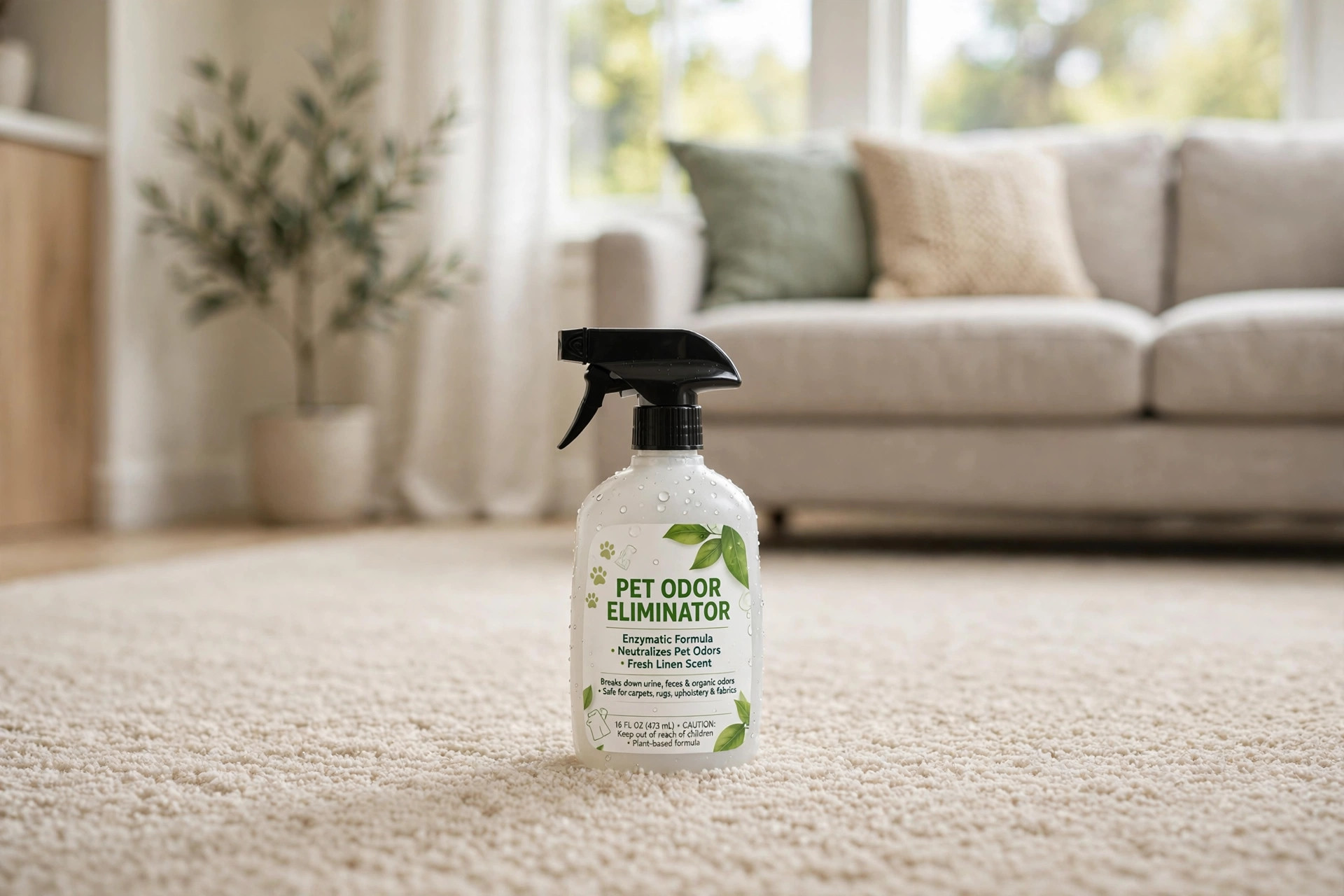
Enzyme sprays are the most common answer to this problem. They carry live bacteria that eat the odor source. When the source is gone, the smell is gone. Other sprays only cover the smell with perfume. The perfume fades in a day or two, and the bad smell comes back. The American Society for the Prevention of Cruelty to Animals offers care guides that stress cleaning accidents fast, since old stains bond with carpet fibers and grow harder to lift over time.
What to Look For When You Choose a Spray
Not every bottle on the shelf does the same job. Read the label with care. The right choice depends on the stain, the carpet, and the pet. A spray that works for dog urine may not work for cat urine. A product made for hard floors may harm carpet dyes.
Enzyme Formulas
Look for the words enzyme or bio-enzymatic on the label. These products hold bacteria that digest proteins and starches in pet waste. They need time to work. Most labels ask for ten to thirty minutes of damp contact. Some need hours for old stains. Give them that time. Wiping too soon cuts the result in half. PetMD publishes vet-reviewed guidance on pet stain removal, and its articles often point to enzyme cleaners as the first line of defense for urine spots.
Scent and Ingredients
Pick a scent you can live with. Strong floral scents fight with a house that already smells of dog. Light citrus or no scent at all suits most homes. Check the ingredient list for plant-based cleaners if your pet licks its paws. Many homes now keep both a deodorizer and a matching best pet vacuum for dog hair on furniture to fight smell and hair together.
Safety for Pets and Children
Some sprays use strong solvents. Read the warning panel. The bottle should say it is safe for use around pets once dry. Keep the pet out of the room while the spray works. Store bottles in a closed cabinet. The Spruce Pets reviews pet-safe cleaning products and reminds owners to test any new spray on a hidden corner of the carpet first.
Types of Pet Odor Eliminator Sprays
Stores group these sprays in four broad kinds. Each works in a different way. The best result comes from matching the type to the job.
Enzyme-Based Sprays
These are the workhorses. They use live bacteria to break down urine, feces, vomit, and drool. They work best on fresh spots but can lift old ones with repeated use. Most are color safe and gentle on carpet fiber. They cost more than simple deodorizers, but one bottle treats many spots. Many vet offices keep an enzyme spray on hand for daily messes.
Baking Soda and Powder Formulas
Powders sit on the carpet and pull moisture and odor out of the fibers. You shake them on, wait, and vacuum them up. They help with general dog smell across a whole room. They do not reach deep stains as well as liquid sprays. Homes with large carpeted areas often use powder weekly and keep a spray for fresh accidents.
Deodorizing Sprays
These sprays add a fresh scent to the carpet. Some also hold odor-trapping compounds that lock smell away. They work in minutes and need no rinsing. They suit light, everyday smells such as wet-dog odor after a walk. They fall short on urine spots, where the source sits deep in the pad. Use them between deep treatments, not in place of them.
Stain and Odor Combo Products
These bottles promise to lift the stain and kill the smell in one pass. They mix surfactants for the visible stain with enzymes or deodorizers for the smell. They save time on fresh spots. Read the label for color-fastness, since the stain-lifting agents can be stronger than plain enzyme sprays. Cat owners often pair a good spray with a strong best cat litter for odor control multi cat to cut down accidents at the source.
How to Use the Spray for Best Results
The method matters as much as the product. Follow these steps for fresh spots and old spots alike.
First, blot the area. Press clean paper towels or an old towel into the carpet. Stand on the towel to push it deep. Do not rub. Rubbing spreads the stain and drives it deeper.
Second, test the spray. Mist a small amount on carpet in a closet or under furniture. Wait one hour. Check for color change or stiffness. If the spot looks fine, move ahead.
Third, soak the stain. Mist or pour enough spray to reach the depth of the urine. For a deep spot, the liquid must reach the pad. Cover the area with a damp towel to keep the enzymes wet and working. Keep pets off the spot during this time.
Fourth, let it dry on its own. Most enzyme sprays ask for air drying. Once dry, vacuum the area to lift the fibers. Smell the spot again the next day. Old stains may need a second or third round. Patience wins here. The American Kennel Club provides house-training resources that note fast, calm cleanup prevents a dog from marking the same spot again.
Old and Deep Stains
Stains that sat for weeks or months need more work. Start by lifting as much dried matter as possible with a damp cloth. Then apply the spray heavy enough to soak through to the backing. Cover with plastic to slow drying and give the enzymes hours to act. You may repeat this over several days. If the pad itself is soaked through and the smell stays after three tries, the pad may need replacement in that area. No spray can save a pad that is fully saturated.
Cost and Price
Most pet odor sprays for carpets cost between eight and twenty-five dollars a bottle. Small trial bottles run under ten dollars. Large refill jugs, one gallon or more, cut the cost per ounce for homes with many pets. Enzyme sprays sit at the high end of the range. Simple deodorizing sprays sit at the low end. Price often tracks with how many treatments one bottle covers. Home Depot and similar home stores carry a wide range, and Chewy stocks pet-specific brands with owner reviews that help compare value per ounce.
A bottle that seems cheap but needs three coats costs more than a strong spray that works in one. Read reviews for mentions of repeat use. For a single cat in a small flat, one sixteen-ounce bottle may last months. For two large dogs in a carpeted house, a gallon jug makes sense. Budget for a vacuum as well, since powder formulas and dried spray residue both need a good vacuum to finish the job.
Care and Upkeep
A spray solves the smell today. Habits keep it away. Vacuum carpets two to three times a week in homes with pets. Use a vacuum with a HEPA filter to catch fine dust and dander. Wash pet bedding every one to two weeks, since beds hold the oils that end up on your carpet. Brush dogs and cats often to cut loose hair and dander.
Bathe dogs on a schedule that suits the breed. Short-haired dogs may need a bath each month. Long-haired breeds may need one every few weeks. Wipe paws at the door after walks in rain or mud. A small towel by the door takes ten seconds and saves hours of cleaning. Clean the litter box daily. Many odor problems trace back to a box that went a day too long, which is why some owners invest in a self cleaning litter box for busy cat owners to keep the routine steady.
Set a deep-clean season. Steam clean carpets once or twice a year in a pet home. Steam lifts the soil that daily vacuuming leaves behind. A professional cleaner with pet-safe products can reset a room that sprays alone cannot fix.
Safety
Read every label before the first spray. Keep all cleaning bottles where pets and small children cannot reach them. Ventilate the room while you spray. Open a window or run a fan. Wait until the carpet feels fully dry before you let the pet back on it. Many products state on the label that the area is safe for pets once dry. Follow that line to the letter.
Watch for reactions. If a dog licks a treated spot and starts to drool or vomit, rinse the mouth with water and call your vet. If a cat walks through a damp spot and then grooms, the same rule applies. The U.S. Environmental Protection Agency publishes safer-choice guidance for household cleaners, and its Safer Choice label marks products screened for lower harm to people and pets. Consumer Reports tests cleaning products in independent labs and reports on which formulas clean well without harsh chemicals.
Never mix products. Do not spray an enzyme cleaner over bleach or ammonia. The mix can ruin the enzymes and may release harmful fumes. Treat one product at a time and rinse between steps if you switch brands.
Frequently Asked Questions
How long does the spray take to work?
Light deodorizing sprays freshen a room in minutes. Enzyme sprays need longer, often ten to thirty minutes for fresh spots and several hours for old ones. Let the product dry on its own for the full effect.
Will the spray remove the stain as well as the smell?
Combo products aim to do both. Plain enzyme sprays focus on odor. They may fade the stain but leave a mark on light carpet. For dark, old stains, a stain and odor combo or a carpet shampoo works better.
Is it safe to use around cats and dogs?
Most sprays made for pets are safe once the carpet is dry. Keep animals off the wet area, store bottles out of reach, and read the label for pet warnings. Products carrying the EPA Safer Choice label meet a set of safety screens.
Why does the smell come back after a few days?
The usual cause is a spot that was never soaked deep enough. The top fibers smelled clean while the pad below stayed dirty. Warm, humid air wakes the smell up again. Treat the spot a second time with a heavier soak that reaches the pad.
Can I use it on rugs and upholstery too?
Most sprays list the surfaces they suit on the label. Many work on rugs, pet beds, and fabric sofas. Test a hidden spot first. Do not use a carpet spray on wood floors, since long wet contact can dull the finish.
How often should I spray the whole carpet?
Spray only where the smell lives. For general freshness across a room, a light deodorizing spray once a week works. Treat fresh accidents the same day. A whole-room enzyme soak is rarely needed and wastes product.
A Final Word
The best pet odor eliminator spray for carpets is the one that fits your pet, your carpet, and your routine. Enzyme sprays win for urine and deep stains. Deodorizing sprays win for quick freshness. Powders win for whole-room upkeep. Buy a small bottle first and test it on your own carpet. Treat spots fast, soak deep, and give the product time to work. Pair the spray with steady habits, weekly vacuuming, clean bedding, and fresh litter, and the home stays pleasant for people and animals alike. The Spruce and Good Housekeeping both keep updated cleaning guides where you can compare products and read home-keeping advice from professional editors.
References
American Kennel Club. (n.d.). Dog care and training resources. https://www.akc.org ASPCA. (n.d.). Pet care and animal welfare resources. https://www.aspca.org Chewy. (n.d.). Pet supplies. https://www.chewy.com Consumer Reports. (n.d.). Product reviews and ratings. https://www.consumerreports.org Good Housekeeping. (n.d.). Product reviews and home advice. https://www.goodhousekeeping.com PetMD. (n.d.). Pet health information. https://www.petmd.com The Home Depot. (n.d.). Home improvement products. https://www.homedepot.com The Spruce. (n.d.). Home and garden advice. https://www.thespruce.com The Spruce Pets. (n.d.). Pet care guides and product reviews. https://www.thesprucepets.com U.S. Environmental Protection Agency. (n.d.). Protecting human health and the environment. https://www.epa.gov
Was this guide helpful?

About James Carter
The My Garden US editorial team writes practical, in-depth home and garden guides for American homeowners — tested advice, no fluff.
You May Also Like
Best Dog Bed for Crate Washable Insert: A Complete Guide
April 19, 2026 0 views
Best Orthopedic Dog Bed for Senior Large Dogs: A Complete Buyer’s Guide
May 30, 2026 0 views
Pet Gate with Walk Through Door for Kitchen: A Complete Guide
May 1, 2026 0 views