
Why String Thickness Matters
The best weed eater string thickness for weeds is not the same for every job. Thin line cuts light grass well. Thick line is needed for tough, woody weeds. Pick the wrong one and you will waste line, waste time, and strain your trimmer.
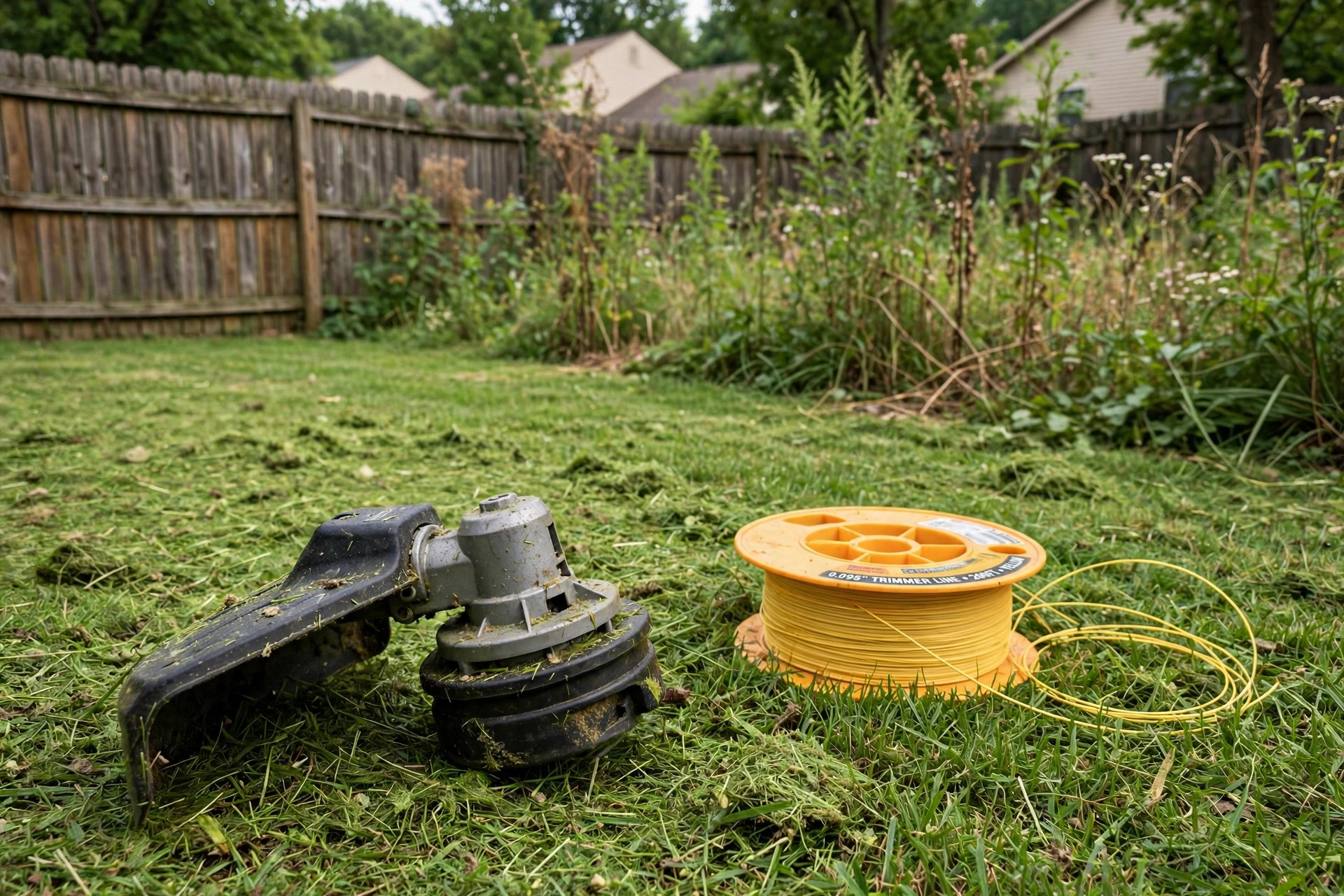
Trimmer line comes in set sizes. Each size is measured in inches. The common sizes are .065, .080, .095, .105, and .130 inch. Small machines use the small sizes. Big gas machines use the big sizes. Using line that is too thick for your trimmer can wear out the motor or the clutch. Using line that is too thin means it will snap every few minutes when you hit thick weeds.
Most people buy line once and use it for everything. That is a mistake. The weeds along a fence line are not the same as the grass on a lawn edge. Tall thistles, brush, and vines call for a heavier cut. Fresh lawn grass needs only a light pass. This guide will help you match the line to the job.
How Trimmer Line Is Measured: Best Weed Eater String Thickness for Weeds
Trimmer line thickness is given in thousandths of an inch. A .065 line is 65 thousandths of an inch across. A .095 line is 95 thousandths. The numbers look small, but the jump from .065 to .095 is a big change in strength.
There is no metric standard in common use in the United States. Package labels show the decimal inch number. Some also show the millimeter size, such as 1.65 mm for .065 and 2.4 mm for .095. Both mean the same thing.
The size range most trimmers accept is printed in the manual. Many heads accept more than one size. A head that accepts .080 and .095 can use either one. It cannot use .130, which is too thick to fit through the eyelets. Always check the manual first. The manual lists the smallest and largest line the head will hold.
The Common Thicknesses and What Each Is For
.065 Inch Line
This is the lightest common line. It fits small electric and battery trimmers. It cuts lawn grass and thin weeds well. It feeds easily through small heads. It is quiet and uses little power.
It is a poor choice for thick weeds. It snaps fast against woody stems. It also wears down quickly on hard surfaces like curbs and fences. Use .065 for edging and light touch-up work only.
.080 Inch Line
This is the middle light size. It works in most cordless and small gas trimmers. It cuts grass and medium weeds. It lasts longer than .065. It still bends and flexes well, so it is gentle on the machine.
It will handle normal fence-line weeds. It will struggle with thick brush, vines, and old woody stalks. If your weeds are green and under a foot tall, .080 is usually enough.
.095 Inch Line
This is the most popular size in America. It is the workhorse line. It cuts grass, heavy weeds, and light brush. It fits most medium and large gas trimmers. It resists snapping far better than the lighter sizes.
For most homeowners, .095 is the safe default choice. It handles a yard with mixed weeds without constant line changes. If you only want to buy one spool of line, buy .095.
.105 Inch Line
This is heavy line for hard jobs. It cuts thick weeds, dense brush, and small saplings. It needs a powerful gas trimmer. It can wear out a small electric machine fast.
It is slower to feed and harder to wind. But on tall, woody weeds it keeps cutting where lighter line would break in seconds. Buy this if your property has rough edges and overgrown patches.
.130 Inch Line
This is the heaviest common line. It is made for brush cutters and heavy-duty machines. It cuts through thick brush and tough vines. Most home trimmers cannot use it.
Check the manual before buying. If your trimmer takes it, .130 will handle the worst weeds on your land. For most lawns, it is more line than you need.
Line Materials and What They Change
Most trimmer line is made of nylon. Plain nylon is the standard and the cheapest. It cuts well and is easy to find. Copolymer line blends nylon with other plastics. It is tougher and lasts longer. It costs a bit more.
Some lines have a core and an outer layer. The core gives strength. The outer layer resists wear. These lines cost more but break less. Titanium-reinforced line is another option. Small metal bits in the nylon add stiffness. It cuts thick weeds well and resists melting at the head.
Twisted line is made of two strands wound together. It is quieter than single-strand line. It also resists breaking a little better. If your town has noise rules, twisted line is worth a look. It feeds well in most bump heads.
Do not mix materials in one spool. Wind one kind at a time. Mixed line feeds unevenly. It also wears at different rates, which leaves one side shorter than the other. Keep each type on its own spool if you switch back and forth.
Storage matters for every material. Nylon dries out in heat and sun. Dry line snaps fast. Keep spools in a sealed bag in a cool room. Soak old line in water for a day before use. This puts flex back into the nylon and cuts down on breaks.
What to Look for When You Choose
Match the Line to Your Trimmer
The trimmer sets the limits. Read the manual for the accepted line sizes. A cordless trimmer rated for .080 should not run .105. The motor will work too hard. The battery will drain fast. Gas trimmers have more power, but the head still has a max size.
When in doubt, start with the middle of the rated range. You can step up or down after one test cut. Maker sites such as Toro list line sizes for each trimmer model, and independent product reviews can help you compare machines.
Line Shape Matters Too
Trimmer line comes in shapes. Round line is the standard. It is quiet and feeds well. Twisted or serrated line cuts more aggressively. Square or star-shaped line has sharp edges that slice weeds instead of tearing them.
Shape can matter as much as thickness. A .095 square line will cut thick weeds better than a .095 round line. It also wears faster. For brush, look at both size and shape.
Feed Type and Head Size
Bump-feed heads are the most common. You tap the head on the ground to feed more line. Thick line feeds harder than thin line in some heads. Make sure the head eyelets are large enough for the line you want.
Large heads hold more line. That means fewer stops to rewind. If you cut a large area of weeds, a bigger head with .095 line saves real time.
Your Weeds Decide the Rest
Walk your yard before you buy. Are the weeds green and soft? Are they tall and woody? Do you have vines or thistles? Green lawn-type weeds need .065 to .080. Mixed fence-line weeds need .080 to .095. Thick brush and woody stalks need .095 to .105.
One reader question we hear often is whether a stronger machine matters more than the line. The truth is both matter. A top rated string trimmer for thick weeds with the right line will outcut a weak machine with any line. But even a strong machine cuts poorly with line that is too light for the weeds.
Cost and Price
Trimmer line is cheap. A small spool of .065 or .080 line costs a few dollars. Larger spools of .095 cost more but last much longer. Buying a large spool lowers the cost per foot.
Do not buy line just because it is cheap. Line that snaps every minute costs you more in time and wasted product. Match the line to your weeds and you will use less of it.
Brand matters less than size. Store brands cut fine. Premium lines claim longer life or less noise. They can be worth it if you cut often. For a small yard, the basic line is enough.
Care and Upkeep
Trimmer line gets brittle with age. Old line breaks faster. Keep spare line in a cool place out of the sun. Some pros soak nylon line in water overnight before use. The water keeps the nylon flexible and cuts down on snapping.
Wind the line neatly on the spool. Tangled line feeds poorly and jams the head. Follow the arrows on the spool for the winding direction. Leave the right tail length. Too long and the line hits the guard. Too short and the cut is weak.
Do not overfill the spool. Cramming on extra line seems smart but it causes tangles. Leave a small gap between the line and the spool edge. The line needs room to move when you bump-feed it.
Clean the trimmer head now and then. Grass and dirt pack into the head and stop the line from feeding. A quick rinse and wipe keeps it working. Pull the head apart once a season and wash out the old dust. Check the springs and eyelets while it is open. Worn eyelets with sharp edges will cut the line as it feeds.
Check the line often while you work. Cut with the tip of the line, not the middle. The tip moves fastest and cuts cleanest. Holding the trimmer at the right height saves line and gives a cleaner edge.
Safety
Trimmer line moves fast enough to cut skin. Wear safety glasses every time you trim. Stones and sticks fly out of the line path. Long pants and closed shoes protect your legs and feet.
Keep people and pets at least 30 feet away while you work. The line can throw objects a long way. Shut the trimmer off before you clear a jam or change the spool.
Watch for hidden objects in tall weeds. Wire, glass, and metal can damage the line and send pieces flying. Walk the area first when the weeds are tall enough to hide things.
Let the trimmer cool after heavy use. A thick line and hard brush work heat up the head. Give the machine rest breaks on big jobs. Briggs & Stratton keeps plain guides for small-engine care and safe use.
Frequently Asked Questions
What is the best weed eater string thickness for thick brush?
For thick brush and woody weeds, .095 to .105 is the best range. Most homeowners do fine with .095. Step up to .105 if the weeds are tall and woody and your trimmer is rated for it. A square or serrated shape will cut even better at the same thickness.
Can I use .105 line in a trimmer rated for .095?
It is not wise. The head eyelets may be too small. The motor or clutch may be too weak. The trimmer will run hot and may break. Stay inside the sizes in the manual.
Does thicker line always cut better?
No. Thicker line cuts harder weeds, but it is slower, noisier, and harder on the machine. For light grass, .065 or .080 cuts faster and cleaner. The best line is the thinnest one that still gets the job done without snapping.
How do I know when my line is too thin?
You will see it snap often. If you feed new line every few minutes on normal weeds, step up one size. If the line melts or fuses at the head, that is also a sign of overload.
Should I use a different line for edging and for brush?
Yes, if your head allows it. Many people keep .080 for lawn edging and switch to .095 for the fence line and brush patches. It takes a minute to change spools and it saves line over the season.
Will a robot mower replace my weed eater?
A robot lawn mower for half acre yards handles the flat lawn well. It does not reach fence lines, walls, or steep spots. Most owners keep a trimmer for those edges. The trimmer and the mower work as a team.
A Final Word
The best weed eater string thickness for weeds comes down to three things: your trimmer, your weeds, and how often you want to stop and feed line. For light work, use .065 or .080. For most yards, .095 is the right call. For heavy brush, go .105 if your machine allows it.
Buy the line that fits the work you actually do. Wind it well. Wear your glasses. And if weeds are only part of the problem, remember that timing matters too: a pre emergent weed killer application timing guide can cut next season’s weed load before it starts.
References
Toro. (n.d.). Lawn mowers, trimmers and lawn care equipment. https://www.toro.com Briggs & Stratton. (n.d.). Engines and outdoor power equipment. https://www.briggsandstratton.com Consumer Reports. (n.d.). Product reviews and ratings. https://www.consumerreports.org
Was this guide helpful?

About James Carter
The My Garden US editorial team writes practical, in-depth home and garden guides for American homeowners — tested advice, no fluff.
You May Also Like

Buffalo Grass Seed for Texas Lawns: A Practical Guide for Hot, Dry Summers
January 31, 2026 0 views
Gravel Driveway Installation Cost USA: A Plain Guide for Homeowners
August 29, 2026 0 views
How to Choose a Fence Line Trimmer for Steep Slopes
August 14, 2026 0 views