Introduction
Finding the best pool chemical feeder for chlorine is one of the smartest steps a pool owner can take. Chlorine keeps water clean. It kills germs and stops algae. But chlorine levels rise and fall each day. The sun burns it off. Rain thins it out. Swimmers use it up. Without help, a pool owner must test and dose by hand almost every day. A chemical feeder does this work on its own. It holds chlorine in a sealed canister. As water passes through, it picks up a steady dose. The result is water that stays balanced between tests. This guide explains the types of feeders, what to look for, what they cost, and how to use them safely.
Why a Chemical Feeder Matters: Best Pool Chemical Feeder for Chlorine
A feeder brings steady control. Hand dosing adds chlorine in waves. Levels spike after a dose. Then they sink again. These swings stress the water. They also make it harder to keep algae away. A feeder adds chlorine in small amounts all day long. The level stays near its target. That is better for the water and better for swimmers.
Convenience is the second gain. A feeder may hold enough tablets for a week or more. The owner fills it once and walks away. There is no daily trip to the equipment pad. For owners who travel or work long hours, this is a real help. Vacation owners can leave a pool for days with less worry.
Feeders also cut waste. Hand dosing often overshoots. Extra chlorine gets used up or must be fixed with more chemicals. A feeder with an adjustable dial lets the owner set a slow, even feed. Less waste means lower cost over a season. It also means fewer times when the pool is over-chlorinated and must be shut down until levels fall.
Finally, a feeder pairs well with regular testing. The owner still checks the water with accurate pool test strips. But the readings stay more stable from week to week. Fewer big fixes are needed. Many pool care writers, such as the team at Swim University, stress that steady dosing is the base of a calm pool season.
What to Look for When You Buy
Match the Feeder to Your Pool Size and Flow Rate
Not every feeder fits every pool. Small above-ground pools need only a light feed. Large in-ground pools need more. Most makers list a pool size range on the box. Read it before you buy. A feeder that is too small will run empty too fast. One that is far too large can be hard to dial down to a low setting.
Flow rate also counts. Inline feeders sit in the main plumbing line. They must handle the full flow of the pump. Check that the feeder accepts your pipe size. Most homes use 1.5-inch or 2-inch pipe. Many feeders include parts for both sizes. If your pump is very strong, make sure the feeder is rated for it.
Look for Simple, Clear Controls
The best feeder is the one you can set with confidence. Look for a large control dial with clear marks. The dial should turn with smooth steps. Some dials have numbers from 1 to 10. Others use dots or lines. What matters is that you can set it, read it, and return to the same setting each week.
The lid should open and close with ease. You will refill the feeder every week or two. A lid with a locking ring is best. It seals tight but needs no tools. Avoid lids that stick or need a strap wrench. They will annoy you by mid-summer.
Demand Strong, Corrosion-Proof Materials
Chlorine is harsh. Cheap plastic cracks over time. The best pool chemical feeder for chlorine uses thick, UV-stable plastic. It should stand up to sun and weather for years. The canister walls should feel solid, not thin.
Inside, check the parts that touch chlorine. The screen, the feed tube, and the O-ring must resist corrosion. Viton or similar chemical-proof seals last longer than plain rubber. If the feeder has metal parts, they should be stainless steel. Ordinary metal will rust fast in chlorine service.
Capacity and Compatibility
Capacity tells you how often you refill. Most home feeders hold 5 to 9 pounds of tablets. That is enough for one to three weeks in a normal pool. Larger canisters mean fewer refills. But they also cost more up front.
Make sure the feeder works with your system. Most feeders are made for trichlor tablets. A few also accept sticks or bromine. If you buy chlorine tablets in bulk, check that the tablet size matches the feeder. Standard 3-inch tablets fit most units. One-inch tablets suit smaller feeders and floaters.
Types of Chlorine Feeders
Inline Feeders
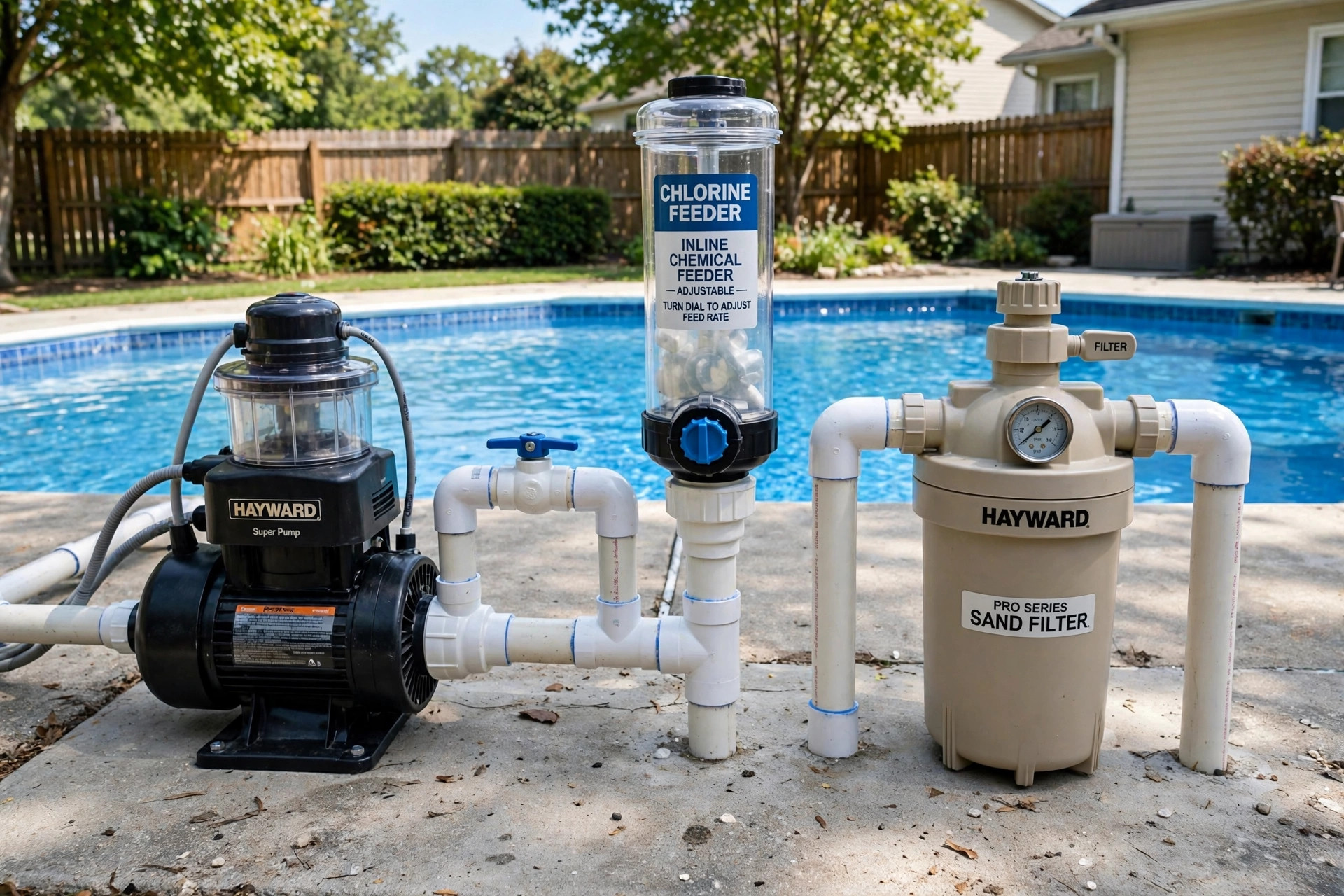
An inline feeder plumbs directly into the return line. Water from the pump flows through it on the way back to the pool. This design is simple and neat. It sits on the equipment pad with the pump and filter. Most pool builders install them for new pools.
The strength of an inline feeder is steady flow. Because it sees the full pump flow, dosing is even. The dial sets how much water passes over the tablets. These units are reliable and common. Prices are fair. The main drawback is that install needs plumbing work. If your pad has no room in the line, a plumber must cut and fit pipe.
Offline (Erosion) Feeders
An offline feeder taps into the line with small feeder hoses. Water is drawn off, run through the canister, and returned. These units are handy for pools that were built without a feeder. Install is easier than an inline unit. No pipe cutting is needed in most cases.
Offline feeders work well. They dose much like inline units. The small hoses mean less water moves through them, so they suit mid-size pools. Check the maker rating for your pool size. Many owners choose this type when they add a feeder to an older pool.
Floating Dispensers
A floating dispenser is the simple choice. It holds tablets and drifts in the pool. Water flows through vents at the bottom. The owner sets the vent opening to control the dose. These cost little and need no install at all.
Floaters have limits. They can drift into corners or against the wall. Long contact can bleach vinyl liners and stain plaster. They also dose less evenly than plumbed feeders. Still, for a small above-ground pool or as a backup, they do a fair job. The safety team at the U.S. Consumer Product Safety Commission reminds owners to keep all chemical devices out of reach of small children.
Tablets, Sticks, and Liquid Options
Most feeders use trichlor tablets. These are slow-dissolving and fit canisters well. Some feeders accept sticks, which are longer and suit tall canisters. Liquid feeders exist too. They pump liquid chlorine from a tank. Liquid systems dose with high accuracy. But they cost more and need more care. For most homes, a tablet feeder is the best mix of price and ease.
Cost and Price
Prices vary by type and size. A floating dispenser may cost 15 to 40 dollars. Inline and offline feeders often run from 50 to 200 dollars. Larger commercial-style units cost more. Big-box stores like Home Depot and pool shops like Leslie’s Pool Supplies carry a wide range.
Install cost adds to the total. A floating dispenser costs nothing to install. An offline feeder may need a short visit from a handyman. An inline feeder often needs a pool tech or plumber. Plan for 100 to 250 dollars in labor if you hire help.
The running cost is the tablets. Trichlor tablets are a steady yearly expense. Buying in larger pails cuts the per-pound price. But tablets lose strength over time. Buy only what you will use in one or two seasons. Store them in a cool, dry place.
Overall, a feeder pays for itself in time saved. Daily hand dosing costs little in cash but much in time. A feeder that holds two weeks of tablets frees up the owner for most of the season. Many pool owners say it is the best upgrade they made.
Care and Upkeep
A feeder needs light care. Refill it when tablets run low. Never let it run fully empty for long. An empty feeder can still pass water, but it does no dosing. Check the tablet level once a week during swim season.
Clean the canister once or twice a season. Turn off the pump first. Close the dial. Remove the lid and take out old tablet stubs. Rinse the canister with a garden hose. Look for grit or scale on the screen. A soft brush removes most buildup. Do not use soap or cleaners.
Check the O-ring at each refill. The O-ring keeps the lid sealed. If it looks flat or cracked, replace it. A bad seal lets fumes escape and weakens the feed. Keep a spare O-ring on hand. They cost little and save trouble.
At season end, empty the feeder. Remove all tablets and stubs. Leave the lid loose so air can move. In cold areas, drain any water from the unit. This stops ice from cracking the canister. The care guides at Pool Warehouse note that winter damage is one of the top reasons feeders fail early.
Safety Rules That Matter
Chlorine chemicals demand respect. Never mix products. Do not put trichlor tablets and other pool chemicals in the same feeder. Mixing can cause fire or harmful gas. Use the feeder only for the product its maker allows.
Keep chemicals dry. Add tablets with dry hands and dry tools. Wet tablets break down fast. They can release strong fumes. If a tablet looks crumbly or smells sharp, handle it with care and use it up soon.
Store tablets in their original pail. Keep the pail sealed and dry. Keep it away from heat, oil, and yard chemicals. Lock storage away from children and pets. The U.S. Consumer Product Safety Commission warns that pool chemicals are a leading cause of pool-area injuries when stored or mixed the wrong way.
Wear gloves and eye cover when you refill. Work in open air, not in a shed with the door closed. Wash your hands after handling tablets. Keep a phone near in case of a spill. These steps take a minute. They are worth the habit.
Frequently Asked Questions
How long do tablets last in a feeder?
It depends on pool size, heat, and use. In a normal home pool, a full feeder may last one to three weeks. Hot weather and heavy swim use speed up use. Check the level each week and learn your pool’s pace.
Can I use a feeder with a saltwater pool?
Yes, in most cases. A salt pool still uses chlorine made by the salt cell. A feeder can serve as backup during high-use weeks or if the cell is weak. Ask your pool tech if you are unsure. Make sure the feeder parts can handle salt exposure.
Will a feeder change my pH?
Trichlor tablets lower pH a little over time. This is normal. Test the water often and keep pH in the right range. If pH drifts low, adjust with the proper product. A feeder does not fix pH on its own.
Do I still need to test the water?
Yes. A feeder keeps dosing steady, but it is not smart. Rain, heat, and heavy use change the need for chlorine. Test the water at least once a week. More often is better in hot months or after storms.
How long does a feeder last?
A good feeder lasts five to ten years with care. Sun and cold wear it down. Clean it each season and protect it from ice. Replace the O-ring when it wears. When the dial stops working or the canister cracks, it is time for a new unit.
A Final Word
The best pool chemical feeder for chlorine is the one that fits your pool and your habits. Small pools may do well with a floater. Most in-ground pools deserve an inline or offline unit. Buy strong materials, match the size to your pool, and set the dial with care. Test the water each week. Store chemicals safely. Do these simple things, and your pool will stay clear with far less daily work. Home and pool writers at The Spruce agree: steady care beats big fixes every time. For spa owners who also want clear water, brands like Hot Spring Spas and Bullfrog Spas offer care guides for tub water too.
References
Bullfrog Spas. (n.d.). Hot tubs and spas. https://www.bullfrogspas.com Hot Spring Spas. (n.d.). Hot tubs and spas. https://www.hotspring.com Leslie’s Pool Supplies. (n.d.). Pool supplies and equipment. https://www.lesliespool.com Pool Warehouse. (n.d.). Pool equipment and supplies. https://www.poolwarehouse.com Swim University. (n.d.). Pool and hot tub care guides. https://www.swimuniversity.com The Home Depot. (n.d.). Home improvement products. https://www.homedepot.com The Spruce. (n.d.). Home and garden advice. https://www.thespruce.com U.S. Consumer Product Safety Commission. (n.d.). Product safety information. https://www.cpsc.gov
Was this guide helpful?

About James Carter
The My Garden US editorial team writes practical, in-depth home and garden guides for American homeowners — tested advice, no fluff.