Finding the best pool for dogs to swim can change the way your pet enjoys the summer. Dogs love water, and a pool made for them gives them a safe place to splash, cool down, and play. But not every pool is right for a dog. Claws can tear thin walls. Small pools can tip over. Chemicals in the water can upset a dog’s skin. This guide walks you through the choices in plain terms, so you can pick a pool that fits your dog, your yard, and your budget.
Why a Dog Pool Matters
Summer heat is hard on dogs. Unlike people, dogs cannot sweat through their skin. They cool off by panting and through their paw pads, which is slow work on a hot day. A pool gives a dog a fast way to drop its body heat. A ten-minute swim or soak can leave a dog cool and calm for hours.
Water play is also good exercise. Swimming works a dog’s legs, chest, and back without pounding on joints. This makes it a fine choice for older dogs and for big breeds that tire fast on long walks. Vets often suggest water work for dogs with stiff joints, because the water holds up the body and lets the animal move with less pain.
A dog pool keeps your own pool safer too. If you have a large in-ground or above-ground pool, a dog may jump in and scratch the liner. It may also fight with the pool cover or drink treated water. A separate small pool for the dog solves this problem. The dog gets its own water, and your main pool stays clean and whole.
There is one more reason. Dogs get bored. A bored dog digs holes, chews shoes, and barks at the fence. A pool with a few floating toys gives a dog a job and a game. Many owners say their dogs play in the yard far more once a small pool is set up.
What to Look for in a Dog Swimming Pool: Best Pool for Dogs to Swim
Before you buy, think about these points. Each one shapes which pool will serve you well.
Size and Depth
Match the pool to your dog. A small dog needs only a pool a foot deep. A large dog needs more room and more depth. A good rule is that the water should reach your dog’s chest or belly when it stands in the pool. This lets the dog cool off without the risk of deep water.
Wall Strength
Dog claws are the main enemy of a pool. Thin vinyl walls tear fast. Look for thick plastic, hard-sided walls, or folded panels made for pet use. Steel stock tanks are the toughest of all. They cost more, but they can last for years of daily use.
Check the bottom too. A rough or thin bottom can wear through where a dog paces or digs. A smooth, thick floor is best.
Easy Entry and Exit
Dogs cannot climb a tall wall. The best pool for dogs to swim in has low walls, a sloped edge, or a wide step the dog can walk over. Many dog pools are made with soft sides the dog can lean on. For larger raised pools, a ramp or sturdy steps help.
Drainage
You will change the water often. A pool with a built-in drain plug near the bottom saves you from tipping a heavy pool over. Look for a wide plug that lets water flow out fast. A hose fitting on the drain is a nice extra, since it lets you send the used water to the garden.
Stability
A full pool is heavy, and a dog adds moving weight. Wide, low pools are more stable than tall, narrow ones. Avoid pools with tall sides and small bases, since an excited dog can tip them. If the pool sits on grass, level the ground first. A tilt can make one side bear too much load.
Types of Pools for Dogs
There are five main types. Each has strengths and limits.
Steel Stock Tanks
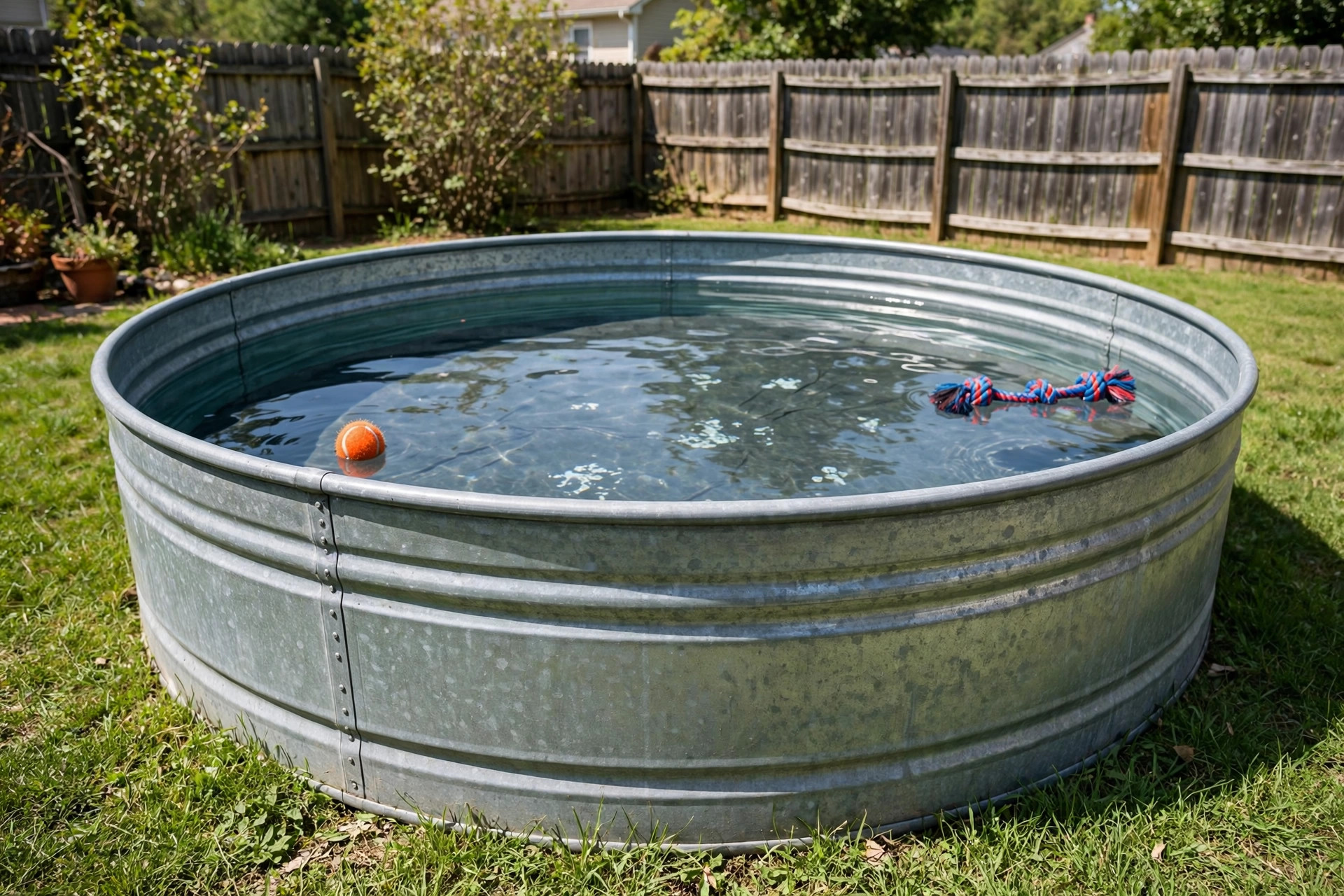
Farm stock tanks are the toughest dog pools you can buy. They are made of galvanized steel, with walls that no claw can cut. They come in round and oval shapes, from two feet to eight feet wide. Many owners paint the outside or wrap it in wood boards to make it look nice in the yard.
The main drawback is weight and cost. A large tank is heavy to move and costs more than a plastic pool. The steel can also get hot in direct sun, so set it in partial shade. You can read more about strong stock tank pool setups at The Spruce.
Hard Plastic Wading Pools
The simple round plastic wading pool sold at every home improvement store is a fine cheap choice. It costs little, needs no setup, and a dog can step right in. For small dogs and calm dogs, it may last a whole summer.
The limit is strength. A big dog with sharp claws can scratch through the floor in weeks. Treat these as one-season pools, and buy a spare.
Foldable Dog Pools
Several brands now sell pools made just for dogs. These have folding walls with hard panels inside, so they pack flat for storage and set up in minutes. They are a smart middle choice: tougher than a wading pool and lighter than a steel tank.
Look for a model with a non-slip floor and a side drain. Owners on Chewy report that these pools suit medium dogs best. Very large dogs may still strain the seams.
Inflatable Pools
Inflatable pools are cheap and soft, but they are a poor choice for most dogs. Claws puncture the air walls with ease. One jump can end the pool. If you already own one and want to let a gentle, small dog use it, trim the dog’s nails first and never leave the dog alone in it.
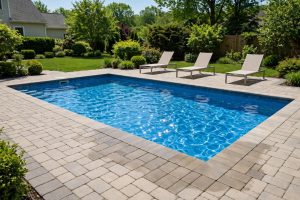
Using Your Existing Pool
Some owners simply let the dog use the family pool. This can work, but it needs care. Dog hair clogs filters, and claws tear liners. You must also teach the dog where the steps are, since a dog that cannot find the exit can panic and drown. A solid-step pool ladder for above-ground pools can serve as a dog exit if the steps are wide and firm. For pool equipment and repair parts, Pool Warehouse carries a wide stock. If you take this route, rinse the dog after each swim and check your water chemistry often, a topic covered well by Swim University.
Never let a dog use a hot tub or spa. The water is too hot for a dog’s body, and the chemicals are strong. Spas like those from Hot Spring and Bullfrog Spas are built for people, not pets.
Cost and Price
Dog pools range from very cheap to fairly costly. A hard plastic wading pool may cost less than thirty dollars. A foldable dog pool often costs between fifty and one hundred fifty dollars, based on size. A steel stock tank runs from about one hundred to several hundred dollars, with large tanks costing the most.
Think about cost per summer, not just the price tag. A thirty-dollar pool that lasts one summer costs the same as a one-hundred-fifty-dollar tank that lasts five. The tank also saves you the work of replacing a torn pool each year.
Water is the other cost. A large pool holds hundreds of gallons. In dry regions, filling and refilling can raise the water bill. Use a cover at night to slow evaporation, and reuse the old water on the lawn or garden. A pool cover for winter storage also helps when you put the pool away for the cold months.
Accessories add a little more. You may want a small pump or filter, a skimmer net, chlorine-free water cleaner, and a few toys. Budget an extra fifty dollars for these in the first year. A pool heater for above-ground pools is rarely needed for a dog pool, since dogs prefer cool water, but it can extend the swim season in cool climates.
Care and Upkeep
A dog pool needs regular care, or the water turns green and the dog refuses to use it.
Change the water often. For a small pool with daily use, change the water every two to three days. For a larger tank, once a week may be enough if you skim and treat the water. Always dump the old water fully and scrub the walls before refilling. Algae grows fast on warm plastic.
Keep the water clean between changes. Use a small hand skimmer to lift out leaves, hair, and bugs each day. Wipe the waterline with a cloth to stop scum from building up. Some owners use a small filter pump made for wading pools. It cuts down on water changes and keeps the water clear.
Go easy on chemicals. Dogs drink pool water, so heavy chlorine is a bad idea. If you must treat the water, use a mild, pet-safe product at the lowest dose, and keep the water balanced. Test strips made for pools tell you the pH in seconds. The American Kennel Club advises rinsing dogs after swimming in treated water to protect their skin and coat.
Store the pool right in winter. Drain it fully, scrub it, and let it dry. Foldable pools should fold dry, or mildew will grow in the folds. Steel tanks can stay out, but cover them so leaves and snow do not collect inside.
Safety Rules for Dogs and Pools
Water is fun, but it has risks. Follow these rules every time.
First, never leave a dog alone in or near a pool. Even strong swimmers can panic, slip, or get too tired to climb out. Stay within arm’s reach for small dogs and puppies.
Second, teach the dog how to get out. Walk the dog to the exit point again and again until it goes there on its own. Mark the exit with a mat or a bright towel so the dog can find it.
Third, watch for heat. A pool cools a dog, but a dog can still overheat before and after swimming. Give shade and fresh drinking water nearby. On very hot days, limit play to morning and evening.
Fourth, know your dog’s limits. Not all dogs can swim well. Short-faced breeds, such as bulldogs and pugs, tire fast in water. Puppies under four months and old dogs with weak hearts should swim only in shallow water for short times. If your dog coughs, shakes, or seems scared, take it out at once.
Fifth, fence the pool when you are not using it. A curious dog can fall in when no one is watching. Local rules in many towns call for a fence or cover around standing water. The U.S. Consumer Product Safety Commission publishes pool safety guidance that applies to any home pool, including small ones.
Finally, rinse the dog after each swim. This washes off chlorine, algae, and dirt. Dry the ears well, since wet ears can lead to infection in some breeds.
Frequently Asked Questions
What is the best pool for dogs to swim in?
The best pool for dogs to swim in is a low, hard-sided pool with a drain plug, such as a steel stock tank or a foldable dog pool. It should be wide enough for the dog to turn around and shallow enough for the dog to stand in. Thin inflatable pools are the worst choice, since claws tear them fast.
How deep should a dog pool be?
The water should reach your dog’s belly or chest when it stands in the pool. For most dogs, that means six to eighteen inches of water. Puppies and small dogs do well with six inches. Large dogs may enjoy up to two feet, but only if they are strong swimmers and you are close by.
Can dogs swim in chlorine pools?
Dogs can swim in a lightly chlorinated pool now and then, but it is not ideal as a daily habit. Chlorine can dry the skin and upset the stomach if the dog drinks much water. Keep the chlorine at the low end of the safe range, rinse the dog after each swim, and give the dog fresh drinking water so it does not drink from the pool.
How often should I change the water in a dog pool?
Change the water every two to three days for a small pool that gets daily use. For a larger pool with a filter and a skimmer, once a week can work. If the water smells, looks cloudy, or feels slimy, change it at once no matter the schedule.
Will a stock tank get too hot in the sun?
Steel tanks can warm up in full sun, both the walls and the water. Set the tank where it gets morning sun and afternoon shade. You can also paint the outside a light color to reflect heat, or wrap it in wood. Check the water with your hand before letting the dog in. If it feels warm to you, it is too warm for long play.
Can two dogs share one pool?
Yes, if the pool is big enough. Two small dogs can share a medium pool with ease. Two large dogs need a wide tank with room to move. Watch for rough play, since excited dogs can push each other under or tip a light pool. Separate pools may be safer for dogs that do not know each other well.
A Final Word
The best pool for dogs to swim in is not the biggest or the dearest. It is the one that fits your dog’s size, stands up to claws, drains with ease, and sits where you can watch. Start simple. A low, sturdy pool, fresh water, and a few ground rules will give your dog a whole summer of cool, safe fun.
References
American Kennel Club. (n.d.). Dog care and training resources. https://www.akc.org Bullfrog Spas. (n.d.). Hot tubs and spas. https://www.bullfrogspas.com Chewy. (n.d.). Pet supplies. https://www.chewy.com Hot Spring Spas. (n.d.). Hot tubs and spas. https://www.hotspring.com Leslie’s Pool Supplies. (n.d.). Pool supplies and equipment. https://www.lesliespool.com Pool Warehouse. (n.d.). Pool equipment and supplies. https://www.poolwarehouse.com Swim University. (n.d.). Pool and hot tub care guides. https://www.swimuniversity.com The Home Depot. (n.d.). Home improvement products. https://www.homedepot.com The Spruce. (n.d.). Home and garden advice. https://www.thespruce.com U.S. Consumer Product Safety Commission. (n.d.). Product safety information. https://www.cpsc.gov
Was this guide helpful?

About David Wilson
The My Garden US editorial team writes practical, in-depth home and garden guides for American homeowners — tested advice, no fluff.