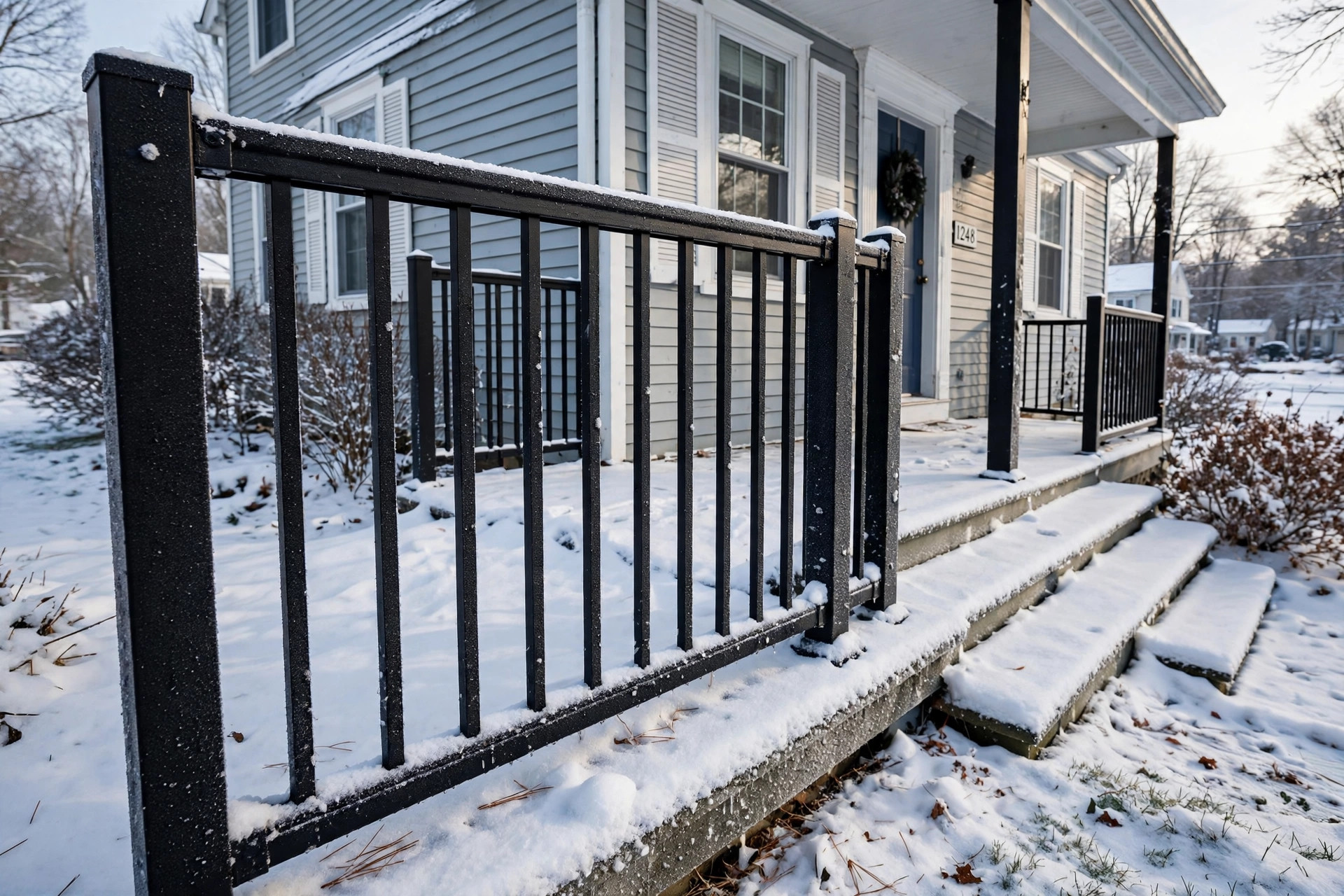

A front porch is the face of a home. It is also the first thing to take a beating in a cold climate. Rain turns to ice. Snow piles against posts. Day after day, the freeze and thaw cycle works on every joint and fastener. A railing that would last twenty years in a warm state may fail in five up north. That is why buyers look for top rated front porch railings for cold climates. They want railings that have been tested by real winter weather and rated highly by real owners. This guide explains what makes a railing stand up to the cold, which materials earn the best ratings, and what you can expect to pay.
Why Cold Weather Changes Everything About a Porch Railing
Most railings are built for average weather. Cold weather is not average. When water seeps into a crack and freezes, it expands. The pressure is strong enough to split wood and pop fasteners loose. When the sun melts the ice by day and the cold refreezes it by night, the cycle repeats hundreds of times in one season. Engineers call this the freeze-thaw cycle, and it is the main reason exterior railings fail in the north.
Salt makes matters worse. Many towns spread salt or de-icing chemicals on walkways and steps. The salt gets tracked onto the porch and sits against the railing posts. It eats through cheap paint and weak metal coatings. By spring, a railing can show rust stains that were not there in fall.
Snow is a load, not just a view. A heavy drift can press sideways against a railing with surprising force. The top rated front porch railings for cold climates are built to carry that load without bending. They use stronger posts, deeper footings, and brackets that hold tight when the temperature drops far below zero.
There is also a safety side to all of this. A railing is a handhold. In January, when steps are slick, the railing may be the only thing between a visitor and a fall. A cold-climate railing must keep its strength in the cold, not lose it.
What to Look for When You Choose a Railing: Top Rated Front Porch Railings for Cold Climates
Start with the material. The material decides how the railing will age. Aluminum and steel handle cold well. Vinyl and PVC do well if they are made for cold weather and rated for low temperatures. Wood can work, but it needs the right species and regular care. Composite railings, made from a mix of plastic and wood fiber, are growing in popularity because they resist rot and do not need paint.
Next, check the fasteners. Screws, bolts, and brackets matter as much as the rail itself. In cold climates, fasteners should be stainless steel or hot-dipped galvanized. Cheap zinc screws can rust and snap when ice forms around them. Ask the seller what hardware comes in the kit before you buy. Buying guides at This Old House and Family Handyman give clear advice on picking rust-proof hardware for outdoor projects.
Look at how the railing is rated. The top rated front porch railings for cold climates earn their ratings from buyers who have owned them for several winters. Look for reviews that mention specific winters, specific states, and specific problems like cracking or rust. A review from a warm state tells you little about how a railing will do in Minnesota. Testing groups such as Consumer Reports also rate outdoor building products, and their test notes can help you compare brands.
Think about grip. A round rail is easier to hold with gloves than a flat rail. A dark finish will absorb some winter sun and melt thin ice faster, but it can also feel cold to bare hands. Some owners add textured sleeves to the top rail in winter for a surer grip.
Finally, check the warranty. A long warranty against cracking, peeling, and rust is a good sign. Read the fine print to make sure the warranty covers cold-climate damage and not just normal wear. Stores like Home Depot and Lowe’s list warranty details on most railing kits they sell, which makes side-by-side comparison easier.
Types of Railings: Five Options Compared
Aluminum Railings
Aluminum is the most popular choice for cold climates, and it is easy to see why. Aluminum does not rust. It does not crack in the cold. It is light, so a homeowner can often install it without a helper. Most aluminum railings come with a powder-coated finish that stands up to salt and snow for many years.
The top rated front porch railings for cold climates are often aluminum kits with welded posts and hidden fasteners. The welded joints have no seams where water can get in. The kits come in white, black, bronze, and other colors that suit most homes.
The main weakness of aluminum is strength at long spans. A rail longer than six feet may feel bouncy unless it has a support leg in the middle. Check the span rating before you buy.
Vinyl and PVC Railings
Vinyl railings are light, low in cost, and easy to clean. They never need paint. In a cold climate, however, cheap vinyl can turn brittle and crack when the temperature drops. The better vinyl railings are made with thicker walls and impact modifiers that keep them flexible in the cold.
Look for vinyl products that list a low-temperature rating. Some brands test their railings at twenty below zero. If the seller cannot tell you how the vinyl behaves in deep cold, choose another brand. The top rated front porch railings for cold climates in vinyl always come with clear cold-weather test data.
Steel Railings
Steel is the strongest option. A steel railing can carry heavy snow loads and take a hard knock without bending. The drawback is rust. Bare steel rusts fast in wet snow and road salt.
Galvanized steel, coated with a layer of zinc, holds up far better. Powder coating over the galvanizing adds another layer of protection. With both layers, a steel railing can last decades in a cold climate. Without them, it may show rust in two or three years. Always ask what coatings are on the steel before you buy.
Wood Railings
Wood is the classic choice. It is warm to the touch, easy to cut on site, and fits old houses well. In a cold climate, cedar and pressure-treated pine are the best picks. Both resist rot better than plain lumber.
Wood needs care. It must be sealed or stained every two to three years. If the finish wears off, water gets in, freezes, and splits the boards. Wood posts set in concrete can trap water at the base and rot from the inside. For a long life in the north, use metal post bases that keep the wood off the concrete. Design ideas for pairing wood railings with classic exteriors appear on The Spruce and Bob Vila, which both cover traditional porch styles in depth.
Composite Railings
Composite railings mix plastic with wood fiber. They look like painted wood but do not rot, splinter, or need paint. They handle freeze-thaw cycles well because they absorb very little water.
Composite railings cost more than vinyl and weigh more than aluminum. They can feel hot in summer sun, but that is a small concern in a cold climate. For buyers who want the look of wood with none of the upkeep, composite is a strong pick among the top rated front porch railings for cold climates.
Cost and Price: What You Will Pay
Prices vary by material, length, and who does the work. Here are honest ranges based on what contractors and sellers charge in the United States.
Aluminum railing kits run from about forty to ninety dollars per linear foot for the materials. A ten-foot porch run with two posts and one rail section often costs between four hundred and nine hundred dollars in parts. Professional installation adds another thirty to sixty dollars per linear foot.
Vinyl railing kits are cheaper. Materials run from about twenty-five to sixty dollars per linear foot. A full porch job in vinyl often lands between three hundred and six hundred dollars in parts. Installation costs about the same as aluminum.
Steel railings are the priciest metal option. Custom welded steel can cost one hundred to two hundred dollars per linear foot installed. Pre-made steel kits cost less but still run higher than aluminum.
Wood is the cheapest material but not the cheapest over time. Pressure-treated wood rails cost fifteen to thirty dollars per linear foot in materials. Add the cost of stain and your time every few years, and the total rises.
Composite railings sit in the middle to upper range. Materials cost fifty to one hundred dollars per linear foot.
If you are watching your budget, it helps to compare these figures with budget friendly exterior stair railings for cold climates and get three quotes from local installers. Labor prices differ a lot by region, and a northern contractor may charge more for the deeper footings that frost lines require.
Care and Upkeep Through Winter
A good railing still needs care. The work is small, and it pays off.
In fall, wash the railing with mild soap and water. Clear leaves and dirt from around the post bases. Check every screw and bolt. Tighten anything that has worked loose during the summer.
Before the first hard freeze, look at the finish. Touch up any chips in the paint or powder coat with the matching paint. A chip left open all winter will let water in and start rust or rot by spring.
In winter, brush snow off the rail after heavy storms. Do not use a metal shovel on the rail. A soft broom is enough. Avoid rock salt against the posts. If you must de-ice the steps, use calcium magnesium acetate, which is gentler on metal and finishes.
In spring, do a full check. Look for cracks in vinyl, rust spots on steel, loose brackets, and soft spots in wood. Fix small problems right away. A crack that starts in March will be a break by December.
Many owners finish the job by lighting the porch well. Adding top rated exterior lighting fixtures for cold climates makes the steps safer on dark winter evenings and shows off the new railing after sunset.
Safety Rules and Local Codes
A railing is safety equipment, and most towns treat it that way. Before you buy, check your local building code.
Most codes say a porch more than thirty inches above the ground must have a guard rail at least thirty-six inches high. The gaps between balusters must be small enough that a four-inch ball cannot pass through. This rule protects small children.
Steps have their own rules. A handrail is usually required when a stair has four or more risers. The rail should be easy to grip, between thirty-four and thirty-eight inches above the stair nose.
Cold weather adds a wrinkle. Ice can build up on rails and make them hard to hold. Some owners wrap the top rail with a foam or rope cover in winter. These covers are cheap and easy to remove in spring.
For general guidance on preventing falls around the home, the U.S. Consumer Product Safety Commission publishes safety information that every homeowner should read. Siding makers such as James Hardie and CertainTeed also publish exterior guides that help owners plan railings, trim, and siding as one project. Local inspectors can tell you exactly what your town requires. A quick call to the building department before you start can save an expensive rebuild.
Frequently Asked Questions
Will vinyl railings crack in freezing weather? Cheap vinyl can crack when the temperature drops far below freezing. Thick-walled vinyl with impact modifiers stays flexible. Look for a low-temperature rating from the maker before you buy.
Is aluminum or steel better for a snowy porch? Both work. Aluminum never rusts and is lighter to handle. Steel is stronger but needs good coatings to fight rust. For most porches, aluminum is the simpler pick.
How long do cold-climate railings last? Aluminum and well-coated steel often last twenty years or more. Good vinyl lasts fifteen to twenty years. Wood lasts ten to fifteen years with steady care.
Can I install a railing kit myself? Many kits are made for do-it-yourself installation. You need a drill, a level, and basic tools. If the porch is high or the posts need concrete footings below the frost line, hire a professional.
Do railings need to match my siding and trim? They should look good together, but they do not need to match exactly. Many owners pair a dark railing with light siding for contrast. If you plan to update the whole exterior, read top rated exterior trim replacement reviews so you can plan colors for the railing, trim, and siding at the same time.
A Final Word
A porch railing is a small part of a house, but in a cold climate it works hard. It holds your hand on icy steps. It stands up to snow loads. It faces the freeze and thaw cycle for months on end. Choose a material made for the cold, check the ratings from owners in northern states, and install it with care. The top rated front porch railings for cold climates are not the cheapest and not the fanciest. They are the ones that still stand straight, still hold firm, and still look good after ten hard winters.
References
Bob Vila. (n.d.). Home improvement advice. https://www.bobvila.com CertainTeed. (n.d.). Building materials and exterior products. https://www.certainteed.com Consumer Reports. (n.d.). Product reviews and ratings. https://www.consumerreports.org Family Handyman. (n.d.). DIY home repair and maintenance. https://www.familyhandyman.com James Hardie. (n.d.). Fiber cement siding and exterior products. https://www.jameshardie.com Lowe’s. (n.d.). Home improvement products. https://www.lowes.com The Home Depot. (n.d.). Home improvement products. https://www.homedepot.com The Spruce. (n.d.). Home and garden advice. https://www.thespruce.com This Old House. (n.d.). Home renovation guidance. https://www.thisoldhouse.com U.S. Consumer Product Safety Commission. (n.d.). Product safety information. https://www.cpsc.gov
Was this guide helpful?

About Lisa Anderson
The My Garden US editorial team writes practical, in-depth home and garden guides for American homeowners — tested advice, no fluff.
You May Also Like

Best Exterior Trim Replacement Near Me: What Every Homeowner Should Know
January 3, 2026 0 views
Best Exterior Stair Railings for Midwest Homes: A Plain Guide
April 23, 2026 0 views
Weather Resistant Soffit and Fascia Repair for Homeowners
April 17, 2026 0 views