Introduction
An outdoor storage cabinet waterproof for patio use is one of the most useful pieces a home can have. It gives you a dry place to keep cushions, tools, toys, and grill gear right where you use them. You no longer need to carry things in and out of the garage every time the sky turns dark. The search for good patio storage is not new. People have wanted dry, easy storage near the back door for as long as people have had patios. What has changed is the choice. There are more types now, better locks, better seals, and better prices. This guide will walk through the whole subject in plain words. You will learn why it matters, what to look for, what types exist, what it costs, and how to keep your cabinet in good shape for years.
Why It Matters: Outdoor Storage Cabinet Waterproof for Patio
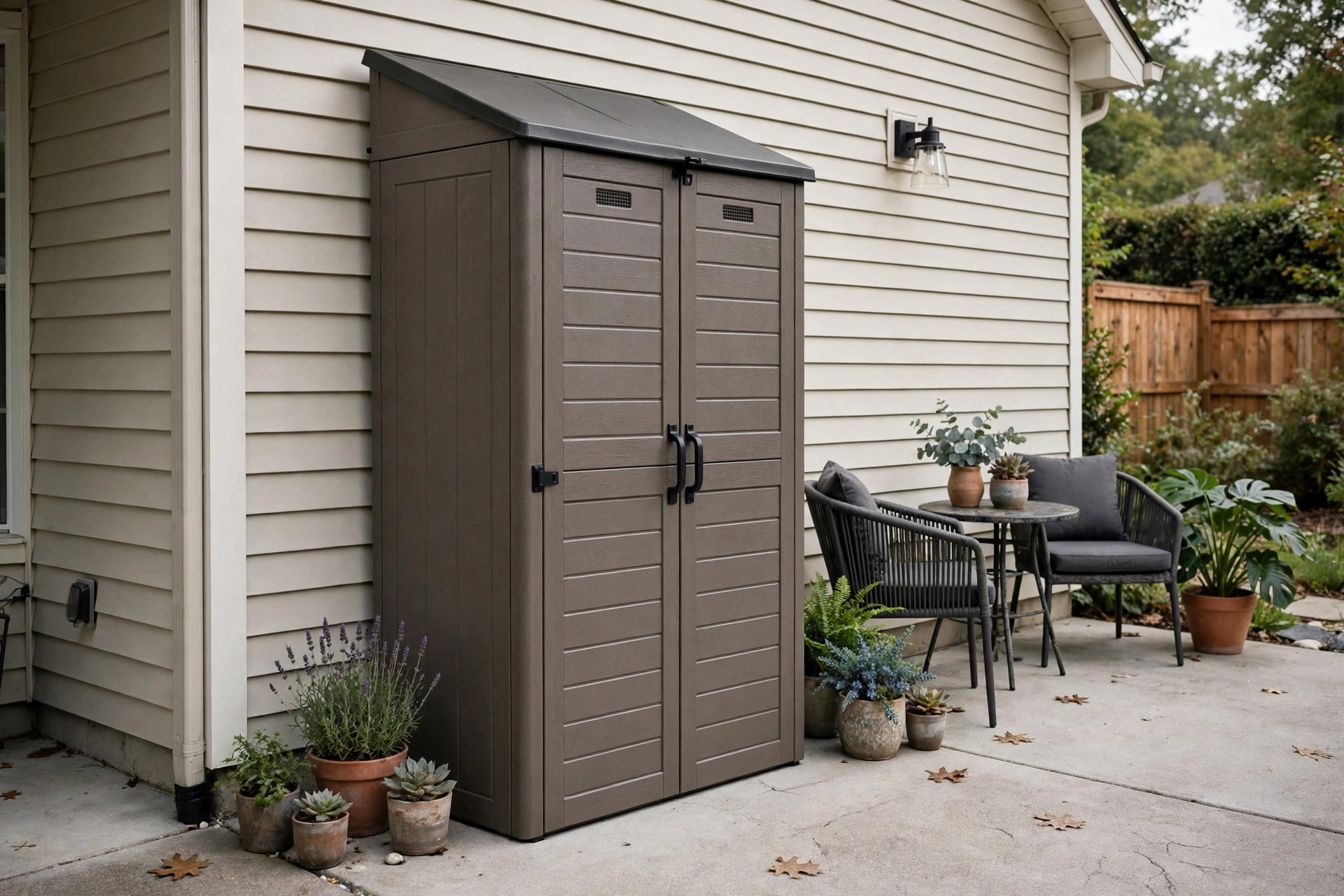
Rain ruins things. A soft summer shower can soak patio cushions in ten minutes. Sun fades fabric and warps cheap plastic. An outdoor storage cabinet waterproof for patio placement stands against all three. The word waterproof is the key word here. Many cabinets say they are weather resistant. That is not the same. Weather resistant means the box can take a light shower. Waterproof means water stays out even in a hard rain. When you shop, look for words like waterproof, watertight, or sealed. A truly waterproof cabinet has gaskets around the doors and a sloped top so rain runs off.
Good storage also saves time. If your grill tools sit in the cabinet by the grill, you start cooking sooner. If the pool towels live on the patio, the kids change and dry off without wet feet on the kitchen floor. There is also a question of safety. Loose tools and sharp trowels left on the patio are a risk to bare feet. A cabinet with a lock keeps these things out of reach of small children and pets.
What to Look For
Start with size. Measure the spot where the cabinet will stand before you buy anything. Leave room for the doors to swing open. Most patio cabinets run from three feet to five feet tall and two to four feet wide. Think about what will go inside. Measure your tallest item. Cushions are bulky but light. Soil bags are low and heavy. Buy a cabinet that fits the list with a little room left over.
Next, study the seal. Open the door in the store or look at close photos online. You want a rubber gasket around the full door frame. Press it with your finger. It should feel firm but soft. Check the hinges. They should be metal, not thin plastic. Look at the top. A flat top holds water in puddles. A sloped or crowned top sheds water. That is a fine detail and worth paying for.
Then comes ventilation. This may sound odd for a waterproof box. But a fully sealed cabinet with no air flow can trap damp air inside. On warm days that damp air breeds mildew. Many good cabinets have small vents with hoods. The hoods keep rain out but let air move.
Locks matter too. A basic door latch keeps the wind from blowing the door open. A real lock with a key or a padlock hasp keeps children and strangers out. Many families store pool chemicals or sharp tools in these cabinets. If that is your plan, a lock is not an option, it is a duty.
Feet and base deserve a look. Cabinets that sit flat on the patio floor can trap water under them. Small feet lift the box an inch or two and let water run under. Some cabinets come with anchor kits to tie them to the patio or wall. This keeps a tall, light cabinet from blowing over in a strong wind.
Types and Options
Resin and Plastic Cabinets
Resin is the most common choice. It is a thick plastic, often made to look like wood. Resin does not rot. It does not rust. It is light enough for one person to move. Good resin cabinets have double walls, which makes them stiff and adds a layer of insulation against heat. Cheaper single wall resin can bend in hot sun. Look for a thick feel and a maker that names the wall type. Resin cabinets are easy to wash with a hose. Their main weakness is the sun. Over years of hard sun, even good resin can fade. A covered patio or a shade sail helps.
Wood Cabinets
Wood looks warm and natural. Cedar and teak are the best woods for outside use because they resist rot on their own. Pine costs less but needs stain or paint every year or two. A wood cabinet must be sealed at every joint to be truly waterproof. Wood is heavy, which is good in wind. If you like to stain and oil things, a wood cabinet will please you. If you do not want upkeep, choose resin or metal instead.
Metal Cabinets
Steel and aluminum cabinets are strong. They hold heavy loads on their shelves. They lock well. The enemy of steel is rust. For more on that fight, read these metal patio furniture rust prevention tips. Look for powder coated steel or galvanized steel. Aluminum never rusts, but it dents and costs more. Metal cabinets can get hot inside on a sunny day, so avoid storing candles or cans of paint in them in high summer.
Wicker and Rattan Look Cabinets
Some cabinets wear a woven wicker skin over a plastic or metal frame. They match wicker patio sets and look fine on a deck. The weave is for looks only. The waterproof part is the inner box. Check that the inner box has its own seal. If the listing is vague, write to the seller and ask.
Storage Benches and Deck Boxes
If a tall cabinet does not fit your space, look at low boxes. A deck box sits like a bench and holds cushions. A storage bench gives you a seat and a box in one. If you are weighing seats with boxes, these outdoor loveseat with storage box reviews can help you compare.
Size and Placement
Think about where water goes. Never place the cabinet in the lowest spot of the patio where puddles form. Even a waterproof cabinet should not stand in standing water. Place the cabinet near a wall for wind shelter. Keep it a step away from the grill. Heat and grease are bad for seals and finishes.
Leave service space. You need to open the doors all the way to lift out a large bag of soil. A foot of clear space on the door side is the bare least. Two feet is better. If the patio is small, consider a cabinet with sliding doors or a top that lifts. Both need less swing room.
Think about the sun path. A cabinet in full afternoon sun will bake. The seal will age faster. A spot with morning sun and afternoon shade is ideal. If you have no shade, a light color reflects heat better than a dark color.
Cost and Price
Prices run wide. A small resin cabinet can cost under one hundred dollars. A mid size double wall resin cabinet with a good lock runs from one hundred fifty to three hundred dollars. Large wood cabinets, cedar or teak, run from four hundred to over one thousand dollars. Metal cabinets sit in the middle, often two hundred to five hundred dollars.
What drives price is size, wall thickness, seal quality, and brand name. Do not judge by price alone. A cheap cabinet with a poor seal costs more in the end when your cushions mildew. Spend your money on the seal and the hinges first. Those are the parts that make a box waterproof. Shelves can be added later with cheap wire racks.
Watch for sales. Patio goods go on sale at the end of summer and after holidays. Keep the box and the receipt until you have seen it through one storm.
For a sense of what others pay and how covers compare as a cheaper shield, many shoppers read weatherproof patio furniture covers heavy duty guides before they decide between a cover and a cabinet. Covers cost less up front. Cabinets protect better and last longer. Some homes use both. The cover guards the chairs. The cabinet guards the small things.
Care and Upkeep
A waterproof cabinet asks little of you. Wash it once or twice a year with mild soap and water. Rinse with a hose. Do not use a pressure washer close up. It can force water past the gasket and crack plastic seams. Check the gasket each spring. Look for cracks or flat spots. A worn gasket can often be replaced with foam weather strip from a hardware store. Oil the hinges once a year with a drop of light oil. Tighten loose screws.
Keep the inside dry. Do not put wet cushions straight in after a rain. Let them dry in the sun first. A damp item in a sealed box is an invitation to mildew. Toss in a few silica gel packs or a small tub of moisture absorber if your climate is humid. Check them twice a year and dry or replace them as the maker says.
In winter, the cabinet can stay outside. Clear snow off the top so the weight does not bow the lid. Make sure the doors are closed and latched so wind cannot work them open. If you store the cabinet empty, leave the doors closed to hold the shape. Sun is the slow killer even in winter, so a simple tarp over the top adds years to the finish.
Safety
Locks we covered, but there are more points. Never store gasoline, kerosene, or large amounts of paint thinner in a patio cabinet. Fumes build up in a sealed box. Heat makes it worse. Small amounts of charcoal lighter fluid are still a risk. Keep fuels in a detached shed if you can. Pool chemicals need care too. Chlorine and acid must never share a box. Store them apart, locked, and dry. Read the labels. The United States Consumer Product Safety Commission publishes plain safety sheets for home chemical storage, and their site is worth a visit at cpsc.gov.
Anchor tall cabinets. A five foot cabinet full of light cushions is a sail in a storm. Use the anchor kit or add your own straps to a wall or a heavy planter. Teach children that the cabinet is not a toy. A child climbing on a top heavy box can tip it. Keep the doors closed when not in use. Check for wasps and spiders in spring before you reach deep inside. A quick look with a flashlight is enough.
Fire safety counts. Keep the cabinet away from the grill, the fire pit, and the smoker. Sparks and heat ruin seals and can melt resin. A few feet of distance is enough in most cases.
Frequently Asked Questions
Is a weather resistant cabinet the same as a waterproof one?
No. Weather resistant means it can stand light rain. Waterproof means water cannot get in, even in a heavy storm. The difference sits in the gasket, the hinges, and the lid design. If the listing does not say waterproof, assume it is not.
Will a waterproof cabinet keep out all dampness?
It keeps out rain and splashes. It cannot keep out damp air that enters when you open the door. Dry your items before you store them. Use vents or moisture absorbers in humid climates. Check inside twice a year and air the box out on a dry day.
What size should I buy?
Buy for your tallest and bulkiest items, then add a little room. A family of four with full chair cushions does well with a four foot tall cabinet about three feet wide. Measure first, buy second.
Can I leave the cabinet out all winter?
Yes, in most of the country. Clear snow off the lid. Latch the doors. Check the gasket in spring. A good cabinet is built to stay out.
Do I need to anchor it?
If the cabinet is tall and light, yes. Wind can tip it. A strap to a wall stud or a heavy planter is enough. This is also a child safety step.
How long will a good cabinet last?
A good resin cabinet lasts eight to twelve years. Cedar lasts ten to fifteen with yearly sealing. Powder coated steel lasts ten or more if chips are touched up. The gasket is the part that wears first. Replace it and the box gains new life.
A Final Word
An outdoor storage cabinet waterproof for patio use is a quiet helper. It does not ask for much. It keeps your things dry, your patio neat, and your family a little safer. Choose by the seal first and the looks second. Measure your space. Think about the sun and the wind. Spend a fair price for a strong gasket and good hinges. Then use the cabinet every day and enjoy the small ease it brings.
For broad shopping ideas across patio sets and storage, large home stores and review sites are useful starting points. Many American shoppers compare styles at IKEA and Wayfair, and check long term test notes at Consumer Reports before they buy.
References
IKEA. (n.d.). Outdoor furniture and storage. https://www.ikea.com Wayfair. (n.d.). Patio furniture and outdoor storage. https://www.wayfair.com Consumer Reports. (n.d.). Product reviews and ratings. https://www.consumerreports.org U.S. Consumer Product Safety Commission. (n.d.). Home safety information. https://www.cpsc.gov
Was this guide helpful?

About Michael Thompson
The My Garden US editorial team writes practical, in-depth home and garden guides for American homeowners — tested advice, no fluff.