
A good patio set is not cheap. A table, four chairs, and a sofa can cost as much as a used car. Rain, sun, and wind wear them down year after year. That is why weatherproof patio furniture covers heavy duty enough to stand up to storms have become a staple in American backyards. A well-made cover keeps water out, blocks the sun, and stops mold before it starts. This guide explains what to look for, how to choose the right fit, what you should expect to pay, and how to keep the covers themselves in good shape for years.
Why Weatherproof Covers Matter
Outdoor furniture lives a hard life. It sits in direct sun in July and under wet snow in January. Wood dries and cracks. Metal rusts. Cushions fade and grow mildew. A single season without protection can age a new set by years.
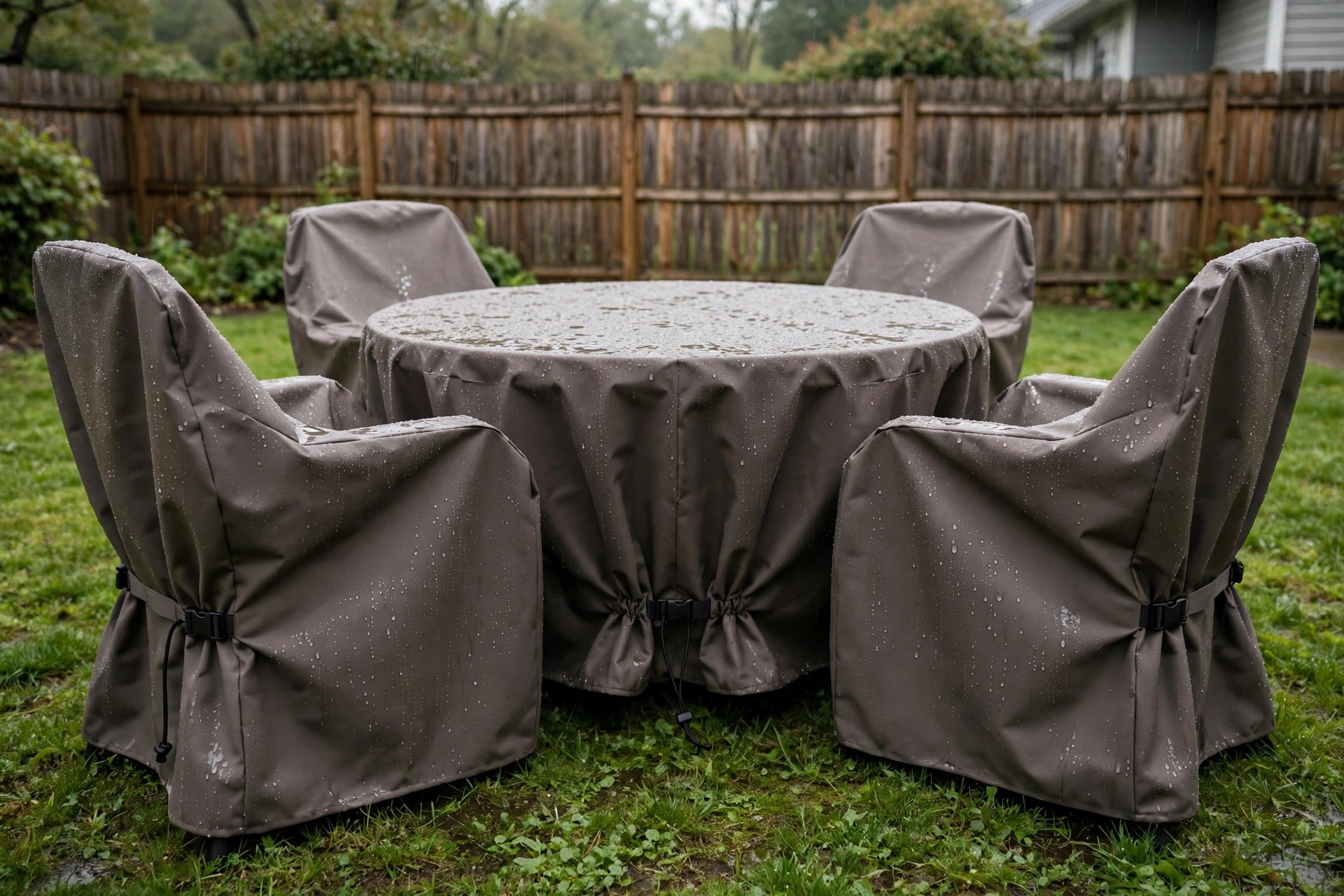
Weatherproof patio furniture covers heavy duty enough for real weather solve this problem. They act as a shield between your furniture and the elements. Rain runs off instead of soaking into the frame. Ultraviolet light, which breaks down plastic and fades fabric, never reaches the surface. Wind-blown dust and leaves stay off the cushions.
The savings add up. A heavy-duty cover that costs sixty dollars can protect a set worth two thousand. Without one, that set may need replacement in five years. With one, it may last ten or fifteen. Homeowners who use covers also spend less time cleaning. Instead of scrubbing each chair every spring, they pull off the cover and sit down.
There is also a comfort factor. Wet cushions are unpleasant. Mold on a chair arm is worse. Covers keep furniture dry and ready to use on short notice. When friends stop by on a Saturday afternoon, the patio is set and clean.
What to Look For in a Heavy-Duty Cover: Weatherproof Patio Furniture Covers Heavy Duty
Not all covers are equal. A thin vinyl sheet from a bargain bin is not the same as a true heavy-duty cover. Here are the points that matter most.
Fabric Weight and Denier
Fabric weight is the first sign of quality. Many makers list denier, a measure of thread thickness. A 300-denier polyester cover is serviceable. A 600-denier cover is truly heavy duty and resists tears and punctures. The thicker fabric also handles wind flapping better, which means less wear at the seams.
Some covers use Oxford fabric, a tightly woven polyester that holds up well in wind and rain. Others use canvas-style polyester with a waterproof backing. Either can work well if the denier is high enough. As a rule, look for 600 denier or more if you live where storms are common.
Waterproof Versus Water-Resistant
These two words mean different things. Water-resistant fabric sheds light rain but will soak through in a long storm. Waterproof fabric has a sealed backing that keeps water out even in heavy downpours. For year-round outdoor storage, choose waterproof.
Be careful, though. Fully waterproof covers can trap moisture underneath. Good covers include air vents. The vents let humid air escape so condensation does not build up on your furniture. Without vents, you may trade rain damage for mold damage. Look for covers with mesh vents placed high on the sides.
Fit and Fastening
A cover that is too small will stretch and tear. A cover that is too large will catch the wind like a sail. Measure your furniture before you buy: height, width, and depth. Most makers print their cover sizes on the package. Match your measurements to the size that fits best, and allow a little extra room for cushions.
Fastening matters just as much. Heavy-duty covers include drawcords at the hem, click-close straps, and sometimes elastic edges. The drawcord cinches the bottom tight. The straps buckle under the furniture legs. Together they keep the cover in place in gusty weather. In windy areas, covers that stay put in storms need the same kind of anchoring that wind-rated patio umbrellas do.
Types of Heavy-Duty Covers
Covers come in shapes matched to common furniture. Buying the right shape is half the battle.
Chair and Sofa Covers
Individual chair covers fit standard patio chairs, including Adirondack chairs and rockers. Sofa covers fit loveseats, sofas, and sectionals. If you own a sectional, look for a cover shaped for the L or U layout rather than trying to drape one flat cover over it. The shaped cover sheds water better and is easier to put on.
Check that the chair cover is tall enough to reach the ground. Covers that stop short at the seat level let rain splash up onto the legs. Full-length coverage is the standard for heavy-duty models.
Table Covers
Table covers fit round, square, and rectangular tables. Round covers often come in 30-inch and 60-inch sizes. Rectangular covers fit standard six- and eight-seat dining tables. If you keep cushions or chair pads on the table under the cover, size up one step so the cover is not stretched tight. A tight cover wears faster and can crack at the corners.
Some table covers include a soft inner lining. The lining protects wood and glass tabletops from scratching when you pull the cover on and off. If your table has a glass top, this feature is worth seeking out.
Grill Covers
Grills need covers too, and the same heavy-duty standard applies. A grill cover must resist heat on the inside and weather on the outside. Look for heat-resistant material rated for warm surfaces, and make sure the grill is fully cool before you cover it. Many grill covers include side handles that let you lift the cover easily.
If your grill sits on an uncovered deck, a heavy-duty cover is almost mandatory. Without one, burners rust, igniters fail, and the body fades. A fifty-dollar cover can save a four-hundred-dollar grill.
Cost and Price
Heavy-duty weatherproof covers are not the cheapest option, but they are far from expensive. Prices follow size and fabric weight.
Single chair covers typically run from twenty to forty dollars. Sofa covers run from forty to eighty dollars. Large table covers run from fifty to one hundred dollars. A full set of covers for a typical dining set costs between one hundred and two hundred dollars. Premium brands with 600-denier fabric, reinforced seams, and long warranties sit at the top of these ranges.
Watch for sales in late summer. Big retailers clear patio stock in August and September, and covers are often marked down by a third or more. Online marketplaces list wide selections year-round. You can browse heavy-duty options on sites like IKEA and Wayfair, which both carry extensive outdoor collections.
Do not judge by price alone. A thin twenty-dollar cover that tears in one season costs more over time than a sixty-dollar cover that lasts five. Read the fabric specs, check the warranty, and look for double-stitched seams. A warranty of three years or more is a good sign.
Care and Upkeep
The covers themselves need care. Take them off once a season and hose them down. Use mild soap and a soft brush for spots. Never use bleach, which can break down the waterproof coating. Let the cover dry fully in the sun before you put it back on.
Inspect the seams and straps each spring. Sun and wind stress the stitching first. Small tears can be patched with repair tape made for outdoor fabric. Replace any broken buckles before storm season. A cover with a broken strap is a cover that will end up in the neighbor’s yard.
Store spare covers indoors when not in use. A dry garage shelf is ideal. Keep them away from sharp tools. If a cover stays damp in storage, mildew will grow on it, so make sure it is bone dry before you fold it.
If your patio set includes cushions, bring the cushions inside or store them in a deck box during long wet spells, even if they are covered. Covers protect against rain, but cushions last far longer when stored dry. For tips on keeping cushions clean, see this guide on how to clean outdoor furniture cushions.
Safety Notes
Covers are simple products, but a few safety points deserve attention. Never cover a grill or fire pit that is still warm. Trapped heat can melt the fabric and, in rare cases, start a fire. Wait until every surface is cool to the touch.
In heavy snow, brush snow off the covers rather than letting it pile up. A foot of wet snow is very heavy. It can stress the seams and press the cover down onto sharp furniture edges, which can puncture the fabric.
If you live in an area with high winds, use every strap and drawcord the cover provides. A loose cover can billow and strain its fasteners, or fly off entirely. A flying cover can damage other property. Check the straps after every major storm.
Finally, keep covers away from open flames, including tiki torches and patio heaters. Most cover fabrics are not fire-resistant. Place heat sources at a safe distance from covered furniture.
Frequently Asked Questions
How long do heavy-duty patio furniture covers last?
A well-made heavy-duty cover usually lasts three to five years with basic care. Covers in harsh sun or heavy snow may wear faster. Cheaper thin covers may last only one season. Buying 600-denier fabric with reinforced seams gives you the best chance at the long end of that range.
Can I leave my furniture covered all winter?
Yes, in most climates. A heavy-duty waterproof cover with vents is made for exactly this. Shake off snow after storms, and make sure the furniture is dry before the first cover goes on. In very wet regions, check under the cover once mid-winter to make sure no moisture is pooling.
Will covers cause mold on my furniture?
They can if they trap moisture. That is why vents matter. Vented covers let humid air escape. To be safe, let wet furniture dry before covering it, and do not cover furniture that is sitting in standing water. If you live in a humid climate, a quick check under the cover every few weeks is wise.
Do I need to cover metal furniture to stop rust?
Covering helps a great deal, but it is not the only step. Quality metal furniture usually has a powder-coated finish that resists rust. The cover keeps water off the finish and slows wear. Touch up any chips in the coating with rust-resistant paint, and the cover will do the rest. More detail is in this guide on metal patio furniture rust prevention tips.
What size cover should I buy for my dining set?
Measure the table at its widest and longest points, including any leaves you plan to leave in. Add two to four inches for ease of fitting. If you store cushions on the table under the cover, add another two inches of height. Round up to the nearest standard cover size rather than down.
Are expensive covers really worth it?
For most homeowners, yes. The jump from a thin bargain cover to a heavy-duty cover is one of the best values in patio care. The price difference is often twenty to forty dollars per cover, and the heavy-duty version can last four times as long while protecting far better.
A Final Word
Weatherproof patio furniture covers heavy duty enough for real weather are one of the simplest ways to protect your outdoor investment. Choose 600-denier fabric or better, insist on waterproof material with vents, measure carefully, and use every strap. Spend a little time on care each season, and the covers will return the favor for years. For broader advice on keeping your whole set looking good, the teak patio set maintenance tips guide pairs well with what you have learned here. Product reviews at Consumer Reports can also help you compare brands before you buy.
References
Consumer Reports. (n.d.). Product reviews and ratings. https://www.consumerreports.org IKEA. (n.d.). Home furnishings. https://www.ikea.com Wayfair. (n.d.). Furniture and home goods. https://www.wayfair.com
Was this guide helpful?

About Michael Thompson
The My Garden US editorial team writes practical, in-depth home and garden guides for American homeowners — tested advice, no fluff.
You May Also Like
Best Outdoor Sofa for Rainy Climate: How to Choose One That Lasts
June 1, 2026 0 views
Patio Furniture for Desert Climate Reviews: What Holds Up in the Heat
September 3, 2026 0 views
Best Outdoor Mirror for Patio Wall: A Plain Guide to Choosing One That Lasts
September 28, 2026 0 views