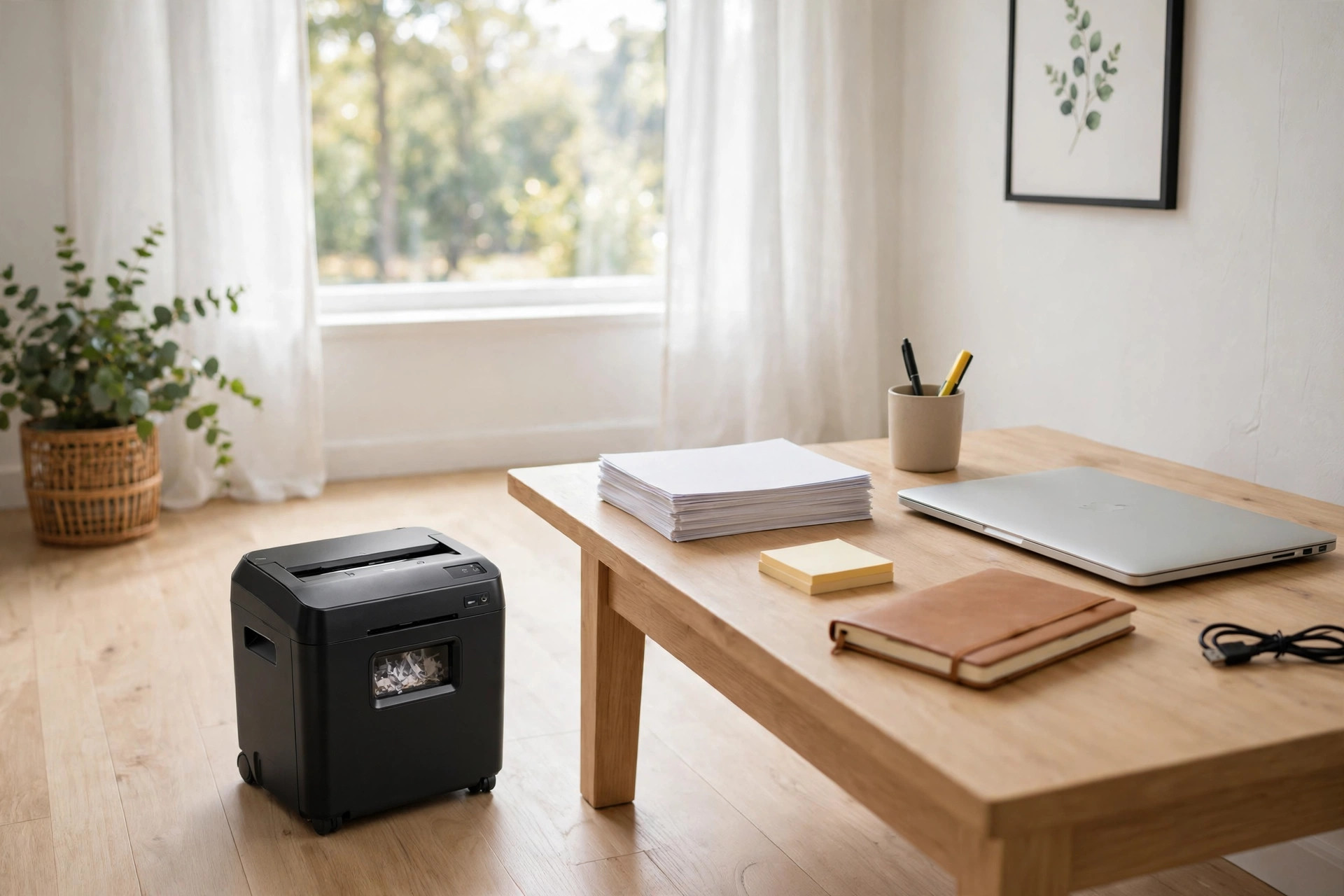

More people now work from home. A desk in the corner of the living room. A spare bedroom turned into an office. Old bills and bank letters pile up. A quiet paper shredder for home office apartment life solves the problem. It cuts papers into thin strips or tiny bits. It keeps your private records safe. And it does the job without loud noise that bothers neighbors or wakes a sleeping child.
Why a Quiet Shredder Matters in an Apartment
Apartments are small. Walls are thin. A loud machine at ten at night can travel through a wall. Your neighbor may hear it. Your family may hear it too. A quiet shredder lets you destroy papers at any hour. You can shred mail right after dinner. You can shred tax forms early in the morning.
Privacy matters as well. Bank statements show account numbers. Medical letters show health facts. Pay slips show income. Throwing these in the trash is risky. Dumpster diving is real. A shredder turns these papers into waste no thief can read. That is worth the small cost.
A home office also needs order. Paper stacks grow fast. Junk mail arrives each day. Old receipts fill drawers. Shredding the ones you do not need keeps the desk clear. A clear desk helps clear work.
What to Look for When You Choose: Quiet Paper Shredder for Home Office Apartment
Noise level comes first. Look at the decibel rating on the box. A normal talk is about 60 decibels. A quiet shredder should run near that level or lower. Under 60 decibels is a good goal. Under 55 is very good. Some makers list the noise rating in the product facts. If no rating is given, read buyer reviews. Many buyers mention noise in plain words.
Cut type comes next. A strip cut shredder cuts paper into long thin strips. It is fast and cheap. But a thief can tape strips back together. A crosscut shredder cuts paper both ways. It makes short bits. It is safer. A micro-cut shredder makes even smaller bits. It gives the best safety. For home office records, crosscut is a solid middle choice. Micro-cut is better if you shred tax forms or medical records.
Sheet capacity matters too. A small shredder may take five sheets at once. A larger one may take ten or twelve. More sheets save time. But do not feed more than the rating. Overfeeding wears the motor down. It also makes more noise.
Bin size is worth a thought. A small bin fills fast. You empty it often. A large bin holds more paper. But a large bin takes more floor space. In a small apartment, a two to four gallon bin is often enough. Pull-out bins are easier to empty than lift-off tops.
Run time and cool down time are often missed. A cheap shredder may run for two minutes. Then it needs thirty minutes to cool. If you shred in big batches, this is slow. Look for a run time of at least five minutes. Ten minutes is better. A shorter cool down is better too.
Types and Options
Strip Cut Shredders
These are the simplest machines. They cut paper into long strips. They cost the least. They run fast. But they give the lowest safety. They work for junk mail and catalogs. For private papers, choose a higher cut type.
Crosscut Shredders
These cut paper into short bits. They are the most common home choice. They give good safety at a fair price. Most quiet models for apartments are crosscut. They can also shred credit cards and small staples. Check the manual before you try.
Micro-Cut Shredders
These cut paper into tiny confetti-like bits. They give the best safety. They cost more. They also run a bit slower. Some are still quiet. If you handle tax records or client files at home, a micro-cut model is worth the price.
Shredders with Credit Card and CD Slots
Some models have a separate slot for cards and discs. This keeps plastic out of the paper bin. Old credit cards hold chips with data. Shredding them is smart. Old CDs may hold backed-up files. A slot for discs saves you a separate tool.
All-in-One Models with Baskets
Some shredders sit on top of a basket. The paper falls into the basket. This makes emptying easy. Just lift the top and tip the basket. These models are often compact. They fit under a desk. That is good for small rooms.
For a full setup, pair your shredder with a small standing desk with wheels for mobility and a home office filing cabinet lateral two drawer to hold the papers you must keep.
Cost and Price
Prices vary by cut type and size. A basic strip cut model may cost thirty to fifty dollars. A quiet crosscut model for home use may cost sixty to one hundred and twenty dollars. A micro-cut model may cost one hundred to two hundred dollars. Machines made for very low noise may cost a bit more.
Set a budget before you shop. For most apartments, a machine in the seventy to one hundred and twenty dollar range gives a good mix. It runs quiet. It cuts crosscut bits. It holds a fair bin size.
Check what is in the box. Some machines include a starter bag for the bin. Some include oil sheets for the blades. These small extras add value. A bag keeps paper dust inside the bin. Oil keeps the blades sharp and quiet. You can buy more on a large home store site such as Home Depot or Lowe’s.
Do not buy only on price. A very cheap shredder may be loud. It may jam often. It may fail in a year. Spending a little more buys a quieter motor and better gears. That is money well spent in a small apartment.
Noise Tips for Apartment Life
Even a quiet machine makes some sound. Place the shredder on a rug or a carpet tile. Hard floors echo sound. A soft pad under the machine soaks up the noise. Keep the shredder away from shared walls. A spot near an inside wall is better than one by the neighbor’s wall.
Shred in small batches. A full load strains the motor. A strained motor runs louder. Feed a few sheets at a time. Let the machine run at an easy pace. It will sound softer and last longer.
Shred at kind hours. Even quiet machines can be heard at midnight. Midday and early evening are safer times. If you must shred late, use a rug and a low feed rate.
Oil the blades now and then. Dry blades grind. Oiled blades glide. Most makers say to oil after each bin full. Use oil made for shredders. Pour a line of oil across a sheet of paper. Run the sheet through. This is simple and quick.
Care and Upkeep
Empty the bin before it overflows. A full bin pushes paper up into the blades. That causes jams. Watch the fill window if your model has one. Or lift the top and check.
Clear jams the safe way. First unplug the machine. Never put a finger near the blades. Use the reverse button to back the paper out. Then run the machine forward again. If paper is stuck deep, use tweezers. Never use a knife near the blades.
Keep the blades oiled. Oil is the main care task. A drop sheet each month keeps the cut smooth. A smooth cut is a quiet cut. Some machines take oil sheets. Feed one through like a sheet of paper. That is all it takes.
Wipe the outside with a dry cloth. Paper dust builds up on the slot. Dust can fall into the gears. A quick wipe keeps the machine clean. Keep the shredder in a dry room. Damp air can rust the blades over time.
Keep the power cord safe. Run it along the wall. Do not let a chair roll over it. A cut cord is a fire risk. Unplug the shredder when you leave for a long trip.
When your whole work corner is set, an ergonomic office stool with back support makes long shredding and sorting sessions easier on the back.
Safety
Shredders are safe when used with care. They are not toys. Keep children and pets away from the machine. A small hand or paw can get hurt. Unplug the shredder when children are in the room. Many models have a safety switch. Learn how yours works.
Do not wear loose sleeves or long ties near the slot. Loose cloth can catch in the blades. Tie back long hair. Remove loose jewelry before you feed paper. These steps take seconds. They prevent real harm.
Feed only what the manual allows. Paper clips are fine on most models. Thick cardboard is not. Wet paper is not. A wet sheet can wrap around the blades. It can stall the motor. It can cause a jam that is hard to clear.
The Consumer Product Safety Commission gives general advice on home product safety. Their site is worth a look before you buy any powered home office tool.
Where to Learn More Before You Buy
Good reviews save money. Wirecutter tests home products with care. Their shredder guides list noise notes and run times. The Spruce also reviews home office gear in plain words. PCMag covers office machines with lab tests. Reading two or three reviews gives you a clear picture.
Retailers with wide ranges help you compare. Wayfair lists many home office models with buyer photos. IKEA sells office storage that pairs well with a small shredder. Office furniture makers such as Herman Miller, Steelcase, and UPLIFT Desk show how a full quiet home office can be laid out. Their ideas help you place a shredder where it fits and stays quiet.
FAQ
How loud is a quiet paper shredder? Most quiet home models run between 55 and 65 decibels. That is near the level of a normal talk. Models under 60 decibels are easy to use in an apartment. Check the product facts or buyer reviews for noise notes.
Can I shred credit cards and staples? Many crosscut and micro-cut models can shred one credit card at a time. Most can take small staples. Check your manual first. Big paper clips should be removed. Thick metal can dull the blades.
How often should I oil the shredder? Oil after each full bin, or about once a month with light use. Feed an oil sheet or an oiled sheet of paper through the blades. Oiled blades cut clean. They run quieter and last longer.
What should I do with shredded paper? Bag it and put it in your paper recycling bin if your city takes shredded paper. Some cities ask you to bag it first so bits do not blow away. Check local rules. Shredded paper also works as packing filler for boxes.
Strip cut or crosscut for an apartment? Crosscut is the better pick for most homes. It gives far better privacy. Strip cut is fine only for junk mail. The price gap is small. The safety gap is large.
How long should a home shredder last? With light home use and regular oiling, a good shredder lasts five to eight years. Heavy use shortens life. Overfeeding and skipped oiling wear the motor fast. Treat the machine gently and it will serve you well.
A Final Word
A quiet paper shredder for home office apartment life is a small buy with a big payoff. It guards your private records. It keeps your desk clear. It runs soft enough for thin walls and late hours. Pick a crosscut or micro-cut model with a low noise rating. Oil the blades. Empty the bin on time. Shred at kind hours. Do these simple things and your little home office will stay tidy, private, and peaceful.
References
Herman Miller. (n.d.). Office furniture and ergonomic seating. https://www.hermanmiller.com IKEA. (n.d.). Home furnishings. https://www.ikea.com Lowe’s. (n.d.). Home improvement products. https://www.lowes.com PCMag. (n.d.). Technology product reviews. https://www.pcmag.com Steelcase. (n.d.). Office furniture and workplace research. https://www.steelcase.com The Home Depot. (n.d.). Home improvement products. https://www.homedepot.com The Spruce. (n.d.). Home and garden advice. https://www.thespruce.com U.S. Consumer Product Safety Commission. (n.d.). Product safety information. https://www.cpsc.gov UPLIFT Desk. (n.d.). Standing desks and ergonomic office furniture. https://www.uplift-desk.com Wayfair. (n.d.). Furniture and home goods. https://www.wayfair.com Wirecutter. (n.d.). Product reviews from The New York Times. https://www.nytimes.com/wirecutter
Was this guide helpful?

About Sarah Mitchell
The My Garden US editorial team writes practical, in-depth home and garden guides for American homeowners — tested advice, no fluff.
You May Also Like
Small Standing Desk With Wheels for Mobility: What to Know Before You Buy
February 15, 2026 0 views
Best Home Office Desk for College Students Dorm: A Guide to Small-Room Study Furniture
February 27, 2026 0 views
Home Office Desk With Modesty Panel Front: A Simple Buying Guide
August 3, 2026 0 views