
Introduction
A fireclay vs cast iron sink comparison usa helps American shoppers choose between two classic kitchen sinks. Both materials have been used in kitchens for a long time. Both give a solid, high-quality feel. Yet they differ in how they are made, how they wear, and how much they cost. This guide explains each type in plain terms. It compares looks, strength, heat resistance, weight, price, and care. It also answers the questions shoppers ask most. By the end, you will know which sink fits your kitchen, your budget, and your daily habits.
Why This Comparison Matters: Fireclay vs Cast Iron Sink Comparison Usa
A kitchen sink is not a small purchase. A good sink may last thirty years or more. A poor choice can chip, stain, or sag within a few years. Fireclay and cast iron both sit in the middle and upper ranges of sink prices. They cost more than basic stainless steel. They also bring a classic look that many buyers want.
The two materials can look alike at first glance. Both are usually white or off-white. Both have a smooth, glossy finish. Shoppers often confuse them. That is why a careful comparison matters. The right sink depends on how you cook, how hard your water is, and how much care you want to give.
Many buyers also pair the sink with other fixtures. If you are adding a faucet that stands high above the stove, our guide to pot filler placement over the range can help with the layout. Hard water can stain any sink, so it also helps to read about a dishwasher that handles hard water and about how often a water softener regenerates.
How Each Sink Is Made
Fireclay Sinks
A fireclay sink starts as a mix of clay and glaze. The raw clay is shaped into the sink form. Then it is fired in a kiln at very high heat, often above 2,000 degrees. The heat bonds the clay and glaze into one dense body. The result is a sink with a hard, glass-like skin.
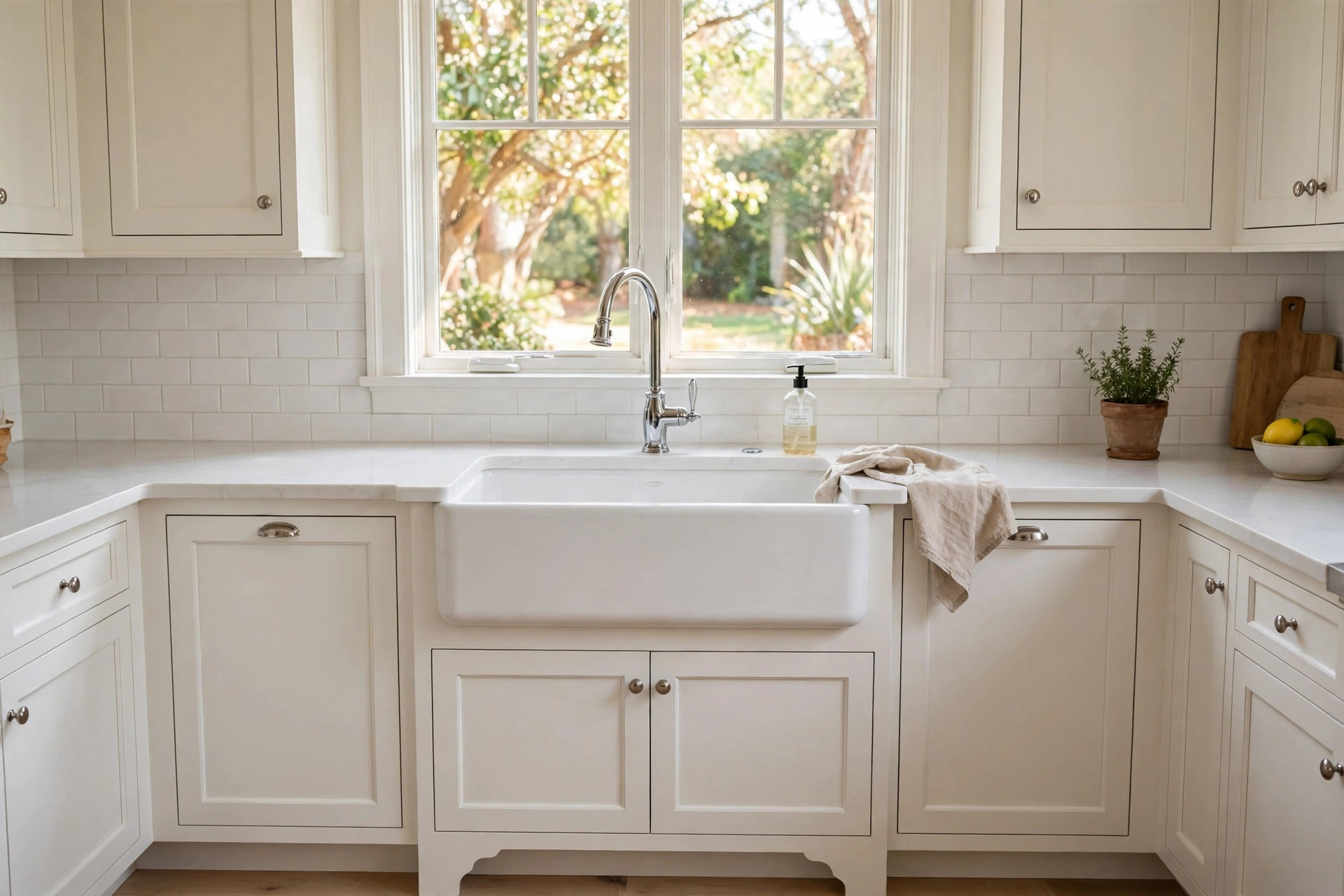
Fireclay sinks are best known as farmhouse sinks. The farmhouse style has a wide front panel that shows on the cabinet face. Many fireclay sinks come in single-bowl designs. Some have a smooth front. Others have a fluted or ridged front for a country look.
The glaze on a fireclay sink is thick. It resists most food stains. Coffee, tea, and tomato sauce wash off with ease if cleaned soon after use. The surface also resists heat from hot pots. You can set a hot pan down without fear of scorch marks.
Cast Iron Sinks With Enamel
A cast iron sink starts as molten iron. The iron is poured into a mold to form the sink shape. After it cools, the sink is coated with enamel. The enamel is a layer of powdered glass. It is fused to the iron at high heat. Brands such as Kohler have made enameled cast iron sinks for many decades.
Cast iron sinks come in many shapes. They include top-mount, undermount, and farmhouse styles. They also come in many colors. White is the most common. But buyers can find biscuit, almond, black, and even deep blue. This color range is one clear advantage over fireclay.
The enamel surface is smooth and glossy. It feels warm and solid under the hand. Like fireclay, it resists heat well. A hot pan will not hurt it. The enamel also resists most stains when kept clean.
What to Look for When You Choose
Start with the style of your kitchen. A farmhouse fireclay sink suits country, cottage, and classic kitchens. An enameled cast iron sink fits almost any style because of its color range. Think about your cabinets too. Both sinks are heavy. Your base cabinet may need extra support.
Next, think about the bowl layout. Single large bowls are best for washing big pots. Double bowls help if you like to soak and rinse at the same time. Both materials offer single and double bowls, but fireclay is most common as a single farmhouse bowl.
Check the drain placement. Some sinks have a center drain. Others have a rear drain. A rear drain gives more room under the sink for storage. It also keeps dishes from covering the drain while you wash.
Look at the finish quality. Run your eye over the surface in good light. The glaze or enamel should be even. Small bumps or thin spots can become weak points over time. Buy from a maker with a strong name. The advice on This Old House often stresses that finish quality decides how a sink ages.
Consider the weight. A cast iron sink can weigh 100 pounds or more. A fireclay sink can weigh 80 to 120 pounds. Both need two people to lift. Both need a cabinet that can bear the load. The Family Handyman site offers useful tips on bracing a sink cabinet before the plumber arrives.
Types and Options
Fireclay sinks are almost always white or off-white. A few makers offer gray or black. The shapes are mostly farmhouse apron-front. Some are made as undermount or top-mount bowls. Depth is often generous, around nine to ten inches. That deep bowl holds a lot of dishes.
Cast iron sinks offer far more variety. You can buy them in drop-in, undermount, and apron-front styles. Bowl depth ranges from shallow bar sinks to deep kitchen bowls. Colors range from bright white to rich black. If you want your sink to match a bold kitchen, cast iron gives you more choices.
Both types pair well with standard kitchen faucets. Choose a faucet from a known maker such as Moen or Delta Faucet. A high-arc faucet works well with a deep farmhouse bowl. It gives room to fill tall pots.
Water quality affects both sinks. Hard water leaves mineral spots on any white surface. A filter can help. Simple under-sink filters are sold by Aquasana and through large stores such as Home Depot and Lowe’s. Soft water keeps the finish bright and reduces spots.
Cost and Price
Price is one of the biggest differences. Fireclay sinks usually cost more than cast iron sinks. A basic fireclay farmhouse sink starts near 400 dollars in the United States. Better-known brands run from 600 to 1,200 dollars. Large or custom sizes can pass 1,500 dollars.
Cast iron sinks cover a wider price range. A simple enameled cast iron drop-in sink can cost as little as 150 dollars. Mid-range models run from 250 to 600 dollars. High-end cast iron farmhouse sinks reach 800 to 1,400 dollars.
Installation adds to the cost for both. Because both sinks are heavy, the installer must brace the cabinet. A farmhouse sink also needs the cabinet face cut to fit the apron. Expect to pay 200 to 500 dollars for installation on top of the sink price. Prices vary by region. Get two or three quotes before you agree.
Replacement cost also matters. If a sink chips badly, you must replace it. Both types are hard to remove once set in sealant. Think of the purchase as long term. Spend a bit more now for a finish that will last.
Care and Upkeep
Daily care is simple for both sinks. Rinse the bowl after each use. Wipe it with a soft cloth. Use a mild dish soap. Dry the sink to stop water spots. These small steps keep the finish bright for years.
Avoid harsh cleaners. Do not use steel wool, scouring powder, or bleach on a regular basis. These can scratch or dull the surface. If a stain appears, use a paste of baking soda and water. Rub gently with a soft sponge. Rinse well.
Fireclay is very hard, but it can chip if a heavy pot strikes the edge. The chips show the dark clay beneath the white glaze. Repair kits exist, but the repair is hard to hide. Handle heavy iron pans with care near the rim.
Cast iron enamel can also chip. A hard knock can crack the enamel and show dark iron below. Once iron is exposed, rust can start. Touch-up kits sold at hardware stores can seal small chips. Deep chips are harder to fix. Keep a rubber mat in the bowl if you wash heavy pots often.
Both sinks handle heat well. You can pour boiling water straight in. You can set a hot pot down for a short time. Still, use a trivet for very hot items to be safe.
Water spots are the most common complaint. They come from minerals in tap water. The EPA notes that mineral content varies widely across the country. A quick wipe after use stops spots from forming. A water softener can also help in hard-water areas.
Safety and Installation Notes
Both sinks are heavy. Do not try to lift one alone. Get a helper. Wear work gloves to protect your hands from sharp edges. The underside of a cast iron sink can be rough.
Check the cabinet before the sink arrives. The base cabinet must hold 100 pounds or more plus the weight of water and dishes. Add wood braces under the sink rim. A contractor or skilled homeowner can do this work. If you are not sure, hire a professional.
Seal the rim well. Use a bead of kitchen-grade silicone around the edge. A good seal keeps water out of the cabinet. Water inside the cabinet can rot the wood. It can also grow mold.
Check the drain and faucet holes. Make sure the faucet you bought fits the hole count on the sink. Some sinks have one hole. Others have three or four. Measure twice before you buy.
If your home has old plumbing, check the drain line while the sink is out. Old pipes may need a cleaning or a new trap. This is a good time to fix small leaks. A plumber can do this during the sink install.
Frequently Asked Questions
Which lasts longer, fireclay or cast iron? Both can last thirty years or more with good care. Fireclay glaze is very hard and resists wear well. Cast iron enamel is also tough. The one that lasts longer is usually the one that is cared for better.
Do fireclay sinks stain? They resist most stains. Coffee, tea, and wine wipe off if cleaned soon. If a stain sits for hours, it may need a baking soda paste. Hard water spots are the most common mark.
Do cast iron sinks rust? The enamel layer stops rust. Rust starts only if the enamel chips and iron is exposed. Seal any chip right away with a touch-up kit. Keep the sink dry around the chip.
Can I use bleach in these sinks? It is best to avoid bleach. It can dull the finish over time. Mild soap and baking soda clean well enough for daily use.
Are both sinks noisy? Both are quieter than thin stainless steel. The thick body of each sink deadens the sound of running water and clanking dishes. Cast iron is often the quietest of all.
Which is better for a farmhouse kitchen? Fireclay is the classic farmhouse choice. Its thick apron front defines the style. But cast iron farmhouse sinks also look right in a farmhouse kitchen, and they offer more colors.
A Short Final Word
This fireclay vs cast iron sink comparison usa comes down to a few clear points. Fireclay offers a very hard glaze, a classic farmhouse look, and strong heat resistance. It costs more and offers fewer colors. Cast iron offers more styles, more colors, and a wider price range. It needs care to keep the enamel free of chips.
Both sinks are heavy, solid, and built to last. Both look far better than a basic steel sink. Pick the one that suits your style and your budget. Give it simple daily care. With that, either sink will serve your kitchen for many years.
References
Aquasana. (n.d.). Water filtration systems. https://www.aquasana.com Delta Faucet. (n.d.). Kitchen and bathroom faucets. https://www.deltafaucet.com Family Handyman. (n.d.). DIY home repair and maintenance. https://www.familyhandyman.com Kohler. (n.d.). Bathroom and kitchen fixtures. https://www.kohler.com Lowe’s. (n.d.). Home improvement products. https://www.lowes.com Moen. (n.d.). Faucets and plumbing fixtures. https://www.moen.com The Home Depot. (n.d.). Home improvement products. https://www.homedepot.com This Old House. (n.d.). Home renovation guidance. https://www.thisoldhouse.com U.S. Environmental Protection Agency. (n.d.). Protecting human health and the environment. https://www.epa.gov
Was this guide helpful?

About James Carter
The My Garden US editorial team writes practical, in-depth home and garden guides for American homeowners — tested advice, no fluff.
You May Also Like

Best Touchless Kitchen Faucet Reviews USA
August 20, 2026 0 views
Best Well Pressure Tank Reviews 2026 USA
January 21, 2026 0 views
Toilet Fill Valve Replacement Cost Near Me: What Homeowners Should Know
June 28, 2026 0 views