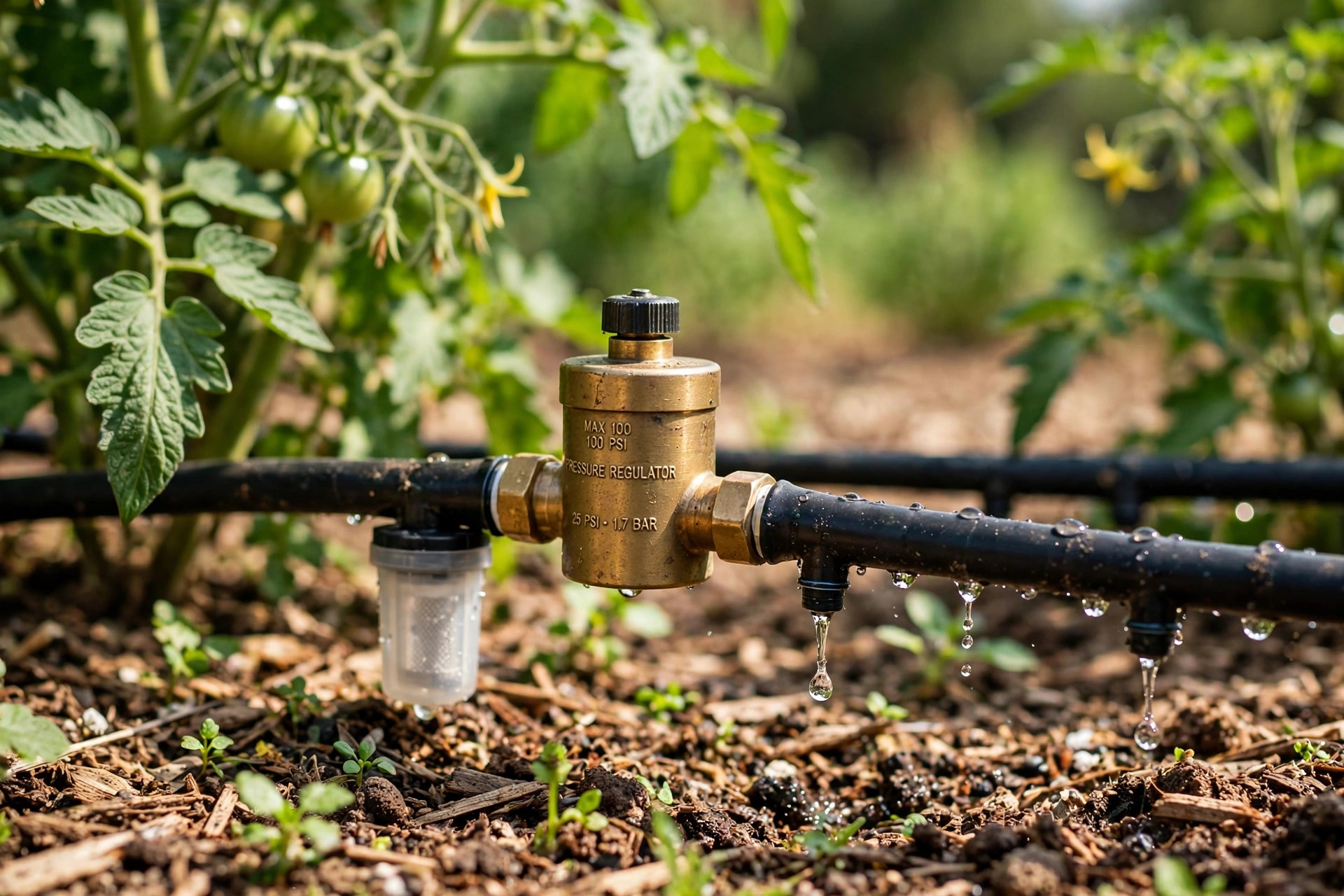

A pressure regulator is one of the smallest parts of a drip system, and one of the most important. House water pressure often runs at 50 to 80 pounds per square inch. Most drip lines and emitters are made to work at 20 to 30 pounds per square inch. This drip irrigation pressure regulator guide explains how these small devices protect your system, how to choose one, and how to keep it working for many years.
Without a regulator, high pressure can pop fittings loose, split thin drip tubing, and push water out of emitters too fast. A ten-dollar regulator can prevent damage that costs far more to fix. This guide covers the basics in plain language, from reading pressure ratings to setting up a simple head assembly.
Why Pressure Control Matters in a Drip System
A drip system works by giving water slowly, drop by drop, right at the roots of plants. Emitters are rated to release a certain amount of water per hour, such as half a gallon or one gallon. They can only do this if the pressure in the line stays within a narrow range.
Most home water supplies run much higher than a drip system needs. A city water main may deliver 60 or 70 pounds per square inch at your garden faucet. Some wells run even higher. Drip emitters and the thin tubing that feeds them are built for low pressure, often 15 to 25 pounds per square inch. When pressure runs too high, fittings can blow apart, thin drip line can split along its length, and emitters lose their accuracy. An emitter rated for one gallon per hour at 25 pounds may give much more at 60 pounds. Plants near the faucet drown while plants far down the line get little.
A pressure regulator sits between your water source and the rest of the system. It takes the high incoming pressure and reduces it to a steady, safe level, holding it there even when faucet pressure goes up and down through the day. This steady pressure is what makes the whole system predictable and reliable.
How a Pressure Regulator Works: Drip Irrigation Pressure Regulator Guide
A regulator is a simple mechanical device. Inside its body, a spring and a diaphragm respond to outlet pressure. When outlet pressure rises above the set point, the diaphragm pushes the spring and partly closes a valve. When it falls, the spring opens the valve wider. This constant adjusting keeps outlet pressure almost steady.
Most drip regulators are fixed, not adjustable. The body is stamped or labeled with its preset pressure, such as 25 PSI. You buy the rating you need and screw it in line. Some regulators are adjustable with a small screw or knob. Fixed regulators are cheaper and simpler, and they suit most home gardens. Adjustable models give more control when a system mixes emitters with different needs.
Regulators come in common thread sizes. The most common for home drip systems is three-quarter inch hose thread, which screws right onto a garden faucet. Others use half-inch or one-inch pipe thread for systems connected to an irrigation valve. Match the thread to the rest of your parts before you buy.
One point deserves care. A regulator only reduces pressure in the direction of flow. It has an arrow on the body that marks which way the water should travel. Install it backward and it will not regulate.
What to Look for When You Choose One
Choosing a regulator is simple once you know three facts about your system: the pressure you need, the thread size, and the flow rate.
Outlet pressure rating. Read the rating of your drip tubing and emitters. Thin-wall drip line usually wants 15 to 20 PSI. Heavier half-inch drip tubing with built-in emitters often works at 20 to 25 PSI. Standard drip emitters generally run well at 25 PSI. Pick a regulator preset that matches the lowest rating among your parts.
Thread size and type. Faucet-connected systems need hose thread, usually three-quarter inch. Valve-connected systems need pipe thread, often three-quarter inch or one inch. The two thread types are not the same, and they do not seal well when mixed. Check your valve or faucet before you order.
Flow range. Every regulator is rated for a range of flow, measured in gallons per minute. A small vegetable bed may need less than one gallon per minute. A large zone with many emitters may need five or more. Add up your emitters to estimate your total flow, then pick a regulator whose range covers it.
Material also matters. Brass regulators cost more and last longer. They resist wear from gritty water and sun exposure. Plastic regulators cost less and work well for small systems, but they can crack if hit or left in freezing weather.
The Parts That Work Alongside a Regulator
A regulator rarely works alone. In most systems it is one part of a small group called a head assembly. The head assembly usually includes a filter, the regulator, and sometimes a backflow preventer. Each part has its own job.
The filter comes first. It screens out sand, rust flakes, and bits of debris from the water supply. Emitters have tiny passages that clog easily, and a clogged emitter gives no water at all. A simple screen or disc filter, cleaned once or twice a year, protects every emitter downstream. The best garden hose for large yards often feeds these assemblies, and a filter keeps hose debris out of the drip lines.
The backflow preventer stops water in the irrigation lines from flowing back into the drinking water supply. This matters most when the system connects to a hose bib, and many local codes require one.
Order matters in the assembly. Water should pass through the backflow preventer first, then the filter, then the regulator. The filter protects the regulator from grit that could wear its internal parts.
If you run drip lines from a rain barrel, pressure works differently. A best rain barrel for garden watering setup relies on gravity, which gives very low pressure. A barrel on a stand six feet up gives only about two and a half PSI, which is too low for most regulators to even work.
How to Install a Regulator
Installation is a job most gardeners can finish in under an hour. You will need the regulator, a filter, thread tape, and the rest of the head assembly. Work with the water off.
Start at the water source. If you are connecting to a hose faucet, wrap the faucet threads with thread tape. Two or three wraps is enough. Screw on the backflow preventer if you are using one, then the filter, then the regulator. Check the arrow on the regulator body and point it away from the source. Tighten by hand, then give a small extra turn with a wrench. Over-tightening can crack plastic parts, so use a light touch.
From the regulator, run your main supply line to the garden beds. Lay out the drip tubing and punch in the emitters. Some gardeners also run a how to use soaker hose effectively section on a separate zone, since soaker hose and drip tubing often want different pressures. Give each zone its own regulator set to the right pressure.
Once the system is connected, turn the water on slowly. Walk the lines and look for leaks at every joint. A small drip at a joint usually means the fitting needs another quarter turn or fresh thread tape. Let the system run for a few minutes and check the farthest emitter. A simple pressure gauge screwed onto a test port or a faucet near the zone can confirm the pressure. They cost little and remove the guesswork.
Cost and Price Ranges
Pressure regulators are among the cheapest parts of a drip system. Small plastic regulators with hose thread often sell for under ten dollars. Brass fixed-pressure regulators usually cost between fifteen and thirty dollars. Larger adjustable brass regulators can run forty dollars or more. A complete head assembly with a filter, regulator, and backflow preventer usually costs between thirty and sixty dollars.
These costs are small next to the cost of the rest of the system. A hundred feet of drip tubing, a bag of emitters, and fittings can easily pass one hundred dollars. A regulator protects all of that investment. It is false economy to skip it.
Replacement cost is also low. Regulators can last five to ten years in clean water. In hard or gritty water, they may wear out sooner. When a regulator fails, it usually fails by letting too much pressure through, not too little. Swapping in a new one takes minutes.
Care and Upkeep
A regulator needs little care, but a few simple habits will keep it working well.
Clean the filter. The filter ahead of the regulator is the main line of defense. Take it out at the start of the season and rinse it. Check it again mid-season. In well water with heavy minerals or sand, check more often. A clogged filter starves the whole system, and the regulator cannot fix low flow.
Drain before winter. Water left in the system can freeze and crack the regulator body, especially plastic ones. At the end of the season, shut off the supply and open the ends of the lines to drain. In cold climates, remove the head assembly and store it indoors.
Watch for changes. Each spring, run the system and walk the lines. Look for misting, which suggests pressure is too high. Look for weak emitters, which may mean a clogged filter or a worn regulator.
Keep it out of the sun when you can. Ultraviolet light breaks down plastic over time. Tucking the head assembly under a bush or behind a small cover costs nothing and slows aging.
Safety Notes
Drip systems work at low pressure, and they are among the safest garden projects. Still, a few points are worth noting.
Check local rules about backflow prevention. Many cities and counties require a backflow device on any connection between drinking water and irrigation. A simple hose-bib vacuum breaker satisfies most codes for faucet connections.
Never connect a drip system to a water source of unknown quality without protection. Well water, creek water, and rain barrel water can carry debris and, in rare cases, contaminants. A filter helps with debris, but it does not purify water. Do not drink from drip lines.
Turn the water off before making any change to the assembly. After any repair, turn the water on slowly so trapped air can escape without hammering the lines.
Store spare parts where children and pets cannot reach them. Small fittings are a choking hazard.
Frequently Asked Questions
Do I really need a pressure regulator for a small drip system?
Yes, in most cases. Even a short run of drip tubing on a hose faucet sees full house pressure. One regulator costs less than replacing blown fittings and split tubing. The only common exception is a gravity-fed rain barrel system, where pressure is already very low.
What pressure should I set for drip irrigation?
Most drip systems run best between 15 and 25 PSI. Thin-wall drip tape needs the low end of that range, around 8 to 15 PSI. Half-inch drip tubing with built-in emitters usually wants 20 to 25 PSI. Standard point-source emitters work well at 25 PSI.
Can I use one regulator for the whole garden?
You can if all zones share the same pressure needs. Many gardeners run vegetable beds, flower beds, and shrubs from one regulator set at 25 PSI. If one zone uses drip tape rated for 10 PSI while another uses standard emitters, that low-pressure zone needs its own regulator.
How do I know if my regulator has failed?
The signs point to too much pressure getting through. Fittings pop off, tubing splits, or emitters spray a fine mist instead of a steady drip. Screw a pressure gauge onto a test port past the regulator. If the reading is much higher than the rated pressure, replace the regulator.
Does a regulator save water?
It can. High pressure pushes more water through each emitter than the rating calls for, so the system uses more water than planned. By holding pressure steady at the design level, a regulator keeps each emitter near its rated flow.
How long does a pressure regulator last?
A good brass regulator in clean water can last eight to ten years. Plastic models usually last three to six years, depending on sun exposure and freezing. Gritty or mineral-heavy water shortens the life of any regulator by wearing the internal parts.
A Final Word
A pressure regulator is a quiet part of a drip system. It does its job out of sight, and you only notice it when something goes wrong. Choose the right preset pressure, match the threads, keep a filter ahead of it, and drain it before winter. With those simple steps, your drip lines will run at the pressure they were built for and your emitters will water evenly.
Gardeners who plan carefully also benefit from reading trusted guides on tools and watering methods. The editors at Family Handyman publish practical irrigation and garden project advice. For plant selection and growing basics, the guides at Burpee are a long-standing reference. Tool reviews from Fiskars help when choosing the cutters and hand tools used around the system. Large retailers like Home Depot and Lowe’s carry the regulators, filters, and tubing themselves. Pruning and line-cutting tools are covered by Corona Tools. General garden how-to articles appear at The Spruce and Bob Vila. Growing supplies and seed-starting help come from Gardener’s Supply. Independent product testing is available from Consumer Reports.
References
Bob Vila. (n.d.). Home improvement advice. https://www.bobvila.com Burpee. (n.d.). Seeds, plants, and gardening supplies. https://www.burpee.com Consumer Reports. (n.d.). Product reviews and ratings. https://www.consumerreports.org Corona Tools. (n.d.). Garden and landscape tools. https://www.corona-tools.com Family Handyman. (n.d.). DIY home repair and maintenance. https://www.familyhandyman.com Fiskars. (n.d.). Garden and cutting tools. https://www.fiskars.com Gardener’s Supply Company. (n.d.). Gardening tools and supplies. https://www.gardeners.com Lowe’s. (n.d.). Home improvement products. https://www.lowes.com The Home Depot. (n.d.). Home improvement products. https://www.homedepot.com The Spruce. (n.d.). Home and garden advice. https://www.thespruce.com
Was this guide helpful?

About James Carter
The My Garden US editorial team writes practical, in-depth home and garden guides for American homeowners — tested advice, no fluff.
You May Also Like
Best Garden Tool Bag for Professionals: A Working Guide
April 8, 2026 0 views
Best Garden Rake for Leveling Soil: A Practical Buying Guide
February 8, 2026 0 views
The Best Garden Wagon With Canopy Reviews: What to Buy and Why
June 25, 2026 0 views