Fire ants turn a fine yard into a danger zone. Their stings hurt people, and they are worse for pets. Dogs sniff mounds with their noses. Cats step on them with soft paws. A single mound can hold tens of thousands of ants, and each ant can sting many times. That is why fire ant treatment for yards safe pets can use matters so much to home owners. You want the ants gone, but you do not want to trade one problem for another. The wrong product can sicken a dog or harm a cat. The right product, used the right way, clears the yard and keeps pets safe.
This guide walks through the whole job in plain terms. It explains why fire ant treatment matters, what to look for on a product label, the main types of treatment, and the step by step method that works best. It covers cost, care after treatment, and safety rules for homes with dogs and cats.
Why Fire Ant Treatment Matters in a Yard With Pets
Fire ants are not like ordinary ants. They swarm when disturbed. A dog that steps on a mound may get stung on the feet, legs, and belly. Stings burn and itch, and they often form small blisters. Some animals have a bad reaction and need a visit to the vet.
Fire ants also spread. A yard with one mound in spring may have five by summer. Each new queen can start a new mound after a rain. Left alone, the ants take over flower beds, garden rows, and play areas. They damage lawn roots and make bare patches in the grass. For families with children who play outside, the risk is even higher.
Many home owners put off treatment because they fear the cure more than the ants. They worry that any poison strong enough to kill fire ants will also hurt their dog. That worry is fair, but it should shape treatment, not stop it. There are products and methods made with pets in mind. When you pick a fire ant treatment for yards safe pets can walk on, and follow the label, you can win back your yard.
What to Look For in a Pet-Safe Fire Ant Product: Fire Ant Treatment for Yards Safe Pets
Start with the label. Every lawful pest product sold in the United States carries a label, and the label is the law. Read the section about pets and domestic animals. Some labels say pets may return once the product dries. Others give a waiting time in hours. Follow that time exactly.
Next, look at the active ingredient. Baits often use a slow poison such as spinosad, which comes from a soil microbe. Spinosad baits are often marked as safe for pets when used as directed. They are made to appeal to ants, not to dogs or cats. Contact killers with pyrethrins act fast on the mound, but many require pets to stay off until the yard dries.
Also look for the words EPA registered. This means the product went through a review by the United States Environmental Protection Agency. It does not mean the product is harmless. Avoid any home mix sold without a label or any old product bought at a yard sale. You can also look up pet safe lawn weed killer reviews to see how other home owners judge products that claim to be safe around animals.
Types of Fire Ant Treatment
There are four main ways to treat fire ants. The best choice depends on how many mounds you have and how your pets use the yard.
Bait Products
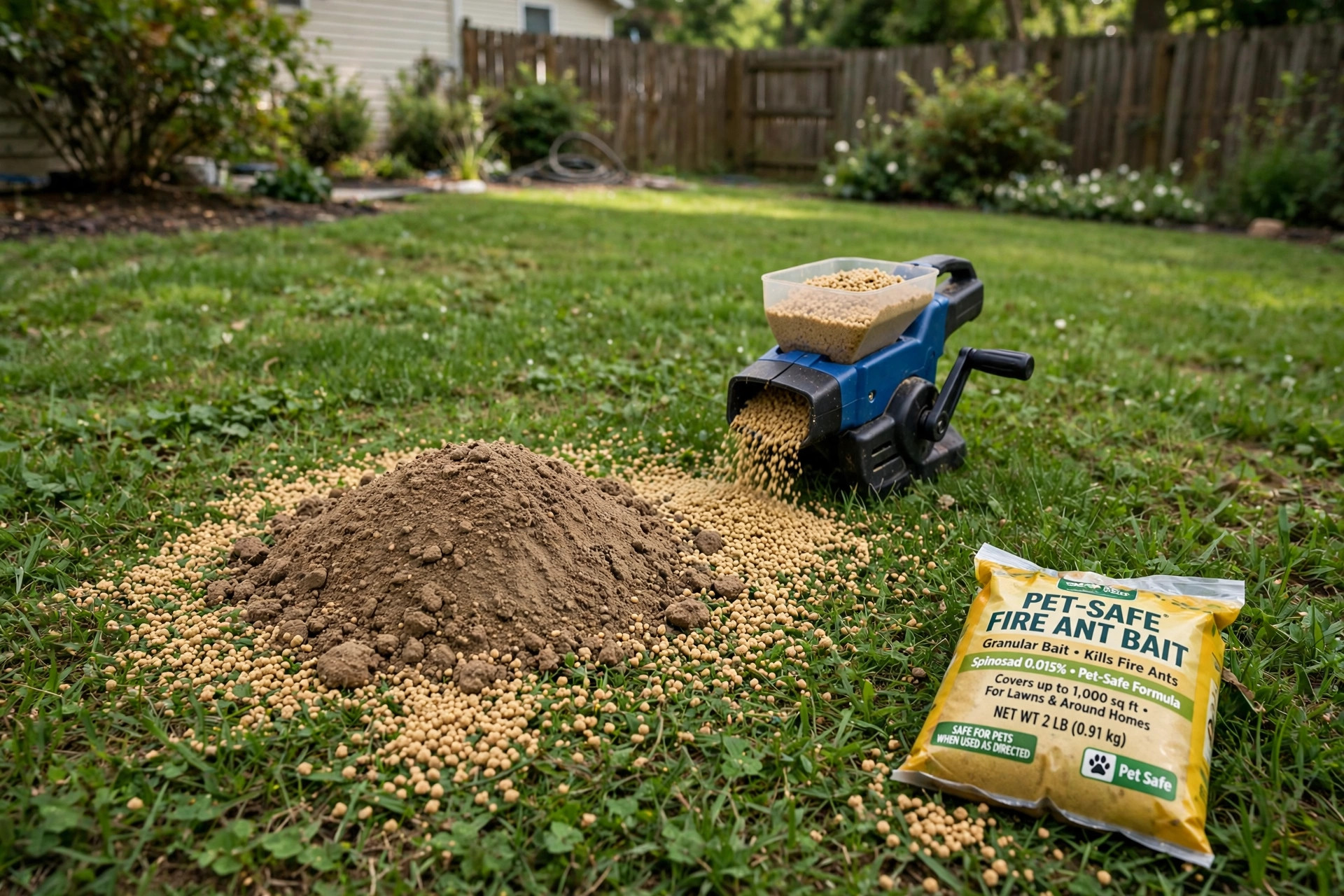
Bait is the top choice for homes with pets. A bait is food mixed with a slow poison. Worker ants pick it up and carry it deep into the mound. They feed it to the queen and the young. When the queen dies, the mound dies with her. This takes days or even weeks, but it kills the whole colony.
Baits use very little poison per mound. The granules sit on the ground for only a short time before the ants carry them below the surface. That is why bait is the standard answer when people ask about fire ant treatment for yards safe pets can play in. Apply bait in the late afternoon or evening when the ground is warm. Do not water bait in. Do not mow right after you put it down.
Mound Drench
A mound drench is a liquid mixed in a bucket and poured over a single mound. It soaks through the soil and kills ants on contact, often within a day. It is good when a mound sits where children or pets play every day. The down side is the amount of chemical used at one spot. Pets must be kept off until it dries fully, often a full day. Use drench only on the mounds, not on the open lawn.
Broadcast Treatment
Broadcast treatment spreads granules or spray over the whole yard. It is used when mounds are too many to count. It gives season-long control in bad cases. For pet homes, it is the least favored method, because it puts product everywhere the dog walks. If you must broadcast, pick a product with a clear pet re-entry time and keep animals inside until the wait is over.
Natural and Low-Chemical Methods
Some home owners prefer no store-bought poison at all. Pouring boiling water on a mound kills many ants, but it rarely kills the queen deep below, and it kills the grass too. Food-grade diatomaceous earth helps in dry weather but stops working when wet. Beneficial nematodes, tiny worms that attack ant young, are safe for pets. These methods are slow and often need repeat work, but they suit people who want the gentlest fire ant treatment for yards safe pets can roam at all hours.
How to Treat Fire Ant Mounds Step by Step
Work in the cool of the day. Late afternoon is ideal, when ants feed but the sun is low.
First, walk the yard and mark every mound with a small flag or stick placed a foot away. Do not step on the mounds. Count them so you know how much product you need.
Second, keep pets and children inside before you start. Close the pet door. Tell the family to stay off the lawn until you say it is safe.
Third, read the product label once more at the mound. Measure the bait or mix the drench exactly as the label says. More is not better. Too much bait can scare the ants away, and they will not carry it home.
Fourth, apply the bait in a ring around each mound, not on top of it. Ants feed away from the mound opening. For a drench, pour slowly so the liquid soaks in instead of running off. Treat every mound you marked.
Fifth, write down the date and the product name. Note when pets may go back out. Rinse the spreader or bucket well and put the empty package in the trash.
Sixth, wait. Bait needs one to two weeks to kill the queen. Do not poke the mound to check. If a mound is still active after two weeks, treat it again. Many owners who fight lawn grubs also read about grub killer for lawns safe for dogs so that all their yard products share the same safety rules.
Cost and Price
Fire ant treatment does not have to cost much. A bag of fire ant bait for a small yard costs about fifteen to thirty dollars. A mound drench product costs about twenty to forty dollars and treats many mounds. A large bag of broadcast granules for an acre costs about fifty to one hundred fifty dollars.
Natural options vary. A bag of food-grade diatomaceous earth costs about ten to twenty dollars. Beneficial nematodes cost about twenty to forty dollars per order.
Hiring a lawn care company costs more. A single fire ant visit runs about one hundred to two hundred dollars. A full season plan can run two hundred to four hundred dollars. Ask what products they use and what the pet re-entry time is. A good company will answer in plain words and show you the label. Before you buy a spreader for the job, you can compare yard machines from lawn equipment makers such as Toro.
Care and Upkeep After Treatment
Treatment is only half the job. New queens fly in from nearby land after rain and start new mounds. A yard that is watched stays cleaner than a yard that is treated once and forgotten.
Walk the yard once a month in warm weather. Look for fresh mounds, which are soft piles of loose soil. Treat new mounds early, when they are small. One small mound is easy. Five large ones are a chore.
Keep the lawn healthy. Thick grass makes it harder for new queens to dig in. Water deeply but not every day. Mow at a good height for your grass type. Some home owners who want to cut down on chemicals look at artificial grass for dogs pros cons as a long-term way to shrink the ant habitat. Do not move soil from an infested area to a clean bed. In the South, the best time for a full-yard bait treatment is spring and again in fall, when ants feed hard.
Safety for Dogs, Cats, and Children
Even with a pet-safe product, good habits matter. Keep pets off treated mounds until the label says they may return. For most baits this is a few hours. For drenches it is often a full day. When in doubt, wait longer.
Store all pest products in a locked cabinet or a high shelf in the garage. Dogs chew through bags. Cats knock bottles off shelves. Never pour leftover mix on the ground or into a drain. Wash your hands and change out of work shoes before you handle pets.
If a dog rolls on a treated mound, wash its paws and belly with mild soap and water. Watch for heavy drooling, vomiting, shaking, or strange tiredness. Call your vet at once if you see these signs, and bring the product package so the vet can read the label. Mark treated spots with small flags until the waiting time passes, and teach children that ant mounds are not for digging. For extra peace of mind, check independent reviews of lawn products before you buy.
Frequently Asked Questions
Will fire ant bait hurt my dog if he eats a few granules? Most modern baits use a very small amount of poison, and the label dose for a mound is far below what would harm a dog. Still, call your vet if your dog eats a large amount. Apply bait when the dog is inside, and let the ants carry it underground before the dog goes out.
How long should pets stay off the yard after treatment? It depends on the product. Many baits allow pets back in a few hours. Liquid drenches often need a full day to dry. Read the label and follow the longest time given. If the label is unclear, keep pets off for twenty-four hours.
Is boiling water a safe way to kill fire ants with pets around? It uses no poison, but it is risky for you. Carrying gallons of boiling water can cause bad burns. It also kills grass and rarely kills the queen. It is a poor main method.
Do fire ant treatments hurt earthworms and good insects? Baits are the kindest choice for the rest of the yard. They target ants that carry the bait home. Broadcast sprays can harm more insects, including bees if flowers are blooming. Treat in the evening when bees are home, and avoid spraying flower beds.
Should I hire a professional or do it myself? A home owner can handle a few mounds with bait from the store. Call a professional if you have dozens of mounds, if past treatments failed, or if someone in the home is allergic to stings. Ask for pet-safe options and a written re-entry time. Yard power equipment guides from Briggs & Stratton can also help you keep the spreader you use for this work in good shape.
A Final Word
Fire ants are stubborn, but they can be beaten without putting pets at risk. Choose a bait made for fire ants, read the label, treat each mound with care, and keep animals off the yard until the waiting time passes. Check the lawn each month and treat new mounds early. With patience and the right product, your yard can be a safe place for dogs to run and cats to roam again.
References
Briggs & Stratton. (n.d.). Yard power equipment. https://www.briggsandstratton.com Consumer Reports. (n.d.). Product reviews and ratings. https://www.consumerreports.org Toro. (n.d.). Lawn mowers and yard care equipment. https://www.toro.com
Was this guide helpful?

About Michael Thompson
The My Garden US editorial team writes practical, in-depth home and garden guides for American homeowners — tested advice, no fluff.