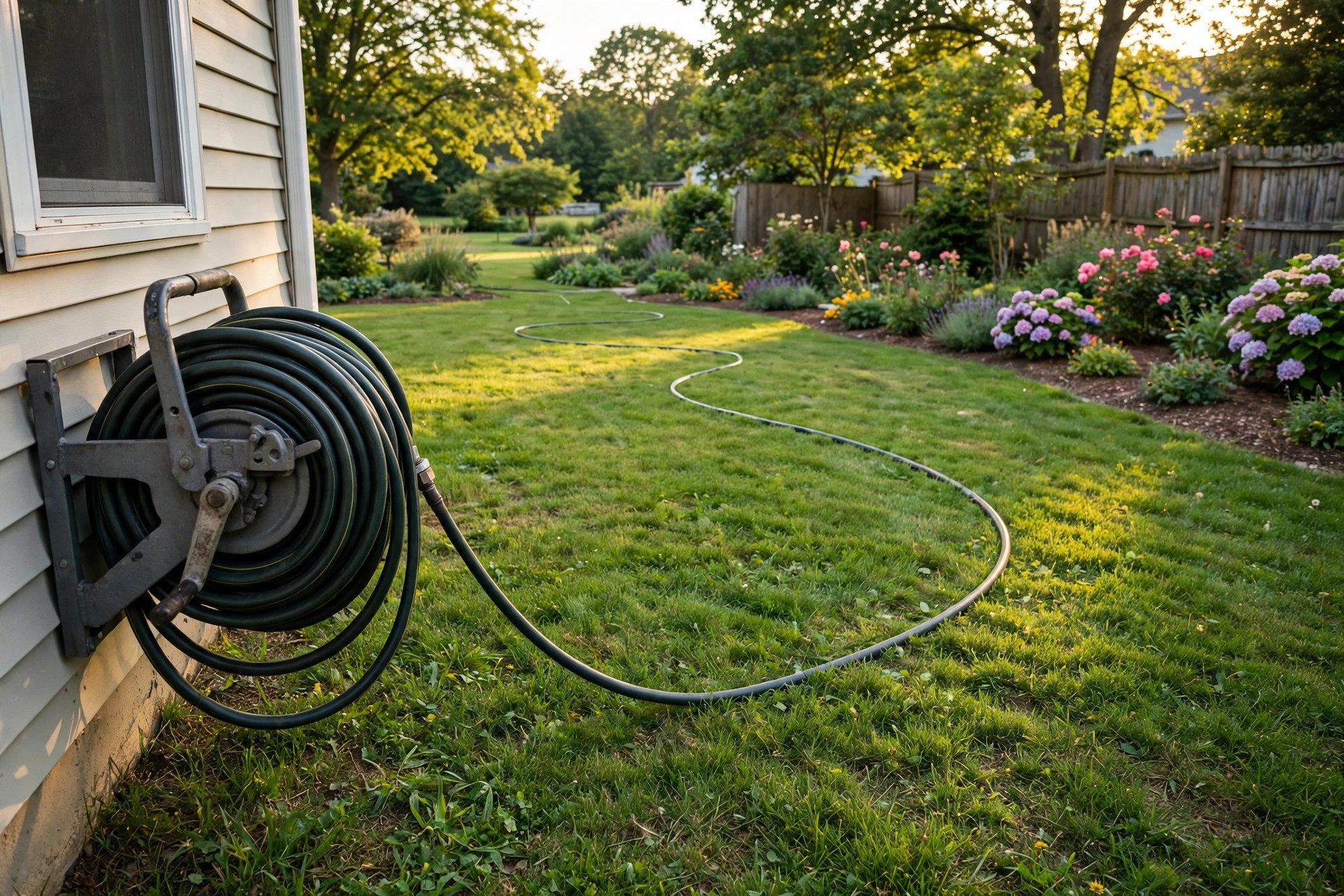
Watering a small patio garden is easy. Almost any hose will do the job. Watering a large yard is a different task. The spigot may sit fifty feet or more from the far flower bed. A short or weak hose will not reach. A cheap hose will kink and cut off the flow. The best garden hose for large yards saves time, water, and temper. This guide walks you through length, diameter, material, and care so you can pick a hose that fits a big lawn and lasts for years.
Why a Large Yard Needs a Special Hose
A big yard puts more strain on a hose than a small one. The longer the water must travel, the more pressure is lost along the way. A thin hose loses pressure fast. A hose that twists under its own weight blocks the flow at every turn. When you must drag the hose around trees, beds, and fences, a light but strong hose makes the chore far easier.
Homes with half an acre or more of lawn often have more than one spigot. Even so, a single long hose may still be the best answer. It reaches the far corners without the weak joints that come from linking short hoses end to end. Every coupling is a place where water can leak. Fewer couplings mean more pressure at the nozzle.
A good long hose also protects the lawn. Cheap hoses kink, and gardeners yank them free. The hose can gouge turf and crush young plants. A hose that lies flat and resists kinks stays where you put it. For more ways to keep garden tools working well, see our guide to garden hose nozzles with multiple settings.
How to Choose the Best Garden Hose for Large Yards
Hose Length
Length is the first thing to get right. Measure from your spigot to the farthest point you must water. Add ten to twenty feet of slack. For many large yards, that means a hose of 100 to 150 feet. Some yards need 175 feet or even 200 feet.
Do not buy more length than you need. A longer hose weighs more. It is harder to drag and harder to drain. It also loses more pressure. If two spigots sit at opposite ends of the yard, two shorter hoses may serve better than one very long one.
Hose Diameter
Diameter controls flow. Most garden hoses come in one half inch, five eighths inch, or three quarter inch. A wider hose carries more water with less pressure loss.
For large yards, five eighths inch is the common choice. It balances flow and weight. A three quarter inch hose gives the strongest flow for very long runs, but it is heavy when full of water. A one half inch hose is fine for small tasks but struggles over long distances.
Hose Material
Vinyl hoses are light and cheap. They work for mild use but crack in the sun and kink with ease. They are a poor pick for a large yard.
Rubber hoses cost more and weigh more. They bend without kinking. They stay flexible in cold weather. They resist sun damage. For daily use on a large yard, rubber is the sound choice.
Reinforced hoses add layers of mesh between the inner and outer walls. The mesh may be nylon or polyester. Reinforced vinyl-rubber blends give much of the strength of rubber at a lower weight. Many top-rated long hoses use this blend.
Metal hoses, often stainless steel, do not kink at all. They are light and tough. They can be stiff, and they may cost much more than rubber. For a large yard, they are worth a look if the budget allows.
Kink Resistance
A kink is a sharp fold that blocks water. On a long hose, kinks are the main cause of low flow. Look for hoses described as kink-free or kink-resistant. Round cross-section hoses kink less than flat ones. A heavier wall also resists folding.
No hose is truly kink-proof. Even the best hose will fold if you pull it around a sharp corner. Brass shut-off valves and a good garden hose nozzle with multiple settings let you stop the flow while you straighten the line.
Fittings and Couplings
Brass fittings last longer than plastic. Plastic fittings crack under sun and pressure. Look for solid brass or sturdy metal couplings with deep threads. Octagon-shaped couplings are easier to grip and turn by hand.
A large yard often means the hose stays connected all season. Good fittings will not leak at the spigot or the nozzle. Leaks waste water and lower pressure. Check the rubber washers inside the fittings each spring and replace them when they crack.
Burst Pressure and Working Pressure
Burst pressure is the pressure at which the hose breaks. Working pressure is the level the hose can handle day after day. For a large yard, look for a burst pressure of at least 300 to 500 PSI. Most home water systems run at 40 to 60 PSI, so this gives a wide margin of safety.
Long hoses heat up in the sun. Heat raises pressure inside a closed hose. A strong hose with high burst pressure is less likely to burst on a hot afternoon. Resources like Fiskars and Gardener’s Supply offer helpful advice on watering tools for large gardens.
Types of Garden Hoses for Big Lawns
Standard rubber hose. The workhorse of the garden. Heavy, flexible, and long lasting. Best for large yards with daily watering needs. A 100-foot rubber hose is heavy when full, so plan storage near the spigot.
Reinforced hybrid hose. A blend of rubber and vinyl with mesh layers. Lighter than pure rubber and nearly as strong. A good middle ground for homeowners who water large beds and lawns.
Expandable hose. These stretch to two or three times their stored length when filled. They are light and easy to store. Most are too weak for large yards. They also wear out faster. They suit small tasks, not long runs.
Flat soaker hose. This hose seeps water along its length. It is made for beds and rows, not for lawns. It can run for hours with the tap barely open. Many gardeners pair a soaker hose in the beds with a standard hose for the lawn.
Metal hose. Stainless steel hoses resist kinks, punctures, and sun damage. They coil tightly and weigh less than rubber. The price is high, and some find them stiff. For a large yard where kinking is the main complaint, a metal hose can be the answer.
Heavy-duty farm hose. Some very large yards call for the kind of hose used on farms. These are thick, heavy, and nearly indestructible. They are hard to move. Most homeowners do better with a long rubber or hybrid hose and a retractable reel. For storage ideas, see our review of the best garden hose reel retractable.
Cost and Price
Prices vary widely. A 100-foot vinyl hose may cost under thirty dollars. A 100-foot rubber hose often costs sixty to one hundred dollars. Reinforced hybrid hoses fall in between. Metal hoses of the same length can cost one hundred fifty dollars or more.
Longer hoses cost more per foot than shorter ones, but the price does not rise in a straight line. A 150-foot hose often costs less than two 75-foot hoses.
Think in terms of cost per year. A cheap hose may last two seasons. A good rubber hose may last ten or more with simple care. Over time, the better hose is the cheaper buy. Buying guides at Consumer Reports and Bob Vila compare long-term value across brands.
Expect to spend seventy to one hundred fifty dollars for a quality 100 to 150-foot hose for a large yard. Add twenty to sixty dollars for a sturdy reel or hanger, and ten to twenty dollars for a good nozzle. This is a fair price for a tool you will use for a decade.
Care and Upkeep
Good care doubles the life of a hose. Start with storage. Never leave a hose in a tangled pile. Coil it in wide loops or wind it on a reel. Keep it out of direct sun when not in use. Sunlight breaks down vinyl and rubber over time. A simple hose hanger on a shady wall works well.
Drain the hose before you store it. Water left inside adds weight and can freeze in winter. To drain, turn off the spigot, open the nozzle, and lift the hose so water runs out. Walk the length of the hose to push out the last of it.
In cold climates, bring the hose indoors for winter. A garage or shed will do. Disconnect it from the spigot so the faucet cannot freeze. If you must leave a hose outside, make sure it is fully drained and coiled.
Check fittings each spring. Replace worn washers. Tighten loose couplings by hand, then give them a quarter turn with pliers if they leak. Do not over-tighten. Over-tightening can crack plastic fittings and strip threads.
Clean the hose now and then. Mud and grit grind into the outer wall. A quick rinse keeps it flexible. If algae grows inside, fill the hose with a mild bleach solution, let it sit for an hour, and flush it well. Never drink from a hose that has held bleach until it is fully flushed.
Fix small leaks with a repair coupling from the hardware store. Cut out the bad section and join the ends with the coupling. This simple repair takes ten minutes and saves the cost of a new hose. Step-by-step repair guides at Family Handyman walk you through the process.
If you collect rain for the garden, a best rain barrel for garden watering can cut your water bill. A hose connects the barrel to the beds with a simple gravity feed.
Safety Tips
Water pressure can hurt. Never point a nozzle at people or pets. Keep fingers away from the stream of a jet setting. Teach children that a hose is a tool, not a toy.
Hot water can scald. A hose left in the sun holds water that may reach 140 degrees or more. Let the water run for a minute before washing hands or filling a pet bowl.
Do not drink from a garden hose on a regular basis. Hoses can leach lead, phthalates, and bacteria. Use a hose marked as drinking-water safe if you need water for pets or for filling a pool. Safety guidance from The Spruce covers safe watering practices in detail.
Electrical safety matters too. Keep hoses away from outdoor outlets and extension cords. Wet ground conducts electricity. Plug outdoor tools into GFCI outlets, which cut power if a fault occurs.
Backflow is a quiet risk. A drop in water pressure can suck garden water back into the house pipes. A simple backflow preventer on the spigot stops this. Many spigots have one built in. If yours does not, a screw-on preventer costs only a few dollars.
Store hoses where no one will trip. A coiled hose on a reel or hanger keeps paths clear. This matters most where children and older adults walk. Retailers such as Home Depot and Lowe’s stock reels, hangers, and backflow preventers in their garden centers.
Frequently Asked Questions
What length of garden hose is best for a large yard?
Measure from the spigot to the farthest watering point and add ten to twenty feet. For most large yards, 100 to 150 feet is right. Yards over half an acre may need 175 feet, or two spigots with shorter hoses. Planting guides at Burpee can help you map bed locations before you measure.
What diameter garden hose gives the best flow?
Five eighths inch is the best all-round choice for large yards. It carries good flow without the heavy weight of a three quarter inch hose. For runs over 150 feet, three quarter inch gives stronger pressure at the far end.
How do I stop my long hose from kinking?
Buy a hose with a heavy wall and kink-resistant design. Lay it in wide curves, not sharp bends. Straighten twists as you uncoil it. A reel helps, since winding and unwinding keeps the hose in order. Corona’s tool care tips at Corona Tools include advice on keeping long tools tangle-free.
Should I connect two hoses to reach farther?
It works, but each joint costs some pressure and can leak. One long hose beats two short ones for flow. If you must join hoses, use solid brass couplings and check both washers.
How long should a good garden hose last?
A quality rubber or hybrid hose lasts seven to fifteen years with basic care. Cheap vinyl hoses often fail in two to three seasons. Sun, kinks, and freezing are the main killers. Store the hose coiled and shaded, drain it before winter, and it will serve for many years.
Is a retractable hose reel worth it for a large yard?
For many owners, yes. A reel keeps a long hose neat, off the grass, and out of the sun. Retractable reels wind the hose at the touch of a lever. They cost more than a simple hanger, but they save time and extend hose life on big properties.
A Short Final Word
The best garden hose for large yards is not the cheapest and not the longest. It is the hose that fits your yard: long enough to reach, wide enough to flow, and strong enough to last. Measure first. Choose rubber or a reinforced blend. Pick brass fittings. Store it with care. With the right hose, watering a large yard becomes one of the quiet pleasures of the day rather than a daily struggle.
References
Bob Vila. (n.d.). Home improvement advice. https://www.bobvila.com Burpee. (n.d.). Seeds, plants, and gardening supplies. https://www.burpee.com Consumer Reports. (n.d.). Product reviews and ratings. https://www.consumerreports.org Corona Tools. (n.d.). Garden and landscape tools. https://www.corona-tools.com Family Handyman. (n.d.). DIY home repair and maintenance. https://www.familyhandyman.com Fiskars. (n.d.). Garden and cutting tools. https://www.fiskars.com Gardener’s Supply Company. (n.d.). Gardening tools and supplies. https://www.gardeners.com Lowe’s. (n.d.). Home improvement products. https://www.lowes.com The Home Depot. (n.d.). Home improvement products. https://www.homedepot.com The Spruce. (n.d.). Home and garden advice. https://www.thespruce.com
Was this guide helpful?

About David Wilson
The My Garden US editorial team writes practical, in-depth home and garden guides for American homeowners — tested advice, no fluff.