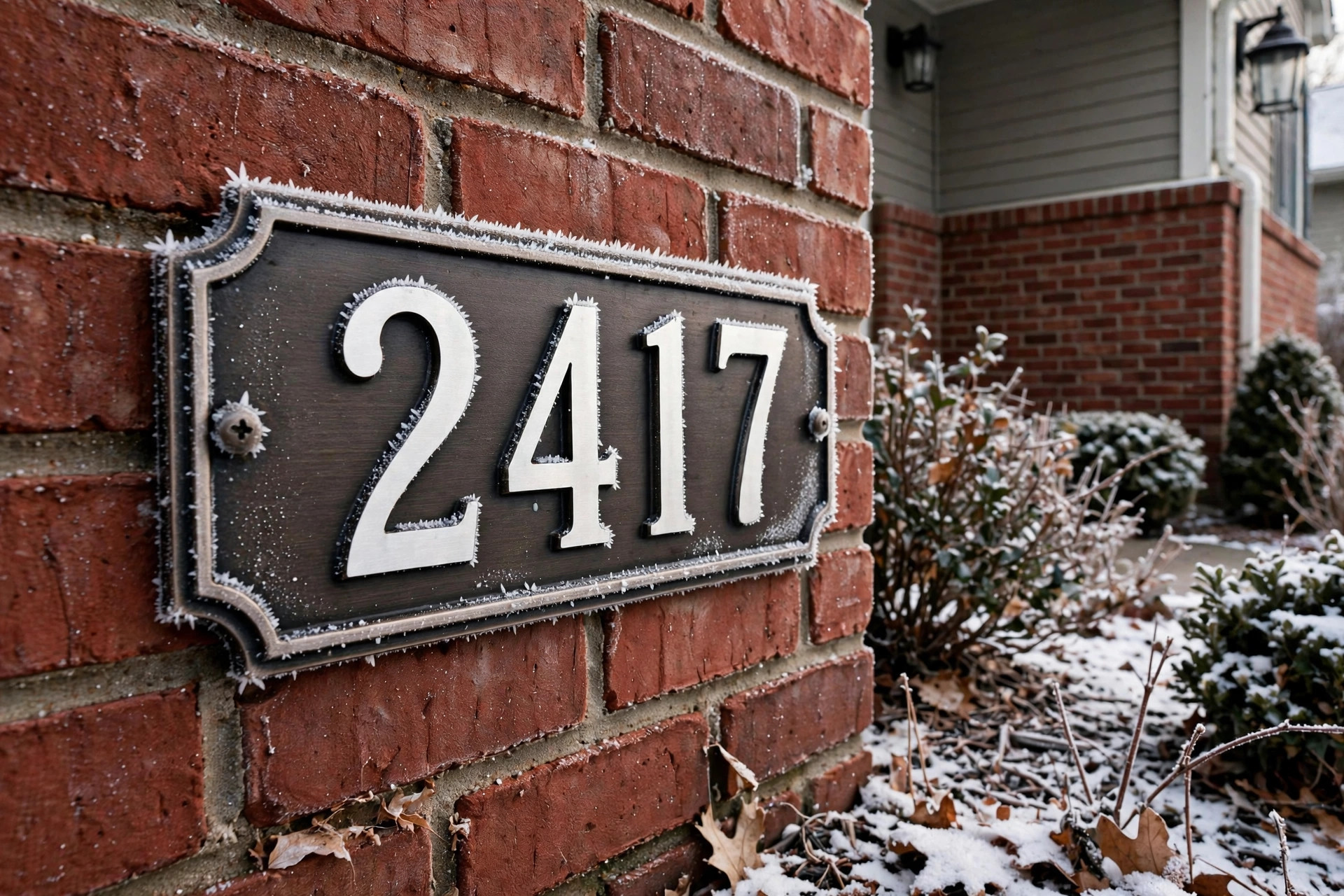

Homeowners in the northern states and mountain regions face a small but stubborn problem. Snow, ice, and wind wear out cheap outdoor details fast. Premium house number plaques for cold climates solve that problem. They use dense metals, sealed finishes, and smart mounting methods. The result is a plaque that looks sharp in July and still looks sharp after three winters of freezing rain and heavy snow.
This guide explains why cold-weather plaques matter, what materials work best, how to choose the right design, what they cost, how to mount them, and how to keep them clean through the cold months. It also answers the most common questions and lists trusted sources for further reading.
Why a Premium Plaque Matters in Cold Climates
A house number is not decoration alone. It guides mail carriers, delivery drivers, guests, and, most important, emergency responders. Firefighters and paramedics must find a house at night in a snowstorm. A plaque that has cracked, faded, or fallen off can cost precious minutes.
Cheap plaques fail in cold weather for three reasons. First, thin plastic or soft wood absorbs water and cracks when the water freezes and expands. Second, low-grade paint lifts and peels under repeated freeze-and-thaw cycles. Third, weak mounting screws rust and snap, so the plaque drops to the ground or hangs crooked.
Premium plaques avoid these faults. Makers build them from cast aluminum, bronze, or thick stainless steel. They seal every edge with outdoor-rated coatings. They ship with rust-proof stainless screws and spacers that let water drain behind the plaque instead of pooling against it. These details cost a little more up front, but they save the cost and bother of replacing a broken plaque every year or two. Home improvement writers at sites such as Bob Vila often note that small exterior upgrades carry real value when they hold up year after year.
Materials That Survive Freezing Weather: Premium House Number Plaques for Cold Climates
Not every material earns a place on a cold-climate home. Each one has strengths and limits.
Cast Aluminum
Cast aluminum is the most popular choice for premium plaques. It is light, it will not rust, and it takes crisp raised lettering. Good makers powder-coat it, which is a baked-on finish that resists chipping far better than ordinary spray paint. Powder-coated aluminum plaques routinely last ten years or more outdoors.
Bronze and Brass
Bronze and brass give a classic, weighty look. Bronze develops a natural patina over time. Many homeowners like that aged finish. Solid bronze costs more than aluminum, but it handles freezing weather with ease. Brass needs a clear lacquer coat, because untreated brass can stain siding in wet weather.
Stainless Steel
Stainless steel looks modern and clean. It resists rust even in salty coastal snow. The best grades are 304 and 316 stainless. The numbers refer to metal blends. The 316 grade fights salt and road spray better, which matters for homes near the street where plows throw slush.
Slate and Stone
Natural slate plaques are heavy and handsome. Slate does not rust, and frost rarely hurts thick stone. The weak point is the engraved lettering. If the maker fills letters with paint instead of carving them deep, the paint can flake in ice. Look for deep-carved or sandblasted letters.
Porcelain-Enamel on Steel
Porcelain enamel fuses glass to steel at high heat. The surface shrugs off water, ice, and sun. The classic white-on-blue porcelain plaque suits farmhouses and cottages. The edge seal matters most. If the rim chip exposes bare steel, rust will spread, so inspect edges each spring.
Wood and thin plastic rarely belong in this list. Wood swells and rots. Plastic grows brittle in deep cold and snaps in wind. A premium plaque should never need winter storage. If a product page suggests bringing the plaque indoors each winter, it is not a cold-climate product.
What to Look for When You Choose
Shopping for a plaque is simpler than it looks. Five points cover nearly everything.
Readability From the Street
Numbers should be at least four inches tall. Letters and numbers must contrast with the background. Light letters on a dark plaque, or dark letters on a light plaque, work best. Reflective or lit plaques help at night. If your street has no lamp nearby, pair the plaque with a small light. Affordable motion sensor flood lights make a practical companion, since they switch on when a car pulls up and throw light across the numbers.
Weather Sealing
Ask how the maker seals the plaque. Powder coating, baked enamel, and marine-grade lacquer are strong choices. The back should have a drainage gap or standoffs. Standoffs are small spacers that hold the plaque off the wall so meltwater runs out instead of sitting behind it. Mounting advice from Family Handyman stresses that water drainage behind any exterior fitting is the single best defense against frost damage.
Mounting Hardware
Stainless steel screws and wall anchors should come in the box. Zinc-plated screws rust. Plastic anchors grow brittle in cold. For masonry or brick, use masonry anchors rated for outdoor use. For vinyl siding, use a mounting block made for siding. Many siding makers, including James Hardie, publish mounting guidance for fiber-cement boards that also applies to plaque hardware.
Size and Proportion
Measure the space before you order. A plaque that is too small disappears on a wide garage wall. A plaque that is too large overwhelms a narrow porch column. A common rule is one inch of plaque height for every ten feet of viewing distance.
Style and Home Architecture
Match the plaque to the house. Bronze script suits a colonial. Clean sans-serif steel suits a modern home. Slate suits a cottage. The big home stores, including Home Depot, carry style filters on their plaque listings that help homeowners compare traditional and modern designs side by side.
Types and Options
Plaques come in a few main shapes. Flat wall plaques are the most common. They bolt straight to siding, brick, or a porch post. Stake or lawn plaques stand in the yard on a metal post, handy when the house sits far from the road. Lighted plaques use a small solar panel or a low-voltage wire. Solar lights fade in the dark weeks of deep winter, so wired lights are more reliable in cold climates. Hanging plaques swing from a bracket, but the bracket must be strong enough for wind and ice loads.
Cost and Price
Premium house number plaques for cold climates range widely in price.
– Cast aluminum plaques with powder coating: about thirty to one hundred twenty dollars. – Solid bronze plaques: about one hundred to four hundred dollars, depending on size and lettering. – Stainless steel plaques: about sixty to two hundred dollars. – Slate plaques with carved letters: about fifty to one hundred fifty dollars. – Porcelain-enamel plaques: about seventy to two hundred dollars. – Lighted plaques: add about forty to one hundred fifty dollars for the lighting unit.
Custom engraving adds ten to forty dollars. Installation by a handyman runs about fifty to one hundred fifty dollars if the wall is masonry and needs drilling. Most homeowners mount a flat plaque themselves in under an hour. Large retailers such as Lowe’s list many models with installed-price estimates that help buyers set a budget.
Price should follow performance. A sixty-dollar plaque that lasts twelve years costs five dollars a year. A twenty-dollar plaque that cracks after two winters costs ten dollars a year, plus the trouble of reordering. The premium choice usually wins on value.
Mounting Your Plaque for Winter
Good mounting keeps the plaque straight and secure through storms.
1. Choose a spot near the front door or the garage, visible from the street. Keep it clear of bushes that will load with snow. 2. Hold the plaque in place and mark the holes with a pencil. 3. Drill pilot holes. Use a masonry bit for brick and concrete. Use a smaller twist bit for wood. 4. Insert anchors if the wall is masonry or if the screw needs extra grip. 5. Place standoffs or spacers behind the plaque before tightening. Leave a quarter-inch gap for drainage. 6. Drive stainless screws by hand at first, then tighten with a driver. Do not over-tighten. Over-tightening can crack cast metal or slate. 7. Step back to the street and check the view. Adjust before dark.
If you mount on vinyl siding, never drive screws through the siding into the sheathing without a proper block. Siding needs room to move with temperature swings. A siding mounting block keeps the fastener honest. Guidance from Certainteed on siding accessories explains how blocks spread the load and keep water out.
For homes with fiber-cement siding, pre-drill every hole to stop the board from cracking. A carbide bit works best.
Care and Upkeep Through the Cold Months
Premium plaques need little care, but a short routine each season keeps them at their best.
In fall, wipe the plaque with a soft cloth and mild soapy water. Clear away leaves and cobwebs that trap moisture. Check the screws for tightness. A screw that backed out over summer will rattle loose in winter wind.
In winter, brush snow off the plaque with a soft broom. Do not chip ice with a metal tool. Ice scrapers scratch powder coating and invite rust. If ice builds up, pour lukewarm water over it, never boiling water, which can shock and crack some finishes.
In spring, inspect the finish for chips. Touch up small chips on aluminum with matching outdoor paint. Check the drainage gap behind the plaque and clear any packed debris. Re-tighten screws that loosened during freeze-and-thaw.
In summer, wash the plaque once with soapy water and check the sealant on slate or stone edges. A thin bead of clear silicone on a worn edge adds years of life.
Never use bleach, harsh acids, or pressure washers on a plaque. The pressure washer strips coatings and forces water behind the plate. Soft cleaning keeps the finish intact.
Safety Notes
Safety starts with visibility. Keep the numbers clear of snow, ice, and overgrown shrubs all winter. If the plaque shares a wall with a gas meter or vent, keep it clear of the vent pipe. Hot exhaust can yellow some finishes and melt plastic parts on lighted models.
When drilling into walls, check for wires and pipes first. A stud finder with wire detection costs little and prevents bad surprises. Wear safety glasses when drilling masonry. The dust is sharp and fine.
If you install a wired lighted plaque, turn off the circuit at the breaker before touching any wiring. Outdoor low-voltage wiring is simple, but the 120-volt feed to the transformer still demands care. When in doubt, hire an electrician. Saving a service call is never worth a shock.
Ice falling from roofs is a real hazard near entry walls. Pick a mild day and keep a clear path.
Pairing the Plaque With Other Exterior Upgrades
A house number plaque is one part of the home’s face. Homeowners who refresh it often look at nearby details too. Clean gutters keep meltwater off the entry wall, and energy efficient gutter installation services can be worth a look when old gutters fail. Material choice always follows climate, as a guide to cedar shake siding for southern states shows. Broad exterior project advice is available from This Old House and design ideas from The Spruce.
FAQ
What size numbers should a house number plaque have?
Most towns ask for numbers at least four inches tall. For houses set far back from the street, choose five or six inches. Bigger numbers read better at night and in falling snow. Check local rules before ordering, since some fire codes set minimums.
Will a solar-lit plaque work in a cold climate?
It works, but with limits. Short winter days and snow on the panel cut charging time. A wired low-voltage light is more dependable in deep winter. If you choose solar, mount the panel where sun strikes it and brush snow off the panel regularly.
Can I mount a plaque on brick or stone in winter?
Yes, but drill carefully. Cold masonry is harder and more brittle. Use a hammer drill with a masonry bit, drill at low speed, and let the bit cool. Fill the hole with an outdoor-rated anchor. Avoid mounting on mortar joints, which are weaker than the brick itself.
How do I keep ice from covering the plaque?
Mount the plaque under a small overhang when possible, such as a porch roof edge. Keep a clear drainage gap behind the plate so meltwater runs off instead of refreezing on the face. A light coat of automotive wax on metal plaques makes ice slide off more easily.
Do premium plaques need any winter protection?
No. A true cold-climate plaque stays up all winter. If a maker advises bringing it indoors, the product is not built for freezing weather. Choose cast aluminum, bronze, stainless steel, slate, or porcelain enamel instead.
How long should a premium plaque last?
A well-made cast aluminum or bronze plaque lasts ten to twenty years outdoors. Stainless steel lasts as long or longer. The finish may need a touch-up in year eight or ten, but the body of the plaque should stay sound. Keep the receipt and note the warranty terms.
A Final Word
A house number plaque is small, but it works hard every day of the year. In cold climates, the difference between a cheap plaque and a premium one shows up fast: in cracked paint, rusted screws, and numbers no one can read in January. Premium house number plaques for cold climates cost more once and then quietly do their job for a decade or more. Choose dense, rust-proof materials, seal the finish, mount with stainless hardware and a drainage gap, and give the plaque a quick seasonal check. The house will thank you every time a guest, a delivery driver, or a first responder finds the door without a second thought.
References
Bob Vila. (n.d.). Home improvement advice. https://www.bobvila.com CertainTeed. (n.d.). Building materials and exterior products. https://www.certainteed.com Family Handyman. (n.d.). DIY home repair and maintenance. https://www.familyhandyman.com James Hardie. (n.d.). Fiber cement siding and exterior products. https://www.jameshardie.com Lowe’s. (n.d.). Home improvement products. https://www.lowes.com The Home Depot. (n.d.). Home improvement products. https://www.homedepot.com The Spruce. (n.d.). Home and garden advice. https://www.thespruce.com This Old House. (n.d.). Home renovation guidance. https://www.thisoldhouse.com
Was this guide helpful?

About Jennifer Lee
The My Garden US editorial team writes practical, in-depth home and garden guides for American homeowners — tested advice, no fluff.
You May Also Like
Affordable Roof Replacement Contractors for Homeowners
March 27, 2026 0 views
How to Buy Stone Veneer Panels Online in California
March 10, 2026 0 views
Best Exterior Stair Railings for Midwest Homes: A Plain Guide
April 23, 2026 0 views