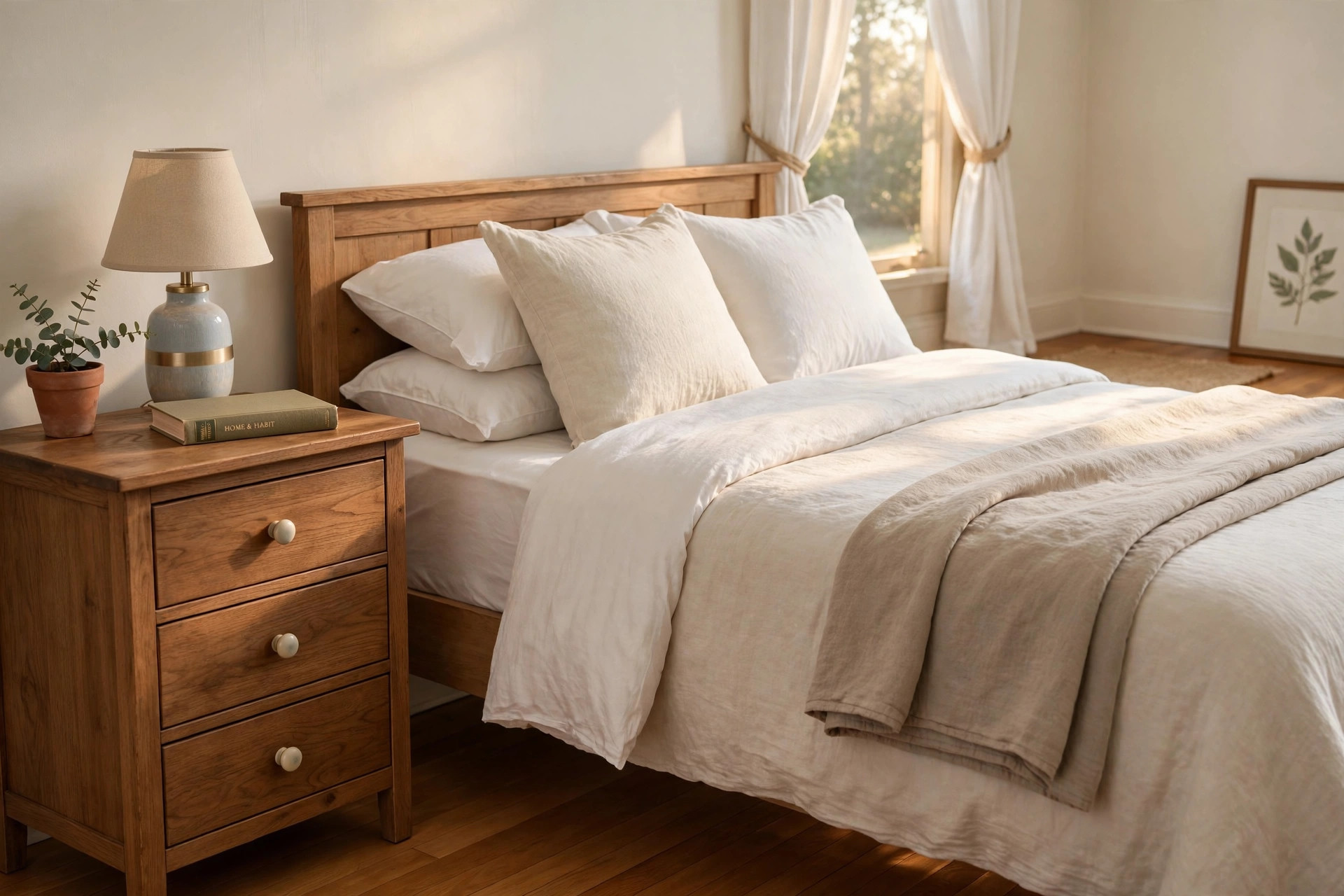

This nightstands with storage drawers reviews and buying guide is written for anyone who wants a calm, tidy bedroom. A nightstand may look like a small piece of furniture. In daily life it is one of the most used pieces in the home. You set an alarm clock on it. You keep a glass of water there. You store the book you read at night. You hide the chargers and the medicine that you do not wish to see all day. When the drawers work well, the room stays neat. When they do not, clutter grows fast.
Many people buy the first bedside table they see. Then they learn that the drawers stick. The top is too small for a lamp. The finish scratches in a month. This guide helps you avoid that mistake. It covers what matters, how to choose, the main types, the prices you can expect, care, and safety. Read it before you shop. You will know what to look for and what questions to ask.
Why a Nightstand With Drawers Matters
A nightstand sits within arm reach of the bed. That is its whole point. You should not have to stand up to find the remote or the reading glasses. A flat top gives you a place for a lamp, a clock, and a glass of water. The drawers below give you closed storage. Closed storage matters more than most buyers think. Open shelves collect dust. Small items fall behind them. A drawer keeps things clean and out of view.
Drawers also protect your sleep. Studies of bedroom order show that a tidy room helps people relax at night. A nightstand with two or three drawers can hold almost everything you need near the bed. Phones, tablets, and books each get a place. The top of the table stays clear for the lamp and the water glass. When morning comes, you wake to a room that looks calm instead of crowded.
For small bedrooms the nightstand is often the only storage near the bed. In that case the drawer space does real work. It can hold socks, underclothes, or papers you read at night. Choose a model with deep drawers if you plan to store clothes. Choose shallow drawers if you mainly store small items like glasses, pens, and medicine.
How to Choose the Right Nightstand: Nightstands with Storage Drawers Reviews and Buying Guide
Measure Your Bed First
Start with a tape measure. The top of the nightstand should sit level with the top of your mattress, or within two inches above or below it. A table that is too low forces you to reach down. A table that is too tall blocks the lamp light. Write down the height of your mattress from the floor. Shop with that number in hand.
Also measure the width of the space beside the bed. Leave at least two inches of clearance between the bed and the nightstand. Measure the depth of the space too. Many buyers forget depth. A table that sticks out too far will block a door swing or a closet.
Look at Drawer Quality
The drawers are the heart of the piece. Pull each drawer open and shut before you buy. It should glide smooth and quiet. It should not wobble or stick. Wood drawers with dovetail joints last the longest. Dovetail joints are the interlocking cuts at the corners of the drawer box. They hold tight for many years.
Look at the drawer glides. Metal glides with ball bearings move best. They also tend to last longer than wood on wood slides. Check if the drawers have stops. Stops keep the drawer from pulling all the way out by accident. Check the drawer depth. A drawer that is only four inches deep will hold less than you think. Eight to ten inches of depth is good for real storage.
Check the Materials and Build
Solid wood lasts the longest and can be refinished. Pine, oak, and rubberwood are common choices. Engineered wood, such as particle board with a veneer skin, costs less. It can look fine at first. It does not hold screws well after a few years. If you move often, solid wood or plywood is the safer buy.
Check the back panel. A thin cardboard back panel is a sign of cheap build. A wood or plywood back panel adds strength. Lift one corner of the piece if you can. A heavy nightstand is usually built better than a light one of the same size.
Types and Options
Two Drawer Nightstands
The two drawer nightstand is the most common type. It gives you a top drawer for small items and a deep bottom drawer for larger ones. It suits most beds and most rooms. Prices stay fair because the design is simple. If you want one reliable piece with no fuss, this type is a safe choice.
Three Drawer Nightstands
A three drawer nightstand adds one more drawer to the same small footprint. It works well for people who keep many items near the bed. Writers keep pens and notebooks there. Readers keep several books. Parents keep medicine and a baby monitor. The trade off is that each drawer is shallower. Measure the depth before you buy.
Nightstands With Shelves and Drawers
Some models mix an open shelf with one or two drawers. The shelf holds books or a basket. The drawers hold private items. This mix looks light and airy in the room. It works well if you like to display a plant or a framed photo. Remember that open shelves need dusting. If you hate dusting, pick drawers only.
Charging Nightstands
Newer models add power outlets and USB ports in the back or inside a drawer. These suit people who charge a phone and a tablet at night. The cord runs through a hole in the back panel, so the top stays neat. Check that the ports are certified by a testing lab such as UL. Cheap electronics in furniture can be a fire risk. Look for the UL mark on the plug or the cord.
Wide and Narrow Models
Most nightstands are between eighteen and twenty four inches wide. Narrow models of fourteen to sixteen inches fit small rooms and twin beds. Wide models of twenty six to thirty inches work beside king beds. A wide nightstand can act as a small dresser. It can hold folded clothes in deep drawers. Match the width to the bed. A king bed with a tiny nightstand looks lost. A twin bed with a huge nightstand crowds the room.
Cost and Price
Prices vary widely. A simple particle board nightstand with two drawers can cost thirty to sixty dollars. These work for a guest room or a short term need. Do not expect them to last through a move.
A mid range nightstand made of rubberwood or pine costs eighty to two hundred dollars. This is where most buyers should shop. The drawers run better. The finish holds up. Many good models live in this range.
A solid hardwood nightstand from a furniture maker costs two hundred to six hundred dollars. At this price you get dovetail drawers, real wood, and a finish that can be repaired. Some hand made pieces cost more. They can last for decades.
Watch for the cost of shipping. Furniture is heavy. Some sellers add large delivery fees. Some offer free shipping on orders over a set amount. Factor the fee into the price before you compare. Also check the return policy. A nightstand that looks good online may feel cheap in person. A free return policy lowers the risk.
For broader storage ideas beyond the bedroom, this guide to storage baskets for every room pairs well with a good nightstand. If you are outfitting a whole home, you may also like our look at freestanding wardrobe closets for American homes. And for an entryway that stays as tidy as your bedroom, see our review of mudroom storage benches.
Care and Upkeep
Dust the nightstand once a week with a soft dry cloth. Dust works into the drawer glides over time and makes them rough. Once a month, pull the drawers all the way out and wipe the inside with a damp cloth. Let the wood dry before you push the drawers back in.
Wipe spills at once. Water rings form fast on wood finishes. Use a coaster under the water glass every night. It is a small habit that saves the finish.
Keep the nightstand out of direct sun when you can. Sunlight fades wood and veneer over a few years. If the piece sits by a sunny window, draw the blinds during the brightest hours.
Tighten the screws twice a year. Wood moves with the seasons. Screws loosen. A loose joint today becomes a broken joint next year. A screwdriver and ten minutes are all you need. If a drawer starts to stick, rub a plain candle along the wood runners. The wax helps the drawer glide.
Safety
Anchor the nightstand to the wall if it is tall or if children climb on it. Tip over accidents hurt many children each year. Use the anti tip kit that comes in the box, or buy one at a hardware store. It takes ten minutes to install.
Check the stability on carpet. Tall narrow pieces can rock on thick carpet. Place a firm board under the piece or choose a wider model.
Keep medicine and small items locked away from children. A drawer with a simple lock, or a lockable box inside the drawer, is enough for most homes. Keep cords behind the furniture. A phone charger cord hanging down the front is a hazard for toddlers and pets.
If you buy a charging nightstand, plug it into a surge protector. Do not run the cord under a rug. Check the cord once a year for cracks or heat marks. The Consumer Product Safety Commission publishes recalls for furniture and electronics. Check their site if you buy a used piece.
Frequently Asked Questions
How tall should a nightstand be?
The top should sit level with your mattress top, give or take two inches. Measure from the floor to the top of the mattress. Most beds need a nightstand between twenty four and twenty eight inches tall. Platform beds sit lower and need shorter tables.
How many drawers do I need?
Two drawers suit most people. The top drawer holds small night items. The bottom drawer holds larger items. Three drawers suit people who keep many items near the bed. One drawer plus a shelf suits people who want a lighter look. Think about what you actually keep at your bedside before you decide.
Should the nightstands match the bed?
They do not have to match. Many designers mix a wood bed with painted nightstands, or the reverse. What matters is scale and tone. The pieces should feel like they belong in the same room. If you mix styles, repeat one color or material in both pieces. That one link ties the room together.
What is the best material for a nightstand?
Solid wood is the best for long life. It can be sanded and refinished. Plywood is a strong second choice. Engineered wood with veneer is fine for a low budget or a guest room. Avoid very light particle board pieces if you plan to move them more than once.
Can I use a small dresser as a nightstand?
Yes. A small dresser with three or four drawers works well beside a king or queen bed. It gives more storage than a standard nightstand. Make sure the height is right. Most dressers are taller than standard nightstands. Measure before you buy.
Where can I learn more about bedroom storage ideas?
Design sites publish many bedroom storage guides each year. Apartment Therapy and The Spruce both run room by room storage features. Good Housekeeping tests organizers and small furniture. This Old House covers built in bedroom storage for older homes. Family Handyman shows how to build simple bedside storage yourself.
A Final Word
A nightstand with storage drawers is a small buy that pays off every day. It keeps the bedroom calm. It keeps your night items within reach. The right piece fits your bed height, holds what you own, and lasts for years. Shoppers who compare a few options do well. Retailers like IKEA, Wayfair, Lowe’s, The Home Depot, and The Container Store carry wide ranges at many price points. Independent testers at Consumer Reports publish furniture ratings that can guide a final choice.
Take your measurements. Set a budget. Check the drawers in person when you can. A careful hour of shopping now saves years of annoyance later. Your bedroom will thank you each night.
References
Apartment Therapy. (n.d.). Home design ideas and inspiration. https://www.apartmenttherapy.com Consumer Reports. (n.d.). Product reviews and ratings. https://www.consumerreports.org Family Handyman. (n.d.). DIY home repair and maintenance. https://www.familyhandyman.com Good Housekeeping. (n.d.). Product reviews and home advice. https://www.goodhousekeeping.com IKEA. (n.d.). Home furnishings. https://www.ikea.com Lowe’s. (n.d.). Home improvement products. https://www.lowes.com The Container Store. (n.d.). Storage and organization products. https://www.containerstore.com The Home Depot. (n.d.). Home improvement products. https://www.homedepot.com The Spruce. (n.d.). Home and garden advice. https://www.thespruce.com This Old House. (n.d.). Home renovation guidance. https://www.thisoldhouse.com U.S. Consumer Product Safety Commission. (n.d.). Product safety information. https://www.cpsc.gov Wayfair. (n.d.). Furniture and home goods. https://www.wayfair.com
Was this guide helpful?

About Michael Thompson
The My Garden US editorial team writes practical, in-depth home and garden guides for American homeowners — tested advice, no fluff.
You May Also Like

Bookcases With Storage Doors: Reviews and Buying Guide
April 13, 2026 0 views
Best Garage Workbench with Storage for Sale: A Practical Buying Guide
July 2, 2026 0 views
Bike Storage Racks Price Comparison USA: A Practical Buyer’s Guide
April 15, 2026 0 views