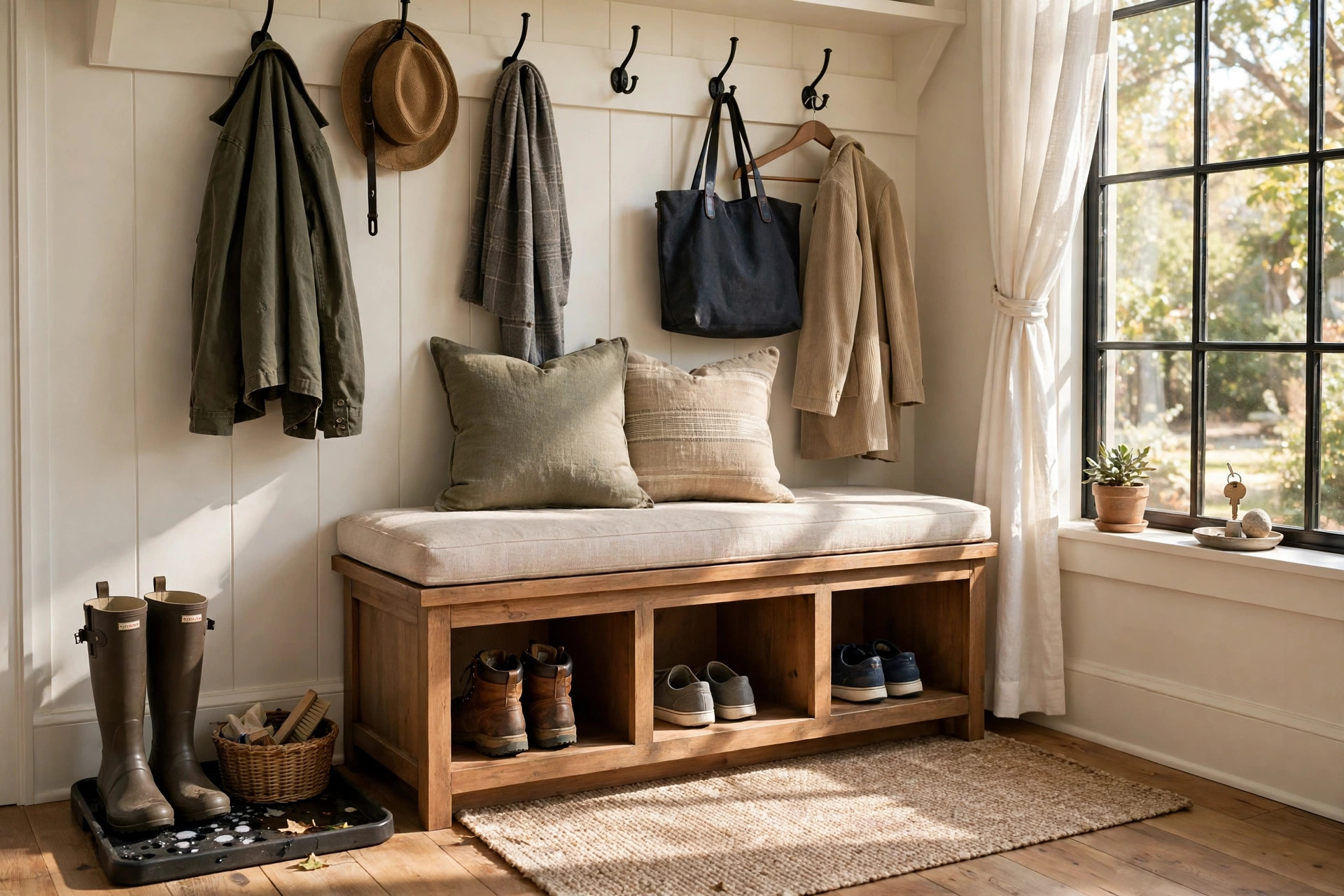

A mudroom storage bench is one of the most useful pieces of furniture a family can buy. It gives you a place to sit while you put on boots. It hides shoes and hats behind closed doors. It keeps the rest of the house clean. When shoppers search for mudroom storage benches price comparison usa, they usually want one thing: a clear picture of what these benches cost and which type is worth the money. This guide lays out the prices, the materials, and the trade-offs so you can buy with confidence.
Why a Mudroom Bench Matters
Every home needs a landing zone. This is the spot where the day starts and ends. Shoes pile up here. Backpacks land here. Coats are tossed over whatever is closest. Without a bench, the mess spreads into the hallway and the living room. With a bench, each person has a seat and a home for their gear.
A good bench does three jobs at once. It seats one or two people. It stores shoes, hats, and gloves. It anchors the room so the space feels planned instead of chaotic. Many American homes place the mudroom bench near the garage door or the back door, where traffic is heaviest. In homes without a full mudroom, the bench often sits in a wide hallway or a corner of the kitchen.
Storage benches also protect floors. When muddy boots have a set place to rest, they spend less time on carpet and wood. Many families in cold states say the bench pays for itself the first winter. Boots stay off the kitchen floor. Wet gloves go in a bin instead of on the counter.
What to Look for Before You Buy: Mudroom Storage Benches Price Comparison Usa
A price tag tells only part of the story. Two benches can cost the same and differ greatly in quality. Check the points below before you compare prices.
Size and Fit
Measure the wall where the bench will sit. Leave at least two inches of clearance on each side for cleaning. A bench for one adult needs about 24 inches of width. A family of four does better with 48 to 60 inches. Height matters too. A seat height of 17 to 19 inches is comfortable for most adults. Children can use a lower seat, or a step stool nearby.
Storage Style
Some benches open from the top, like a chest. Others have cubbies, drawers, or baskets. Lift-top chests hold bulky items such as sports pads and winter scarves. Cubbies suit shoes, one pair per opening. Drawers keep small items tidy. Think about what your family actually stores, then pick the style that fits those items.
Material and Build
Solid wood benches are strong and last for decades. Engineered wood and MDF cost less but can swell if water sits on them. Metal benches suit garages and workshops. Wicker and rattan give a softer look but hold less weight. Check the weight limit. A good mudroom bench should hold at least 200 pounds, since two children may share it. Independent furniture durability ratings can help you judge whether a bench is built well enough to earn its price.
Finish and Color
The entryway takes a beating. Choose a finish that wipes clean with a damp cloth. Dark wood hides scuffs better than white paint. If the bench will sit near an outside door, pick sealed wood or water-resistant paint so rain and snow do not stain it.
Types of Mudroom Storage Benches
Prices vary widely by type. Here are the main kinds sold in the United States, with typical 2026 price ranges.
Simple Slatted Benches
These are open benches with a flat seat and one or two lower shelves. They are the least expensive option. Expect to pay 60 to 150 dollars. They work well in small spaces and light-traffic homes. The open design means dust collects on the shoes, so they need regular wiping.
Cubby Benches
Cubby benches are the classic mudroom piece. A row of open squares holds shoes, and a cushioned top gives a seat. Most measure 24 to 48 inches wide. Prices run from 120 to 400 dollars. Solid pine versions sit at the low end. Hardwood versions with dovetailed joints sit at the high end. Compare cubby-style storage furniture across big retailers before deciding. Families with many pairs of shoes also like to read up on luxury stackable shoe storage boxes for extra space.
Lift-Top Storage Chests
A lift-top chest looks like a traditional bench from the front. The hinged lid opens to reveal a deep compartment. Prices range from 100 to 350 dollars. These hide clutter well and give the cleanest look. The downside is access. To reach items at the bottom, you must move everything off the lid first. Slow-close hinges are worth paying extra for, especially with children in the house.
Hall Trees with Benches
A hall tree adds a tall back panel with hooks and an upper shelf to the bench base. This is the full mudroom station. Prices run from 250 to 800 dollars or more. Solid wood hall trees at the top of the range are heavy but built to last. A tall unit needs wall anchoring so it cannot tip. Many retailers such as The Container Store and Home Depot carry several sizes.
Upholstered Settees
These benches have padded seats and often a fabric or leather cover. They look more like living room furniture. Prices range from 200 to 700 dollars. They are comfortable but harder to clean. Performance fabric helps with stains from muddy clothes. Vacuum the seat weekly and use a washable cover if pets sit there.
Cost and Price Comparison
A fair mudroom storage benches price comparison usa starts with the price bands above. Budget benches, 60 to 150 dollars, are made of engineered wood or light pine. They suit apartments and starter homes. Mid-range benches, 150 to 400 dollars, are the sweet spot for most families. They offer solid frames, real storage, and decent finishes. Premium benches, 400 to 800 dollars, use hardwood, better hardware, and often come from furniture makers rather than flat-pack lines.
Watch the extras that change the real cost. Assembly matters. A bench that takes three hours to build costs you time. White-glove delivery adds 80 to 150 dollars but saves the trouble. Cushions add 30 to 100 dollars. Wall anchors, baskets, and bins add another 40 to 120 dollars. When you compare two benches, add these costs to each and then judge.
Sales follow the seasons, and it pays to browse mudroom bench listings from several sellers before you commit. Prices dip in January and February, when retailers clear winter furniture. Late summer brings back-to-school sales on entryway gear. Warehouse clubs sometimes beat big-box stores by 20 percent on identical pieces, so check Costco and Walmart before you buy.
Second-hand markets deserve a look too. Solid wood benches from estate sales often cost less than new particle-board ones and last far longer. Sand the top, add a fresh coat of sealer, and a used bench can look new.
Simple Ways to Save Money
Buy off-season. January discounts are real. Choose a smaller bench if the space allows it; a 36-inch bench costs far less than a 60-inch one. Skip the cushion at first and add it later. Check store-brand lines at Target and Lowe’s, which often match the build of name brands at lower prices. And read the return policy before you order online. A bench that arrives damaged should be replaced free, but some sellers charge return shipping.
Care and Upkeep
A mudroom bench earns its keep with small habits. Wipe the seat weekly with a damp cloth. Wood benefits from a coat of furniture wax twice a year. Most home organization guides suggest a quick monthly once-over: wipe shelves, empty crumbs from bins, and throw away dead batteries from the drawer. Tighten bolts and screws every six months, because the seat takes daily stress. If the bench sits where wet boots rest, place a rubber boot tray on the lower shelf to catch melt.
Upholstered tops need more care. Vacuum the cushion monthly. Spot-clean stains at once with a mild soap solution. Keep a washable cover on the cushion if pets sit there. For painted benches, keep a small jar of touch-up paint. Scuffs from shoe heels show up fast on light colors.
Check the wall anchors on hall trees once a year. Children climb. Adults lean. A loose anchor is a hazard. Re-drive screws or replace the anchors if the unit wobbles.
Safety Notes
Mudroom benches are safe when chosen and installed well. Keep these points in mind.
Anchor tall units to wall studs. Any unit taller than 30 inches can tip if a child pulls on it. Use the hardware that comes in the box, or buy a stronger kit.
Mind pinch points. Lift-top lids should have soft-close hinges so small fingers are not caught. Test the lid before you buy, if you can.
Keep the weight limit in mind. The posted limit counts people and items together. A bench rated for 200 pounds is not a ladder. Do not stand on it to reach high shelves.
Place the bench with care. Leave clear walking space of at least 30 inches in front of it. Do not block the door swing. If the bench sits in a hallway, keep the path wide enough for two people to pass.
Frequently Asked Questions
What size mudroom storage bench do I need? Measure your wall and your family. A 24-inch bench seats one adult. A 48-inch bench seats two adults and fits four or more pairs of shoes. When in doubt, tape the outline on the floor with painter’s tape and live with it for a day.
Are mudroom benches worth the money? For most families, yes. A mid-range bench costs less than replacing a carpet damaged by muddy shoes. It also cuts morning chaos, because each child has a set spot for shoes and bags.
Wood or metal: which is better? Wood suits the house interior and holds heat less in summer. Metal suits the garage or a farm entry where water is constant. Wood needs occasional sealing. Metal needs a rust check each year.
How much should I spend on a mudroom bench? Most buyers are happy in the 150 to 400 dollar range. This buys solid construction and real storage. Below 150 dollars you trade strength for savings. Above 400 dollars you pay for hardwood and fine detail.
Can I use a mudroom bench in a small apartment? Yes. A 24-inch cubby bench fits most entry halls. Add pegboard wall organizers above it to hold keys and mail without using floor space. Wall hooks behind the door add more room.
Where should the bench go? Near the door you use most. For many homes that is the garage door. In apartments it is the front door. The bench should be the first thing you reach when you step inside with armfuls of gear.
What pairs well with a mudroom bench? Shoe storage, wall hooks, and a boot tray complete the setup. Corner closet organizers suit tight entryways where a wide bench will not fit.
A Final Word
A mudroom storage bench is a small purchase that changes daily life. It keeps shoes in one place. It gives tired feet a rest. It makes the entryway look cared for. Compare prices across types, add the real costs of delivery and extras, and buy the best build your budget allows. The right bench will serve your family for years.
References
Consumer Reports. (n.d.). Product reviews and ratings. https://www.consumerreports.org Costco. (n.d.). Wholesale retailer. https://www.costco.com IKEA. (n.d.). Home furnishings. https://www.ikea.com Lowe’s. (n.d.). Home improvement products. https://www.lowes.com Target. (n.d.). Retail store. https://www.target.com The Container Store. (n.d.). Storage and organization products. https://www.containerstore.com The Home Depot. (n.d.). Home improvement products. https://www.homedepot.com The Spruce. (n.d.). Home and garden advice. https://www.thespruce.com Walmart. (n.d.). Everyday low prices. https://www.walmart.com Wayfair. (n.d.). Furniture and home goods. https://www.wayfair.com
Was this guide helpful?

About Michael Thompson
The My Garden US editorial team writes practical, in-depth home and garden guides for American homeowners — tested advice, no fluff.
You May Also Like

Waterproof Kitchen Drawer Organizers for New England Homes: A Practical Guide
March 24, 2026 0 views
Waterproof Holiday Decoration Storage Boxes Buying Guide
March 15, 2026 0 views
Where to Buy Garden Tool Organizers in Arizona
September 26, 2026 0 views