
Introduction
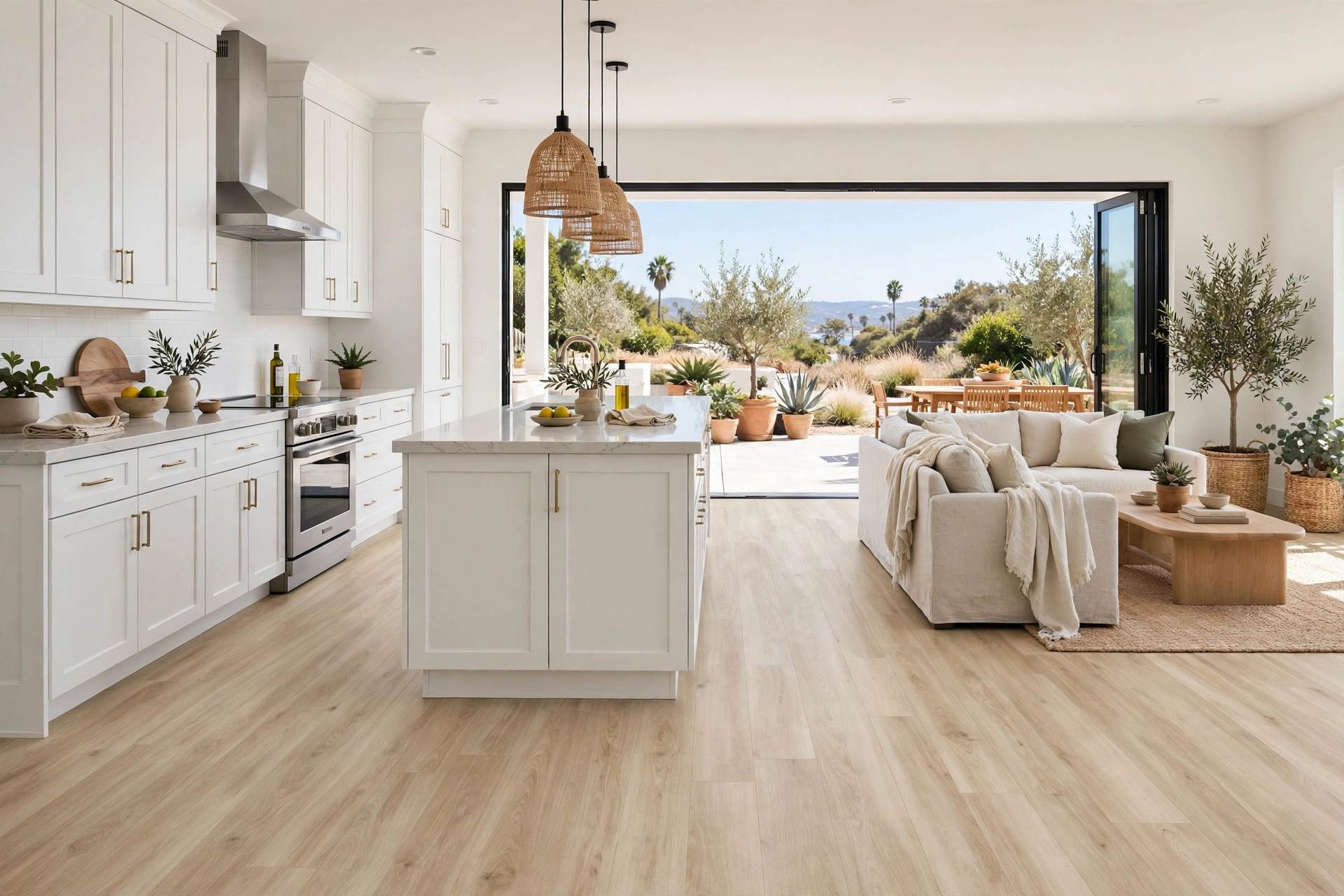
Vinyl plank flooring california homes usa is a search phrase that many homeowners type before a renovation. They want a floor that looks like wood but stands up to real life. Vinyl plank flooring answers that need. It is made of layered plastic materials pressed into long planks. Each plank carries a printed picture of wood grain. From a few steps away, most guests cannot tell the difference.
California homes have their own needs. The sun is strong. The ground moves. Some rooms get hot and others get cold. This guide walks through what vinyl plank flooring means for a California home, from the coast to the desert. It covers why it matters, how to choose it, the types on the market, what it costs, how to care for it, and the safety facts. It closes with answers to the most common questions.
Why It Matters for California Homes: Vinyl Plank Flooring California Homes Usa
A climate that tests floors
California weather is not one weather. A house in San Diego stays mild all year. A house in Palm Springs bakes in summer heat. A house in San Francisco stays cool and damp. Vinyl plank handles these shifts better than many wood floors. It does not swell and crack when the air turns humid. It does not shrink into gaps when dry heat sets in.
Real hardwood reacts to moisture and heat. Boards cup. Joints open. In a beach town or near a pool, this can ruin a new floor in a few years. Vinyl plank keeps its shape through those changes. That is a large part of why so many California owners choose it.
Earthquakes and the subfloor
California sits on active fault lines. Even small quakes can shift a floor slightly. Vinyl plank is forgiving. The click-lock edges flex a little without splitting. A solid oak board would crack under the same stress. Planks can also be lifted and replaced one by one, which makes repairs simple after any ground movement.
Value and style
Wood-look floors raise the appeal of a home. Buyers in California often look for warm, modern interiors. Vinyl plank gives that look at a much lower price than hardwood. It also matches many design styles, from beach cottage to desert modern. A home seller can refresh a tired floor without spending a fortune.
What to Look For When Choosing
Thickness and wear layer
A plank has several layers. The top layer is called the wear layer. It is measured in mils, which are thousandths of an inch. For most homes, a wear layer of 12 mil is a good start. Heavy traffic rooms do better with 20 mil. Thicker planks also feel more solid underfoot. Many flooring guides on The Spruce explain how to read these numbers before a purchase.
Core type
Older vinyl plank bends easily. Newer types have a rigid core, sold as SPC or WPC. SPC cores are hard and dense. WPC cores are softer and a bit warmer to the foot. Both hold up well. SPC is the better pick for rooms that get hot sun through large windows, since it stays flat under heat.
Waterproof ratings
Almost every vinyl plank sold today is labeled waterproof. That means spills and mopping will not harm it. It does not mean water can sit under the floor. Water trapped below can cause mold on the subfloor. Good installation still matters. See the vinyl plank flooring buying guide usa for a fuller look at ratings.
Color and pattern
California light is bright and warm. Pale oak tones look fresh under that light. Gray tones suit modern condos. Dark walnut tones suit Spanish-style homes. Ask for full-size samples. Lay them in the room at different hours. A color that looks perfect at noon may look cold at dusk.
Warranty terms
Read the warranty before buying. Most brands promise 15 to 25 years for home use. The promise usually covers wear-through of the printed layer. It does not cover scratches from dragging furniture or damage from steam mops. Keep the paper work. Take a photo of the receipt and the box label.
Types and Options
Glue-down planks
Glue-down vinyl plank sticks flat to the subfloor. It sits low and feels firm. Shops and rental units often use it. It is hard to remove, so it is a long-term choice. It also shows every bump in the subfloor, so the surface must be smooth.
Click-lock floating planks
Click-lock planks snap together and float over the floor below. This is the most common type for homes. A handy owner can install it over a weekend. It needs a small gap around the walls for expansion. Most brands require this gap in their instructions.
Loose-lay planks
Loose-lay planks are heavy and stay in place by weight and friction. They go down fast and lift up fast. They suit renters who want to upgrade a room and take the floor with them later. They cost more per box than click-lock types.
Textured and embossed surfaces
Some planks have grooves pressed into the surface. The grooves follow the printed grain. This makes the plank feel like real wood under bare feet. Embossed finishes also hide small scratches. Homes with dogs or children benefit from this texture.
Cost and Price in California
Material prices
Across the United States, vinyl plank sells for about two to five dollars per square foot for the material alone. California prices sit near the upper end of that range. Import and freight costs push prices up in the state. Big box retailers such as Home Depot and Lowe’s run frequent sales that bring the price down. Watch for holiday weekend events.
Labor prices
Professional installation in California runs about three to six dollars per square foot. Cities like Los Angeles and San Francisco charge more. Smaller towns charge less. A 200-square-foot kitchen might cost around one thousand dollars for labor alone. Get three written bids. Check that the installer is licensed. California law requires flooring contractors to hold a license for jobs over a set dollar amount.
What drives the total
Several factors move the final bill. Removing old tile adds cost. Leveling a crooked subfloor adds cost. Moving large furniture adds cost. Stair steps take extra time and skill. A simple open room is the cheapest job. A cut-up floor plan with many closets costs more.
Comparing with alternatives
Real hardwood costs eight to fifteen dollars per square foot installed. Tile costs five to twelve. Laminate costs three to seven. Vinyl plank sits in the middle. It costs less than hardwood and about the same as mid-range laminate, but it resists water far better than laminate. For kitchens and bathrooms, that water resistance is worth a lot. Budget guides at Bob Vila break down these comparisons in plain numbers.
When to buy
Flooring prices in California often drop in January and July. Stores clear old stock before new lines arrive. Online prices may beat store prices, but shipping a heavy pallet can erase the savings. Compare the final delivered price before choosing.
Care and Upkeep
Daily cleaning
Sweep or vacuum each day in busy rooms. Sand and grit are the main enemies. They grind into the wear layer over time. Use a vacuum without a beater bar, or use a soft broom. Damp mop once a week with plain water and a small amount of pH-neutral cleaner.
What to avoid
Do not use steam mops. Heat and steam can loosen the click joints and cloud the finish. Do not use wax or polish made for hardwood. It leaves a film that attracts dirt. Do not use abrasive pads. A microfiber mop head is the safe tool.
Furniture protection
Put felt pads under chair and table legs. Replace the pads each year, since they collect grit. Use wide casters under rolling chairs. In home offices, a chair mat helps. A plain vinyl mat is safer than a studded one, which can dent the floor.
Sun and fading
California sun is strong through glass. Prolonged direct sun can fade some floors over the years. Close blinds during the hottest hours. Area rugs help in sun-baked spots. Choose planks rated for high sun exposure if the room faces west or south.
Repairs
One great strength of vinyl plank is easy repair. A damaged click-lock plank can be unclicked and swapped. Keep a spare box from the original batch. Dye lots change over time, so a new box bought two years later may not match. A single spare box saves a lot of trouble.
Safety
Indoor air quality
Vinyl is plastic. Some vinyl floors release small amounts of chemical gases at first. This is called off-gassing. Look for products certified by FloorScore or GREENGUARD. These labels mean the floor was tested for low emissions. Open windows during installation and for a day after.
Fire safety
Vinyl plank will burn in a fire like other plastic goods. It is not sold as a fireproof floor. Keep it away from direct heat sources such as space heaters and fireplace fronts. In wildfire areas, the floor choice does not change home fire safety much. The roof and vents matter far more. Federal energy guidance at Energy Star covers related home safety topics.
Slip resistance
Bare vinyl can be slippery when wet. This matters near kitchen sinks and back doors. Look for planks with a textured finish and a listed slip rating. Place absorbent mats at entries. Teach children to dry their feet after swimming.
Pets and children
Vinyl plank is a practical choice for busy families. It stands up to claws better than soft wood. It cleans up after spills fast. Choose products without added phthalates when small children will crawl on the floor. The label or the brand website should state this clearly.
How Vinyl Plank Fits a Kitchen Renovation
Many California owners replace floors during a kitchen remodel. The floor often goes in before the appliances arrive. If new appliances are part of the plan, check their depth against the new floor height. Most dishwashers and ranges fit under standard counters with vinyl plank in place. When a kitchen gets both new floors and new appliances, brands like GE Appliances and Bosch publish exact dimensions online that help the planning. Our related guide on quartz countertop installation buying guide usa covers the next big kitchen surface.
Old appliance models can be checked against ratings at Consumer Reports when deciding what to keep and what to replace during the same remodel. Plan the order of work. Flooring first, then cabinets if they are being replaced, then appliances last. This order avoids damage to the new floor from heavy units.
Frequently Asked Questions
How long does vinyl plank flooring last in a California home?
With normal care, expect 15 to 25 years. Busy kitchens and entryways wear faster. Bedrooms last longer. Sun-baked rooms may show fading sooner. The wear layer thickness is the best guide to lifespan.
Is vinyl plank good for homes near the beach?
Yes. Salt air and humidity do not harm it the way they harm wood. Rinse sand off shoes at the door. Sand is abrasive. A mat at every entry keeps the floor looking new.
Can it go over existing tile?
In many cases, yes. The tile must be flat and firmly stuck down. Deep grout lines may need a skim coat of filler first. Check the plank maker’s rules. Some warranties are void if the floor goes over tile.
Does it add value to a California home?
A clean, modern floor helps a sale. Appraisers value it below real hardwood but above old carpet. For rental homes, it is often the best value choice. It looks good in photos and survives tenants.
Is professional installation worth it?
For large or complex rooms, yes. A pro finishes faster and handles tricky cuts around doors and cabinets. For a single square bedroom, a careful owner can do it well. Watch an installation video from This Old House before deciding.
How does it compare with laminate?
Both are budget wood-look floors. Vinyl is plastic and waterproof. Laminate is fiberboard and only water-resistant. In kitchens, baths, and laundry rooms, vinyl wins. In dry bedrooms, both work fine.
A Final Word
Vinyl plank flooring suits the way many California homes live. It takes sun, spills, pets, and foot traffic without complaint. It costs far less than hardwood and installs in days. Choose a thick wear layer, check the warranty, and plan for sun protection. With those steps, the floor will serve the home well for many years.
Related guides on this site include stainless range hoods buying guide usa.
References
Bob Vila. (n.d.). Home improvement advice. https://www.bobvila.com Bosch. (n.d.). Home appliances. https://www.bosch-home.com Consumer Reports. (n.d.). Product reviews and ratings. https://www.consumerreports.org ENERGY STAR. (n.d.). Energy efficient products. https://www.energystar.gov GE Appliances. (n.d.). Kitchen and home appliances. https://www.geappliances.com Lowe’s. (n.d.). Home improvement products. https://www.lowes.com The Home Depot. (n.d.). Home improvement products. https://www.homedepot.com The Spruce. (n.d.). Home and garden advice. https://www.thespruce.com This Old House. (n.d.). Home renovation guidance. https://www.thisoldhouse.com
Was this guide helpful?

About Robert Taylor
The My Garden US editorial team writes practical, in-depth home and garden guides for American homeowners — tested advice, no fluff.
You May Also Like

Kitchen Pantry Cabinets for Sale USA: A Practical Buying Guide
June 22, 2026 0 views
Quartz Countertop Installation in Texas Homes: A Plain and Full Guide
January 28, 2026 0 views
Quartz Countertop Installation USA Online Deals: A Plain Guide for Homeowners
June 15, 2026 0 views