
Few things calm a hard day like the best hot tub for stress relief. Hot water loosens tight muscles. It slows the breath. It quiets the mind. Many people find that twenty minutes in a warm tub works better than an hour on the couch. This guide will help you choose wisely. We will cover what makes a tub good for stress, what types exist, what they cost, and how to keep the water safe and clean. By the end, you will know what to look for before you spend your money.
Why a Hot Tub Helps With Stress
Warm water changes how the body feels. Heat opens the blood vessels. Blood moves more freely through tired arms, legs, and backs. Muscles that were tight begin to let go. The mind often follows. When the body relaxes, worry eases.
Jets add to the effect. Strong streams of warm water press into the neck, the shoulders, and the lower back. These are the places where most people carry tension. A good tub aims jets at these sore spots. Air bubbles lift and stir the water. The light motion of the water feels soothing against the skin.
Heat also helps sleep. Many people soak about an hour before bed. The warm water raises body heat. When the body cools down after the soak, it signals that it is time to rest. This simple pattern can help people fall asleep faster.
Stress relief is not just about heat. It is also about quiet time. A hot tub gives you a place with no phone, no television, and no noise from the house. Even a short soak can feel like a small break from the day. That break has real value.
What to Look for in the Best Hot Tub for Stress Relief
Seat Design and Comfort
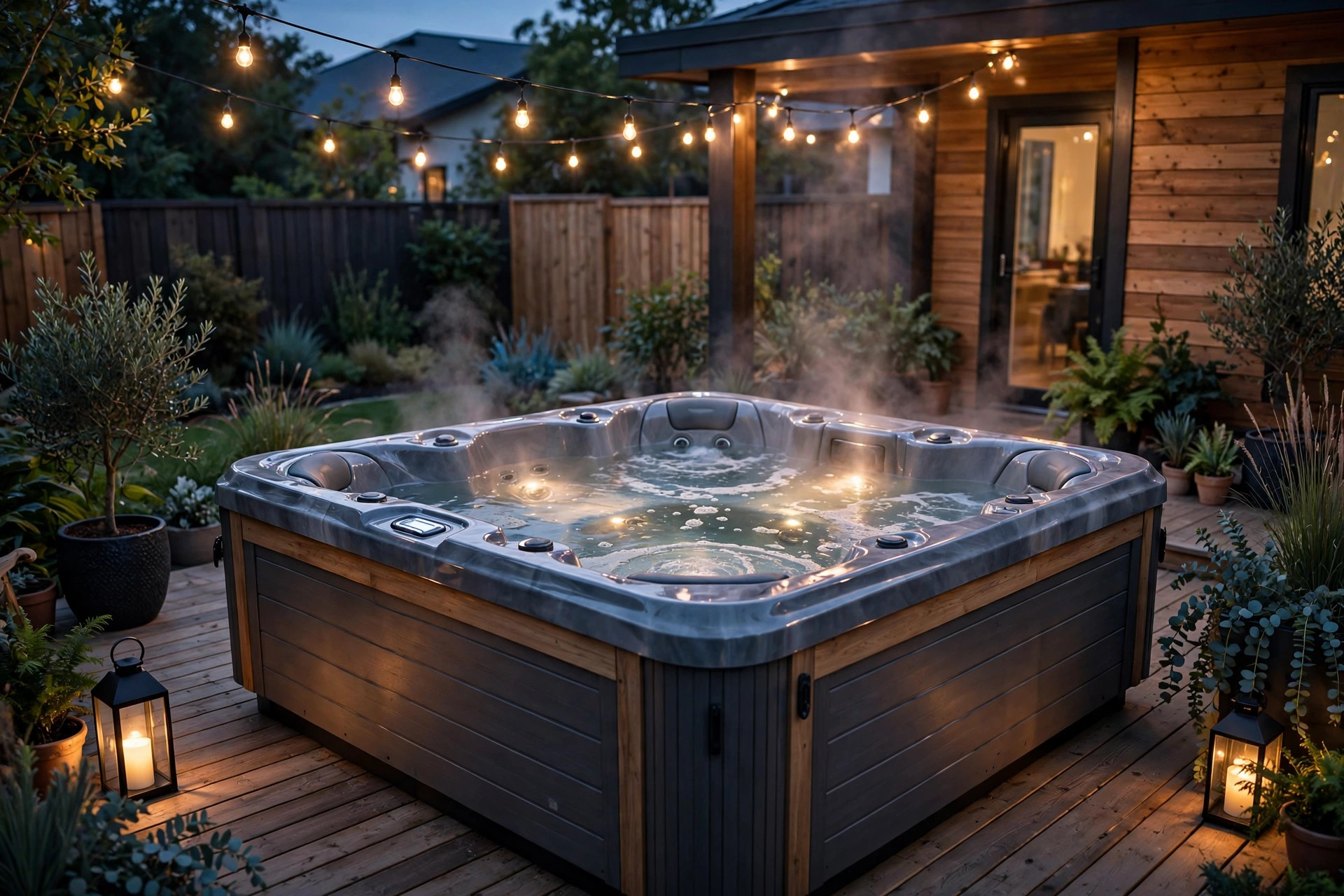
Seats matter more than most buyers think. Deep seats let you sink into the water. Wide seats let you stretch out. A good tub for stress relief has at least one or two lounge seats. These seats let you lie back with your whole body in the water.
Look for neck rests and padded head supports. They keep your head at a good angle. Contoured seats fit the shape of the body. Avoid tubs with hard, flat benches. They look fine in the store but feel stiff after ten minutes.
Jets: Count, Type, and Placement
More jets do not always mean better relief. What counts is where the jets sit and how they feel. The best hot tub for stress relief has jets aimed at the neck, the shoulders, and the lower back. Rotating jets give a massage-like feel. Directional jets push a steady stream into one sore spot.
Test the jets if you can. Sit in the tub at a showroom. Feel the force on your back. A tub that hits the right spots with warm, firm streams will do more for stress than one with fifty jets that spray everywhere.
Water Temperature and Controls
Good temperature control is a must. Most people soak between 100 and 104 degrees. The tub should reach and hold its set heat without trouble. A clear control panel helps you change the heat and the jets without guesswork. Some tubs let you set one zone hotter than another. This is a nice touch if two people want different heat levels.
Size and Seating Capacity
A two-person tub is fine for a couple. A five or six-person tub fits a family. Bigger is not always better for stress relief. A smaller tub holds its heat better and costs less to run. Pick the size that fits your yard and your usual group. Extra empty seats just mean extra water to heat.
Types of Hot Tubs for Stress Relief
Acrylic Spas with Full Foam Insulation
These are the most common permanent tubs. They have a hard shell, strong insulation, and many jet options. They hold heat well, which keeps running costs down. Most models made for relaxation fall into this group. A buyer who wants a serious long-term answer to daily stress often ends up here. Retail sites like Home Depot and Pool Warehouse show many models in this class.
Plug-and-Play Models
These tubs run on a standard 110-volt outlet. They are easy to set up. They cost less up front. But they heat more slowly and the jets are often weaker. For mild stress relief on a budget, they can still work well. Many first-time buyers start here.
Inflatable Hot Tubs
Inflatable tubs are light and cheap. They set up in an afternoon. They do not have strong jets or deep seats. They give warmth and a calm soak, but not the strong massage that deeper tubs give. They are a good test. If you use an inflatable tub often, a real tub may be worth the money.
Swim Spas
Swim spas are long tubs with a current to swim against. They give exercise and soaking in one shell. They cost much more and take up more room. For people who want both a workout and a place to unwind, they can be a good fit.
Jet Layouts That Target Stress
Not every jet layout serves the same body. A full-body lounge seat puts jets along the neck, spine, and legs. This suits people with back pain and tense shoulders. A captain’s chair seat wraps jets around the neck and upper back. This suits desk workers with tight necks.
Some tubs add foot jets. Foot jets press warm water into tired feet. After a day on your feet, this feels wonderful. Hip jets target the lower back where many people hold stress. When you shop, ask where the jets aim. Then sit in the tub and check that the streams hit your sore spots.
Waterfall features add sound to the soak. The soft sound of falling water helps some people relax. It is not a must, but it is a pleasant extra.
Cost and Price
Prices vary widely. A small inflatable tub can cost under a thousand dollars. A plug-and-play tub often runs from three to six thousand dollars. A full-size acrylic spa made for comfort often runs from eight to fifteen thousand dollars. Swim spas can run past twenty thousand dollars.
Think about running costs too. A well-insulated tub costs less to heat each month. Prices for power differ by state. A cheap tub with thin insulation can cost more over time than a well-built one. Ask about the monthly cost to run the model you like.
Installation adds cost. A concrete pad or a strong deck costs money. Wiring for a 220-volt tub needs an electrician. Delivery and crane placement can add several hundred dollars. Ask for the full installed price, not just the sticker price.
A tub is a long-term buy. The best hot tub for stress relief is the one you will use for years. It is worth paying for comfort, strong jets, and good insulation.
Care and Upkeep
Water Chemistry Basics
Clean water keeps the soak safe and pleasant. Test the water two or three times a week. Keep the sanitizer level in the right range. Keep the pH balanced. Cloudy water often means the chemistry is off. Fix it early before it gets worse.
A beginner kit with test strips and basic chemicals makes the job simple. If you also keep a pool, you may already know the drill from reading about the best pool chemicals for beginners kit.
Filter Cleaning
Clean the filter every few weeks. A dirty filter makes the pump work harder and the water turn cloudy. Rinse it with a garden hose. Let it dry fully before you put it back. Most filters need replacement once a year.
Cover Care
The cover holds heat in and keeps dirt out. Wipe it down now and then. Treat the vinyl with a protectant so it does not crack. Replace a waterlogged cover. A heavy, soggy cover leaks heat and costs you money each month.
Draining and Refilling
Drain and refill the tub every three to four months. Fresh water soaks better and is easier to balance. When you refill, clean the shell before you add water. This is also a good time to flush the pipes with a spa flush product.
Guides at Swim University and Leslie’s give step-by-step care routines that are easy to follow.
Safety
Hot water can be risky if you are careless. Follow the safety rules and the tub stays a place of calm.
– Keep the water at or below 104 degrees. – Limit soaks to fifteen or twenty minutes at high heat. – Drink water before and after your soak. – Do not mix alcohol with hot soaking. – Keep children under close watch at all times. Lock the cover when the tub is not in use. – Pregnant women and people with heart trouble should ask a doctor first.
The Consumer Product Safety Commission publishes spa and pool safety guidance that every tub owner should read.
Choosing Between Top Brands
Several well-known makers build tubs with strong comfort features. Hot Spring and Bullfrog Spas are two names that show up often in comfort reviews. Their designs aim jets at common tension points. Other makers offer similar comfort at lower prices.
Do not buy on brand name alone. Sit in the tub. Test the seats. Feel the jets. A mid-priced tub that fits your body will beat a costly one that does not. Review sites like The Spruce publish plain-language comparisons that can help you narrow the list.
Setting Up Your Stress-Relief Space
Where you place the tub matters. A quiet corner of the yard feels more calming than a spot next to a busy street. Add a few simple touches. A small set of steps makes entry easy. A nearby towel hook keeps things simple. Soft lighting sets a calm mood for evening soaks.
Keep the area tidy. A cluttered space pulls the mind back to chores. A clean, simple setup lets you let go of the day. Some owners add plants or a small fence for privacy. These small steps make the tub feel like a true retreat.
If your yard also has a pool, keep up with both. Tile and grout grime can spread in wet areas, so it helps to know how to clean pool tile grout. A clean backyard makes every soak better.
FAQ
How long should I soak for stress relief?
Fifteen to twenty minutes is enough for most people. Longer soaks at high heat can make you dizzy. Start with ten minutes and add time as you learn what feels right.
What water temperature is best for relaxing?
Most people find 100 to 102 degrees the most comfortable for a long, calm soak. You can go up to 104 degrees, but keep those soaks shorter.
Can a hot tub help with muscle soreness?
Yes. Warm water and jets ease tight muscles. Many people with sore backs or stiff necks soak after work or after exercise. It is not a cure for injury, but it eases everyday aches.
How often should I use my hot tub?
Use it as often as you like, as long as the water is clean. Many owners soak three to five times a week. Even two soaks a week can make a real dent in stress.
Do I need a special electrical setup?
Small plug-and-play tubs run on a normal outlet. Larger tubs need a 220-volt line and a licensed electrician. Check the specs before you buy. Also plan your pad or deck. If you heat a pool too, a pool heater for above ground pools can pair well with your setup.
What is the cheapest way to get stress relief from a tub?
An inflatable tub costs the least up front. It gives warmth and calm but weaker jets. If you want stronger relief, a mid-range plug-and-play tub is the next step up.
A Final Word
The best hot tub for stress relief is the one that fits your body, your budget, and your daily life. Warm water, strong jets in the right places, and a quiet corner of the yard can turn an ordinary evening into real rest. Shop with care. Test the seats. Keep the water clean. Then give yourself twenty minutes of warm, quiet water at the end of each hard day. Your shoulders will thank you.
References
Bullfrog Spas. (n.d.). Hot tubs and spas. https://www.bullfrogspas.com Hot Spring Spas. (n.d.). Hot tubs and spas. https://www.hotspring.com Leslie’s Pool Supplies. (n.d.). Pool supplies and equipment. https://www.lesliespool.com Pool Warehouse. (n.d.). Pool equipment and supplies. https://www.poolwarehouse.com Swim University. (n.d.). Pool and hot tub care guides. https://www.swimuniversity.com The Home Depot. (n.d.). Home improvement products. https://www.homedepot.com The Spruce. (n.d.). Home and garden advice. https://www.thespruce.com U.S. Consumer Product Safety Commission. (n.d.). Product safety information. https://www.cpsc.gov
Was this guide helpful?

About Robert Taylor
The My Garden US editorial team writes practical, in-depth home and garden guides for American homeowners — tested advice, no fluff.
You May Also Like
Best Pool Vacuum for Steps and Benches: A Full Guide
March 23, 2026 0 views
The Best Hot Tub Under 5000 Dollars: A Plain Guide for the Sensible Buyer
April 28, 2026 0 views
Best Pool Thermometer Floating Reviews: A Plain Buyer’s Guide
February 8, 2026 0 views