
Every fall, pool owners face the same task. The water is cool. The nights are cold. It is time to learn how to close pool for winter season the right way. A proper closing saves you money. It protects your pool from ice damage. It makes the spring opening fast and easy. Many owners skip steps and pay for it later. Cracked pipes, green water, and torn liners all cost far more than one careful afternoon of work.
This guide walks you through each step in plain order. You will learn what tools you need, how to treat the water, how to protect the pipes, and how to cover the pool for months of cold weather.
Why Closing Your Pool for Winter Matters
Water freezes and grows. That simple fact is the main reason to close a pool. When water inside a pipe freezes, it swells. The swell can crack the pipe open. A cracked underground pipe is a costly repair. A liner that tears can cost even more.
Closing also keeps the water clean. Leaves and dirt break down over winter. They stain the walls and feed algae. A pool closed in clean water opens in clean water. Owners who close well often open their pools in spring with clear blue water. They spend less on chemicals and less time scrubbing.
There is also a money reason. A winterized pool uses no pump power for months. That cuts the electric bill. And it saves the filter, the pump, and a pool heater from wear and frost damage.
Before You Start: Tools and Supplies: How to Close Pool for Winter Season
Gather your tools before the cold sets in. A winter closing kit from a pool supply store makes the job simple. These kits hold the shock, algaecide, and stain guard you need in one box.
You will also need these items:
– A test kit or test strips for water balance – A skimmer net and a pool brush – A pool vacuum or an automatic cleaner – A shop vacuum or air compressor to blow out lines – Rubber freeze plugs for the skimmer and returns – An air pillow or pool pillow for the cover – A winter cover, water tubes, or a safety cover – A cover pump to clear rain water off the cover
Many of these supplies, such as pool covers and air pillows, are easy to find at pool supply shops or large home stores. Buy them before the rush. Stores sell out of covers each fall.
Pick a closing day when the water is at or below 65 degrees. If you close while the water is still warm, algae can grow under the cover all winter. Watch the weather and pick a cool, dry weekend.
How to Close Pool for Winter Season Step by Step
Step 1: Balance the Water Chemistry
Clean water is the base of a good closing. Test the water with your kit. Aim for these levels:
– pH between 7.2 and 7.6 – Total alkalinity between 80 and 120 parts per million – Calcium hardness between 175 and 225 parts per million – Chlorine between 1 and 3 parts per million
Fix the pH first. Then fix the alkalinity. Add chemicals in small doses. Wait a few hours between doses. The water should be balanced a day or two before you add the winter chemicals. Balanced water will not stain the liner or eat at the plaster over the winter months.
Step 2: Shock the Water
Give the pool a strong dose of shock. Use a chlorine shock made for winter closing. Add it in the evening, since sun burns off chlorine fast. Run the pump all night so the shock mixes well.
This heavy dose kills the last of the bacteria and algae. Some owners like to add an algaecide made for winter use. Winter algaecides are made to stay active for months. They keep the water from turning green while the pool sleeps. Many owners also check step-by-step closing guides to time their shock and algaecide doses right.
Step 3: Clean the Pool Top to Bottom
Brush the walls and floor. Vacuum every bit of dirt. Skim all leaves from the surface. Empty the skimmer baskets and the pump basket. Clean the filter as well. Backwash a sand filter. Rinse out a cartridge filter. Take out the DE filter grids and clean them.
Do not skip this step. Dirt left in the pool over winter will stain and feed algae. A clean pool closes clean and opens clean.
Step 4: Lower the Water Level
Turn off the pump. Lower the water a few inches below the skimmer mouth. For most pools, this means dropping the water to just under the tile line. Use the pump on waste, or use a submersible pump.
Do not drain the pool fully. A full or near-full pool keeps the liner pressed tight against the walls. It also keeps the cover from sinking. If you have a mesh safety cover, check the maker’s advice on water level. Some covers want the water higher.
Step 5: Drain the Equipment
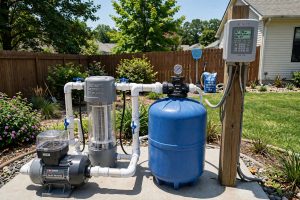
Now protect the gear. Turn off the breaker for the pump and heater. Drain the pump by removing the drain plugs. Store the plugs in the pump basket so you can find them in spring.
Drain the filter tank. Drain the heater, too. If the heater has a drain plug, pull it. Look at the pipes for any spot that could hold water. Each spot matters. A cup of water left in a pipe can crack it when it freezes.
If you use a chlorine feeder, take it apart and rinse it. Store it dry. Do the same for salt systems, lights, and any add-on gear.
Step 6: Blow Out the Plumbing Lines
This is the most important step for cold climates. Water in the pipes must be pushed out with air. Use a shop vacuum or an air compressor on a low setting. Blow air through the skimmer line until bubbles rise in the pool. Then plug the line with a freeze plug while the air is still on. This keeps the air in the pipe.
Do the same for each return jet. Blow, then plug. If your pool has a main drain, blow that line too. Add pool antifreeze to the lines for extra safety. Pool antifreeze is made for pools and is safe for the water. Do not use car antifreeze. It is poison.
Homeowners who are not sure about this step can hire a pool service for the blowout alone. One visit from a pro can be worth it. The cost of a pool pro for an hour is far less than the cost of a broken pipe.
Step 7: Add Winter Chemicals and the Air Pillow
After the lines are clear, add your winter chemical kit. Follow the box for doses. Spread the chemicals across the pool. Then set the air pillow in the middle of the pool.
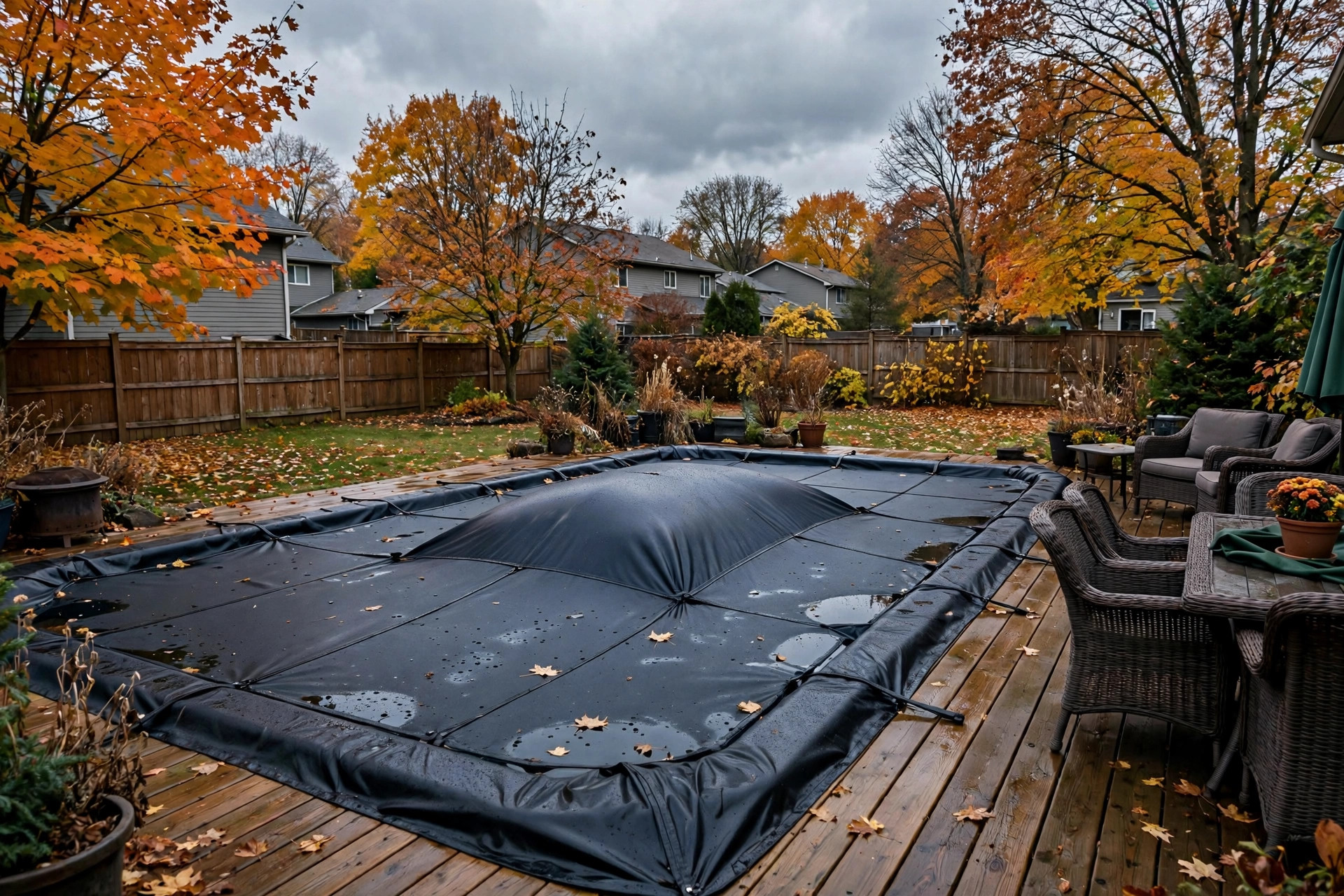
An air pillow keeps the cover from sitting flat on the water. It gives ice a place to push against. Ice presses the pillow instead of pressing the walls. Tie the pillow with rope so it stays in the middle. Do not fill it all the way. Fill it about two thirds full. This leaves room for the air inside to squeeze.
Step 8: Put On the Winter Cover
Lay the cover over the pool. Center it so the edges hang even all around. If you use a solid cover with water tubes, fill the tubes halfway with water and lay them around the edge. The tubes hold the cover down in wind.
If you have a mesh safety cover, hook each strap to its anchor. Pull the straps snug. A safety cover should sit flat and tight like a drum. It is worth learning what it costs to install an inground pool cover if you plan to switch to a safety cover. The upfront cost is higher, but the cover lasts much longer than a cheap tarp cover.
Tug the cover all around to check for gaps. Gaps let in leaves and sun. Leaves rot into the water. Sun feeds algae. A tight cover is a clean spring.
Types of Winter Pool Covers
Not all covers are the same. Here are the main types:
– Solid winter covers. These block all sun and rain. They keep the pool clean but need a cover pump, since rain piles up on top. Most are made of heavy tarp material. – Mesh winter covers. These let rain through but block leaves and sun. They cost less than safety covers and are light to handle. Some fine dirt can pass through the mesh. – Safety covers. These are made of strong mesh or solid fabric that hooks into deck anchors. A child or pet cannot fall through one. They cost the most but last the longest, often ten years or more.
Pick the cover that fits your budget and your yard. If you have kids or pets near the pool, a safety cover is the wise choice. Check pool safety barrier rules for your state. Many states require fences and alarms around pools, even in winter.
Cost to Close a Pool for Winter
Doing it yourself costs between 100 and 200 dollars in supplies. The winter chemical kit, plugs, and antifreeze are the main costs. You will reuse the plugs and pillow for years. A new cover costs 100 to 400 dollars, but it should last three to five seasons.
Hiring a pool company costs more. A basic closing service runs from 250 to 400 dollars. Full service with cover installation and line blowout can reach 500 dollars or more. Prices rise in areas with hard winters. Many owners start by doing it themselves and hire help for the first year. Watching a pro once is a good way to learn.
Winter Care and Upkeep
A closed pool still needs some care. Check the cover once a month. Pump standing water off a solid cover after heavy rain. Snow is heavy, so brush deep snow off the cover with a soft broom. Do not use a shovel. It can tear the cover.
Keep the cover tight. Wind can work the straps loose. Check the water level under the cover now and then. If it drops a lot, you may have a leak. Finding a leak in winter is hard, but knowing early helps you plan the spring repair.
Watch the trees around the pool. Trim branches that hang over the cover. A fallen branch can rip the cover and dump a load of leaves in the water.
For homes with a hot tub, winter care is different. Many owners keep their tubs running all year. The hot tub winter guides explain how to keep a tub safe in deep cold. If you do shut a tub down, drain it fully and blow the lines, just like a pool. The spa and hot tub winter care guides give the same warning. A tub left half drained in freezing weather can crack fast.
Safety Around a Closed Pool
A closed pool is still a risk. Never let children play on the cover. A solid cover with standing water is a trap. Even a tight safety cover is not a play mat. Keep the gate to the pool area locked all winter.
Store chemicals in a dry, locked spot away from kids and pets. Pool shock and chlorine are strong stuff. Keep them off the ground and away from metal tools that can rust.
Check your local rules. Some towns ask for a fence around the pool all year. Others ask for a pool alarm. A few minutes on the phone with your town office can save you a fine.
Frequently Asked Questions
When is the best time to close a pool?
Close when the water stays at or below 65 degrees. This is often in late September or October. Close too early and warm water feeds algae under the cover. Close too late and you risk a sudden freeze.
Can I close my pool myself?
Yes. Most owners can close their own pool with a basic kit and a weekend afternoon. The line blowout is the hardest part. If you have an air compressor, you can do it. If not, hire a pro for that one step.
Should I drain the pool all the way?
No. Never drain an inground pool fully. The ground water outside the pool can push an empty shell up out of the ground. Keep the water a few inches below the skimmer. That is enough.
How long does a winter cover last?
A basic tarp cover lasts three to five years. A good mesh cover lasts five to eight years. A safety cover often lasts ten years or more. Store the cover dry in spring to make it last.
Do I need to add chemicals during winter?
Usually not. The winter kit you add at closing should hold for the season. If you live where the pool sits for six months or more, a mid-winter dose of algaecide through a small opening can help. Ask your local pool store for advice.
What if the cover fills with green water in spring?
Green water on top of the cover is normal. It is rain and dirt, not pool water. Pump it off before you open the cover. Do not let it drain into the pool. Slide the cover off with care so the dirty water stays out.
A Final Word
Learning how to close pool for winter season is a skill that pays off every year. Each step is simple on its own. Together they guard your pool through ice, snow, and wind. Take one calm weekend in the fall. Balance the water. Clean the pool. Clear the lines. Cover it tight. When spring comes, you will open to clear water and working gear. That is the reward for doing the job right.
References
Bullfrog Spas. (n.d.). Hot tubs and spas. https://www.bullfrogspas.com Hot Spring Spas. (n.d.). Hot tubs and spas. https://www.hotspring.com Leslie’s Pool Supplies. (n.d.). Pool supplies and equipment. https://www.lesliespool.com Pool Warehouse. (n.d.). Pool equipment and supplies. https://www.poolwarehouse.com Swim University. (n.d.). Pool and hot tub care guides. https://www.swimuniversity.com The Home Depot. (n.d.). Home improvement products. https://www.homedepot.com The Spruce. (n.d.). Home and garden advice. https://www.thespruce.com U.S. Consumer Product Safety Commission. (n.d.). Product safety information. https://www.cpsc.gov
Was this guide helpful?

About David Wilson
The My Garden US editorial team writes practical, in-depth home and garden guides for American homeowners — tested advice, no fluff.
You May Also Like
How to Figure the Pool Pump Running Cost Per Month
June 1, 2026 0 views
Salt Cell Replacement Cost for Pools: A Clear Guide
September 10, 2026 0 views
How to Install Above Ground Pool: A Complete Guide for Homeowners
July 13, 2026 0 views