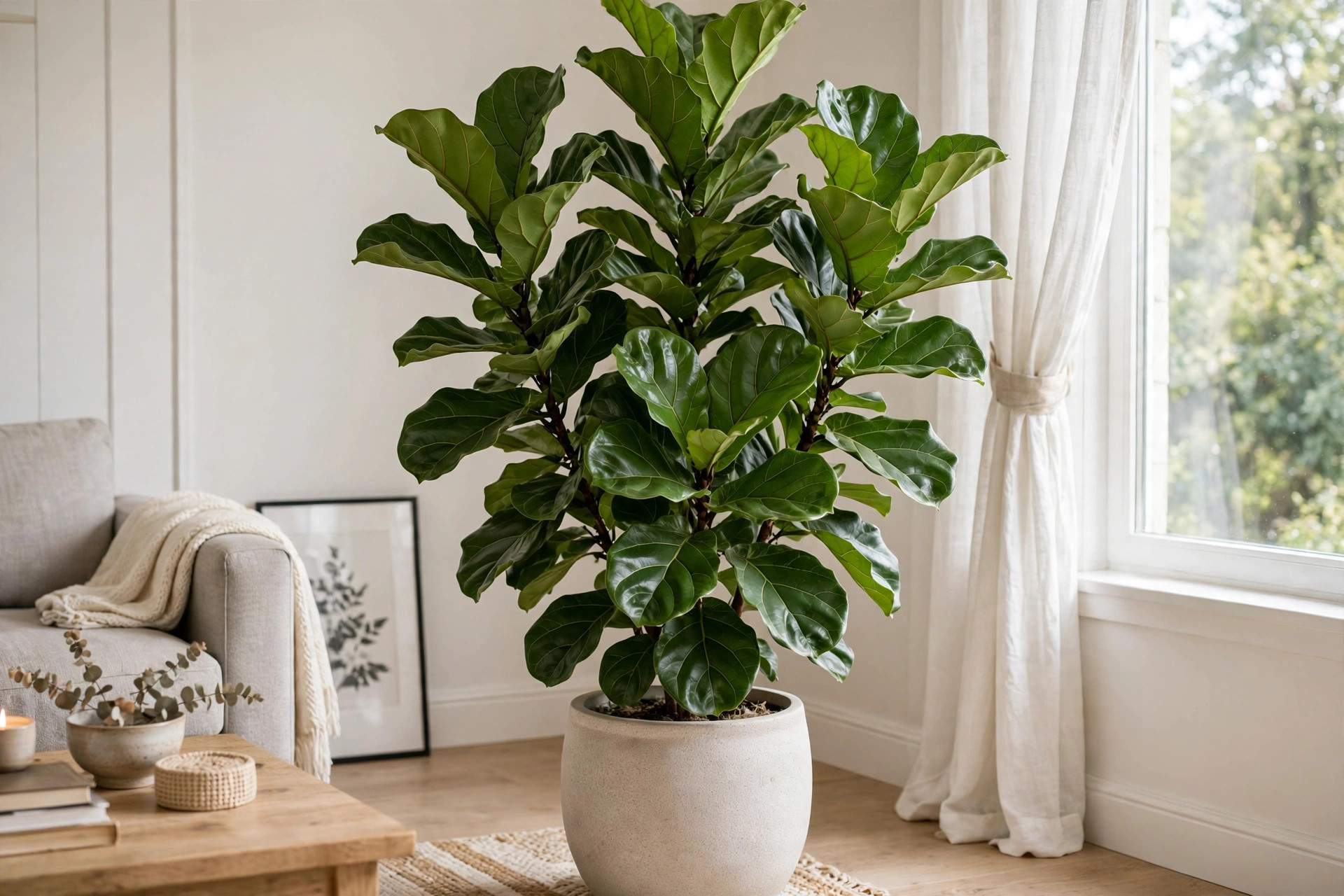

Many people search for fiddle leaf figs deals near me when they want this tall, handsome plant for their home. The fiddle leaf fig has broad, glossy leaves that look like the head of a violin. It has filled the pages of home magazines for years. Yet the price of a large tree can shock a first-time buyer. A fair deal is not hard to find if you know where to look and what to check. This guide will show you how to find a good price close to home, how to judge the health of a tree before you pay, and how to keep it alive for years.
Why Fiddle Leaf Figs Matter
The fiddle leaf fig, known to botanists as Ficus lyrata, comes from western Africa. It earned its fame in American homes during the late twentieth century. Interior designers favored it because it grows tall and fills empty corners with green life. A well-grown tree can reach six feet indoors. Its leaves can measure more than a foot across.
Part of the plant’s appeal is its simple shape. A single trunk rises from the pot. Broad leaves branch off at the top. The result looks like a small tree, and it brings an outdoor feel into a living room or office. Few other houseplants give this effect without years of training.
The plant also teaches patience. It does not grow fast. New leaves appear one by one over the growing season. Owners learn to watch for these small changes. Many people find this quiet growth restful.
Demand has stayed high for decades. That demand keeps prices up at retail stores. When shoppers look for fiddle leaf figs deals near me, they are usually trying to skip the high mark-up of designer plant shops. A patient buyer can save half the price with a little legwork.
How to Find Deals Near You: Fiddle Leaf Figs Deals near Me
Good deals on fiddle leaf figs come from several kinds of sellers. Each has its own strengths. The best approach is to check more than one source and compare.
Local Garden Centers
Start with the independent garden centers in your area. These shops often grow their own stock or buy from regional growers. Their prices are usually lower than the prices at trendy plant boutiques in big cities. The staff can also tell you how long the plant has been in the shop and how it has been cared for.
Call ahead before you drive over. Ask what sizes they carry and what they charge. A six-inch pot may cost very little, while a four-foot tree may cost much more. Some garden centers run end-of-season sales in late summer and fall. Plants that look slightly rough may be marked down sharply even though they recover fast with care.
Local nurseries sometimes post sale lists on their own sites. National seed and nursery companies like Burpee and Gurney’s also sell indoor plants and supplies, and their catalogs can give you a sense of fair prices before you shop locally.
Big-Box Stores
Large home and garden chains carry fiddle leaf figs at low prices. Their buying power keeps costs down. You may find a three-foot tree for far less than a garden center charges. The catch is care. Staff at these stores may not water or feed the plants on schedule. Look closely before you buy.
Check the clearance rack. Plants with a few brown leaf edges are often marked down by half. These plants are usually not sick. They are simply dry. A week of proper care at home often brings them back to full health.
Online Sellers and Delivery Services
Online plant shops ship fiddle leaf figs to homes across the country. Their prices can beat local stores because they ship straight from large growers. Watch for shipping fees, which can add to the total. Some sellers offer free shipping over a set amount.
Read the reviews for each seller. Look for notes about how the plant arrived. A plant packed with care will arrive with leaves intact. A poorly packed plant may arrive with broken stems. Reputable growers such as Monrovia, Proven Winners, and White Flower Farm have long histories of selling healthy plants and garden goods.
For gardeners in warmer states, regional searches can turn up even better bargains. A guide to heirloom vegetable seeds florida homes usa shows how local climate shapes what sellers carry, and the same idea applies to houseplants.
What to Look for When You Buy
Price means little if the plant is weak. A cheap tree that dies in a month is no deal at all. Learn to read a plant the way you would read a used car.
The Leaves
Start with the leaves. They should be deep green and glossy. A healthy leaf feels firm when you hold it between your fingers. Small brown spots on older leaves are common and harmless. Large brown patches, yellow leaves, or leaves that fall off when you touch the plant are warning signs.
Check the newest leaves at the top of the plant. They show what the plant is doing right now. Fresh, tight growth means the plant is happy. Stunted or pale new growth means the plant has been stressed.
The Trunk and Roots
The trunk should be straight and firm. Press it gently with your thumb. It should feel woody, not soft. A soft trunk can mean rot, and rot is hard to cure.
If the nursery allows it, lift the plant from its pot and look at the roots. Healthy roots are white or light tan and firm. Dark, mushy roots mean the plant has been overwatered. A root-bound plant, with roots circling tightly inside the pot, can still be saved, but it will need repotting soon after you bring it home.
The Pot and Soil
Note the size of the pot compared with the plant. A very tall tree in a very small pot will dry out fast. The soil should smell earthy, not sour. A sour smell can point to rot in the root zone.
Many shoppers compare plant buying with seed buying. If you are new to shopping for plants and seeds, an air plants bulk reviews buying guide usa offers a helpful look at how to judge plant quality from seller descriptions.
Types and Sizes
Fiddle leaf figs come in several forms. The right one depends on your budget and your patience.
Small Starter Plants
Small plants in four- to six-inch pots are the cheapest option. They may stand only a foot tall. They grow slowly, so a starter plant will take years to become a floor tree. The advantage is price. You can often buy two or three small plants for the cost of one large one.
Medium Trees
Plants in one- to three-gallon pots stand two to four feet tall. They make a fine statement in a room without a large price tag. This size ships well and adapts to a new home faster than a large tree. Most buyers looking for deals choose this range.
Large Statement Trees
Large trees stand five feet or more. They are grown for years at the nursery and priced to match. A large tree gives instant drama, but it also costs the most and is the hardest to move. If you want this size, the best deals come from local growers who let you pick the plant up yourself.
Cost and Price
Prices for fiddle leaf figs vary widely by region and season. A small starter plant may cost less than twenty dollars. A medium tree often costs between forty and one hundred dollars. A large tree can cost several hundred dollars at a high-end shop.
The same tree may be priced very differently at two stores in the same town. This is why comparison shopping pays. Check at least three sources before you buy. Ask about discounts for buying more than one plant.
Season matters. Growers ship most new stock in spring. Prices dip in late summer when stores clear space for fall goods. Winter is the hardest time to buy, since cold shipping damages leaves.
Delivery fees add up fast for large trees. A local deal that looks expensive may beat an online deal once shipping is added. Always compare the total cost, not just the tag price.
Guides that explain where to buy usa for other kinds of plants follow the same method: list the sources, compare the totals, and read the fine print on shipping.
Care and Upkeep
A good deal turns into a waste if the plant dies. Fiddle leaf figs have a reputation for being fussy, but their needs are simple once you learn them.
Light
Give the plant bright, indirect light. A spot near an east- or south-facing window works well. The plant can take some morning sun, but strong afternoon sun burns the leaves. If your room is dark, a simple grow light makes a big difference.
Turn the pot a quarter turn every week or two. This keeps the tree growing straight instead of leaning toward the window.
Water
Water when the top two inches of soil feel dry. Pour water slowly until it runs out of the drain holes. Then empty the saucer so the roots do not sit in water. In winter, when growth slows, the plant needs less water.
More fiddle leaf figs die from too much water than from too little. If you are unsure, wait a day. A slightly dry plant recovers faster than a soggy one.
Feeding
Feed the plant during the growing season, from spring through early fall. A balanced liquid houseplant food, mixed at half the strength shown on the label, works well. Feed once a month. Do not feed in winter when the plant rests.
Cleaning and Turning
Wipe the leaves with a damp cloth every month or two. Dust blocks light and slows growth. While you clean, look at both sides of each leaf for pests. Spider mites and scale insects are the most common troublemakers. A strong spray of water or a light insecticidal soap treats most cases.
General houseplant care guides from Gardening Know How and The Spruce cover these routines in depth, and the National Institute of Food and Agriculture offers research-based information on plant health that serious growers will find useful.
Safety
Fiddle leaf figs are not safe for pets or small children to chew. The sap can irritate skin and mouths. Keep the plant out of reach of cats, dogs, and toddlers. If a pet eats part of a leaf, call your veterinarian.
The plant is safe to touch and safe to keep in a bedroom. It does not release harmful fumes. Handle it with care when you move it, since the trunk can snap if bent hard.
Frequently Asked Questions
How much should I pay for a fiddle leaf fig? A small plant should cost under twenty-five dollars in most towns. A medium tree of three feet should cost between forty and one hundred dollars. Large trees cost more, but prices above two hundred dollars deserve a close look at quality before you pay.
Where are the cheapest fiddle leaf figs? Big-box stores and clearance racks usually have the lowest prices. Local garden centers offer better care and advice at a slightly higher price. Online sellers can beat both if shipping is free.
Can I grow a fiddle leaf fig from a cutting? Yes. A stem cutting placed in water will grow roots over several weeks. Cuttings are free if a friend has a healthy plant. This is the cheapest way to get a new tree, though it takes time.
Why are the leaves falling off my new plant? New plants often drop a few leaves as they adjust to a new home. Changes in light, temperature, and water all cause stress. Give the plant two or three weeks in a steady spot before you worry.
How fast do fiddle leaf figs grow? Indoors, a healthy plant adds one to two feet of growth per year during the growing season. Growth is slow in winter. Good light and regular feeding speed things up.
Is a marked-down plant worth buying? Often yes. A plant with dry soil and a few brown leaf edges is usually just thirsty. Check the roots and trunk first. If those are sound, a discount plant can become a fine tree with basic care.
Planting calendars and seasonal advice from the Old Farmer’s Almanac and catalogues from Park Seed can help you plan purchases around the best months for buying.
A Final Word
Finding fiddle leaf figs deals near me is mostly a matter of patience and a sharp eye. Check local garden centers, big-box stores, and online sellers. Compare total costs. Inspect the leaves, trunk, and roots before you pay. With a healthy plant and steady care, a bargain tree can grow into a fine part of your home for many years.
References
Burpee. (n.d.). Seeds, plants, and gardening supplies. https://www.burpee.com Gardening Know How. (n.d.). Gardening guides and plant care. https://www.gardeningknowhow.com Gurney’s Seed & Nursery Co. (n.d.). Seeds, plants, and garden supplies. https://www.gurneys.com Monrovia. (n.d.). Plants for home gardens. https://www.monrovia.com National Institute of Food and Agriculture. (n.d.). Agricultural research and extension. https://www.nifa.usda.gov Park Seed. (n.d.). Seeds, plants, and gardening supplies. https://www.parkseed.com Proven Winners. (n.d.). Plants and gardening inspiration. https://www.provenwinners.com The Old Farmer’s Almanac. (n.d.). Gardening calendars and advice. https://www.almanac.com The Spruce. (n.d.). Home and garden advice. https://www.thespruce.com White Flower Farm. (n.d.). Plants, bulbs, and garden supplies. https://www.whiteflowerfarm.com
Was this guide helpful?

About Jennifer Lee
The My Garden US editorial team writes practical, in-depth home and garden guides for American homeowners — tested advice, no fluff.
You May Also Like
Seed Starting Trays Reviews Buying Guide USA
June 7, 2026 0 views
Monstera Plants for Sale: Where to Buy Them in the USA
May 6, 2026 0 views
Succulent Variety Packs Reviews Buying Guide USA
January 20, 2026 0 views